
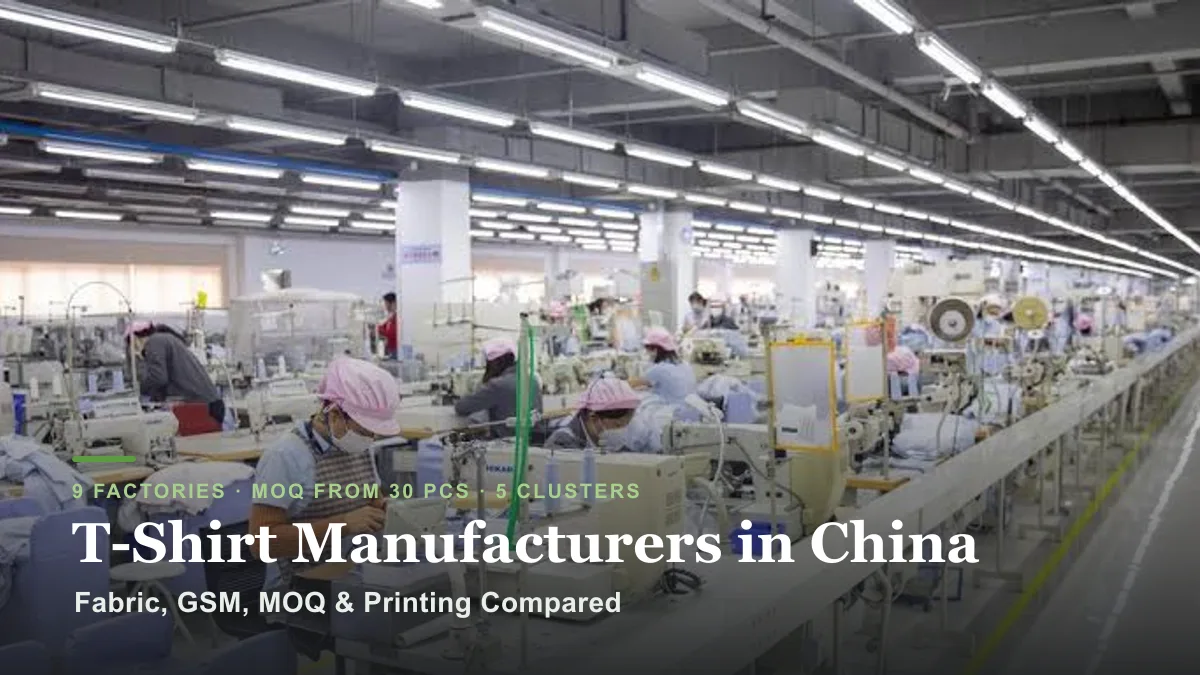

China exported US$151.1 billion of apparel in 2025 (down 5.0% year on year), part of US$293.8 billion in total textiles and apparel, according to China's General Administration of Customs data reported in January 2026. T-shirts are the most commoditized slice of that output — and the easiest category in which to overpay for a trading company's markup.
I have spent 14+ years in promotional merchandise and apparel sourcing. The nine factories below were shortlisted by cluster, MOQ, printing method, and certificate claims. Disclosure: LeelinePromotion is itself a China-based promotional manufacturer; this is not a paid ranking. MOQ, capacity, and certification claims are supplier-reported — confirm them in writing before you place a deposit. The Contact buttons connect you with our sourcing team, who can introduce you to the shortlisted factory. For broader apparel sourcing, see our China clothing manufacturer list.
China's T-Shirt Manufacturing Clusters: Match Your Product to the Right Hub
Picking the wrong region is the most expensive mistake buyers make. China's T-shirt production is clustered by specialty.
| Product / order type | Best region | Why it works |
|---|---|---|
| Low-MOQ graphic tees, streetwear | Guangzhou / Dongguan, Guangdong | Zhongda fabric and trim market, 50–100 piece runs, 2–4 week turnaround |
| Print-heavy promo and sport tees | Quanzhou / Xiamen, Fujian | Screen print and sportswear ecosystem, direct export port access |
| Organic cotton and knit programs | Shandong | Deep textile infrastructure, GOTS-certified yarn, 500+ piece runs |
| Cost-controlled basics | Zhejiang (Ningbo / Yiwu) | Knit ecosystem, low-MOQ traders, competitive blank pricing |
| Retail private label at scale | Guangdong / Fujian / Zhejiang | In-house cutting, sewing, printing, labels, and packaging |
Don't buy organic cotton from a fast-fashion printer, and don't buy 50-piece streetwear drops from a 100,000-piece bulk mill.
T-Shirt Manufacturers in China: Quick Comparison
| # | Manufacturer | Location | MOQ | Best for | Printing / certifications |
|---|---|---|---|---|---|
| 1 | Eton Garment | Xiamen, Fujian | From 500 pcs | Certified retail-ready tees | Screen, DTG; GOTS, OEKO-TEX, BSCI, Disney FAMA |
| 2 | Peony & Buyoh | Shanghai / Shandong | 500–1,500 pcs | Organic cotton and bamboo tees | Screen, DTG; GOTS, OCS, GRS, OEKO-TEX, BSCI |
| 3 | Toohoo Custom | Quanzhou, Fujian | From 30 pcs | Low-MOQ graphic tees | Screen up to 12 colors, DTG, DTF, embroidery; certifications not stated |
| 4 | Adiwe | China (direct factory) | 100 pcs / style & color | Streetwear and heavyweight tees | Screen, DTG, embroidery; certifications not stated |
| 5 | Virex Apparel | China | 50–100 pcs / style | Startup and e-commerce test runs | Screen, DTG, embroidery, sublimation; certifications not stated |
| 6 | ATI China | Hong Kong / mainland China | 50–100 pcs / style | Scalable private label | Screen, DTG, sublimation, embroidery; OEKO-TEX/GOTS options |
| 7 | Ninghow Apparel | Shenzhen, Guangdong | Quote-based | Organic cotton and knit-focused programs | Screen, embroidery; GOTS, OEKO-TEX, Fairtrade |
| 8 | Qianshiwear | Guangzhou, Guangdong | From 50 pcs | Streetwear and full-package OEM/ODM | Screen, digital print, embroidery; OEKO-TEX, GOTS claims |
| 9 | Essty Garment | Guangzhou, Guangdong | 100 pcs / style | Low-MOQ private label with fast turnaround | Screen, DTG, embroidery, heat transfer, sublimation; BSCI, ISO 9001 |
Quick picks: Eton for certified retail; Peony & Buyoh for GOTS organic; Toohoo for 30-piece graphic drops; Adiwe for heavyweight streetwear; Essty for fast 100-piece private label. MOQ is usually per style and per color — ask for the minimum color quantity (MCQ) before comparing quotes.
9 T-Shirt Manufacturers in China
1. Eton Garment
Location: Xiamen, Fujian | MOQ: from 500 pcs | Sampling: 4–7 days Fabric & GSM: cotton and blends; confirm 160–220 GSM per style. Printing: screen print, DTG. Certifications: GOTS, OEKO-TEX, BSCI, Disney FAMA.
- Dedicated T-shirt line: a focused T-shirt factory within the Eton Group, producing promo, graphic, crew, V-neck, and oversized tees.
- Retail-ready compliance: the GOTS, OEKO-TEX, BSCI, and Disney FAMA stack suits retail and licensed programs.
Bottom line: Best for certified retail-ready tees at 500+ pieces. Confirm certificate scope and bulk lead time before fixing a launch date.
2. Peony & Buyoh
Established: 2004 | Location: Shanghai / Shandong | MOQ: 500–1,500 pcs Fabric & GSM: organic cotton, bamboo viscose, and modal in single jersey, rib, and French terry. Printing: screen print, DTG. Certifications: GOTS, OCS, GRS, OEKO-TEX 100, BSCI.
- Vertically integrated: knitting, dyeing, and sewing under one operation, reducing the risk of a certified fabric being swapped downstream.
- Traceable organic supply: GOTS and OCS documentation for sustainability-led brands; the company reports 6 million+ pieces per year.
Bottom line: The strongest organic-cotton fit here, provided you can commit to 500+ pieces and verify the GOTS transaction certificate.
3. Toohoo Custom
Location: Quanzhou, Fujian | MOQ: from 30 pcs | Sampling: ~7 days | Bulk: 15–20 days Fabric & GSM: cotton and blends; confirm weight per style. Printing: screen up to 12 colors, water-based, puff, DTG, DTF, embroidery. Certifications: not stated.
- Lowest MOQ on this list: 30 pieces makes it practical for artist drops and small brand tests.
- Print-heavy specialization: screen setup is listed at $8 per color, with water-based and multi-color work.
Bottom line: Best for low-MOQ, color-heavy graphics. Verify the 12-color claim and certification status before bulk.
4. Adiwe
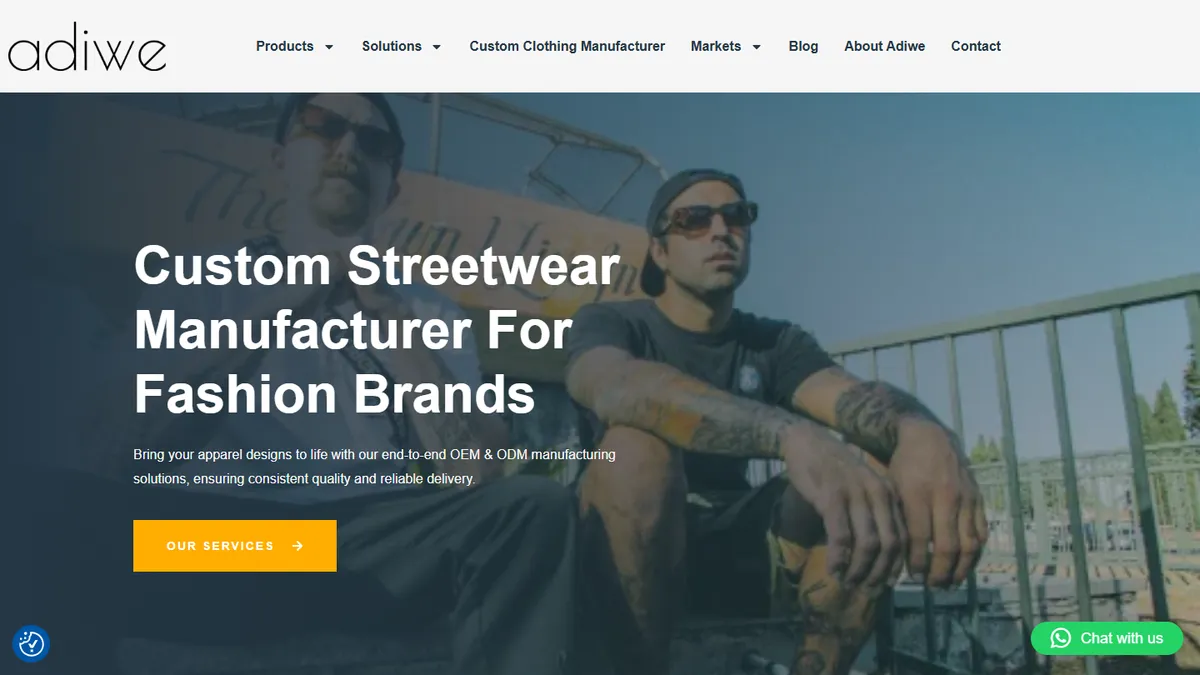
Location: China (direct factory) | MOQ: 100 pcs / style & color | Sampling: 7–10 days | Bulk: 20–30 days Fabric & GSM: 180–300 GSM cotton and blends, including 240–300 GSM heavyweight boxy tees. Printing: screen print, DTG, embroidery. Certifications: not stated.
- Streetwear weight range: built for heavyweight, boxy, and oversized fits rather than thin promo blanks.
- Process control: locks the fabric mill, batch, and GSM before sampling; logs cure temperatures and runs wash tests.
Bottom line: Best for streetwear brands needing 100 pieces per color. Confirm factory ownership and certificate scope.
5. Virex Apparel
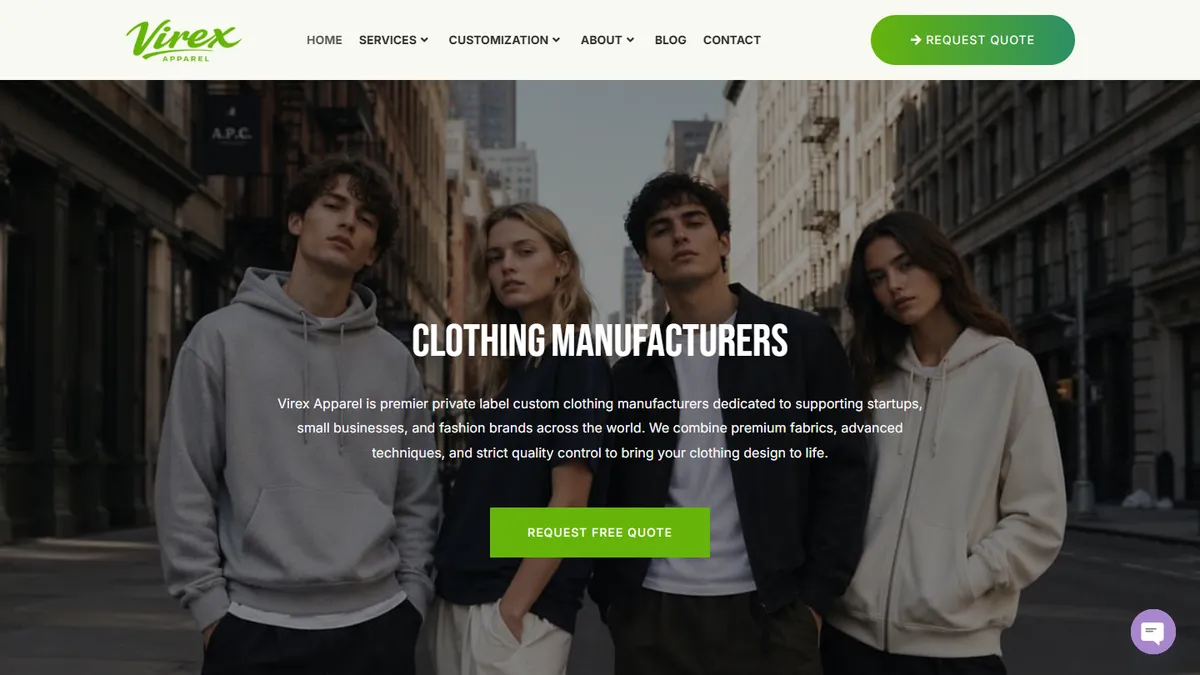
Location: China | Experience: 5+ years | MOQ: 50–100 pcs / style | Sampling: 7–10 days | Bulk: 2–4 weeks Fabric & GSM: cotton, organic cotton, and recycled polyester options. Printing: screen print, DTG, embroidery, all-over sublimation. Certifications: not stated.
- Low-MOQ entry: 50–100 pieces per style suits a first DTC collection.
- Multi-process decoration: screen, DTG, embroidery, and sublimation under one supplier.
Bottom line: Best for startup test runs. Verify which processes are in-house and which are subcontracted.
6. ATI China
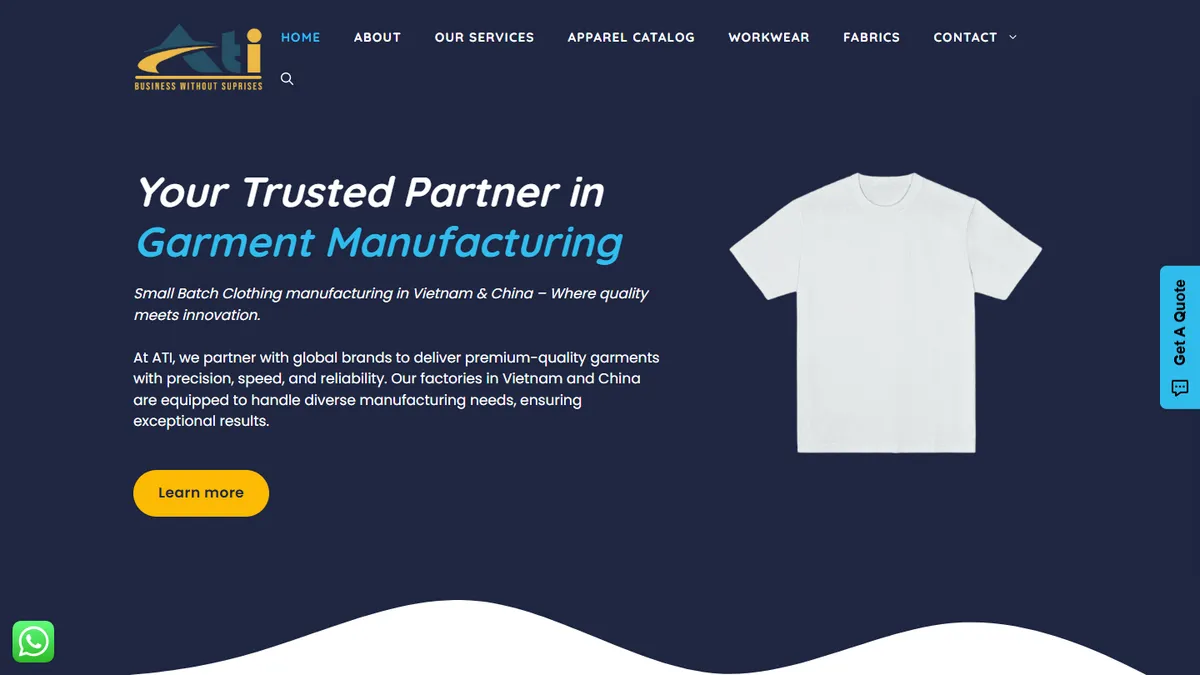
Location: Hong Kong / mainland China | MOQ: 50–100 pcs / style | Sizing: XS–5XL Fabric & GSM: cotton, organic blends, recycled materials, polyester. Printing: screen, DTG, sublimation, embroidery, custom patches. Certifications: OEKO-TEX and GOTS options.
- Low-MOQ start with a scale path: 50–100 pieces per style, with a claimed capacity of 150,000 garments per month.
- Broad size range: XS–5XL sizing for global markets.
Bottom line: Best for a low-MOQ start that can scale without changing suppliers. Verify the capacity claim and certificate scope.
7. Ninghow Apparel
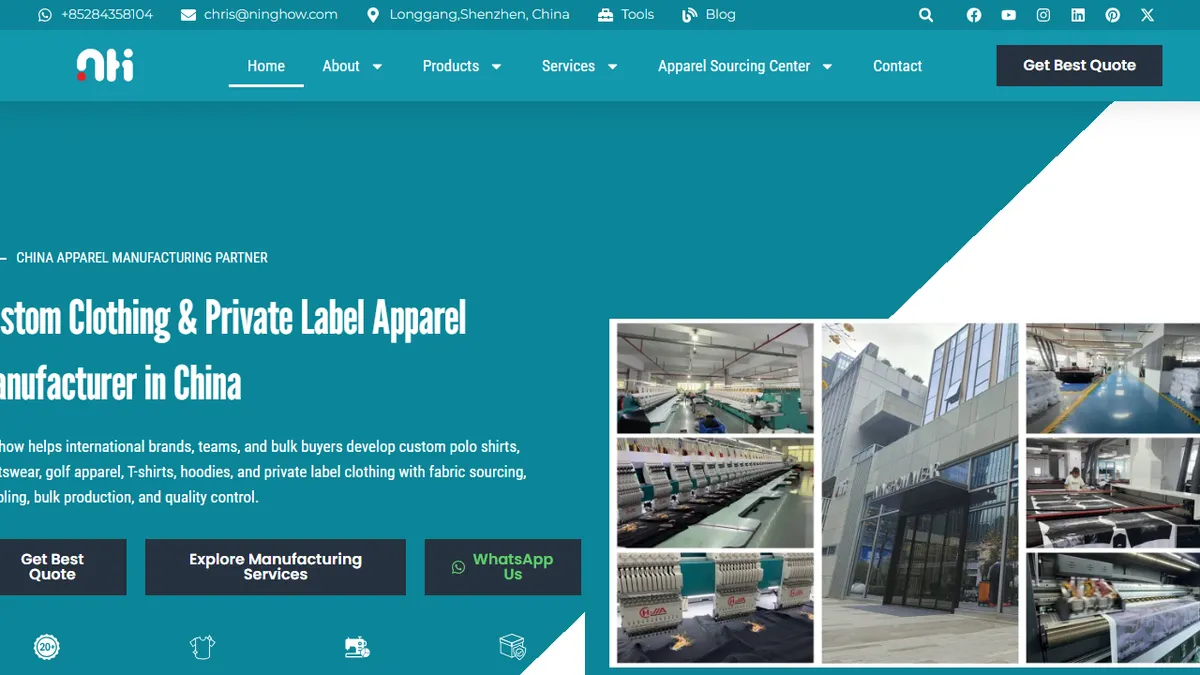
Location: Shenzhen, Guangdong | MOQ: quote-based | Focus: organic cotton and knits Fabric & GSM: organic cotton and knit fabrics. Printing: screen print, embroidery. Certifications: GOTS, OEKO-TEX, Fairtrade.
- Knit-focused operation: in-house knitting and yarn control in Shenzhen.
- Organic claims: GOTS, OEKO-TEX, and Fairtrade coverage for sustainability-led programs.
Bottom line: Best for organic cotton and knit-led programs. Confirm the T-shirt line's capacity before committing.
8. Qianshiwear
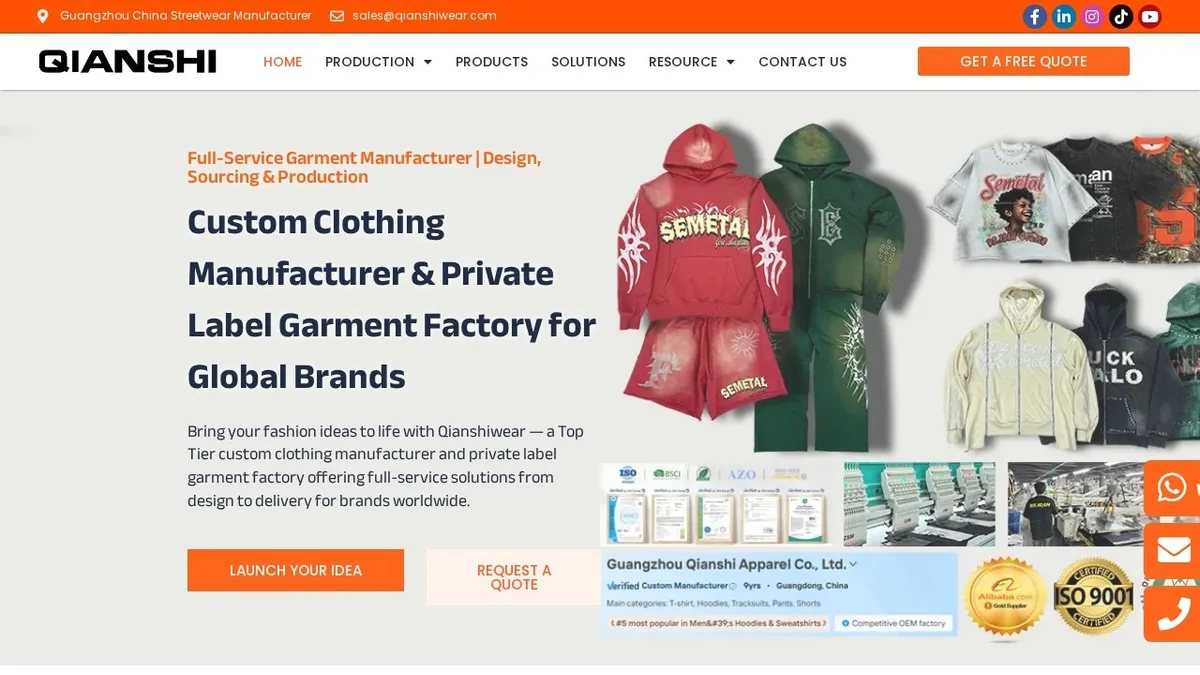
Location: Guangzhou, Guangdong | MOQ: from 50 pcs per design | Sampling: ~7 days Fabric & GSM: cotton and blends. Printing: screen print, digital print, computerized embroidery. Certifications: OEKO-TEX Standard 100, GOTS, and SGS inspection claims.
- Full-package OEM/ODM: design, fabric sourcing, sampling, production, and private-label branding.
- Streetwear focus: panel construction, oversized fits, and print-heavy designs.
Bottom line: Best for streetwear brands that want one partner from tech pack to delivery. Confirm subcontracting and IP ownership.
9. Essty Garment
Location: Guangzhou, Guangdong | MOQ: 100 pcs / style | Production: 10–15 days Fabric & GSM: 140–240 GSM cotton, blends, and polyester. Printing: screen, DTG, embroidery, heat transfer, sublimation. Certifications: BSCI, ISO 9001.
- Fast low-MOQ private label: 100 pieces per style with a 10–15 day production window.
- Broad decoration: screen, DTG, embroidery, heat transfer, and sublimation under one roof.
Bottom line: Best for a first private-label run that needs a written MOQ, short lead time, and basic compliance.
Fabric, GSM & Printing: What to Specify
- Fabric: 100% combed or ringspun cotton for discharge and water-based screen printing; CVC for lower cost and shrinkage; tri-blend for a vintage hand-feel; organic cotton for GOTS traceability. See CVC vs tri-blend and apparel fabric types.
- GSM: 145–160 lightweight; 160–180 standard retail; 180–200 premium basics; 200–220 heavyweight. See what GSM means in fabric.
- Printing: screen print costs $8–$50 per color and wins at 100+ pieces; DTG suits complex art at 1–100 pieces; DTF is good for small runs; embroidery adds $0.80–$2.50; sublimation is polyester-only. Test the fabric-ink combination against wash-fastness standards before bulk.
How to Choose: 5 Steps
- Write the tech pack: fit, size range, fabric composition, GSM, color/Pantone, print placement, labels, packaging, and compliance documents.
- Shortlist 3–5 factories by cluster and MOQ: ask for MOQ per style, per color, and per fabric — not one headline number.
- Sample and wash test: check shrinkage, colorfastness, pilling, print adhesion, collar recovery, and measurement tolerance.
- Negotiate price breaks: request quotes at 200, 500, 1,000, and 5,000 pieces; confirm sample credit and screen-setup credit.
- Lock QC and inspect: put AQL 2.5 (major) and 4.0 (minor) in the PO; inspect before releasing the balance. See our inspection process.
T-Shirt Pricing Benchmarks (FOB China, 2026)
Pricing is for 180–220 GSM combed cotton, one-color screen print, standard labels, and polybag packing.
| Quantity | Typical FOB unit price | Sample fee | What changes |
|---|---|---|---|
| 200 pcs | $4.50–$8.00 | $50–$150 | Screen setup and sampling dominate |
| 500 pcs | $3.20–$6.00 | Often credited | First meaningful price break |
| 1,000 pcs | $2.50–$4.80 | Often credited | Best balance for most brands |
| 5,000 pcs | $1.80–$3.50 | Usually waived or credited | Lowest unit; fabric dye lots matter |
Add $0.30–$1.00 for heavyweight fabric, $0.50–$1.50 for embroidery, and $0.20–$0.80 for organic cotton. Custom Pantone dyeing may require a 300–500 kg yarn minimum. At 1,000 pieces, freight, duty, broker, and last-mile charges typically add 30–50% to FOB; compare FOB vs EXW vs CIF before requesting quotes, then use calculating landed cost before comparing them.
Quality Control & Compliance
QC tests: shrinkage to AATCC 135 or ISO 6330 (max 5%), colorfastness to AATCC 61 or ISO 105-C06 (grade 4+), pilling to ISO 12945-2 (grade 3–4+), print durability after washing, and seam/collar/measurement checks. Use AQL 2.5 for major defects and 4.0 for minor; our QC process covers both.
US compliance: buyers need FTC textile labeling (fiber, origin, RN) plus CPSIA for children's items and Prop 65 for California.
EU and UK compliance: buyers need REACH, OEKO-TEX 100, and GOTS if organic; the UK adds UK textile labeling and UK REACH. Run our eco-certification checks before bulk. GOTS paperwork without a transaction certificate is not proof of organic content; a BSCI report must cover the factory you are paying.
Red Flags to Watch For
- Price below fabric cost. When a 180 GSM cotton tee quotes at $1.20 FOB, expect a lighter GSM, cheaper blend, or bait quote.
- No factory video or license. If the supplier cannot move from the office to the sewing line on a live call, you are talking to a trading company.
- Headline MOQ that hides the per-color minimum. Get per-style, per-color, and per-fabric MOQ in writing.
- Certificate that does not match the factory. Check the holder, site address, and product scope against the proforma invoice.
- No wash test or third-party inspection. Resistance to either is a preview of what bulk will look like.
- 100% upfront payment to a personal account. Standard terms are a deposit against a proforma invoice, with the balance before shipment.
About LeelinePromotion's T-Shirt Sourcing Services
LeelinePromotion is a promotional products manufacturer, not a dedicated T-shirt mill. For T-shirt programs, we source from audited partner factories in Guangdong, Fujian, and Shandong, manage sampling and AQL 2.5/4.0 inspection, coordinate CPSIA/Prop 65/REACH/GOTS/OEKO-TEX documents, and kit tees with other promotional items. MOQ starts from 100 pieces depending on fabric and print. If you need a dedicated T-shirt factory, use the nine profiles above; if you need tees as part of a larger custom promotional clothing program, talk to our sourcing team.
Conclusion
Start with the cluster, then the MOQ, then the sample. Shortlist three to five suppliers from the table above, send the same tech pack to each, and compare landed cost — not the headline FOB price.
Frequently Asked Questions about T-Shirt Manufacturers in China
Q1. What is the MOQ for custom T-shirts from China?
Low-MOQ factories start at 30–100 pieces per style, especially for screen print, DTG, or stock fabric colors. Certified organic and retail-focused factories typically ask for 500–1,500 pieces per style. Custom Pantone dyeing can add its own 300–500 kg yarn minimum.
Q2. How much does a custom T-shirt cost in China?
At FOB China, a 180–220 GSM combed cotton tee with one-color screen print typically runs $4.50–$8.00 at 200 pieces, $3.20–$6.00 at 500, $2.50–$4.80 at 1,000, and $1.80–$3.50 at 5,000. Heavyweight fabric, embroidery, organic cotton, and multiple colors move the price toward the top of each range.
Q3. Which fabric is best for screen printing?
100% combed or ringspun cotton gives the best results for discharge and water-based screen printing. CVC is a cost-effective option with lower shrinkage, but its polyester content can make discharge inks less predictable. Polyester is best reserved for sublimation.
Q4. Are Chinese T-shirt factories GOTS or OEKO-TEX certified?
Some are, but claims are often overstated. Check the certificate holder and production site, ask for a GOTS transaction certificate for the actual shipment, and verify the OEKO-TEX certificate number. If a factory cannot produce shipment-level documents, it is not a certified organic supplier.
Q5. How do I verify a factory is not a trading company?
Ask for the business license, the factory address on the certificate, and a live video walkthrough of the knitting, cutting, sewing, and printing lines. Request two active buyer references and confirm the factory accepts third-party inspection. If a supplier cannot show the production floor, treat it as a sourcing agent, not a factory.
Need help shortlisting a factory or running these checks? Talk to our sourcing team →
Sources and Verification
- Organic textile certification: GOTS and Fairtrade.
- Harmful-substance and social compliance: OEKO-TEX and amfori BSCI.
- U.S. labeling and safety: FTC Clothing and Textiles and CPSC.
- EU and UK compliance: European Commission — REACH, GOV.UK textile labeling, and USITC HTS.
- China 2025 export totals: General Administration of Customs of China, as reported in Fibre2Fashion's 2025 review, January 2026.
Editorial note: Factory locations, MOQ, lead times, capacity, and certification claims are supplier-reported as of November 2026. We did not run paid factory audits for this article. Homepage screenshots are used for supplier identification; trademarks belong to their respective owners. Verify current documents and pricing directly with each supplier before ordering.