
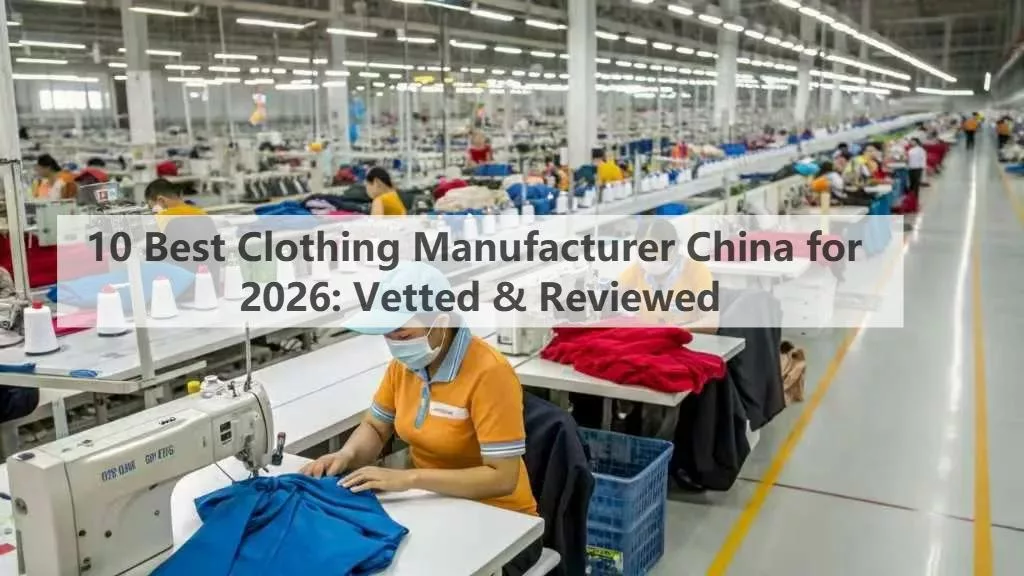

China's factories exported US$301.1 billion in textiles and apparel in 2024 — US$159.1 billion of it apparel — according to China's General Administration of Customs (reported January 2025), across some 150,000+ textile and garment enterprises in specialized clusters like Guangzhou, Ningbo, and Dongguan.
The real challenge for buyers isn't finding a clothing manufacturer — it's filtering out trading companies posing as factories and workshops that pass a sample check but fail on bulk consistency.
I've audited 200+ factories across China over 14 years in this industry — 80+ of them dedicated garment producers — working alongside our floor manager Wang and QC manager Li on the ground. The ones that made this shortlist passed a four-point filter: a valid manufacturing license (not just a sales permit), a live video walkthrough of the sewing line, a current ISO 9001 or BSCI certification covering the actual production site, and at least two reference checks from active buyers. More than half the factories I started with failed at step one.
A note on independence: LeelinePromotion is itself a China-based clothing manufacturer. The factories below are independent; we list them as an honest shortlist, not a paid endorsement. Where sourcing, QC, or logistics on top is needed, our team is an optional extra — not a requirement to use this list.
Below are 10 manufacturers we've personally evaluated. The vetting questions to ask each supplier are in the FAQ at the end of this guide. Need help with sourcing or QC? Contact our team.
China's Garment Manufacturing Clusters: Match Your Product to the Right Hub
Picking the wrong region is the single most expensive mistake buyers make. China's manufacturing is clustered by specialization — a factory built for speed (Guangzhou fast fashion) won't deliver gauge precision on knits (Ningbo).
| Product Type | Best Region | Why It Works |
|---|---|---|
| Fast fashion, woven, cut-and-sew | Guangzhou, Guangdong | Adjacent to Zhongda Fabric Market — trim sourcing takes hours, not weeks. Built for 2–4 week turnaround |
| Knitwear, sweaters, yarn-based pieces | Ningbo, Zhejiang | Multi-generational knit ecosystem. Factories here run 12GG–18GG machines as standard |
| Sportswear, technical fabrics, seamless | Dongguan, Guangdong | Stretch recovery and bonded-seam expertise. The hub for performance wear |
| Workwear, uniforms, heavy-duty textiles | Shandong | Industrial-grade textile infrastructure. Built for durability, not trend speed |
| Menswear basics, polos, casual pants | Zhongshan (Shaxi), Guangdong | Specialized in core menswear. Consistent sizing across repeat batches |
| Private label, retail-ready branding | Multi-province (Guangdong, Fujian, Zhejiang) | Larger operations with in-house branding lines for hangtags, labels, and packaging |
The rule I enforce with every client: don't buy sweaters in Guangzhou — the machinery is built for speed, not gauge precision. Don't buy fast fashion in Shandong. Go where the ecosystem matches the product.
China Clothing Manufacturers Compared
| # | Manufacturer | Main Product Focus | Typical Client Type | Location / Hub |
|---|---|---|---|---|
| 1 | Hongyu Apparel | Fashion collections for men, women, and kids, including streetwear and casual sets | Shopify / Amazon brands and labels planning repeated production runs of the same items | Dongguan, Guangdong, China |
| 2 | Ninghow Apparel | Knit-focused garments such as sweaters, knit sets, and other yarn-based pieces; runs its own Shenzhen facility | Brands building collections where knit quality and fabric behavior after washing are critical | Shenzhen, Guangdong, China |
| 3 | Valtin Apparel | Custom cut-and-sew garments including fashion pieces and branded apparel for global clients | Startup labels and small to mid-size brands that need flexibility plus customization | Guangzhou, Guangdong, China |
| 4 | Dongguan Humen Hucai Garment Co., Ltd. | Activewear, gym wear, yoga sets, and performance sportswear with seamless and bonded construction | Fitness brands, athleisure startups, and sports teams needing technical fabric expertise and BSCI-certified production | Humen, Dongguan, Guangdong, China |
| 5 | Taian BOWINS Garment Co., Ltd. | Workwear, uniforms, and functional clothing designed for demanding use | Industrial workwear brands, uniform programs, and safety-oriented buyers | Tai'an, Shandong, China |
| 6 | Tuer Garment (Guangzhou Tuer Garment Co., Ltd.) | Women's fashion styles and private-label collections | Fashion labels and influencers needing fast capsule runs and quick trend response | Guangzhou, near major fabric markets |
| 7 | MMS Clothing | Broad range of custom apparel plus wholesale stock garments | Small brands testing new categories and buyers needing both custom and ready-made stock | Chengdu, Sichuan, China |
| 8 | Qian Zhan Garment Factory | Industrial workwear and protective garments | Workwear labels and corporate buyers requiring robust performance clothing | Guangyuan, Sichuan, China (multiple production bases) |
| 9 | Arlisman Clothing Processing Factory | Menswear basics such as polos, T-shirts, jeans, and casual pants | Brands building core menswear programs and private-label basics | Shaxi, Zhongshan, Guangdong, China |
| 10 | Canton Jeans Fashion Co., Ltd. | Denim jeans, denim jackets, shirts and dresses — from raw selvedge to washed and distressed finishes | Denim-focused streetwear brands, boutique labels, and retailers building jeanswear programs | Xintang, Zengcheng, Guangzhou, China |
Top 10 Clothing Manufacturers in China
1. Hongyu Apparel
Most factories can make one perfect sample. Few replicate that quality across 1,000 units. Hongyu Apparel succeeds here, prioritizing process maturity over the lowest quote.
Questions to ask: Clarify minimum color quantity (MCQ) up front — a 500-unit order may still split across several colorways. I also check fabric lead times and confirm pattern making happens in-house, which prevents sizing errors.
Vetting strategy: Demand raw production video of the exact product category. If they can't show it, they haven't made it. A refusal of third-party inspection is an immediate dealbreaker.
Bottom line: High repeatability, but be specific. Vague answers on fabric specs (GSM or yarn count) are the warning sign — if they won't quote from a defined tech pack, walk away.
2. Ninghow Apparel
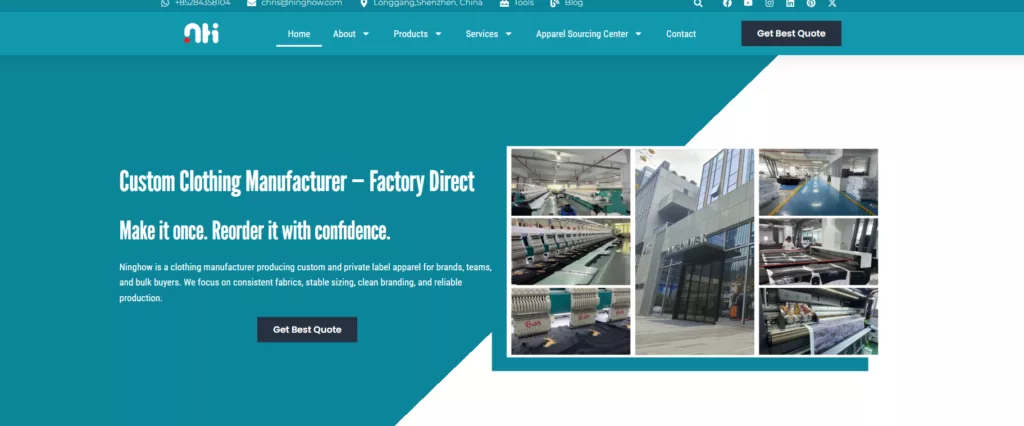
Ninghow runs knitwear out of its own Shenzhen facility — gauge and yarn control are in-house, not borrowed from another cluster. I recommend them for knit-led collections (sweaters, sets) where yarn control drives quality.
What to verify: Don't assume capacity. I check their knitting gauge range (14GG machines, or just standard 5GG?) and make the supplier define pilling grades and shrinkage targets before production. Custom yarn is slow, so I build a 14-day buffer for lab dips and procurement.
Compliance note: Confirm certificates cover the actual production site, not a holding company.
Bottom line: Knits move. I still require a signed wash test report with every sample — that prevents the "fits in photos, shrinks in the wash" disaster.
3. Valtin Apparel
Returns kill profit. I use Valtin Apparel for complex cut-and-sew projects where construction integrity is non-negotiable — hidden zippers, reinforced pocket bags. A twisted lining or popped seam turns a sale into a refund.
Success here takes discipline. I never ask for "high quality"; I specify 12 SPI (stitches per inch) at stress points and demand a full Bill of Materials (BOM). If a zipper brand (YKK or SBS) isn't pinned down, the default generic option will break.
Bottom line — defect control: I categorize crooked labels and shade variation as Major defects; most factories treat them as minor unless pushed. Lock in a rework responsibility clause — if inline inspection fails, the factory repairs at its own cost before shipping.
4. Dongguan Humen Hucai Garment Co., Ltd. — Activewear Specialist
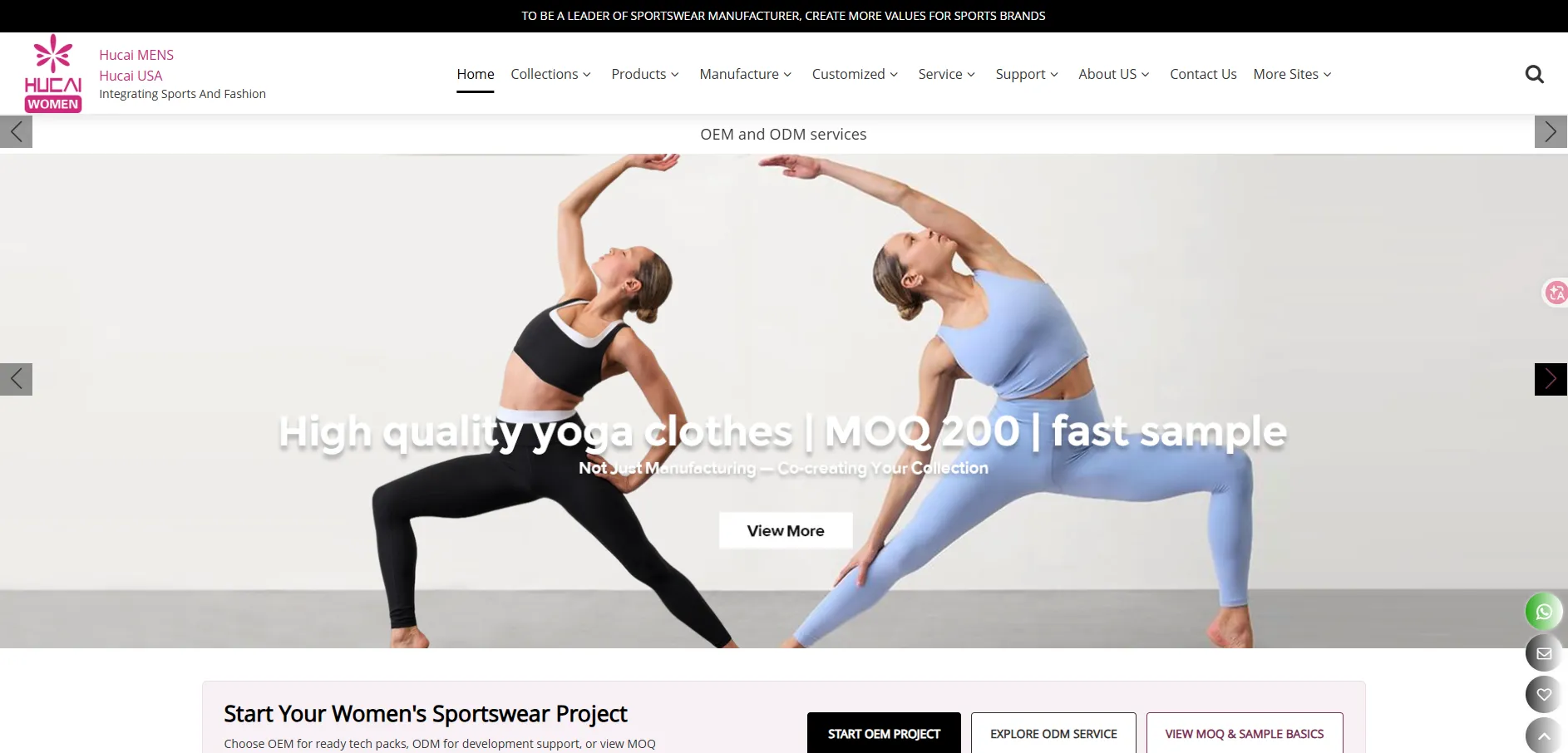
With 25+ years in Humen Town — Dongguan's sportswear core — Hucai runs a 100–200 person operation pushing 30,000–50,000 pieces daily. They combine flatlock and 4-needle 6-thread stitching with in-house seamless knitting, so compression pieces aren't outsourced.
What to verify: I request a stretch recovery test report — fabric that bags out after 20 wears kills a return rate. The BSCI certification is current, but confirm it covers the Humen site, not a holding entity. I also ask about their MES (Manufacturing Execution System), because real-time production tracking means fewer delivery surprises.
Production specs: 300–500 units per style, with color minimums flexing to fabric stock. Lead times run 4–6 weeks for standard activewear, 6–8 weeks for bonded or laser-cut pieces. FOB Shenzhen or Nansha.
Bottom line: A stable mid-size operation in the right cluster — Humen's fabric mills feed straight into Hucai's cutting tables. The tradeoff: they're not a 50-unit startup shop. For production-scale activewear with audited compliance, they deliver.
5. Taian BOWINS Garment Co., Ltd.
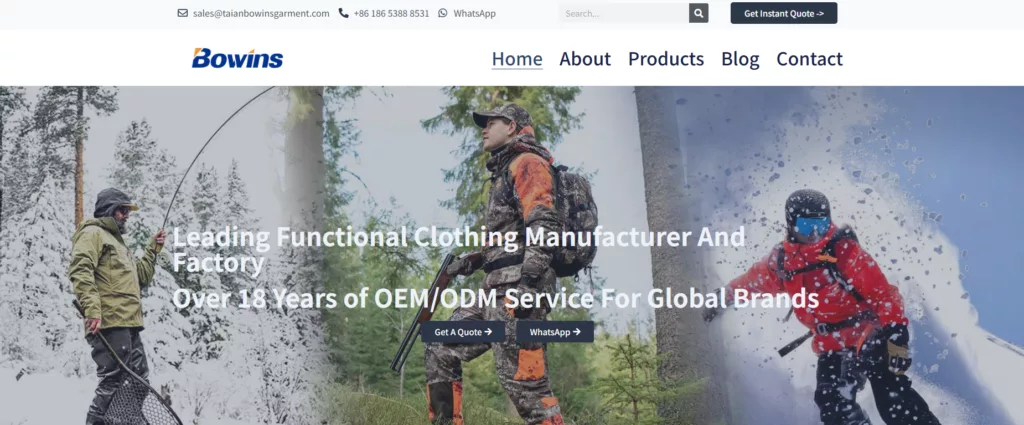
Most fashion factories chase trends; Taian BOWINS prioritizes tension strength. They treat apparel as industrial equipment — ideal for uniform programs where repeatability drives margins.
What to request: Forget "hand feel." I demand a physical property report listing fabric GSM, tear strength targets, and colorfastness (Grade 4 minimum), plus consistent size grading — a Medium bought in 2026 must match a 2024 Medium. Uniforms often go straight to automated distribution centers (FBA/3PL), so define carton packing standards and barcode labeling before production.
Risk control: Durability is binary. Mandate a pre-shipment inspection. The contract needs a defect disposition clause — if tear strength fails, state explicitly whether they rework, discount, or remake the batch at their own cost.
6. Tuer Garment (Guangzhou Tuer Garment Co., Ltd.)
Tuer Garment operates minutes from the Zhongda Fabric Market in Guangzhou, sourcing trims and fabrics in hours rather than weeks. I recommend them for trend-driven capsules and viral drops where speed-to-market is the priority.
The tradeoff is consistency. This fast-paced factory may substitute materials to hold speed if the tech pack is loose. Verbal agreements aren't enough — lock specs early and schedule inline inspections to avoid a batch of "almost correct" goods.
Bottom line: Never approve samples digitally. Physically sign and seal the fabric swatch before production runs. And pay for the priority sampling line — squeezing the price on a rush order invites construction shortcuts to hit the deadline.
7. MMS Clothing
Most factories specialize. Asking a knitwear specialist to make winter jackets usually fails. MMS Clothing is different — built to cover multiple categories, they're my top pick for founders testing tees, sets, and outerwear with one vendor instead of three.
Broad coverage can hide outsourcing. I enforce a strict revision-brief loop and treat the pre-production sample sign-off as a binding contract. If a clear timeline for a complex parka alongside a basic tee isn't forthcoming, they lack the organization needed.
Bottom line — validating capacity: Ask for production videos of the specific category, and run 2–3 sample orders in parallel to benchmark fit and finish consistency before committing to a bulk deposit.
8. Qian Zhan Garment Factory
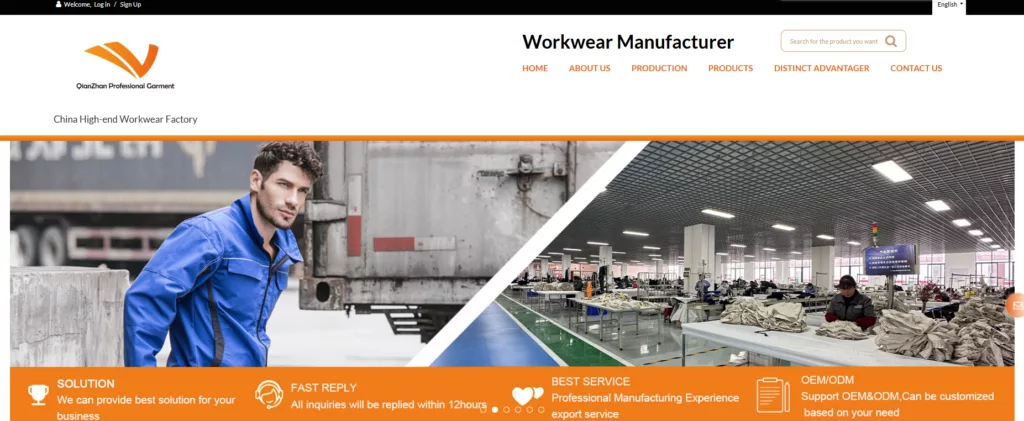
Workwear is industrial equipment, not fashion. I use Qian Zhan when durability drives the purchase — heavy-duty textiles built for real-world abuse.
The spec checklist: Standard construction fails here. I demand bar-tacks at pocket stress points, specify fabric abrasion scores, and pin the zipper brand (e.g., YKK). Otherwise generic hardware breaks after ten washes.
Commercial safeguards: Workwear buyers face strict deadlines. I insert a late-delivery penalty (e.g., 5% credit per week) in the purchase order to make the factory prioritize the slot.
Bottom line — the QC standard: Define failure points early — loose reflective tape or sharp hardware edges are Critical Defects. I enforce a zero-tolerance policy: a single Critical Defect at pre-shipment inspection means the whole batch is reworked.
9. Arlisman Clothing Processing Factory
Menswear basics die without consistency. I recommend Arlisman for brands building core collections rather than fast fashion — their production maturity prevents the "product drift" where sizing fluctuates between batches.
What to verify: Define strict measurement tolerances and shrinkage targets in the tech pack. I specifically inspect for shade banding — if the navy sleeve doesn't match the navy torso across lots, the product is unsellable. Confirm factory identity: check sewing-line ownership and whether third-party inspection is allowed. Hesitation usually means a hidden subcontractor.
Scaling strategy: Ask about reorder lead times during the first quote. Without fabric reservations locked early, simple reorders face six-week delays in peak season.
10. Canton Jeans Fashion Co., Ltd. — Jeanswear Specialist
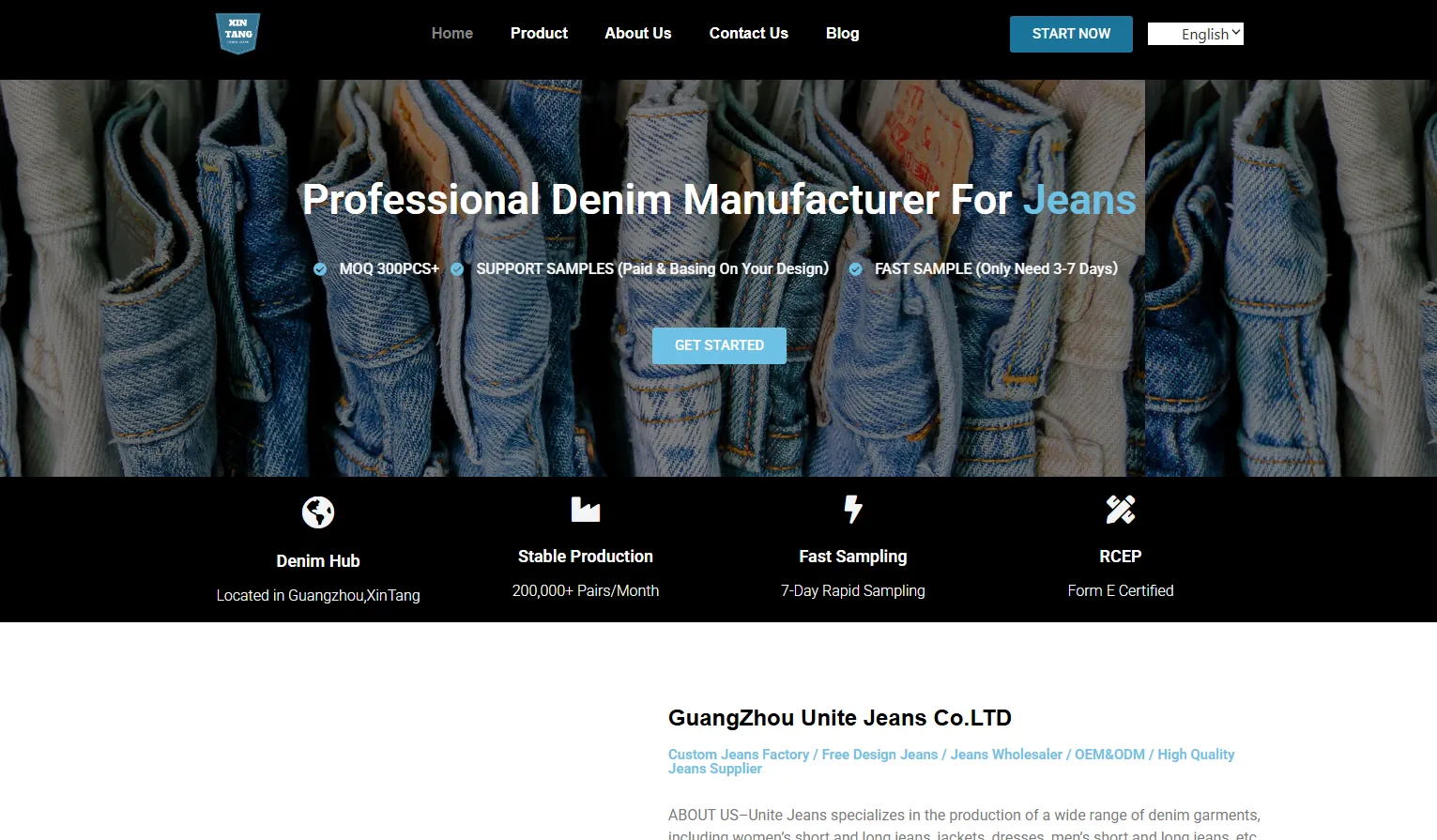
Xintang, Zengcheng is China's denim capital — the cluster supplies an estimated 60% of the country's denim output and, at its peak, was reported to turn out some 2.5 million pairs of jeans a day, running thousands of denim enterprises and wash houses in a tight cluster. Fabric sourcing, cutting, sewing, and finishing all happen within a 10-kilometer radius — an advantage no other region matches.
Technical capability: Canton Jeans is a Xintang OEM/ODM denim maker (founded 2004) covering jeans, denim jackets, shirts and dresses, plus twill and corduroy. The cluster runs the full wash range — enzyme, stone, acid, hand-finishing — with in-house wash houses.
What to verify: I require a wash approval panel — a physical set of 3–5 wash variations on the actual fabric — before bulk cutting. Never approve a wash from a photo. Check shrinkage control under 3% post-wash, and confirm ozone or laser capability if there are sustainability commitments; traditional stone washing consumes massive water.
MOQ & lead time: The cluster supports low-MOQ test runs (roughly 50–100 units per style) with 7–10 day sampling; bulk timelines scale with wash complexity. Confirm color and wash minimums in writing — upstream fabric mills keep their own yardage minimums.
Bottom line: For denim, go to Xintang — cluster density means faster sampling and lower fabric costs than anywhere. The catch: wash houses vary wildly in consistency. Lock the wash standard with a signed, sealed physical panel before production; a verbal "medium blue" means nothing here.
Frequently Asked Questions about Clothing Manufacturers in China
Q1. How do I confirm a supplier is a real factory, not a trading company?
Check the business scope for manufacturing and processing; trading or sales only means a broker. Then force a live video walkthrough — the supplier should move from the office to the sewing line to show the exact product type. That's point two of the four-point filter above; the other two (certification site coverage and active-buyer references) are worth confirming in writing before any deposit.
Q2. What MOQ should I expect in 2026 for private label apparel?
Plan for 300–500 units per style for bulk, but watch the Minimum Color Quantity (MCQ) — dye houses need minimum yardage. Test runs can start lower (roughly 50–100 units) at denim and some multi-category clusters. To unlock lower MOQs, spec stock fabric colors instead of custom Pantone dyeing, and confirm both figures in writing.
Q3. What AQL standard should I use for apparel inspections?
Use AQL Level II (Major 2.5 / Minor 4.0). For complex outerwear, I tighten Major defects to 1.5. Without this in writing, factories ship goods that look "okay" to them but fail retail standards.
Q4. Is Alibaba Trade Assurance enough to protect me?
It is not insurance — it only holds funds. Tie the final payment release to a passed third-party inspection. If the money is released before the inspection report comes back, the leverage to demand a refund is gone.
Q5. How do tariffs affect my pricing?
Always calculate Landed Cost (FOB + Freight + Duty). Duty rates swing wildly by material. Check the HTS code before ordering — a slight change in fabric blend (cotton vs. polyester) can double the import tax. See calculating landed cost and FOB vs EXW vs CIF for the full breakdown.
Need help shortlisting a factory or running these checks? Talk to our sourcing team →