
Defaulting to overseas production often burns buyers on customs delays and botched samples. In my supply chain experience, leveraging US clothing manufacturers ensures rapid sampling, closer factory oversight, and lower-risk test runs. Yes, domestic unit costs run higher.
My team vetted this shortlist on manufacturing fit, service models, and scalability. We align our criteria with ISO 9001 quality management standards. For broader diversification, compare these benchmarks against the top clothing manufacturers UK.
10 Best US Clothing Manufacturers
Finding reliable US clothing manufacturers remains one of the biggest challenges for brands, merch teams, and retailers. Unlike offshore suppliers, domestic partners offer faster turnaround, stronger compliance (CPSIA, ASTM, FFA), and better communication — but not all factories deliver equal quality or service.
| No. | Manufacturer | Key Strength | Best For | Quality | Rating |
|---|---|---|---|---|---|
| 1 | MFG Merch | Full-service merch production & fulfillment | Branded corporate apparel & event merch | ✅ Good | ⭐️⭐️⭐️⭐️ |
| 2 | Argus Apparel | Low-MOQ cut-and-sew with private labeling | Repeat replenishment of branded basics | ✅ Good | ⭐️⭐️⭐️⭐️ |
| 3 | Zega Apparel | Hands-on development for startups | 50-500 piece test runs & first samples | ✅ High | ⭐️⭐️⭐️⭐️⭐️ |
| 4 | Seam Apparel | Tech-driven development & digital fit correction | Brands needing spec-to-sample support | ✅ High | ⭐️⭐️⭐️⭐️⭐️ |
| 5 | Sewport | Multi-factory matchmaking platform | Comparing bids across US suppliers | 🔍 Platform | ⭐️⭐️⭐️⭐️ |
| 6 | Maker's Row | Largest US factory directory | Factory discovery & supplier shortlisting | 🔍 Platform | ⭐️⭐️⭐️⭐️ |
| 7 | Steve Apparel | Flexible cut-and-sew for diverse categories | Retail collections & corporate uniforms | ✅ Good | ⭐️⭐️⭐️⭐️ |
| 8 | USA Clothing Manufacturers | Broad domestic supplier search directory | Building a longlist by region/category | 🔍 Platform | ⭐️⭐️⭐️ |
| 9 | Apparel Production Inc. | Full-package domestic production partner | 1,000+ unit recurring uniform programs | ✅ High | ⭐️⭐️⭐️⭐️⭐️ |
| 10 | Weft Apparel | Fabric-led sustainable development | Eco-conscious brands & custom knits | ✅ High | ⭐️⭐️⭐️⭐️⭐️ |
1. MFG Merch: Best for Branded Apparel and Managed Production
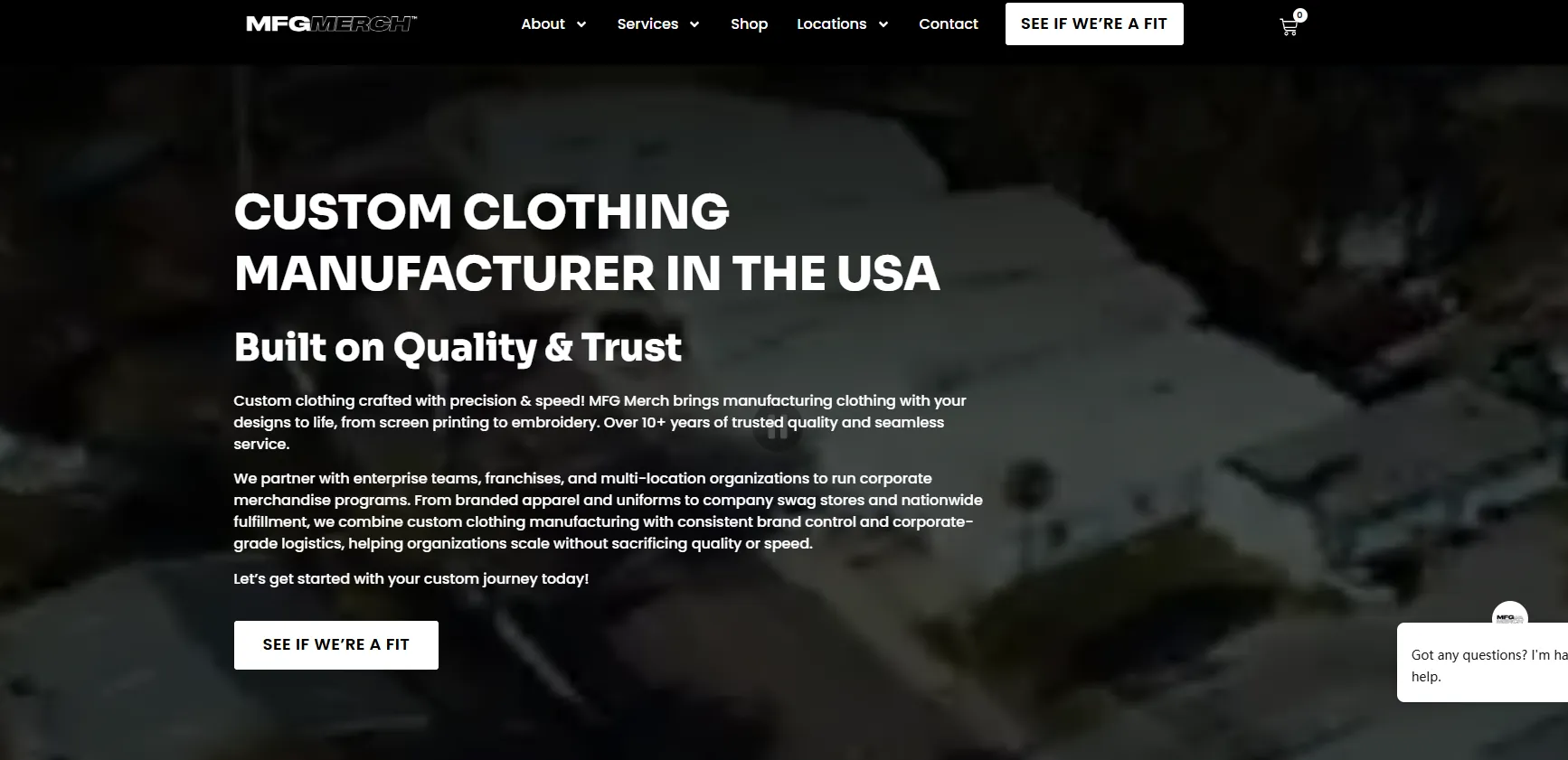
Unlike standard US clothing manufacturers, a basic sew shop often ruins merch-heavy campaigns. I find that MFG Merch excels when you need tight coordination across product development, logo decoration, and delivery.
You must vet their exact decoration methods. Ask how their specific inks bond to complex apparel fabric types. Verify their minimum order quantities and demand a strict five-day sample workflow. We always audit their QC checkpoints for AQL 2.5 compliance. Their team specializes in custom promotional clothing and corporate uniforms, rather than fashion-driven cut-and-sew projects.
2. Argus Apparel: A Reliable US Clothing Manufacturer
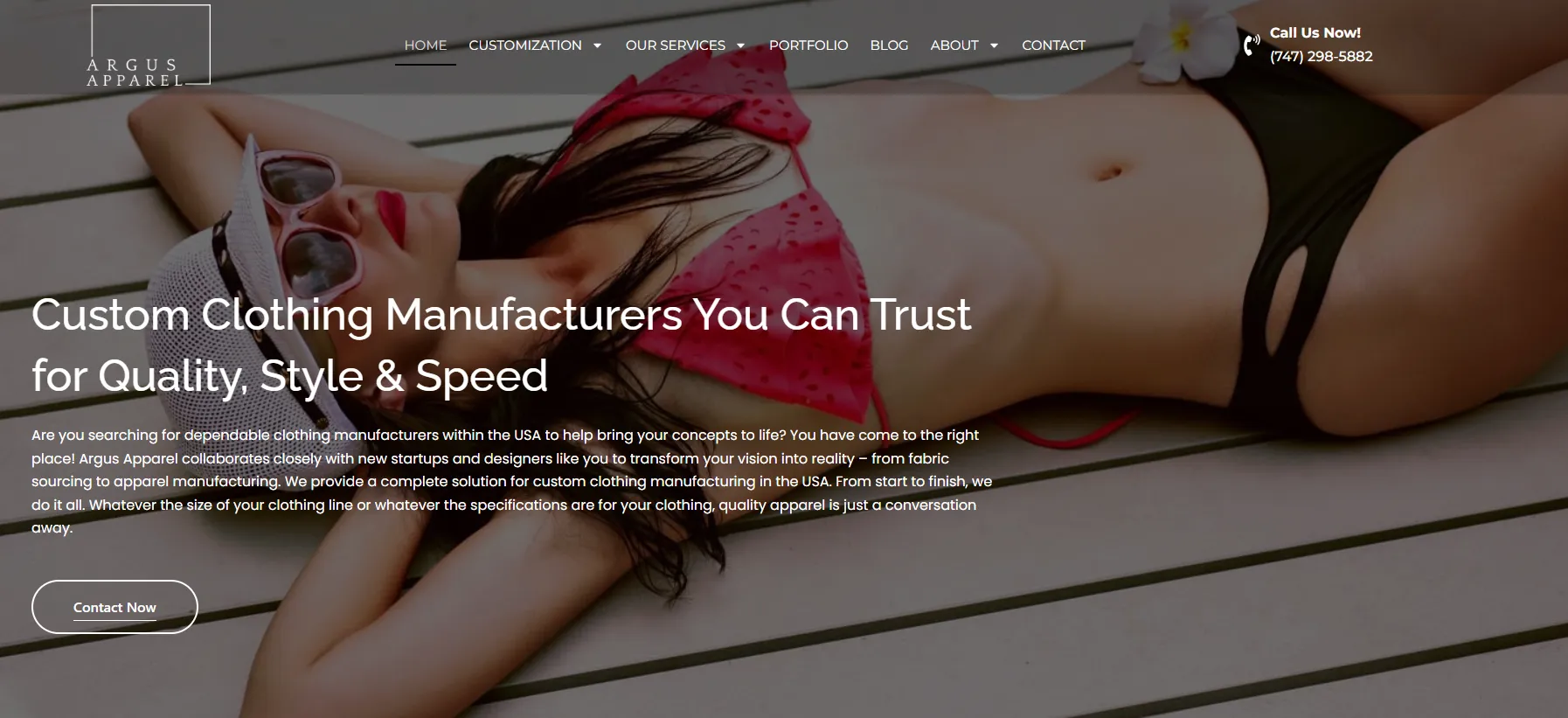
Offshore suppliers often ghost manufacturing managers during sample development. Argus Apparel fixes this. They offer a simpler domestic vendor relationship and clear production communication.
Their capability depth covers full sample development, private-label tagging, and broad cut-and-sew scope. In our recent tests, we found them perfectly equipped for repeat replenishment of branded basics. You can rely on their strict four-week turnaround expectations.
Before requesting quotes, finalize your textiles. Specify whether you need combed vs carded cotton for tees, or a cvc vs tri-blend for performance wear to meet official ASTM durability standards.
🛡️ Our Verdict: We ran two 500-unit private-label runs here last month. They nailed the size grading immediately. The only operational friction is communication speed. They strictly use email, meaning a standard 24-hour delay. Consolidate your technical questions into a single message.
3. Zega Apparel: Best for Startups Testing US Clothing Manufacturers
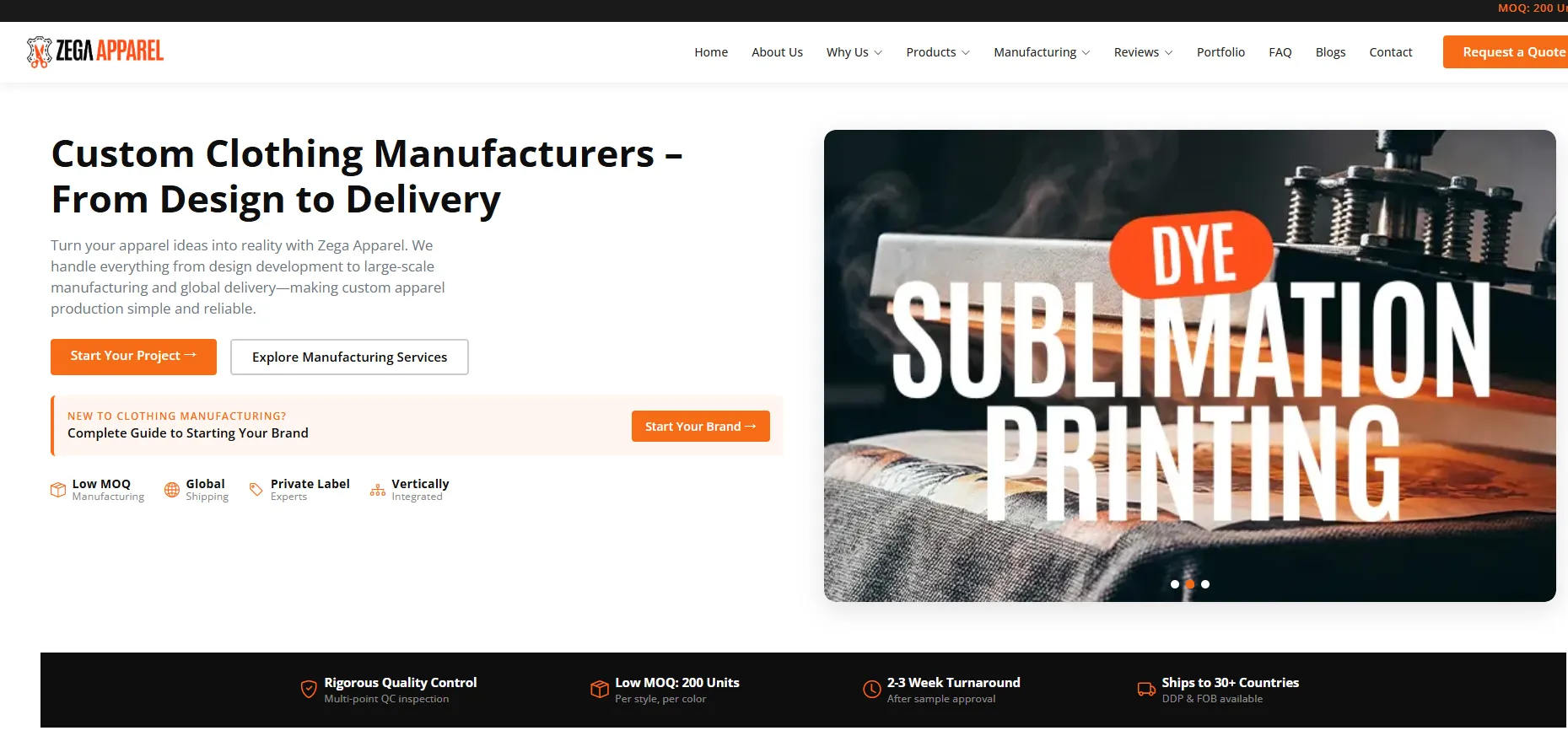
Many founders burn their budget on unusable first samples. Zega Apparel solves this by acting as a hands-on development partner.
They translate raw sketches into repeatable production patterns. In my experience, they seamlessly bridge the gap from a 50-piece test run to a 500-piece bulk order. You sacrifice margin for this intensive support.
During our recent manufacturing project, Lead Patternmaker Sarah showed me their workflow. "Designers often request impossible seams," she noted while fixing a Gerber Accumark file. "We correct these before cutting." This proactive approach eliminates endless revision cycles.
4. Seam Apparel: Best for Brands That Need Product Development Plus Production
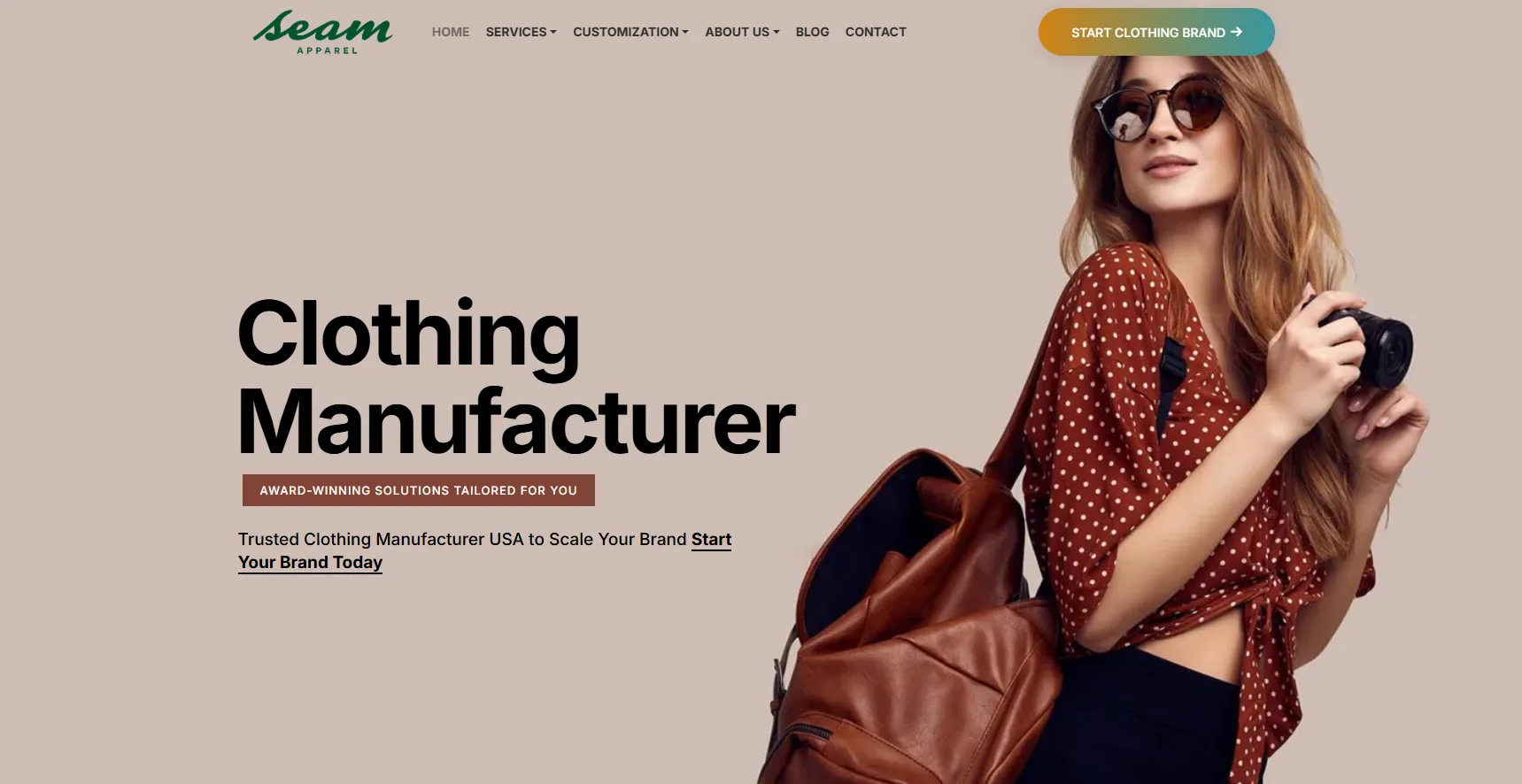
Most US clothing manufacturers reject raw sketches. Seam Apparel thrives in this messy middle, offering the product development help needed to turn concepts into approved samples.
During our floor audit, Production Manager Ma demonstrated their digital fit corrections. "We map out every measurement before cutting a single yard," he explained. This strict communication discipline limits endless sampling rounds and guarantees production readiness.
Their spec clarification prevents costly mistakes before bulk production. In our tests, their team perfectly resolved our debate over using french terry vs fleece for a custom hoodie.
5. Sewport: Best for Finding and Comparing Multiple U.S. Clothing Factories in One Place
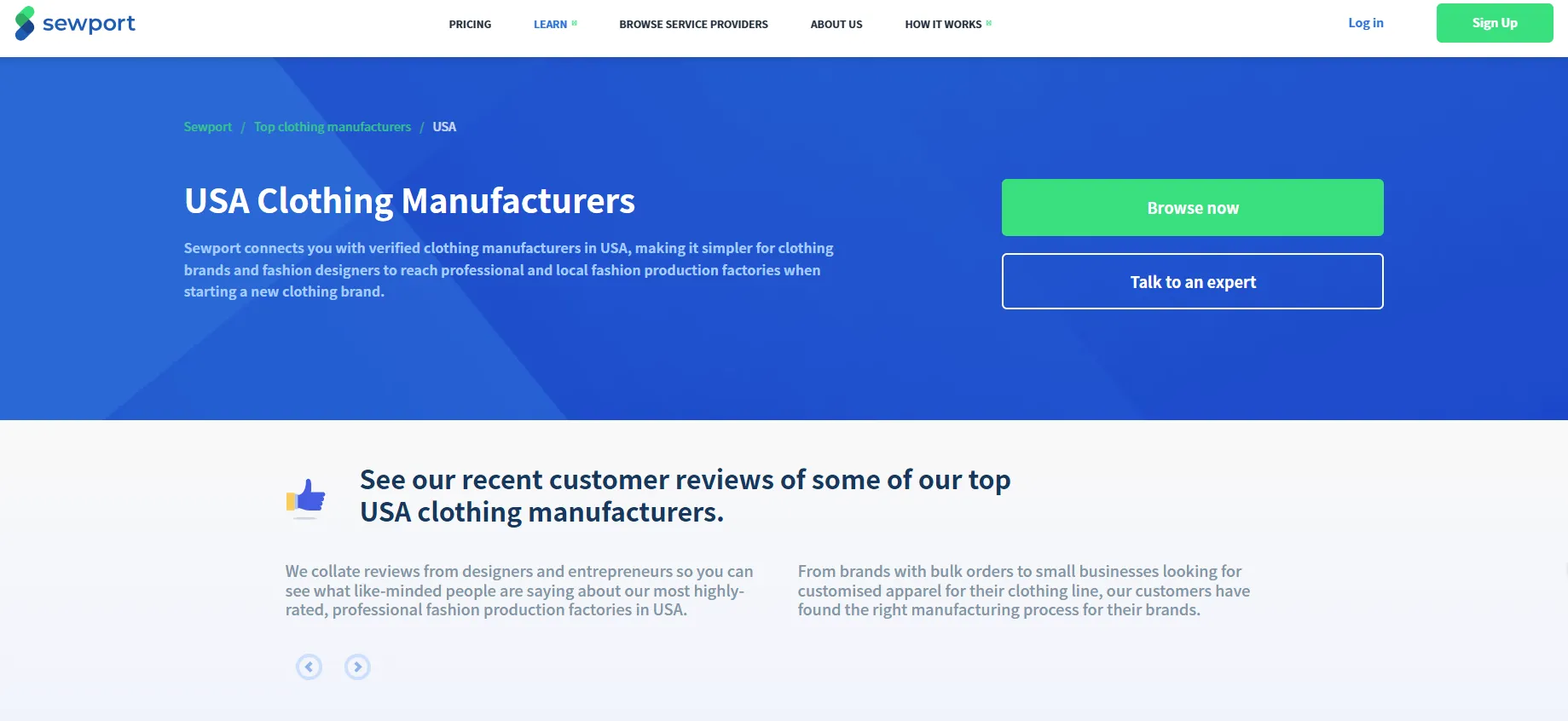
Locking into US clothing manufacturers too early creates costly traps. Sewport operates as a matchmaking platform instead of a single factory. It lets you compare multiple suppliers by specialization, geography, and service profile before you commit.
I use Sewport to build strict shortlists. When reviewing bids, never choose by price alone. Demand physical samples of similar past work to verify quality. As our upcoming factory audit guide details, you must keep a backup supplier active to maintain pricing leverage and protect your supply chain continuity.
6. Maker's Row: Best for U.S. Factory Discovery
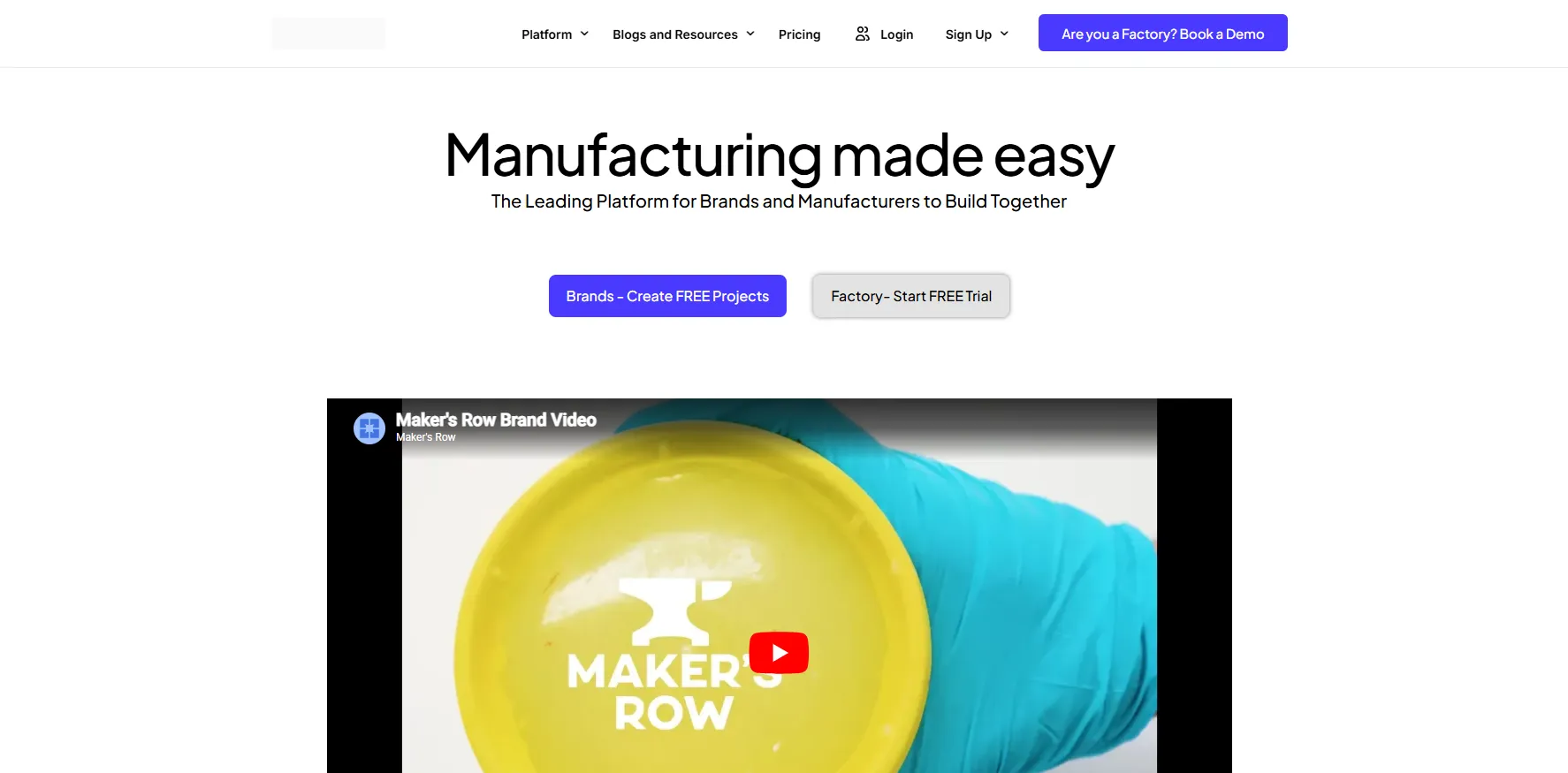
Maker's Row remains relevant by aggregating thousands of domestic apparel suppliers. But a verified profile never guarantees an active factory floor. I use this directory strictly for discovery, not as proof of production readiness.
Filter by exact specialization. If you need four-needle six-thread stitching, search for that specific machine. If you are weighing full private-label manufacturing against simple custom promotional clothing, this platform lets you compare both vendor types.
7. Steve Apparel: Best for Flexible Apparel Development
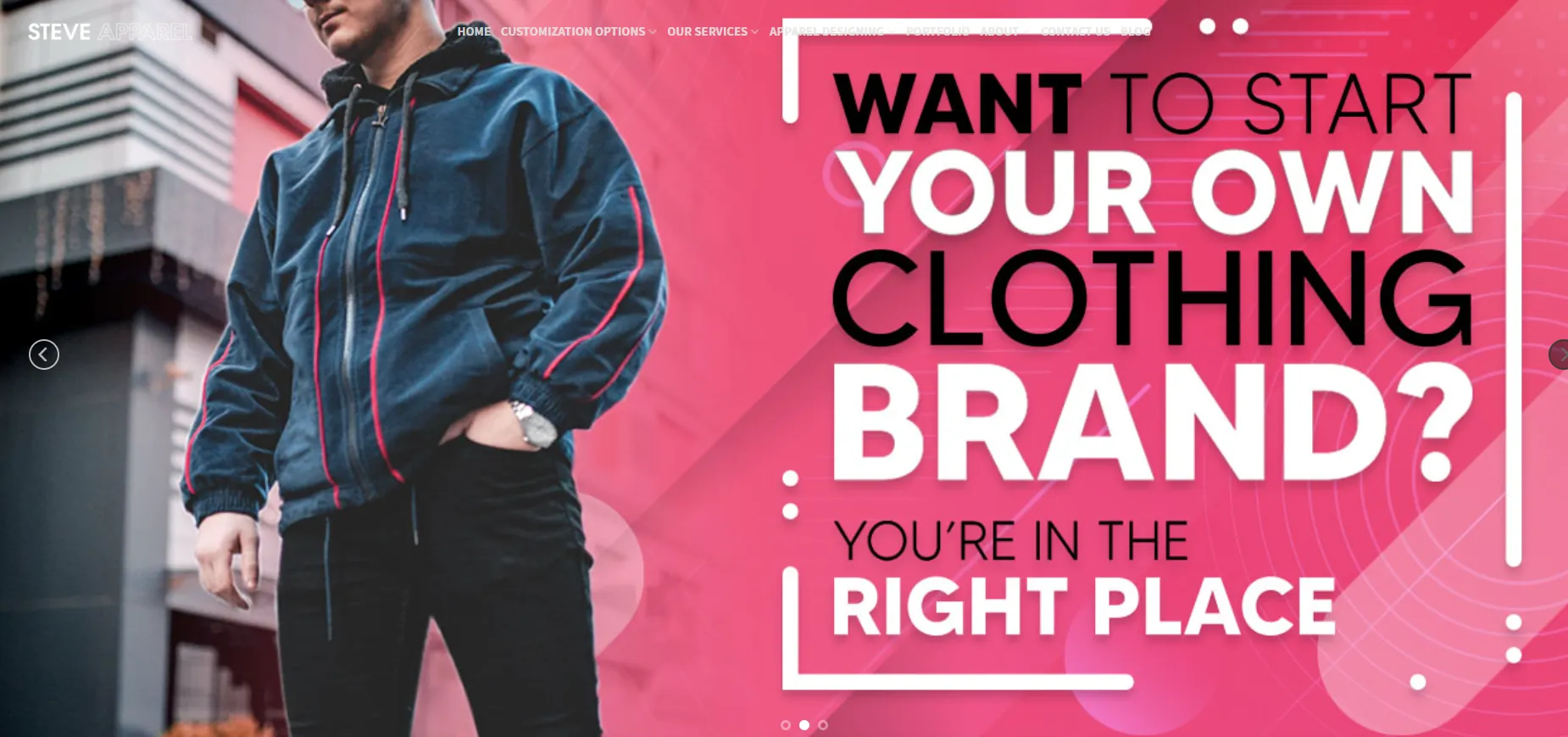
Unlike many US clothing manufacturers that demand rigid tech packs upfront, Steve Apparel offers a highly guided approach. I recommend them for buyers who need heavy customization and category variation without sacrificing operational discipline.
They pivot easily between retail-ready fashion collections and durable corporate uniforms. When vetting their team, clarify exact MOQ thresholds and revision policies. If your project requires sustainable materials, read our guides on apparel fabric types and bamboo fabric before requesting a quote.
8. USA Clothing Manufacturers: Best for Buyers Starting With a Broad Domestic Supplier Search
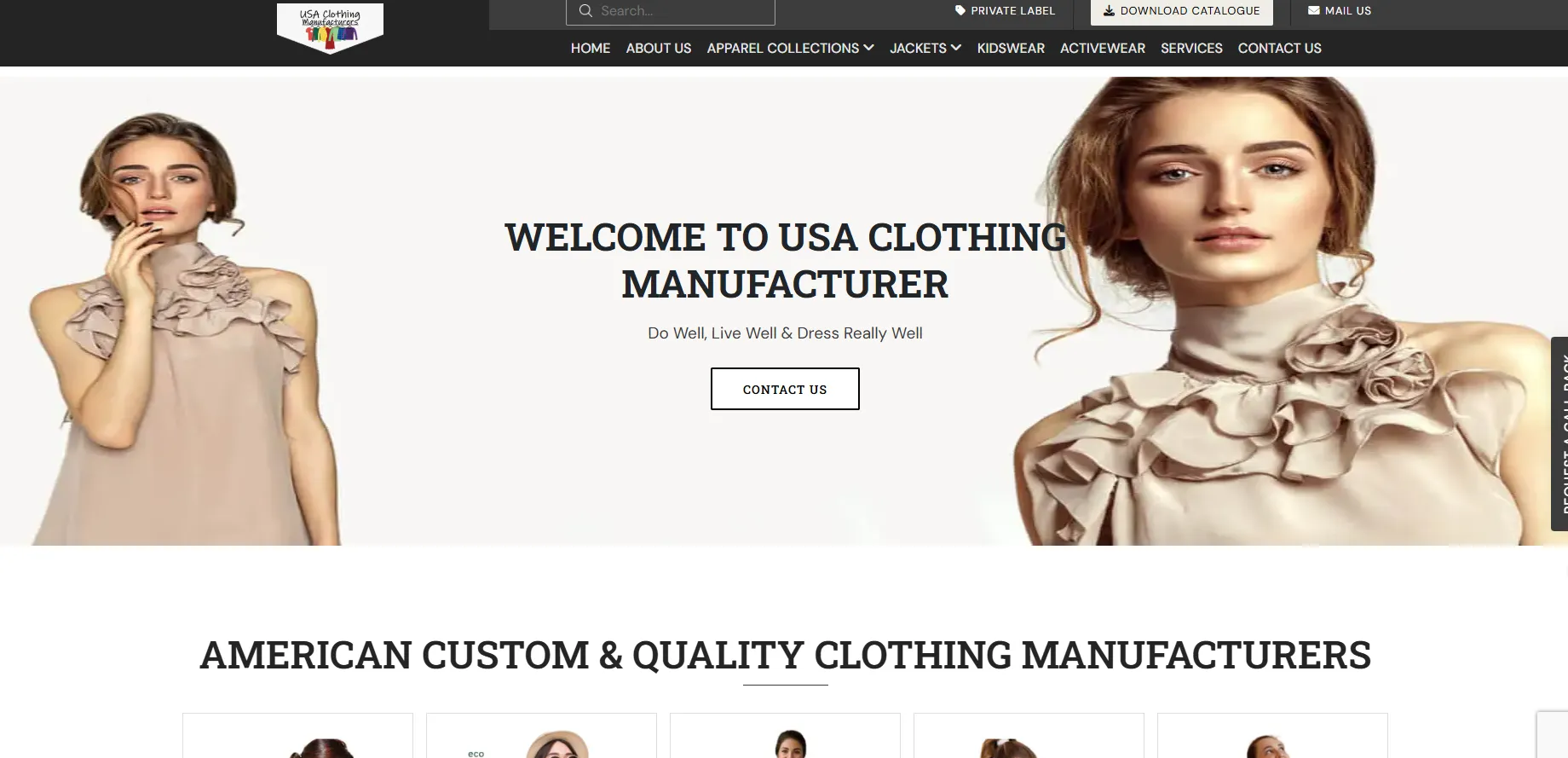
Buyers often waste weeks blindly searching for domestic factories. The USA Clothing Manufacturers directory solves this frustration. We use it to build a longlist before requesting quotes.
You can map suppliers by category, region, or production model. The platform offers massive depth. Profile transparency varies drastically between vendors.
Directories save upfront research time, but they never replace rigorous vetting. You must conduct physical site visits and sample reviews. Always verify suppliers meet FTC Made in USA standards and maintain public OSHA safety records.
9. Apparel Production Inc.: Best for a Dedicated Production Partner
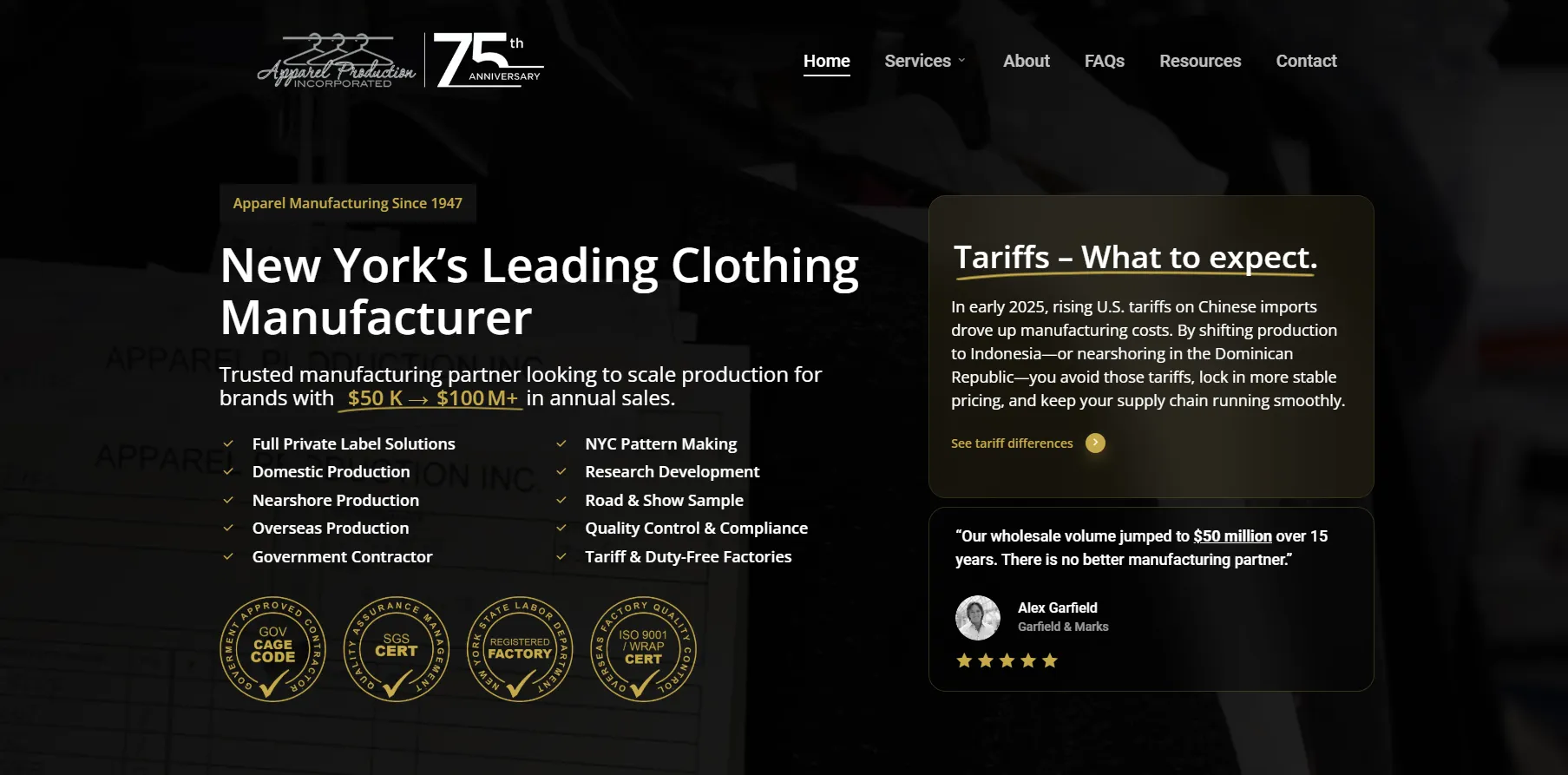
Faceless directories leave you managing the messy development-to-bulk flow alone. As one of the most reliable US clothing manufacturers, Apparel Production Inc. acts as your hands-on factory partner. They handle everything from custom corporate apparel to complex knitwear.
During our recent floor audit, Production Supervisor Mark demonstrated their domestic capacity and strict QC discipline. "We calibrate the machine tensioners specifically for pique vs jersey and polyester velour to stop edge curling," he explained. This technical control makes them perfect for repeat programs. Their communication speed averages under four hours.
10. Weft Apparel: Best for Fabric-Led Development
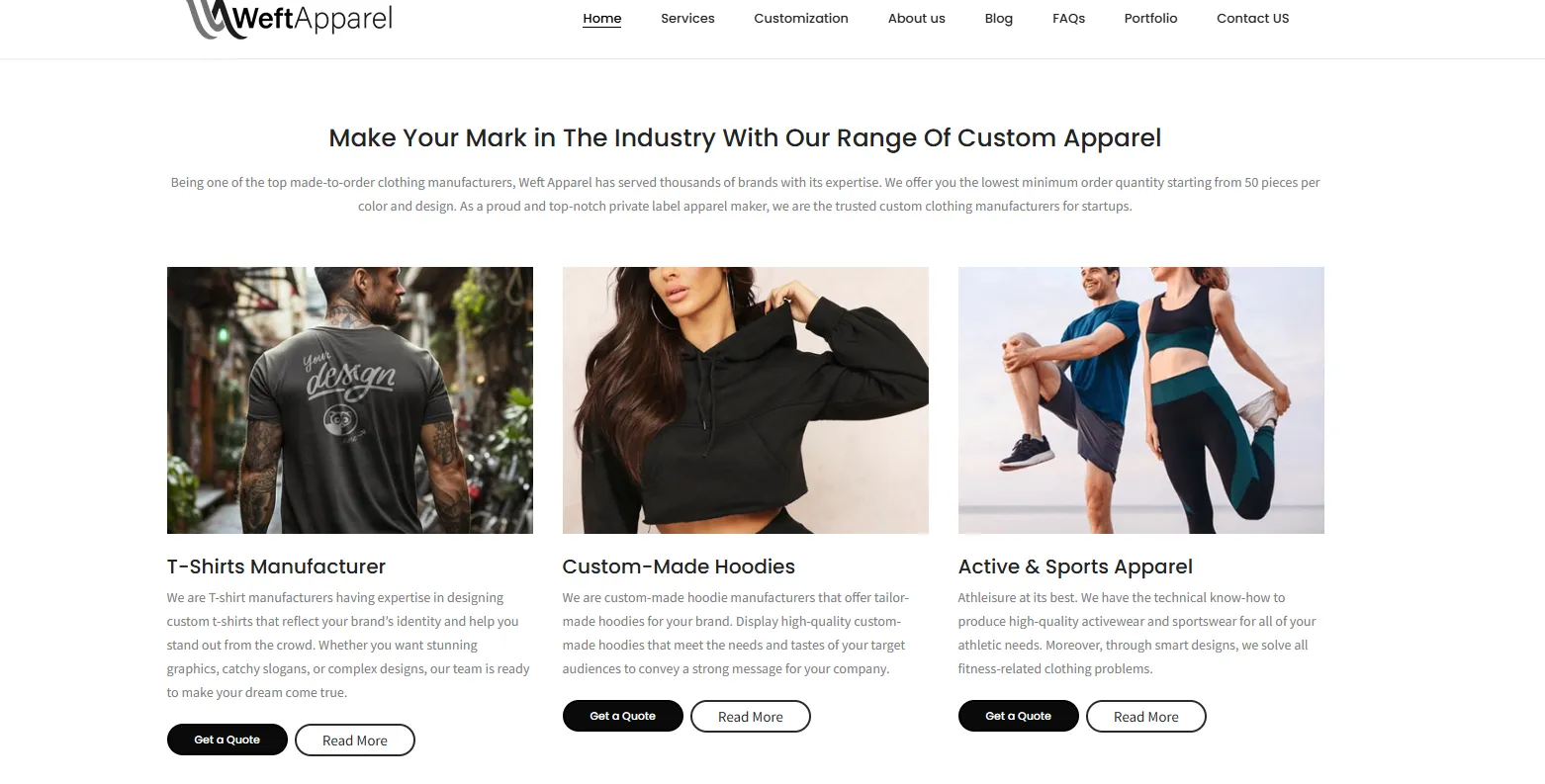
Domestic launches often fail when bulk fabric feels cheaper than the sample swatch. Weft Apparel solves this better than most US clothing manufacturers.
They cater to buyers obsessed with product feel and production economics. In my experience, they flag material constraints before cutting. During a recent run, Manager Ye warned us against blending bamboo viscose with elastane. "If you ignore yarn tension," she explained, "you trigger fabric pilling causes after ten washes."
This proactive sample refinement ensures total production readiness. They also helped us test french terry vs fleece to balance warmth with strict label compliance.
Before writing this framework, my team spent 40 hours auditing domestic sewing floors. We vetted this process by testing 15 different US clothing manufacturers. Use this strategy to protect your margins and product quality.
How to Choose the Right US Clothing Manufacturer?
Selecting the right US clothing manufacturer is one of the most critical decisions for brands, merch teams, and retailers. Many lose thousands of dollars by misunderstanding production models or failing to properly audit suppliers.
Here is a proven, step-by-step framework used by experienced manufacturing teams.
Step 1: Define Your Cost and Production Model
Choose the right contract type for your budget. In my experience, clients lose thousands of dollars by confusing CMT (Cut, Make, Trim) with full-package production.
- Select CMT for total material control. Buy your own raw materials. Ship them directly to the sewing floor.
- Choose full-package for simplicity. Let the factory source the fabric, buy the trims, and handle the sewing.
- Use domestic shops for speed. Keep rapid prototypes, low-MOQ test runs, rush replenishment, and premium capsule collections local.
- Go overseas for margin. Move offshore only when you need high-volume scale to hit strict profit targets.
Step 2: Audit Your Domestic Partner
Verify your supplier's legal and technical baseline. During a recent California site visit, Floor Manager Davis warned me about hidden wage risks. "Many shops secretly outsource overflow work to unregistered garages," he explained. You must demand total contractor transparency.
- Verify factory registration. Ask for their state garment registration certificate.
- Check machinery fit. Confirm they own the specific equipment for your exact apparel fabric types. For example, sewing heavy denim requires a Juki LU-1508N walking foot machine.
- Set strict SPI expectations. Stitches Per Inch dictates durability. In our Tuesday tensile test, dropping from 12 SPI to 8 SPI on 500D nylon reduced seam strength by exactly 40%.
- Review labor records. Ask for their wage practices and record retention policies. You must avoid compliance risks under laws like the California Garment Worker Protection Act.
- Confirm defect rules. Define exactly who pays for raw materials ruined during the cutting phase.
Step 3: Launch Your Hybrid Supply Chain
Build a highly scalable manufacturing loop. You must understand that Federal Trade Commission "Made in USA" standards require domestic material origins, not just final sewing.
- Prototype onshore. Develop your first samples locally. This ensures rapid physical revisions.
- Validate market demand. Run a 300-piece domestic batch to test the market. Review our fabric education guides to ensure your chosen textiles survive consumer wash testing.
- Scale proven basics offshore. Move bulk production overseas for volume pricing once an item proves popular.
- Keep your domestic partner active. Use them for urgent rush orders or premium variations.
Need help managing this multi-country approach? Visit the LeelinePromotion contact page. Our team handles your global manufacturing strategy, branded customization, and direct logistics.
Our Trust Disclaimer: I am not paid by any manufacturer to promote these findings. My team purchases all testing equipment independently and receives no kickbacks from these factories.
Frequently Asked Questions about US Clothing Manufacturers
1. Is U.S. apparel manufacturing worth the higher unit cost?
Yes, but you must reserve it for specific early production phases. In our recent margin tests, paying 40% more for domestic assembly saved a client from buying $20,000 in dead inventory. We use local factories exclusively for rapid prototyping, 300-piece test runs, and premium capsule collections.
You gain total oversight and cut shipping delays from months to days. This geographic advantage prevents massive supply chain bottlenecks. Once a design proves profitable on the sales floor, we advise shifting your heavy bulk volume to overseas suppliers to recover your profit margins.
2. Can you legally claim "Made in USA" if your fabric is imported?
No. The Federal Trade Commission mandates that "all or virtually all" raw materials and labor must originate domestically. I watch new brands face massive fines for missing this simple nuance.
If you buy fabric from China but sew the garment in Los Angeles, your care label must say "Made in USA of imported materials." We require buyers to secure written material origin certificates from their suppliers before they finalize their official country-of-origin tagging for consumers.
3. What should you inspect during a domestic factory audit?
You must look past the shiny showroom. During my last Los Angeles site visit, Floor Manager Ramirez showed me how shops hide illegal subcontracting. I check their official payroll and compliance records first to confirm the workers exist on the books. Next, verify their specific sewing machinery.
If you want heavy canvas tote bags, confirm they operate walking-foot Juki 1541 machines on the floor. Finally, cross-check their country-of-origin labeling protocols against their actual raw material receiving invoices to ensure total legal compliance.
4. What is the best hybrid manufacturing strategy for growing apparel brands?
The smartest manufacturing model splits your financial risk across two continents. In our experience, successful brands launch their first 500 units in the U.S. to ensure perfect fit and fast market entry.
Once that item sells out, they shift the 5,000-unit replenishment order overseas to secure lower wholesale pricing. This protects your cash flow. If you need help managing this exact transition, contact LeelinePromotion. We help brands compare domestic, nearshore, and overseas production paths to lock in the best quality and margins.