

Manufacturing commercial linens requires a contract-ready partner rather than a retail shopping list. Many buyers mistake local distributors for actual mills, but a Toronto address does not guarantee domestic production according to Competition Bureau guidelines.
I analyzed the leading custom towel manufacturersin Canada to prevent these costly sourcing errors. This shortlist prioritizes suppliers with published bulk capacity, custom embroidery options, and clear origin transparency. Repeatable quality and accurate GSM specs matter more than unverified imports.
Disclosure: LeelinePromotion is our company. We are a one-stop promotional manufacturing partner, and we are not on this list — the shortlist covers Canadian towel suppliers and makers, not our own service. Each profile is compiled from publicly available company information, so treat it as a starting point for due diligence rather than an endorsement. Any link to our contact page is our own service: if consolidating sourcing, QC, and door-to-door delivery under one account beats managing several suppliers, we can help.
Comparison of the 8 Best Towel Suppliers & Manufacturers in Canada
| Company | Type | Est. | Certifications | Primary B2B focus | Typical buyer profile | Geographic focus |
|---|---|---|---|---|---|---|
| 1. Towels Direct | Wholesale supplier | Not published | Not published | Supplies large-volume terry programs with assortments tuned for industrial wash performance | Hotels, resorts, fitness chains, salons, remote camps | North America-wide distribution for hospitality |
| 2. Canadian Linen | Linen rental & service | Not published | Not published | Integrates towel supply into full-service rental and managed linen programs | Multi-site hotels, healthcare groups, industrial clients | Canada-wide branch network |
| 3. Eden Textile | Textile manufacturer & supplier | 1946 | Not published | Combines design input with contract-grade textile manufacturing for hospitality and healthcare | Hotels, senior living, camps, healthcare operators | Edmonton and Toronto warehousing, Canada-wide |
| 4. Superior Linen & Towels | Distributor & laundry service | Not published | Not published | Bundles towel supply with regional commercial laundry and care services | Regional hotels, restaurants, spas, gyms | GTA and Niagara-focused operations |
| 5. Direct Textile Store | Wholesale distributor (US) | Not published | Not published | Online wholesale shop offering broad towel assortments with transparent case pricing | Boutique hotels, gyms, salons, independent resellers | Ships across North America |
| 6. Towel+ | Private-label supplier | Not published | Not published | Orients around private-label basics with branding components and packaging options | Retailers, e‑commerce brands, promo buyers | Canada-first brand with import capabilities |
| 7. Pomp & Sass | Brand (production in Türkiye) | Not published | Not published | Design-led Turkish towel brand focused on ethically made, visually distinctive pieces | Spas, boutiques, corporate gift buyers | Canadian brand with production in Türkiye |
| 8. Slowtide Canada | Brand (US-based) | 2015 | Not published | Art-forward beach and pool towels aligned with lifestyle and collaboration projects | Resorts, lifestyle retailers, co-branded campaigns | Origin brand in US, Canadian-facing channels |
Est. and Certifications list only what each company publishes publicly. Most mid-market suppliers publish neither, so "Not published" means the documents have to be requested directly — see Phase 2 for the exact test reports and audit evidence to ask for.
How We Vetted These Suppliers?
Each company was assessed on publicly available information: how the business goes to market (manufacturing, converting, distribution, rental, or branded retail), the B2B categories published, and whether certifications, capacity, and ordering terms are stated.
An important boundary: we have not audited these companies in person, and no one paid for a placement. "Type" reflects how each business presents itself publicly — a Canadian address does not make a distributor a mill, and a brand whose production sits overseas is labelled as such. Numbering reflects published B2B scope and fit for hospitality buyers rather than quality.
This shortlist applies the same AQL 2.5/4.0 inspection criteria our team uses across 200+ factory audits, adapted for a market where the most common risk is a distributor presenting itself as a domestic mill. Roy Huang writes our sourcing guides after 14+ years in promotional merchandise and apparel procurement.
Top 8 Towel Suppliers & Manufacturers in Canada
1. Towels Direct — Best for Fast-Turn Bulk Hospitality Towels (White Terry Programs)
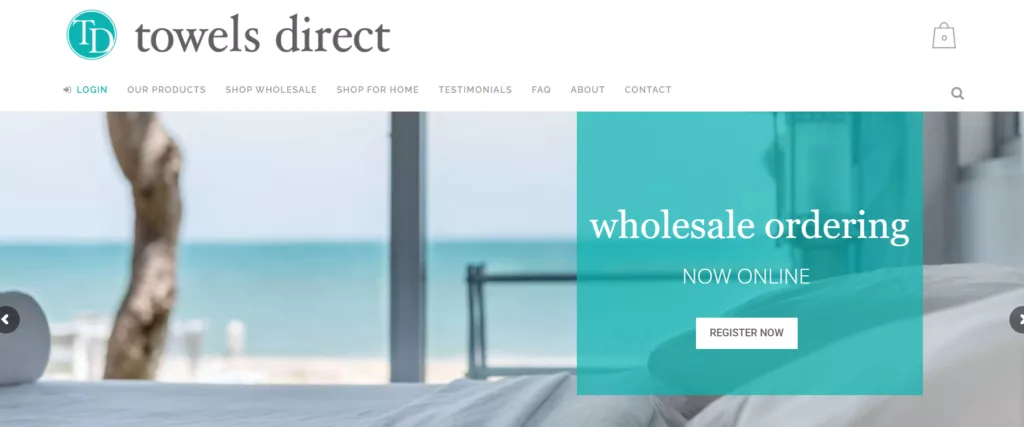
Hotels often struggle with replenishment stock that looks dingy next to original batches. Towels Direct solves this by ensuring consistent shade across core bath and hand towel reorders.
To guarantee commercial durability, use this spec template:
- Weight: 450–650 GSM. This range balances drying speed with luxury.
- Construction: Ring-spun cotton with double-stitched hems. This withstands industrial laundering better than open-end fibers.
- Branding: Use embroidery for smaller orders. Woven jacquard bands typically require higher Minimum Order Quantities.
Supplier validation checklist:
- Logistics: Confirm if the price is FOB (factory) or DDP (delivered).
- QC: Demand current AATCC colorfastness and shrinkage test results.
- Traceability: Require a written origin declaration for each SKU.
2. Canadian Linen — Best for Managed Linen Programs
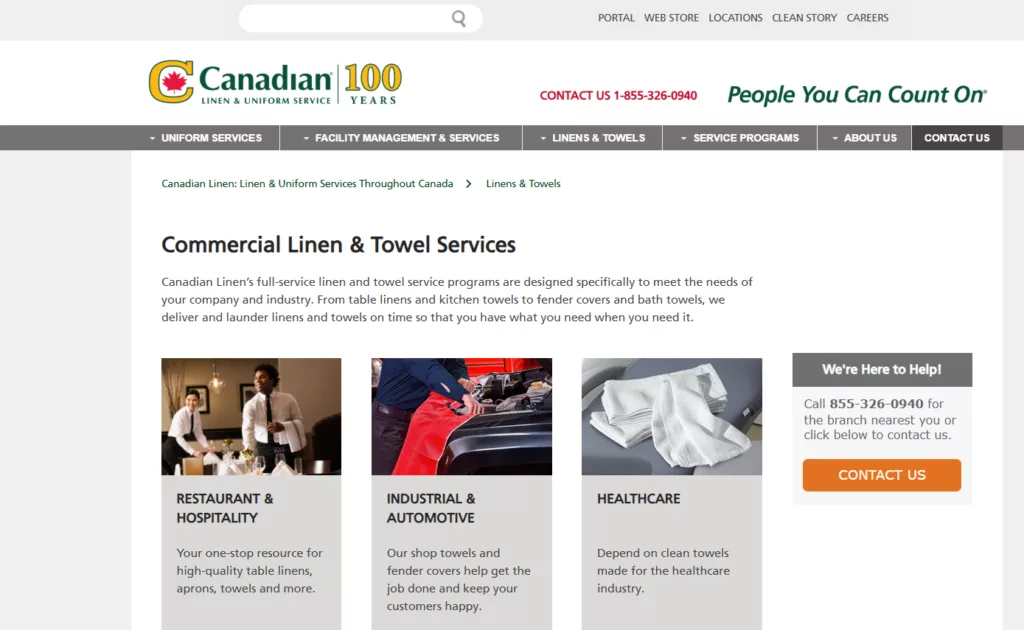
Hotels bleed budget on replacement costs, not initial orders. If commercial laundry destroys your inventory, prioritize lifecycle cost over branding. Canadian Linen is best for high-volume properties needing strict replenishment cadences.
Focus procurement on durability:
- Demand specs: Request ASTM-standard shrinkage data and pile retention ratings.
- Select the weave: Ring-spun offers softness; open-end loops provide better cost efficiency.
- Define density: Specify GSM (grams per square meter) to ensure consistency across batches.
Contract Essentials Establish par levels and replenishment SLAs before signing. Guaranteed emergency stock for occupancy spikes is the point. Always demand SKU-level proofs to verify domestic versus imported origins.
🚀 Actionable Insight: Calculate linen loss rate annually. In high-loss properties, switch to open-end loop towels and renegotiate the loss-and-damage clause in the rental contract.
3. Eden Textile — Best for Custom Manufacturing Conversations
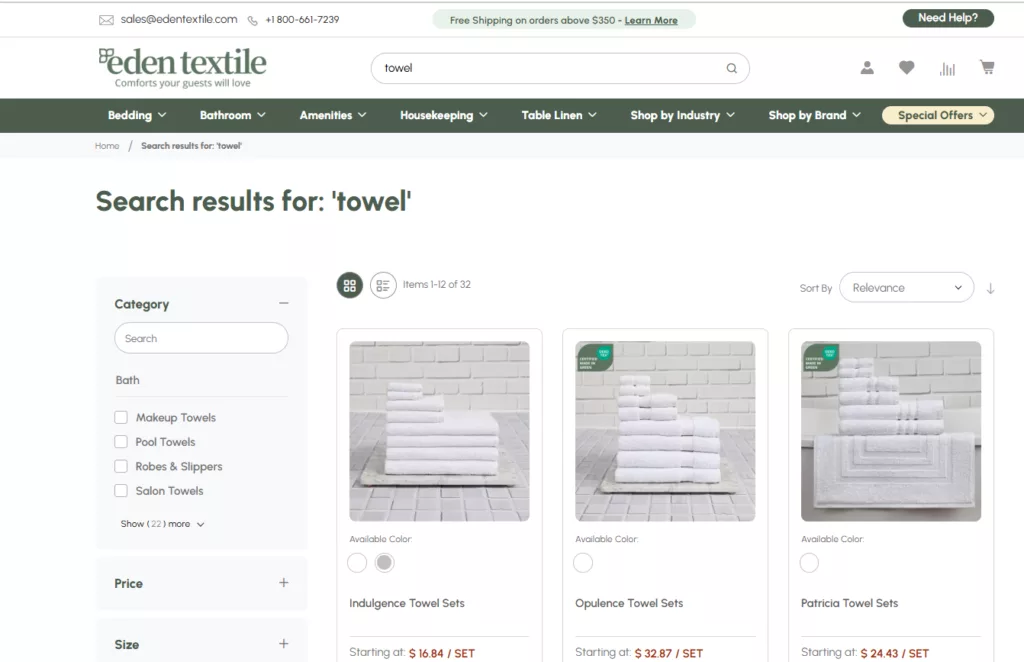
Eden Textile suits brands designing differentiated towels rather than printing on generic blanks. Success here requires a structured OEM brief to get accurate quotes. Start with a detailed tech pack that specifies target hand-feel, absorbency rates, and exact GSM (grams per square meter).
Fiber composition — organic cotton or bamboo viscose blends — also governs shrinkage and durability.
Move beyond simple embroidery by requesting jacquard woven logo bands or yarn-dyed patterns for a retail-ready look. To prevent production disasters, enforce a strict sampling protocol. Approve lab dips for Pantone color matching first, then verify a physical Pre-Production Sample (PPS) for weight and weave texture. Do not sign the purchase order until the PPS meets the agreed standards.
🚀 Actionable Insight: Always negotiate re-order minimums during the initial contract. Securing lower MOQs for continuity orders prevents overstocking just to restock a sold-out SKU.
4. Superior Linen & Towels — Best for Hospitality Distributors Needing Breadth (Bath + Pool + Spa)
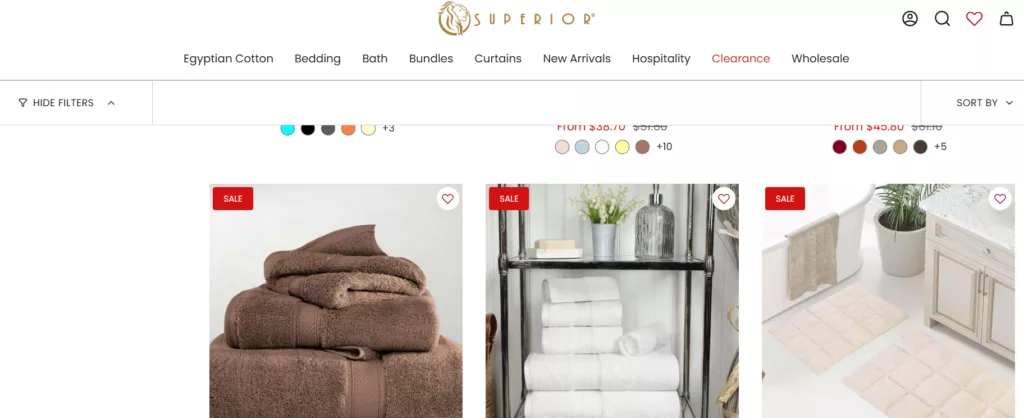
This distributor suits hotels looking to consolidate guestroom, pool, and spa inventories into one account.
To make consolidation work, standardize technical specs. Set distinct GSM thresholds (heavier for pools, lighter for guestrooms) and require bleach-resistant dyes for chlorine exposure. Strict shade control also keeps spa whites matching room inventory.
Operational checks:
- Availability: Broad catalogs fail without stock. Verify fill-rate history for core SKUs and multi-location shipping capabilities.
- Origin: Request labeling proofs to validate “Made in Canada” claims versus imported stock.
- Risk: Enforce a written substitution policy. Explicitly ban "silent spec changes" so vendors cannot swap 600 GSM towels for lighter alternatives during shortages.
5. Direct Textile Store — Best for Mid-Market Bulk Orders
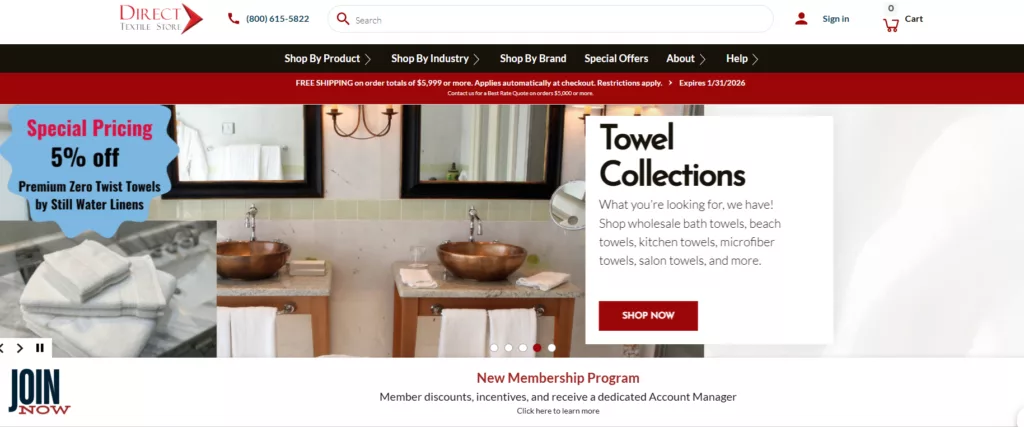
Direct Textile Store fits boutique hotels, gyms, and salons needing bulk stock without enterprise contracts. Transparent pricing bypasses sales delays, but technical specs must be validated in-house.
Check the GSM range and fiber type: select ring-spun for guest comfort or open-end yarns for high-traffic durability. Confirm the construction—single-loop terry absorbs best, while velour offers a smoother surface for branding.
Clarify customization constraints early. Ask if they support embroidery at mid-range MOQs and which file formats and stitch counts are required. Capture critical commercial data: case pack sizes, reorder lead times, and volume price breaks.
🚀 Actionable Insight: Never rely on a digital image. Order a physical sample case and wash it five times. Reject the supplier if shrinkage exceeds standard textile tolerances or the hems fray.
6. Towel+ — Best for Private Label Basics (Core Colors, Repeatable Runs)
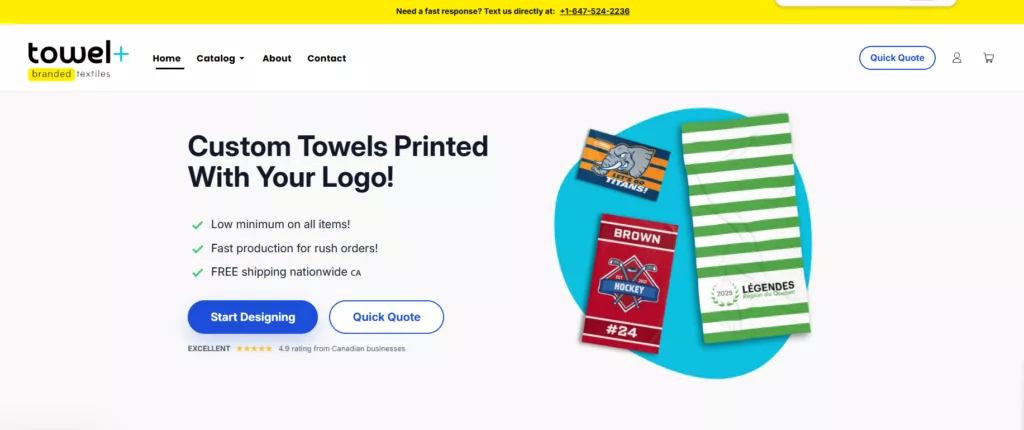
Private labeling requires more than just soft fabric. Retail basics are essential: sewn-in labels, custom hang tags, and valid GS1 GTIN barcodes. Towel+ fits retail operators who want these without managing a complex custom manufacturing relationship.
To prevent returns, define specs in writing. Set a strict GSM tolerance (aim for ±3–5% of ASTM mass standards) and distinct measurement limits. The contract should grant the right to reject any shipment that drifts from the master sample.
Be careful with logo placement. While woven jacquard branding looks premium, it often spikes the Minimum Order Quantity (MOQ). Stick to embroidery or printed care labels for a first run to keep deposit costs manageable.
7. Pomp & Sass — Best for Boutique Branding (Design-Led Towels with Premium Feel)
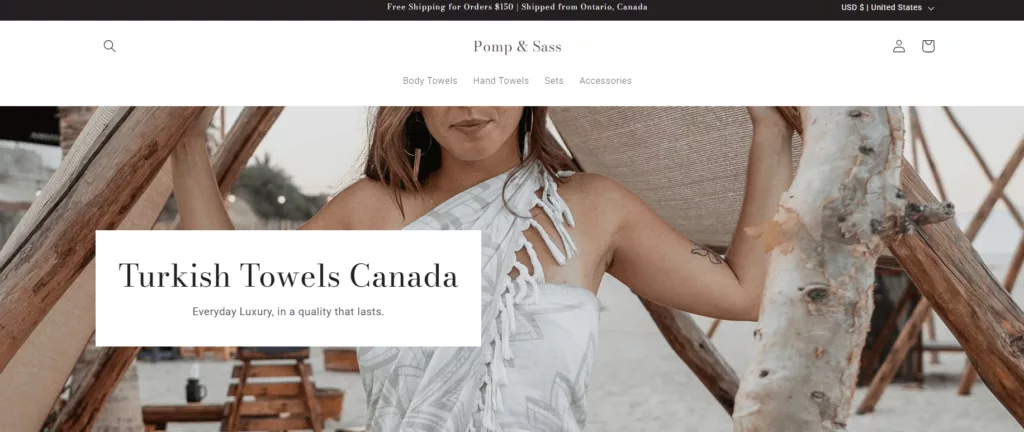
Pomp & Sass serves spas and boutiques that value design and guest experience over the lowest price. This option fits brands requiring strict visual consistency.
For durability, specify combed cotton. This process removes short fibers to reduce pilling and shedding better than standard blends. Define the GSM target and finish: velour feels softer, while terry loops absorb more water.
Spec control:
- Color: Require physical lab dips. Pantone colors look different on fabric than on screens.
- Logo: Choose between embroidery and woven bands. Embroidery looks premium but can feel stiff; woven bands are smoother and often last longer.
🚀 Actionable Insight: Map the timeline before committing. Ask whether products are made domestically or imported per order; imported custom runs often need 60–90 days, so plan restocks months in advance.
8. Slowtide Canada — Best for Branded Beach/Pool Towels
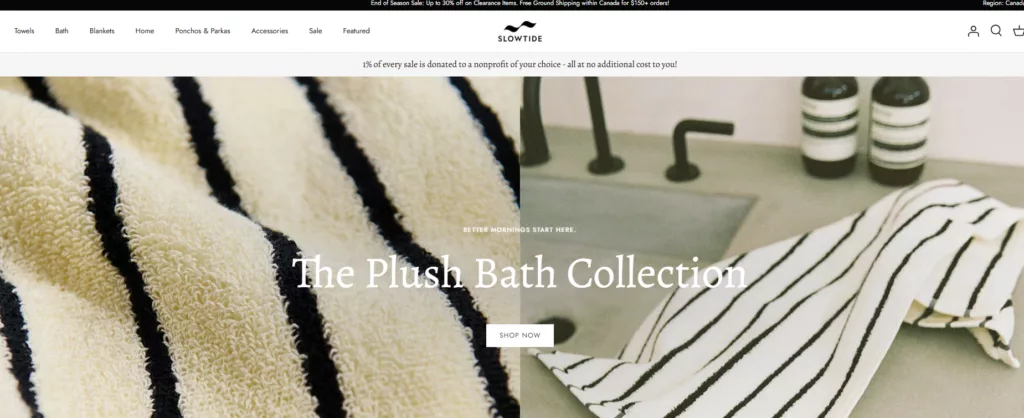
Slowtide turns functional gear into high-visibility assets for resorts and retail collaborations. Standard white towels vanish here; print clarity is non-negotiable.
For complex artwork, choose a velour face. The sheared loops create a flat canvas for sharp details. Be aware this changes the hand-feel; velour pushes water away initially rather than soaking it up like terry cloth.
Chlorine destroys surface prints. Demand fiber-reactive dyes that bond with the fiber core. This prevents fading from UV exposure and harsh pool chemicals.
- Weight: Target 400–500 GSM to balance plushness with realistic drying times.
- Origin: Art-forward towels are often imported. Request written Country of Origin statements where "Buy Canadian" mandates apply.
The "Copy-Paste" Canadian Towel Buying Guide
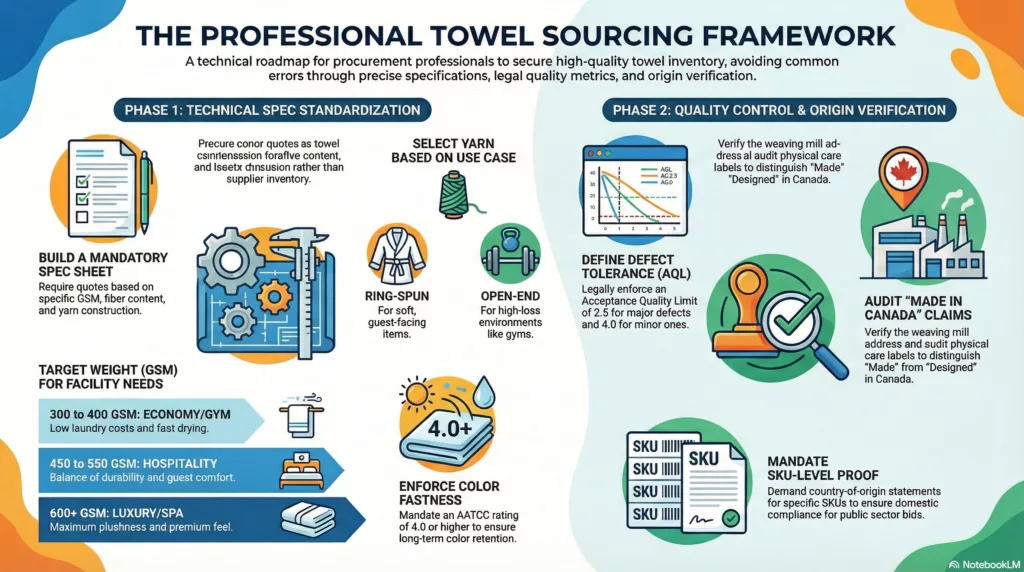
Vague requests cause manufacturing errors. Ask for "high quality hotel towels" and the reply is whatever stock needs offloading.
Use this technical framework to get accurate quotes. Copy these sections directly into a Request for Quotation (RFQ).
Phase 1: The Spec Sheet Template
Paste this table into supplier emails. Fill in the brackets with specific needs. This forces the supplier to quote on stated requirements rather than generic inventory.
Read our guide on types of towel material to understand fiber trade-offs before choosing.
- Product: [e.g., Bath Towel / Hand Towel / Pool Towel]
- Dimensions: [e.g., 27" x 54" for standard bath]
- Target Weight (GSM):
- 300 to 400 GSM (Economy/Gym): Choose this for low laundry costs and quick drying.
- 450 to 550 GSM (Hospitality): Choose this for the best balance of durability and guest comfort.
- 600+ GSM (Luxury/Spa): Choose this for maximum plushness. Note that this increases drying time and energy costs.
- Fiber Content: [e.g., 100% Cotton, 86/14 Poly-Cotton Blend, or Bamboo Viscose Blend]
- Yarn Type:
- Ring-Spun: Select for guest-facing items.
- Open-End: Select for high-loss environments like gyms.
- Construction: [e.g., Cotton Terry loops for absorption or Polyester Velour face for printing]
- Finish: [e.g., Dobby Border / Double-Stitched Hem]
- Color Fastness: Must meet AATCC rating 4.0 or higher.
Phase 2: Defined Quality Standards
Define quality metrics legally. Add this specific text to the terms sheet to prevent disputes later.
- Test Reports: "Supplier must provide valid third-party test reports. We require adherence to ISO 6330 for shrinkage and AATCC 61 for colorfastness to laundering."
- Defect Tolerance: "We enforce an Acceptance Quality Limit (AQL) of 2.5 for major defects like holes or stains. We allow an AQL of 4.0 for minor defects like loose threads."
- Lot Traceability: "Each carton must possess a batch number linked to the production date."
Compare these specs against international options using our data on manufacturers in the UK or towel factories in China.
Phase 3: "Buy Canadian" Verification
"Made in Canada" is a legally protected claim. "Designed in Canada" is marketing language. If a project requires domestic manufacturing for public sector bids or ESG targets, the origin claims must be validated.
Follow these steps to vet a supplier against official Competition Bureau Canada guidelines.
- Check the Scope: Verify if the claim covers the entire company or just one product line. Many suppliers manufacture custom orders locally but import their stock programs.
- Request SKU-Level Proof: Demand a Country of Origin statement for the specific SKU being purchased.
- Identify the Mill: Ask for the address where the weaving occurs. If the supplier only cuts and sews imported fabric, the product may not qualify as fully domestic under certain trade rules.
- Audit the Label: Request a photo of the care label. The label must legally state the country of origin. Reject the bid if the quote says "Canada" but the label says "Imported."
Start Your Production We can handle this entire supply chain end to end. Contact us to work through these specs or source custom branded merchandise without the compliance risk.
Frequently Asked Questions about Towel Manufacturers in Canada
Q1. What GSM should we specify for hospitality vs. spa vs. quick-dry towels?
Match the band to the laundry first, then to guest expectations. The spec sheet above sets the three standard bands — quick-dry for gyms and pools, mid-weight for hotel bath towels, heavier for luxury spas — and notes the drying-energy trade-off at each level. The lightest band that still meets the comfort standard is usually the right call.
Q2. What is the difference between ring-spun and open-end cotton?
Ring-spun cotton consists of long fibers twisted tightly together. This creates a smoother surface, softer hand-feel, and greater durability for guest-facing inventory. Open-end cotton wraps shorter fibers together, which makes a coarser, lint-prone yarn that costs far less.
Procurement managers often reserve open-end specs for high-loss environments like budget motels or public locker rooms.
Q3. What is the most durable way to add a logo: embroidery, jacquard weave, or printing?
Jacquard weaving is the most durable method because the design is woven into the towel's structure using colored yarns.
The weave lasts the entire lifecycle of the product but requires higher Minimum Order Quantities (MOQs), often exceeding 500 units. Embroidery provides a premium look for stock items but can cause puckering if the base towel shrinks. Printing is the least durable; surface inks fade quickly, especially when exposed to chlorine in pools.
Q4. How do we verify a supplier’s “Made in Canada” claim for a specific SKU?
The permanent sew-in label is the deciding evidence: it must state the country of origin under the Textile Labelling Act, and “Imported” means the product is not domestic even when the supplier is Canadian. Phase 3 above sets out the full four-step audit, including how to confirm where the weaving actually happens.
Q5. What lead times and MOQs are typical for custom logo towels?
Timelines depend on the customization method. Stock towels with custom embroidery typically ship in 2–4 weeks with low MOQs (often 24–48 units). Custom jacquard weaves usually require 60–90 days for production and ocean freight, with MOQs starting at 500–1,000 units. Always request a written lead-time matrix so replenishment cycles align with production schedules.