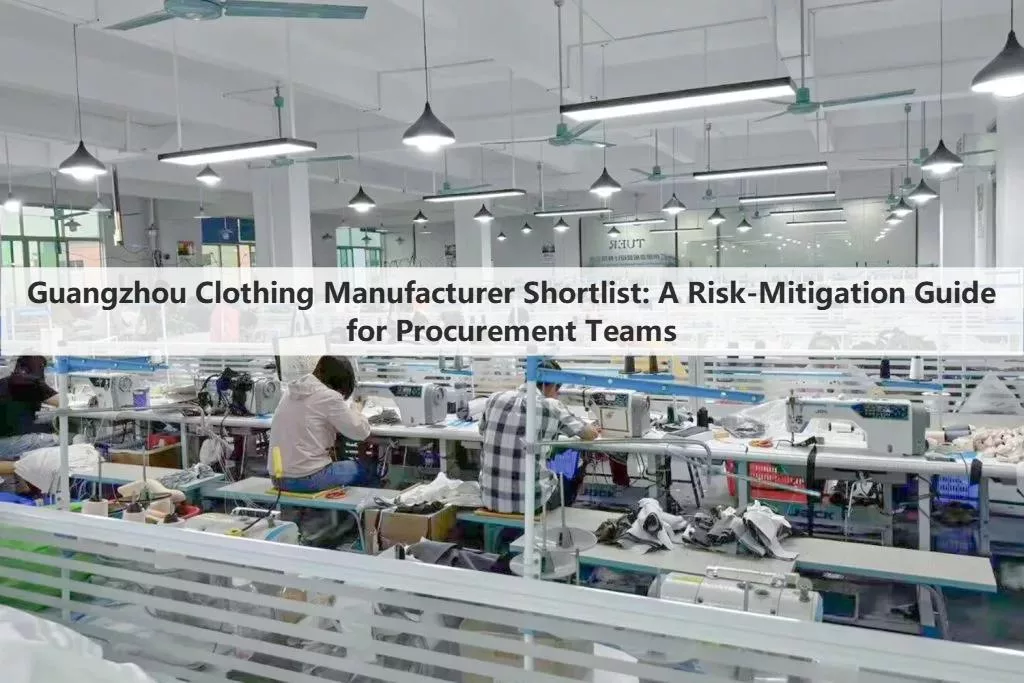

Finding a reliable Guangzhou** clothing manufacturer** often feels like a gamble. You balance high margins against costly failures like IP theft. We built this risk-mitigation shortlist for procurement teams. We evaluated factories strictly on OEM capabilities, QC posture, and compliance. We ignored vanity metrics like platform star ratings.
You will get the district-level manufacturing context and verification steps that other guides miss. If you need a managed factory match with direct oversight, see the contact section below.
Comparison of Guangzhou Clothing Manufacturer in a Table
| Manufacturer | Focus | Best For | Rating |
|---|---|---|---|
| 1. Guangzhou Compass Garment Factory | Basic OEM, clear specs | First bulk PO | ⭐️⭐️⭐️⭐️ |
| 2. Guangzhou Jintong Clothing Factory | Speed, Haizhu fabric access | Fast fashion / weekly drops | ⭐️⭐️⭐️⭐️ |
| 3. Jianggao Etai Garment Factory | Hardware, leather, trims | Jackets / streetwear | ⭐️⭐️⭐️⭐️ |
| 4. LangDi Clothing Factory | Stable basics, repeat fit | Tees / hoodies / sets | ⭐️⭐️⭐️⭐️⭐️ |
| 5. Guangzhou Tailoria Manufactory | Process discipline, documents | Complex tech-pack styles | ⭐️⭐️⭐️⭐️⭐️ |
| 6. Guangzhou PZF Garment Co., Ltd. | Inspector-friendly QC | Orders with 3rd‑party PSI | ⭐️⭐️⭐️⭐️⭐️ |
| 7. Guangzhou Nixiya Garment Co., Ltd. | Low MOQs, many styles | Micro-drops / testing | ⭐️⭐️⭐️⭐️ |
| 8. Guangzhou Miying Fashion Co., Ltd. | Finishing, presentation | Boutique dresses / tops | ⭐️⭐️⭐️⭐️ |
Top 8 Guangzhou Clothing Manufacturer
1. Guangzhou Compass Garment Factory
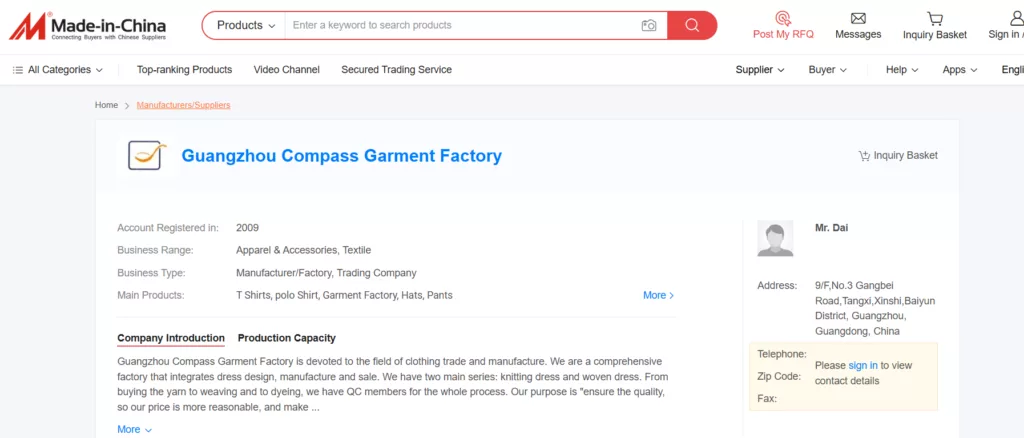
Best for: Founders moving from prototypes to their first bulk Purchase Order (PO).
Many factories claim they can make "anything" to get your business. Compass is different. They stick to a rigid OEM scope: cut-and-sew, labeling, and fabric manufacturing. This makes them the pragmatic choice if you need structured sampling and export readiness rather than endless design experiments.
Due Diligence Checklist Before you wire a deposit, you must verify their process control.
- Ask for proof: Request recent production videos and their defect/rework policy.
- Verify flow: Ask to see their Pre-Production (PP) sample approval path. If they can't document the steps from sample to bulk, walk away.
- Check compliance: Request their ISO 9001 certificate and any social audit reports (like BSCI). Always verify the issuing body details yourself.
We see startups lose money on vague quality terms. When negotiating here, propose an AQL 2.5 or 4.0 standard immediately. You must define "garment-critical" defects in writing. For example, if a medium shirt is 2cm wider than the spec sheet, is that a defect? If you don't define it, they will ship it.
2. Guangzhou City Haizhu District Jintong Clothing Factory
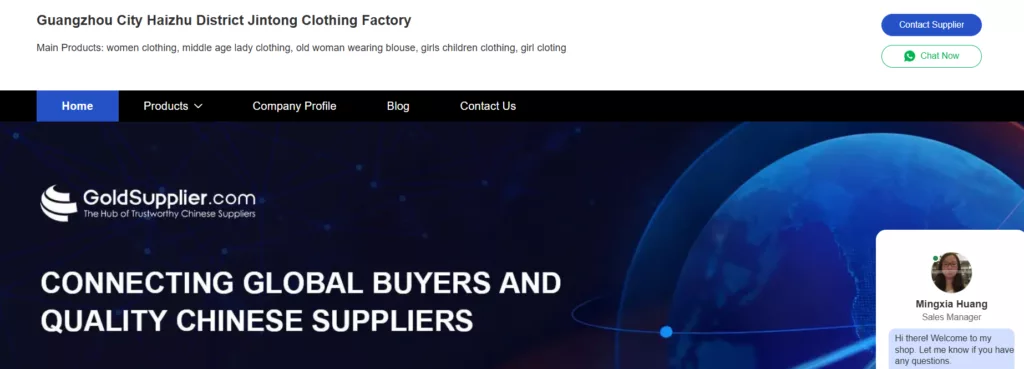
If your business relies on weekly drops or chasing micro-trends, speed beats price. Jintong sits in Haizhu. This is the heart of Guangzhou’s textile ecosystem. This location allows them to source fabrics from the neighboring Zhongda Market in hours rather than days. It prevents the common trap where fast samples turn into slow bulk production.
However, proximity doesn't guarantee versatility. You must verify if their machinery matches your specific fabric weight. Ask explicitly if they handle the specific woven or knit gauge you supply.
Due diligence (what to ask/verify):
- MOQ reality check: Low listed MOQs often apply only to in-stock "blanks." Clarify the minimums for true private-label cut-and-sew.
- Surcharge questions: Ask specifically about upcharges for small dye lots, custom hangtags, or branded zipper pulls.
- QC: Fast production breeds errors. Insist on a Pre-Production (PP) sample and a Top-of-Production (TOP) photo approval before the run.
Haizhu factories are fast, but we find speed often masks poor finishing. While they can stitch a sample in 24 hours, dye tolerances vary wildly in rush orders. Always secure a "limit sample" (a signed physical sample showing the lowest acceptable quality) before the machines start running.
3. Guangzhou Baiyun District Jianggao Etai Garment Factory
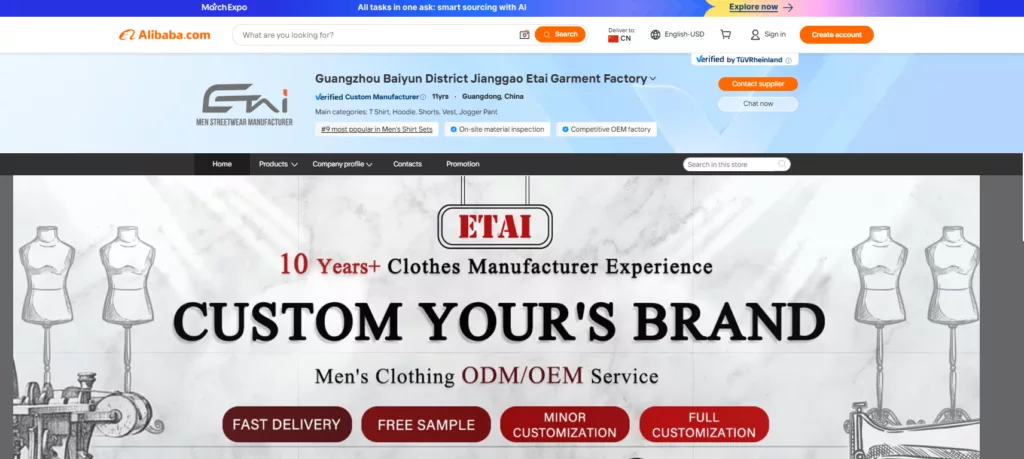
If your line requires heavy hardware, leather patches, or complex trims, geography matters. Located in Baiyun District, Guangzhou’s leather and accessory cluster, Jianggao Etai has immediate access to trim suppliers that other factories wait days for.
They are a strong choice for jackets, structured streetwear, and mixed-material pieces. While they handle both OEM and ODM, we recommend clarifying exactly which finishing steps (like metal riveting) happen in-house to avoid quality control gaps.
Due diligence checklist:
- Material Compliance: Demand OEKO-TEX Standard 100 certificates for fabrics. If shipping to the US or EU, request recent test reports for restricted substances like lead in metal trims.
- Hardware MOQs: Custom buttons often have higher minimums than the garments themselves. Confirm these limits before designing.
- The "Golden Sample": Prevent margin-killing surprises. Insert a contract clause that defines your signed pre-production sample as the "golden sample." This stops factories from swapping zipper quality during bulk production.
4. LangDi Clothing Factory
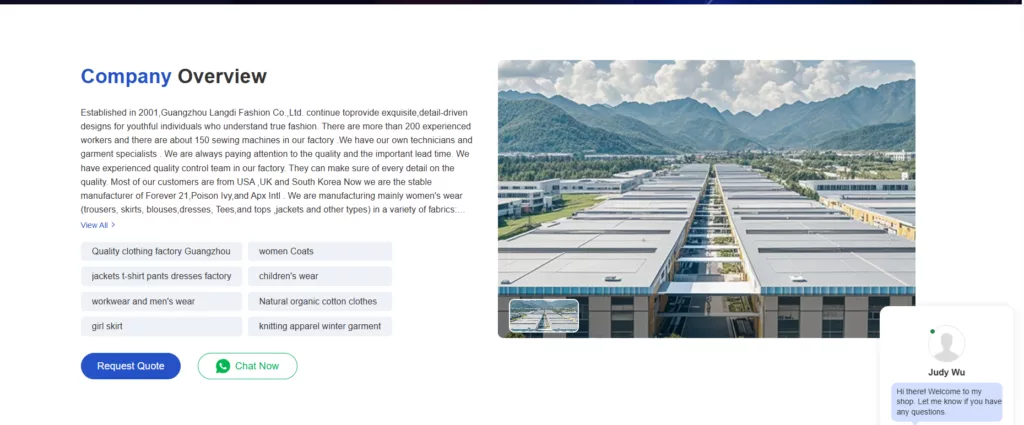
Scaling basics on Amazon or Shopify becomes a nightmare when customers return items because "the fit changed." LangDi solves this specific headache. They aren't for experimental fashion. They are for sellers who need the 5,000th t-shirt to measure exactly like the first.
Here, quality means repeatability. LangDi excels at locking in fabric weight (GSM) and stabilizing shrinkage rates across production runs for hoodies, tees, and sets.
What to verify:
- Fabric Stability: Require wash and shrink testing reports on every batch. Ask how they control shading between dye lots so your "navy blue" doesn't drift.
- QC Standards: Demand both inline (during sewing) and final inspections. Ask if they accept third-party inspectors and which Acceptance Quality Limit (AQL) they sign.
- FBA Prep: Confirm they handle polybag suffocation warnings, SKU labeling, and correct carton marks for FBA delivery.
Basics look simple, but they are the hardest to manufacture consistently. In our experience, a 1-inch variance in a "standard" tee kills repeat purchase rates. LangDi's focus on automated cutting minimizes this drift.
5. Guangzhou Tailoria Manufactory Co., Ltd.
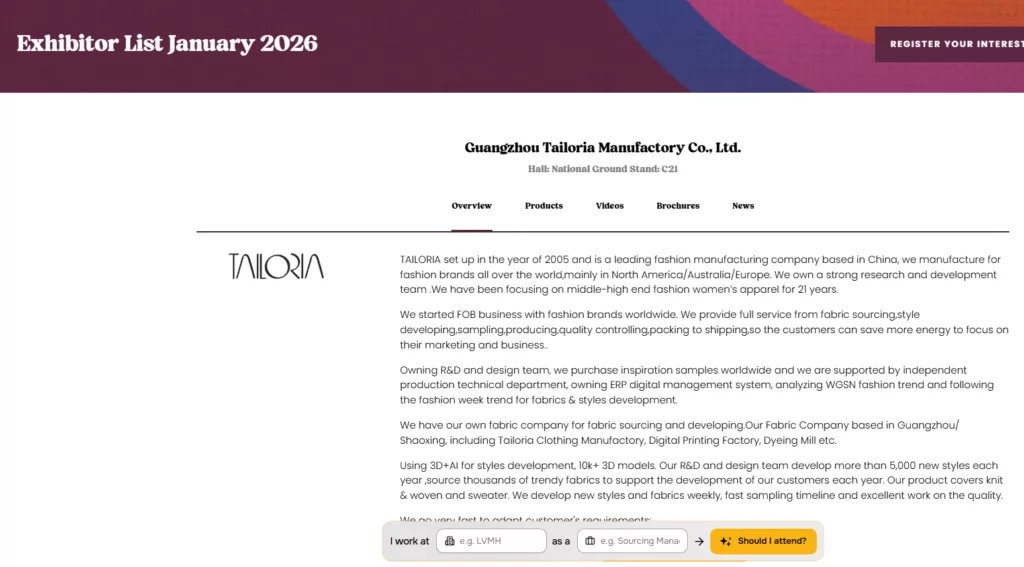
Most Guangzhou clothing manufacturers run on informal WeChat voice notes. This works for solo founders but creates chaos for professional procurement teams. Tailoria stands out because they enforce the administrative discipline of a Tier-1 facility.
They offer full-package capabilities—pattern making, grading, manufacturing, and packing—with strict version control. When I reviewed their process, I noticed they treat the Tech Pack as a binding document rather than a loose suggestion. This prevents the "interpretation errors" that often plague complex orders in this region.
Due diligence (what to verify):
- Change Control: Ask how they track V1 vs. V2 revisions. Do they require a new PP sample sign-off for every measurement tweak?
- Contract Logic: Request specific credit terms if the defect rate exceeds your AQL standard.
- Certification: Demand the Certificate ID and last audit date for ISO/BSCI claims. Never accept a screenshot.
⚡ Power Move: Implement a "Red Tag" system. Physically tag the exact defect on a rejected sample before returning it. Tailoria’s QC team actually reads these tags to correct the pattern, whereas others often repeat the error.
6. Guangzhou PZF Garment Co., Ltd.
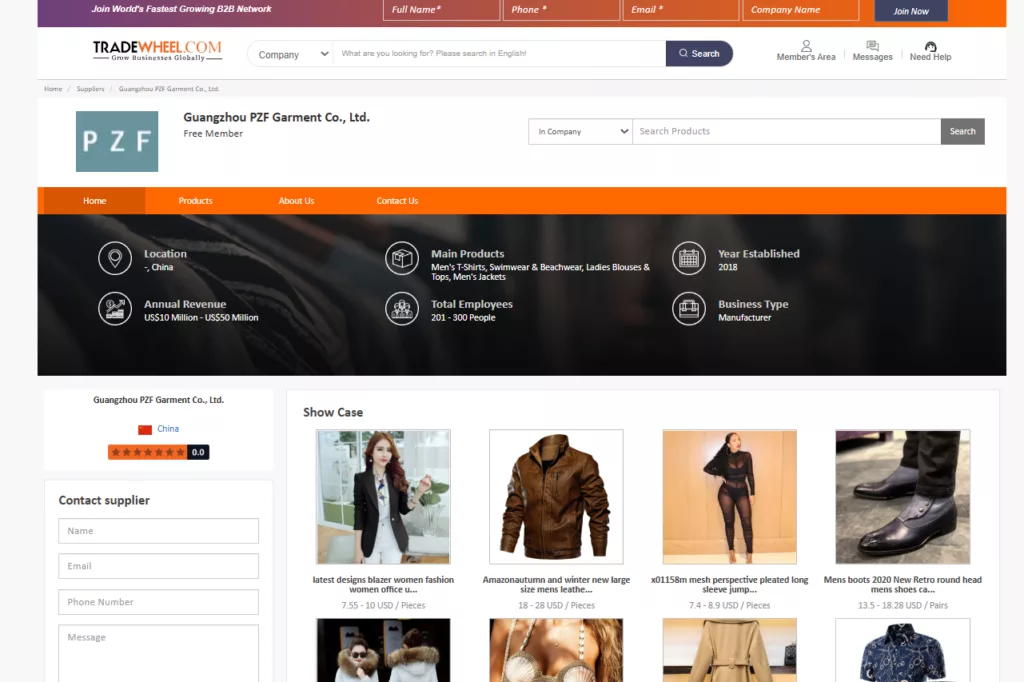
I often see brands approve a perfect sample, only to receive a bulk shipment with crooked seams three months later. In my experience, Guangzhou PZF Garment Co. is the antidote for this specific "bait and switch" nightmare. They work best for brands planning to use third-party inspectors like SGS or Intertek.
Most factories fight outside inspectors. PZF cooperates. When we managed a project requiring strict tolerance tables, they sat down before production to align on defect definitions. If I flagged a 2mm logo misalignment as a "major defect," their line managers actually respected that standard.
Due Diligence Checklist:
- Re-Inspection Liability: Confirm they accept AQL-based inspection. Get it in writing. If the batch fails, they pay the $300+ re-inspection fee.
- QC Artifacts: Ask for inline check sheets and daily measurement reports. If they don't document quality during sewing, they can't control it.
- No Substitutions: Add a clause preventing them from swapping fabrics for "similar" local stock without written approval.
7. Guangzhou Nixiya Garment Co., Ltd.
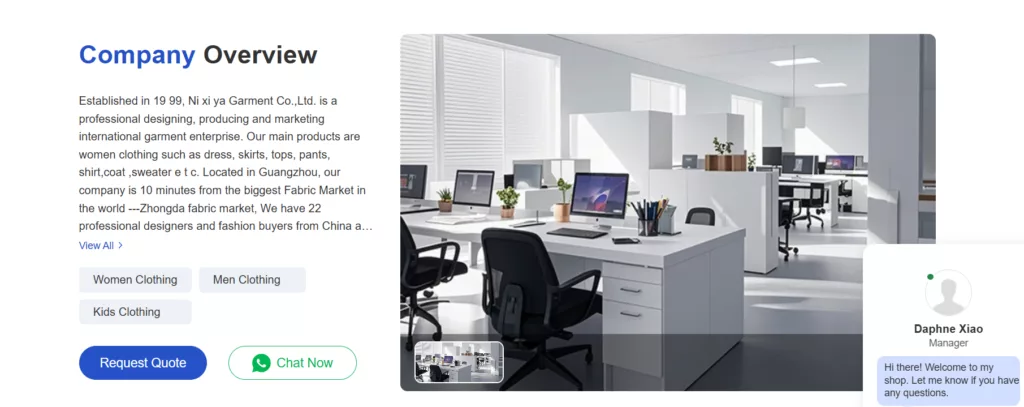
Nixiya fits founders testing "micro-drops." You can launch ten styles quickly rather than betting everything on one design. This suits influencer brands where catching a trend matters more than unit margins.
Watch out for the "Low MOQ" trap. This usually applies to ODM (picking their existing designs). If you bring a custom Tech Pack for OEM, minimums often jump significantly. Clarify this distinction before you pay a deposit.
Due Diligence Checklist:
- Verify MOQ Scope: Get three distinct numbers: in-stock styles, custom cut-and-sew, and custom fabric dyeing.
- Check Hidden Costs: Small runs kill margins. Demand a breakdown of sample, pattern-making, and grading fees.
- Protect IP: Require an NNN agreement before sharing designs. Without it, your style might end up in their catalog.
8. Guangzhou Miying Fashion Co., Ltd.
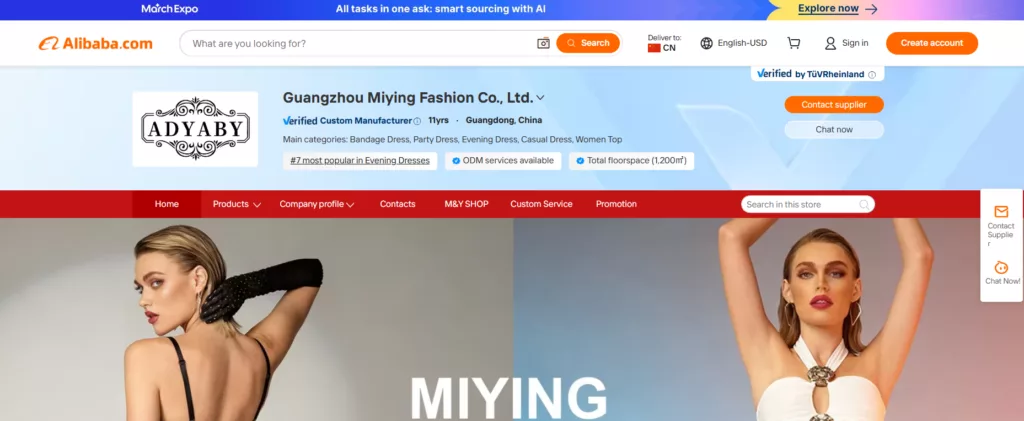
Miying Fashion fits boutique brands where perceived quality—stitching, pressing, and packaging—drives repeat purchases. I recommend them specifically for woven dresses and tops that require careful handling. Unlike volume-focused knit factories, they prioritize finishing details.
Due diligence (what to verify):
- Sample-to-bulk controls: Digital photos lie about color. I always demand a physical "shade band" (a strip from the actual bulk fabric roll) for approval before they start cutting.
- Define "finished": Don't assume the unit price includes steam pressing. You need to specify thread trimming standards and audit their packing method so garments don't arrive crushed.
- Verify compliance: If they claim OEKO-TEX or BSCI, never accept a PDF scan. Get the license ID and verify it directly on the issuing body's portal.
We find that high-end fabrics often fail at the finishing stage. A wrinkled silk dress looks cheap, no matter the material cost.
Boots-on-the-Ground: Your Guangzhou Manufacturing Blueprint
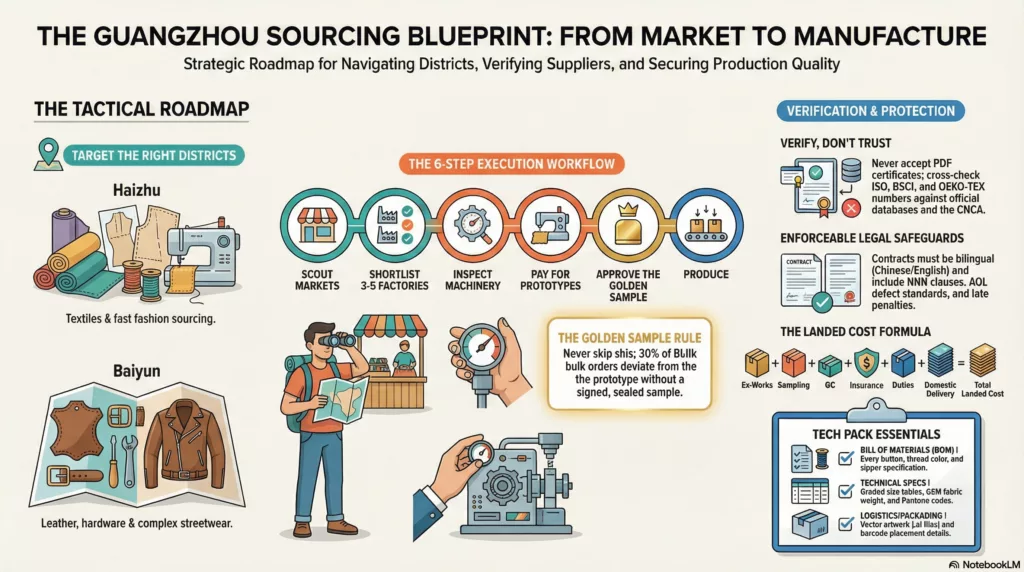
Finding a manufacturer name is easy. Executing a secure transaction is hard.
We use this exact workflow when our teams hit the ground in China. Follow this map to find the right materials and protect your investment.
District Cheat Sheet: Where to Go
Guangzhou is massive. You lose days if you visit the wrong district.
Haizhu District (Fabrics & Speed)
Go here for textiles. The Zhongda Fabric Market is the industry's center of gravity.
- Best for: Fast fashion, knitwear, and cotton basics.
- Why: Factories here source trims and fabrics in hours, not days.
- Our Experience: Traffic around Zhongda is often gridlock. Use the metro to avoid losing two hours in a taxi.
Baiyun District (Leather & Hardware)
Go here for complex goods.
- Best for: Jackets, handbags, and streetwear with heavy hardware.
- Why: The local supply chain specializes in leather tanning and metal casting.
Practical Visit Workflow
- Scout Markets: Visit material markets first. Know the raw material prices before you negotiate.
- Shortlist: Pick 3-5 factories.
- Inspect: Check the machines. Do not just sit in the showroom.
- Sample: Pay for a prototype.
- Approve: Sign the "Golden Sample."
- Produce: Only start bulk production after step 5.
Author’s Verdict Never skip the "Golden Sample." In our tests, 30% of bulk orders deviate from the initial prototype if you do not have a signed, sealed sample on the production floor.
Certifications You Must Verify
Factories often edit certificates in Photoshop. Never accept a PDF file as proof. You must verify the document number in the official database.
- ISO 9001 (Management): Ask for the certificate number and the auditing body's name. Verify the auditor is accredited by the CNCA (Certification and Accreditation Administration of China). The company name must match the business license exactly.
- amfori BSCI (Social Compliance): Ask for the supplier’s amfori ID (DBID). Verify it via the amfori sustainability platform. Do not trust a static screenshot.
- OEKO-TEX Standard 100: Ask for the label number. Type it into the official OEKO-TEX Label Check. If it fails, the fabric is unverified.
- Business License: Cross-check their Unified Social Credit Code. Use China’s National Enterprise Credit Information Publicity System to confirm they are a legal entity.
Manufacturing Assets (Copy & Paste)
Use these lists to lock in your requirements.
Tech Pack Checklist
Do not send a sketch. Send this data:
- BOM: Every button, thread color, and zipper.
- Graded Size Table: Measurements for S, M, L, XL.
- Fabric Details: GSM (weight) and composition.
- Artwork: Vector files (.ai) and Pantone codes.
- Packaging: Barcode placement and polybag warnings.
Manufacturing Agreement Terms
English contracts often fail in Chinese courts. Include these terms:
- NNN Clause: Prevents the factory from selling your design.
- AQL Standard: Define the defect rate (e.g., AQL 2.5).
- Late Penalties: 5% discount for every week of delay.
- Bilingual Requirement: The contract must be in Chinese to be enforceable.
Landed Cost Framework (No Fluff)
New buyers focus on the "Ex-Works" price. Experienced buyers calculate the Landed Cost. This is the total price to get the product to your door.
Landed Cost = Ex-Works Price + Sampling + QC Fees + Freight + Insurance + Duties (check Section 301) + Domestic Delivery
Skip this math and you lose profit. Read more about clothing manufacturing methods to see how production styles impact base cost. You can also review our guide on clothing manufacturing in China.
Need a Partner on the Ground? Manufacturing solo is risky. We handle factory matchmaking, QC, and logistics for you. Contact LeelinePromotion for Support
Frequently Asked Questions about Guangzhou Clothing Manufacturer
What does “low MOQ” really mean in Guangzhou?
It depends strictly on the production method. In my experience, a "50-piece" MOQ usually refers to stock blanks (ready-made items) that you simply rebrand. If you want custom cut-and-sew with your own patterns, the minimum typically jumps to 300 units. The real bottleneck is often the fabric. If you require custom-dyed fabric, mills often demand 1,000+ meters per color.
You must ask: "Is this MOQ for the sewing line or the dye house?"
What should I put in my first purchase order to avoid quality disputes?
Your Purchase Order acts as your safety net. I never wire a deposit without referencing a signed "Golden Sample" in the contract. This physical sample proves exactly what "good" looks like. You must also specify measurement tolerances (e.g., +/- 1cm) and an AQL 2.5 defect standard. Finally, include a clause that grants you the right to a Pre-Shipment Inspection.
If the factory refuses this access, walk away immediately.
How do I verify ISO 9001, BSCI, and OEKO-TEX claims?
Never trust a PDF file sent via email. I frequently see certificates that factories edited in Photoshop. To be safe, request the certificate ID number and the exact legal entity name. Verify these details directly on the official portals (like the CNCA or amfori database). If the factory name on the certificate does not match the business license you have, the claim is false.
Should I use an agent or buy direct?
Buy direct only if you have the internal capacity to manage logistics and Quality Control on-site. If you cannot visit the factory, the risk of error increases. A manufacturing partner is the better choice when you have complex requirements, such as custom promotional clothing kits, or strict deadlines. You need a partner who speaks the language when disputes arise.
Compare Your Global Options Smart buyers compare regions before committing. See how Guangzhou production stacks up against clothing manufacturers in Turkey or domestic clothing manufacturing companies in New York.