
New York City offers unmatched sampling speed, yet expensive mistakes happen when founders skip the development-ready stage. Without verified compliance, you risk wasting months on the wrong partner.
We vetted 10 clothing manufacturing companies in New York against the New York State Department of Labor (NYS DOL) Garment Manufacturers & Contractors Registration Database to help you navigate the Garment District safely. This guide covers who they serve best, questions to ask, and how to re-verify any factory in minutes.
The short answer: New York is built for sampling, small batches, and high-end tailoring — not mass production. Across the 10 factories below, expect MOQs from 50 to 500 units, sampling in 2–4 weeks, and bulk runs in 6–9 weeks after approval (per CFDA and NYS DOL guidance).
If you need thousands of units per SKU, move production overseas instead.
Comparison Table for Clothing Manufacturing Companies in New York
| Manufacturer | Location | Specialization | MOQ Sweet Spot | Lead Time (sample → bulk) |
|---|---|---|---|---|
| 1. Apparel Production Inc. | Garment District, NYC | Full workflow (pattern to cut & sew) | 300+ units | 2–3 wks → 4–6 wks |
| 2. The Factory NYC | Brooklyn | Small-batch, rapid prototyping | Under 500 | 4–6 wk sampling queue → bulk to confirm |
| 3. Royal Apparel | Hauppauge, NY | Sustainable blanks, private label | Stock: no MOQ · custom dye varies | Stock: immediate · custom: 4–8 wks |
| 4. NYC Factory, Inc. | Garment District, NYC | Cut-sew + screen print/embroidery | 300–500 units | 3–4 wks → 6–8 wks |
| 5. QuickTurn Clothing | Garment District, NYC | Rush orders, time-sensitive drops | Flexible | Rush sample vs. bulk defined in quote |
| 6. InStyle USA | Queens, NY | Full-package development + production | Varies by complexity | 2–4 wks → 6–8 wks |
| 7. Jenny Fashion, Inc. | Garment District, NYC | High-precision performance wear | Higher (precision runs) | 3–4 wks → 8–10 wks |
| 8. 3Crowns Apparel | Brooklyn, NY | Startup-friendly, tech pack creation | Development-led (no min to sample) | Sampling 4+ wks → 6–8 wks bulk |
| 9. Tailored Industry | NYC | Luxury structured garments | Low–mid (luxury batches) | 4+ wks → 8–10 wks |
| 10. Brooklyn Garment Factory | Brooklyn | Development + production proximity | Flexible | Same-day prototype approvals |
Lead times are typical industry ranges for each production model and vary by season, fabric availability, and order complexity. Always confirm the exact timeline in writing before booking.
How We Vetted These 10 NYC Clothing Manufacturers
Every factory below passed the same five-point screen before inclusion. You can repeat each check yourself in minutes:
- Active NYS DOL registration — each entry's legal entity was checked against the NYS Department of Labor Garment Manufacturers & Contractors Registration Database. NYS law requires annual registration; unregistered shops were excluded.
- Specialization match — machinery and service scope must match the category listed (e.g., small-batch prototyping vs. full-package production).
- MOQ and lead-time ranges — the table lists starting-point ranges for each factory's category. Reconfirm the exact numbers in writing before paying a deposit.
- Location verification — the facility address must match the borough/city listed here.
- Buyer fit — we matched each factory to the buyer profile it serves best. No factory is best for everyone; each profile states who it fits best.
The comparison table above summarizes MOQ sweet spots and typical lead times. The profiles below go deeper into what to ask and where the hidden costs live.
Editorial disclosure: This list is researched and written by LeelinePromotion's sourcing team, which also offers sourcing and production-management services. Treat every entry as a starting point and use the Trust Check section to verify any factory independently before paying a deposit.
Top 10 Clothing Manufacturing Companies in New York
1. Apparel Production Inc.
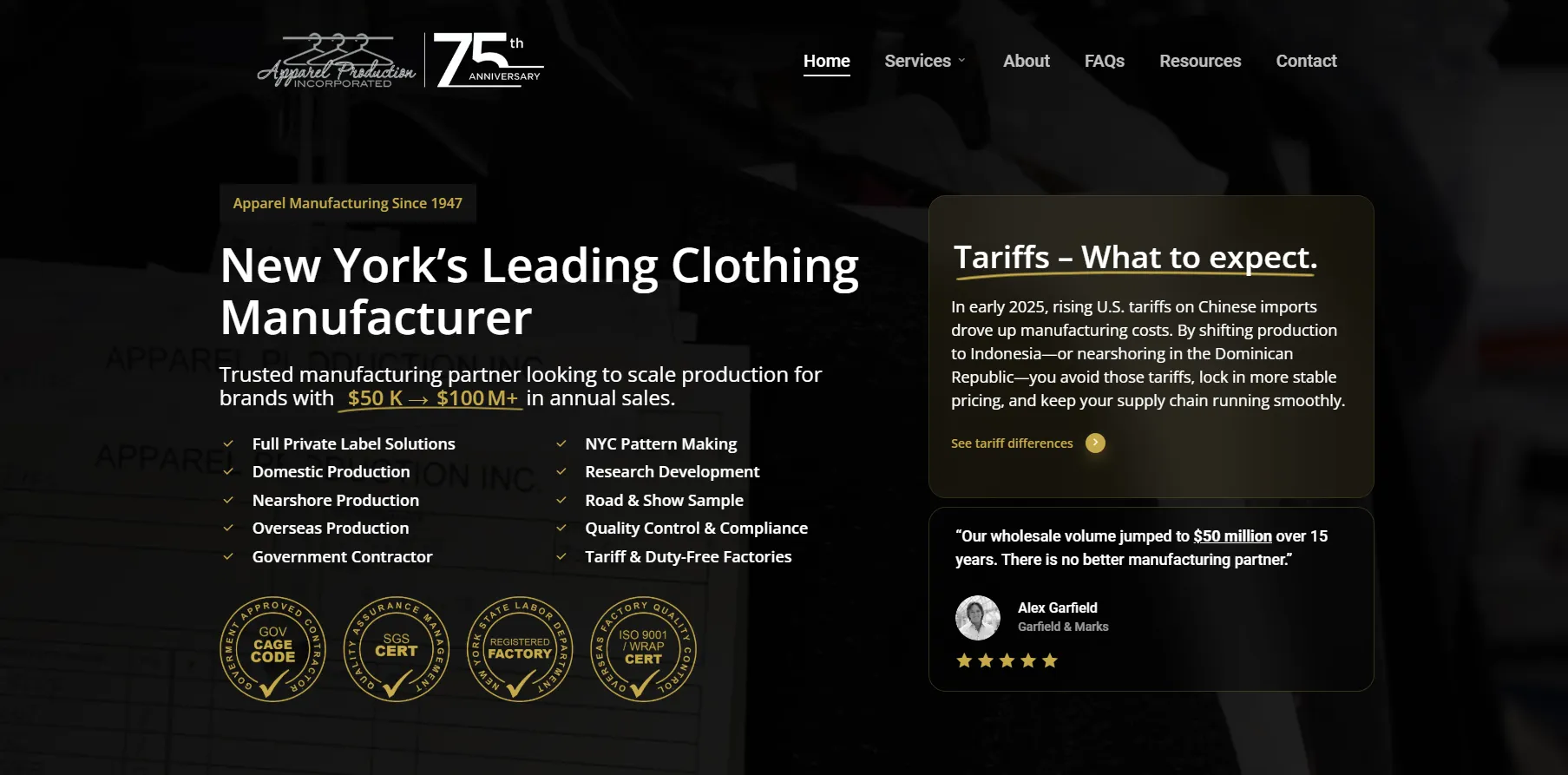
Splitting pattern making and production creates fit errors. Apparel Production Inc. solves this by centralizing the workflow in the Garment District. They handle everything from pattern grading to final cut & sew, distinguishing them from other clothing manufacturing companies in New York.
This integration is critical for private label brands that need strict quality control.
Best for: private-label brands that want pattern grading, sampling, and production under one roof at 300+ unit MOQs.
Skip if: you need test batches under 100 units or decoration-only work on blanks.
What to ask before you pay:
- Scope: Is pattern grading included in the quote or billed hourly?
- Timelines: What is the specific lead time between sample approval and production?
- QC: What is the protocol if a sample fails tech pack specs?
🚀 Actionable Insight: Request a "size run" sample set before production. Factories often perfect the base sample (usually Medium), but grading errors frequently ruin the fit on Small and XL units.
2. The Factory NYC (Brooklyn)
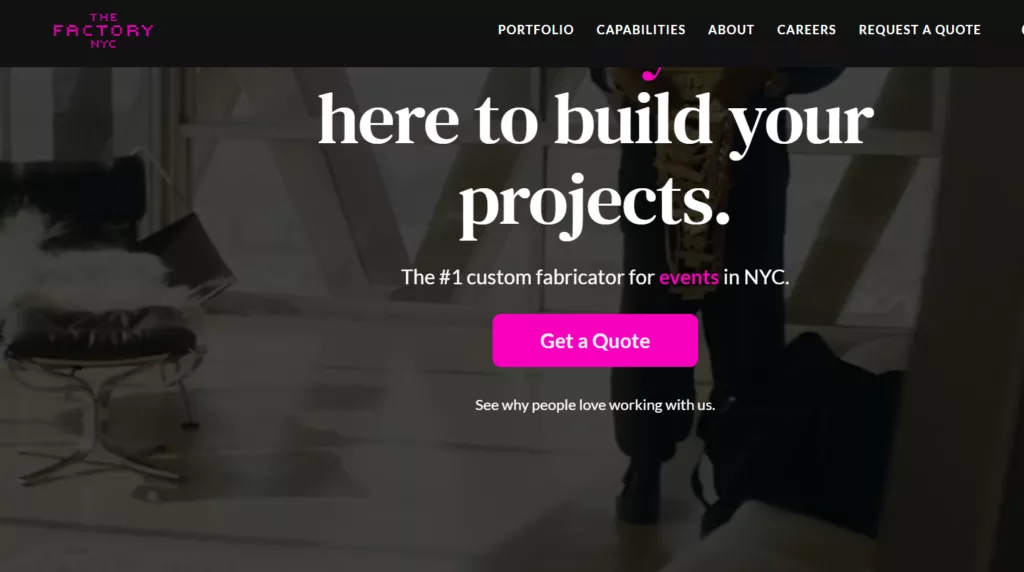
Most manufacturers ignore orders under 500 units. The Factory NYC fills this gap by specializing in small-batch clothing production and rapid prototyping.
Proximity is your leverage here. Instead of shipping samples back and forth to Asia, you can visit the floor to troubleshoot fit issues in real time. This hands-on oversight helps you maintain strict quality control standards without the communication lag of overseas production.
Best for: founders validating designs with sub-500-unit small batches and hands-on Brooklyn floor oversight.
Skip if: you need large seasonal volume — sampling queues back up during fashion week.
Validate these capabilities before booking:
- Category "Sweet Spot": Ask if they specialize in your specific product type (e.g., streetwear, wovens, or complex knits).
- Service Scope: Confirm if they are a true full-package partner or just a cut-and-sew shop.
- Pricing Structure: Clarify costs for product development, specifically pattern revisions and fit sessions.
3. Royal Apparel (NY)
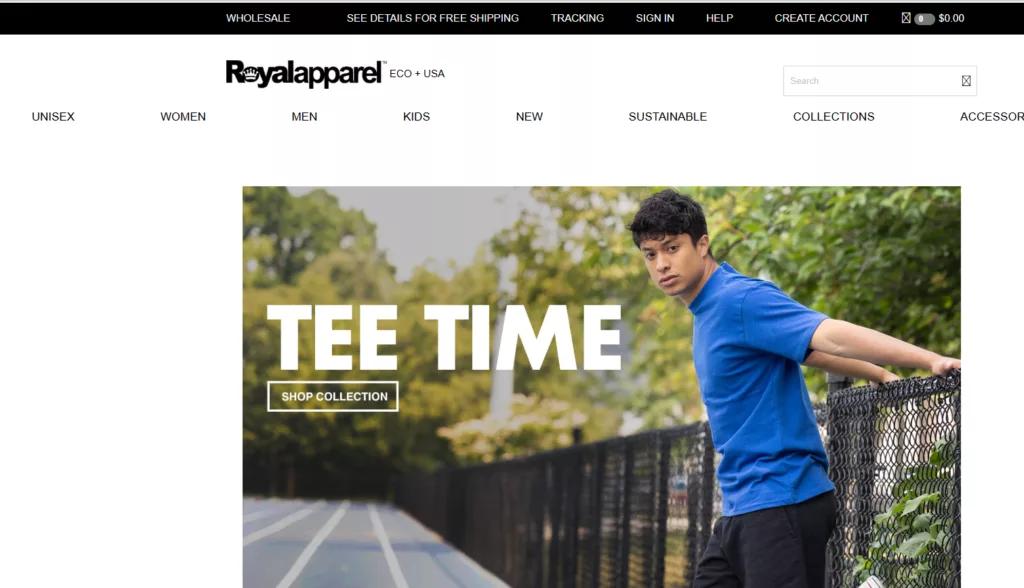
Sustainable fabric manufacturing usually implies long lead times. Royal Apparel cuts this by stocking organic cotton, bamboo, and recycled polyester basics ready for immediate production. They provide a scalable domestic option for brands needing a sustainability story without managing fabric production in-house.
Use their private label services to re-tag and customize stock items. This speeds up time-to-market compared to custom cut-and-sew while keeping your supply chain compliant with FTC "Made in USA" standards.
Best for: brands that need an FTC-compliant "Made in USA" story fast, printed on stock sustainable blanks.
Skip if: you need true custom cut-and-sew from raw fabric — they mainly decorate stocked garments.
What to ask:
- MOQs: Custom dyes often require higher commitments than stock colors.
- Scope: Does the private label fee cover printing, tag removal, and packaging?
- Location: Is production in Hauppauge, NY or Pennsylvania? This matters for specific "Made in NY" claims.
🚀 Actionable Insight: Request "tear-away" label stock. These items let you rip out manufacturer tags and sew on your own without seam damage, significantly reducing re-labeling labor costs.
4. NYC Factory, Inc.
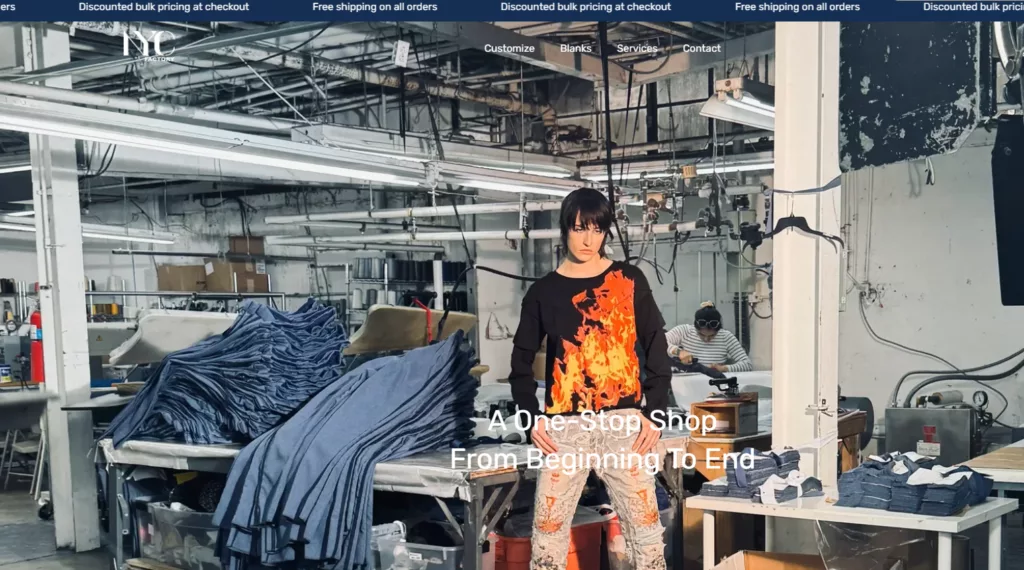
Splitting production between sewing factories and print shops creates costly bottlenecks. NYC Factory, Inc. solves this by bundling cut-and-sew manufacturing with in-house screen printing and embroidery. This integration reduces vendor sprawl for brands that require tight coordination between garment construction and design placement.
Don't assume "full service" means "in-house." You must verify exactly which steps—cutting, sewing, or decoration—occur on their floor versus through subcontractors. You also need to confirm if they source blanks or require you to supply raw fabric.
To avoid rejection, prepare your design assets before quoting: they require a complete tech pack, vector artwork, and specific Pantone codes to guarantee accuracy.
Best for: brands that want garment construction and decoration bundled under one roof to cut vendor sprawl.
Skip if: your tech pack and vector artwork are not production-ready — sloppy briefs get rejected.
🚀 Actionable Insight: Ask for their "spoilage allowance" policy in writing. Most manufacturers require you to provide 2–5% extra garments to account for printing errors during production.
5. QuickTurn Clothing (Garment District)
Missing a launch date kills momentum. QuickTurn Clothing serves brands that cannot afford delays. Operating within NYC garment district factories, they specialize in time-sensitive drops and rapid replenishment.
However, speed requires a disciplined staged plan, not just paying extra.
Best for: time-sensitive drops and replenishment with hard launch deadlines.
Skip if: your specs won't be production-ready on day one — rush fees cannot fix bad inputs.
The Rush-Order Checklist:
- Define "Quick": Distinctly separate sample turnaround from bulk production lead times.
- Day 1 Inputs: Supply approved patterns, graded specs, and fabric immediately. If you are still manufacturing trim, you are already late.
- Fee Triggers: Ask specifically what actions trigger overtime charges.
- QC Protocol: Ensure standardized quality checks are not skipped during timeline compression.
6. InStyle USA (Queens)
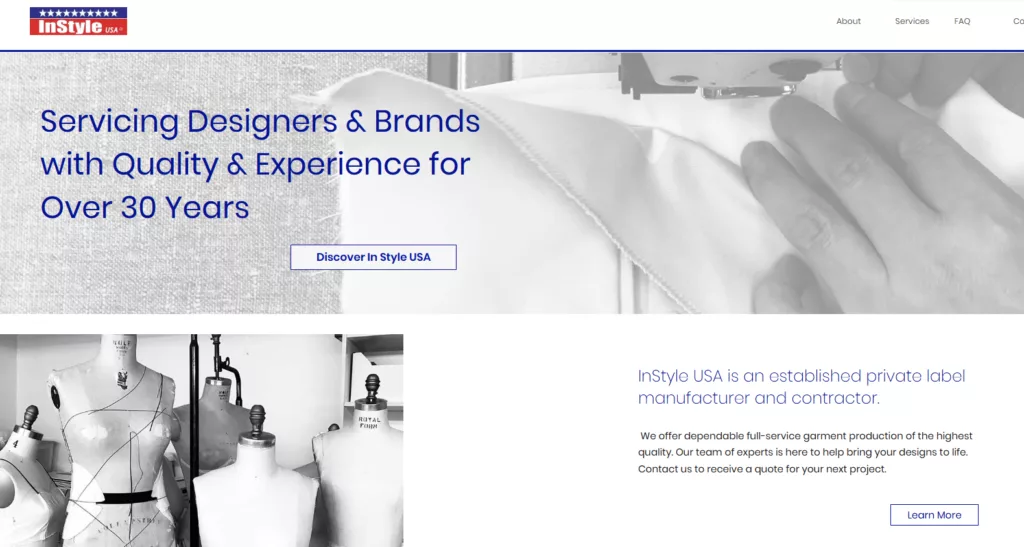
InStyle USA combines development and production into one coordinated workflow. This removes the friction of managing separate vendors for patterns, grading, and sewing. It fits brands that need a complete "full package" partner instead of just a factory.
Best for: brands that want one full-package partner from development through production, with itemized landed costs.
Skip if: you already have a development partner and only need a pure cut-and-sew floor.
Accurate budgeting requires digging into their service layers. Clarify these costs before signing:
- Manufacturing: Do they source fabric and trims, or must you supply them?
- Development Fees: Are pattern and sampling costs bundled or charged per style?
- MOQs: Minimums change based on item complexity (e.g., simple knits vs. outerwear).
7. Jenny Fashion, Inc.
Unlike basic NYC apparel factories that cut corners on precision, Jenny Fashion, Inc. caters to brands demanding high-precision execution. They excel at performance wear and multi-layer outerwear, preventing common issues like puckered seams or misaligned prints.
Best for: performance wear and multi-layer outerwear where seam precision and tolerance control decide quality.
Skip if: your goal is basic tees at the lowest unit cost — precision carries higher MOQs.
To ensure they can handle your specs, audit their technical rigor:
- Demand Gatekeepers: Require distinct fit, sales, and pre-production samples to catch errors before bulk cutting.
- Review Tolerance Sheets: Verify they document specific seam engineering standards and stitch density (SPI).
🧠 Expert Take: Test their tolerance documentation. Request a past QC report to see how they handle measurement deviations beyond 1/8 inch. If a factory doesn't track this data, your production sizing will be inconsistent.
8. 3Crowns Apparel
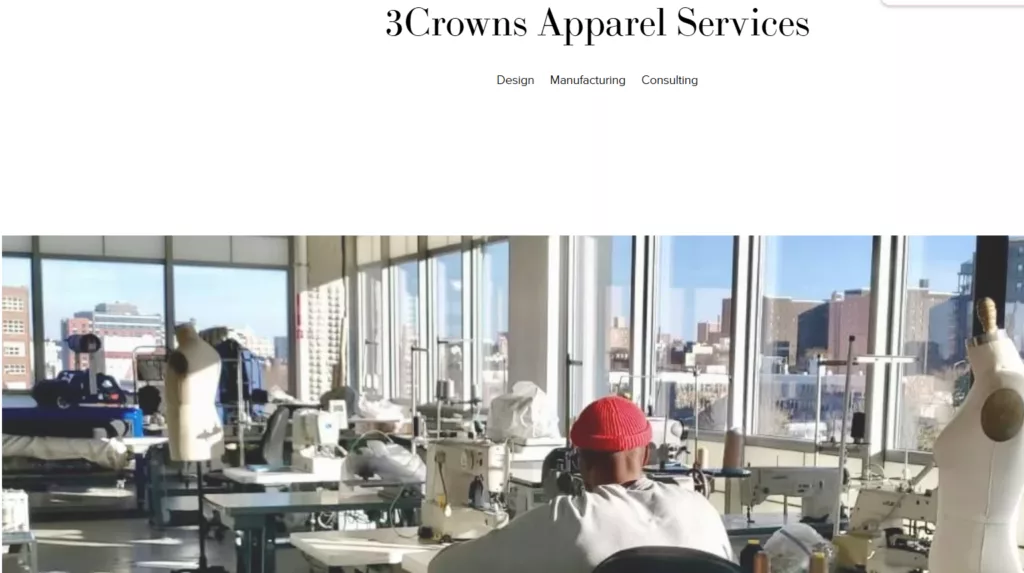
Most NYC apparel factories ignore you if you lack a tech pack. 3Crowns Apparel is the exception. They position themselves as a bridge for startups, translating rough concepts into production-ready patterns and manufacturing plans.
This support prevents expensive development errors. But you must clearly define where standard help ends and billable consulting begins.
Best for: early-stage brands without a tech pack that need development support and pattern creation.
Skip if: you have a production-ready tech pack and need pure bulk manufacturing.
Ask these risk-control questions before signing:
- Capacity: Are they accepting full production runs or just development projects?
- Revisions: How many sampling rounds does the quote cover before extra fees kick in?
- Deliverables: If you switch factories, do you receive the graded pattern files and Bill of Materials (BOM)?
9. Tailored Industry (NYC)
Sloppy tailoring destroys luxury brands. If a blazer shoulder collapses or a lining pulls, the customer returns it immediately. Tailored Industry focuses on the complex engineering required for structured garments.
Choose them when shape retention and interior finishing determine your margins.
Best for: structured garments like blazers and coats where live fittings and shape retention define quality.
Skip if: you need fast high-volume casualwear — tailored programs run slower and in smaller batches.
Validate the fit process before booking:
- Live vs. Static: Require live model fittings. Static dress forms cannot show how a coat pulls when the wearer sits.
- Iteration Volume: Confirm if the quote covers two fit rounds or three. Tailored silhouettes require more adjustments than casual knits.
- Finishing Specs: Inspect their pressing equipment. Poor steam control ruins expensive wools.
10. Brooklyn Garment Factory
Remote factories often misread complex design changes. Brooklyn Garment Factory solves this by keeping development and production under one roof in the boroughs. This proximity allows you to troubleshoot fit issues in person—approving a prototype in the morning and cutting fabric by afternoon.
It bridges the critical gap between design studio and factory floor.
Best for: brands that iterate fast, approving prototypes in person with same-day turnaround.
Skip if: you need fully digital pattern work without on-site collaboration.
Verify scope before scheduling:
- Inputs: Do you supply paper markers, or do they digitize them?
- Flexibility: What is the hard cutoff for changes once cutting starts?
- Repeats: Do they archive digital patterns for fast re-orders?
You have partners. Now you need to master the process.
🚀 Actionable Insight: Request a "marker efficiency" report before the first cut. This document proves exactly how much fabric is used versus wasted, often saving up to 15% on material costs compared to unmonitored production runs.
A Step-by-Step Guide to Managing NYC Production
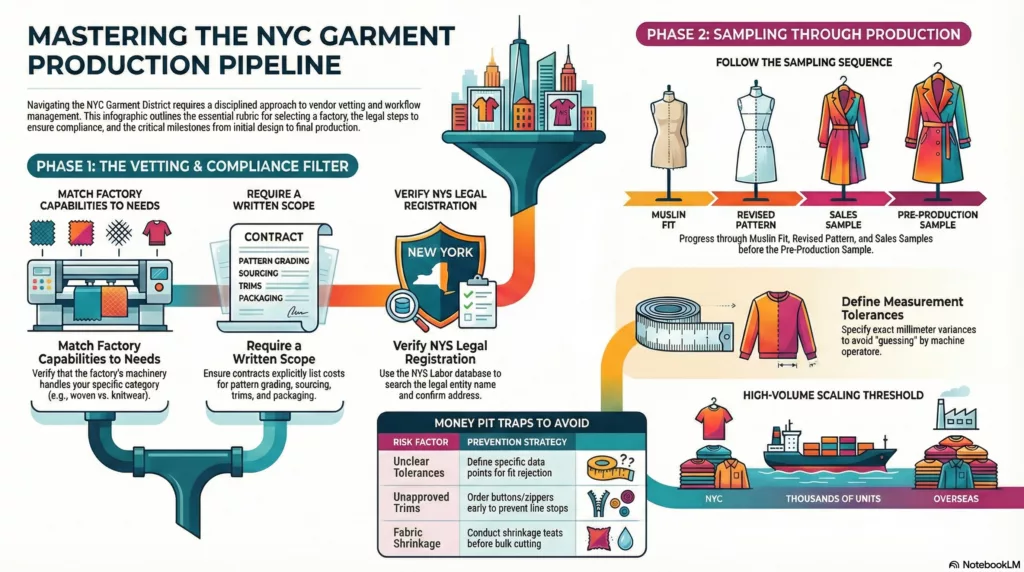
You have a list of potential partners. Now you need a plan to vet them and manage the workflow. Use this buyer rubric and compliance check to protect your budget.
1. The Buyer Rubric
Filter factories before you send an inquiry. Ensure they fit your specific business model.
- Match by Stage: Determine if you need development or production. Development shops create patterns and samples. Production shops expect you to have those ready. Review different apparel manufacturing methods to define your needs accurately.
- Match by Category: Check their machinery and operators. A factory with single-needle machines for woven shirts cannot sew stretchy knitwear or heavy denim correctly. Confirm they handle your specific types of clothing.
- Match by Constraints: Ask for Minimum Order Quantity (MOQ) and lead time immediately. If they require 300 units and you need 50, move on.
- Require a Written Scope: Your contract must list exactly what is included. Does the price cover pattern grading, manufacturing, trims, and packaging? Get it in writing.
2. Trust Check: Verify Legal Compliance
Illegal subcontracting puts your brand at risk of chargebacks and reputation damage. New York State requires every garment manufacturer and contractor to register annually with the NYS Department of Labor (NYS DOL). Verify this status before you pay a deposit.
- Go to the NYS DOL Garment Manufacturers & Contractors Registration Database.
- Search for the legal entity name.
- Confirm the address matches the facility you visited.
- Save a dated screenshot of their active registration for your vendor file.
3. Real-Life Walkthrough: Sampling to Production
Follow this timeline to move from idea to finished product.
Intake (Tech Pack Ready) > First Pattern > Muslin Fit Sample > Fit Notes > Revised Pattern > Sales Sample > Pre-Production Sample > Production Cut > In-Line QC > Final Audit
Avoid These Money Pits. Founders lose money at specific decision points. Watch out for these traps.
- Unclear Tolerances: Define acceptable measurements. You cannot reject bad fits without specific data.
- Unapproved Trims: Production stops if buttons or zippers arrive late.
- Shrinkage: Test fabric shrinkage before cutting bulk orders.
4. Insider Perspectives
Sample discipline: Rushing a sample is the fastest way to ruin a production run. If the pattern is not validated before cutting, machine operators are effectively guessing, and rush fees cannot fix bad inputs. Treat pre-production sample approval as a hard gate, not a formality.
Tolerances, not photos: Most tech packs fail because they lack measurable tolerances. Specify seam variance in millimeters (e.g., ±3 mm) and define each point of measure, rather than relying on "make it look like the photo."
Verify against official guidance: Check the NYS DOL apparel industry requirements and CFDA resources for sampling and compliance checkpoints before signing a contract.
5. When to Move Production Overseas
NYC is the right tool for speed, sampling, and high-end luxury runs. It is often the wrong tool for high-volume scale.
If you are scaling to thousands of units, labor costs in New York will destroy your margins. At that stage, you need a managed overseas supply chain that handles strict QC standards (like AQL 2.5) and sampling gates. This applies whether you distribute in the US or compete with clothing manufacturers in China and other global markets.
LeelinePromotion acts as a bridge for brands ready to scale. We manage the entire process to ensure you get factory-direct pricing without the logistics headache.
Frequently Asked Questions about Clothing Manufacturing Companies in New York
Q1. What MOQs should I expect from NYC clothing manufacturers?
Production minimums depend entirely on the product category and the factory's model. Simple stock-knit programs may require 300+ units, while small-batch specialty shops accept runs as low as 50 pieces. Precision-specialist factories that run complex outerwear typically hold higher minimums to justify their setup and QC gates.
Development (sampling) usually has no minimum but costs 2–3 times the production price.
Always request the Minimum Order Quantity (MOQ) in writing for every specific color and size before you pay a deposit.
Q2. What is a realistic lead time for sampling and production?
Plan for a 6 to 9-week cycle. This timeline includes pattern making, first samples, fit revisions, and final bulk cutting. You must build in a buffer for fabric delivery delays. Factories prioritize active production runs over samples, so development often takes longer than expected.
Never skip the pre-production sample approval to save time.
Q3. How do I verify a NYC factory is legally compliant?
Search the factory’s legal business name in the NYS DOL Garment Manufacturers & Contractors Registration Database. If it is not listed with an active annual registration, treat it as unverified — and save a dated screenshot for your vendor file.
Q4. What should I bring to the first meeting to get an accurate quote?
You need a complete Tech Pack and a physical reference sample. You must also list your Bill of Materials (BOM), total quantity, and target deadline. Factories cannot provide accurate costs based on sketches or photos.
If you do not have the fabric in hand yet, state this clearly so they can adjust the schedule.
Q5. What is the difference between “cut-and-sew” and “full-package” manufacturing?
Full-package services manage the entire process, including fabric manufacturing, printing, and packaging. Cut-and-sew factories only assemble the materials you provide. Most NYC manufacturers operate as cut-and-sew shops.
This means you are responsible for buying fabric, buttons, and labels. Unless your contract explicitly says "full package," assume you handle procurement.