
Finding reliable custom clothing manufacturersAustralia requires more than a Google search. It demands strict checks on capability, MOQs, and compliance with Ethical Clothing Australia standards.
Whether you’re manufacturing team uniforms, activewear, or fashion apparel, understanding a factory’s technical limits and ethical standards can make or break your supply chain. This 2026 guide ranks the ten best custom clothing manufacturers in Australia, from large-scale production houses to boutique CMT specialists.
Each has been evaluated for quality control, minimum order quantities (MOQs), and accreditation with Ethical Clothing Australia (ECA).
You’ll also find a clear framework for verifying suppliers before committing funds — including sample milestones, QC steps, and compliance checks — so your next production run launches on time and to spec.
Comparison Table of Custom Clothing Manufacturers Australia
| Manufacturer | Main Product Focus | Best For | Typical Production Model | Strengths Summary |
|---|---|---|---|---|
| 1. Sherwood Sportswear | Custom teamwear and uniforms | Long-term, repeatable uniform programs | Full custom sportswear, in-house decoration | High consistency across reorders, strong local sportswear heritage |
| 2. Hingto | Performance activewear and swimwear | Technical compression, gym and swim brands | Design-to-production activewear specialist | Deep expertise in technical fabrics, activewear-focused development |
| 3. The Clothing Room | End-to-end fashion development management | Startups needing design–to–production help | Coordination of tech pack, patterns, CMT via partners | Acts as outsourced production team for new brands |
| 4. CB Clothing | Wholesale blank tees and fleece | Fast launches with print/embroidery | Blanks + decoration model | Short lead times, easy private labelling via blank garments |
| 5. Sphinx Australia | Structured garments and corporate uniforms | Mid–high end uniforms with strict control | CMT plus finishing and logistics | Strong documentation, full-service finishing options |
| 6. KJ Production House | Concept-to-spec fashion development | Turning sketches into production-ready specs | Development + managed CMT | Reduces first-run errors through pattern and sample work |
| 7. LP Garments | Boutique CMT for apparel collections | Small runs and first collections | Small-batch CMT | Good for iterative fit work and limited launches |
| 8. Phyre Apparel | Custom branded apparel (beyond blanks) | Retail-ready brandable garments | Custom apparel, category dependent | Potential to handle full-brand presentation and finishing |
| 9. Legend Sportswear | Sublimated teamwear and sports uniforms | Club kits and recurring team orders | Custom sublimation sportswear | Strong color consistency and repeat order management |
| 10. EVO Sportswear | High-volume custom team sportswear | Large programs with fixed launch dates | End-to-end controlled production | Tight delivery control, in-house design and manufacturing for big runs |
Top 10 custom clothing manufacturers australia
1. Sherwood Sportswear — Best for Teamwear, Uniform Programs & Repeat Reorders
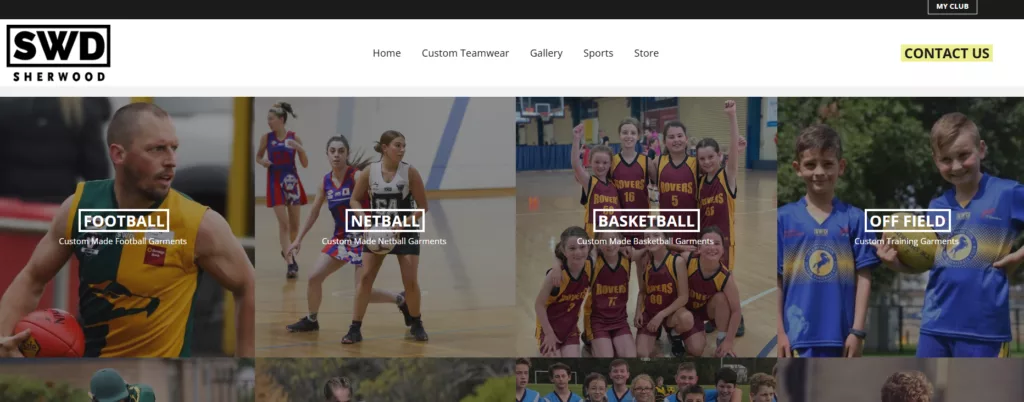
If you manage a large uniform program, you do not need fashion experiments. You need the 500th jersey to match the first one exactly.
Sherwood Sportswear specializes in operational consistency. They are the ideal partner for teamwear, club uniforms, and corporate programs that rely on repeatable SKUs rather than seasonal trends.
You must verify these capabilities in your RFQ:
- Capabilities to confirm: Verify they handle screen printing, embroidery, and dye-sublimation in-house. Ask about size-set management to ensure fit consistency across a full team roster.
- Commercial fit: Request MOQs by style and color. Crucially, negotiate reorder minimums upfront. You want to avoid paying premium rates for small top-up orders later.
- Procurement checks: Require a written lead-time calendar and specific QC checkpoints (pre-production plus in-line checks).
Pros: Excellent for stable, long-term programs. Cons: Not built for complex, high-fashion cut-and-sew.
🚀 Actionable Insight: Send your tech pack and logo files immediately. Request a physical sample set and a written policy on reorders to test their administrative speed before signing.
2. Hingto — Best for Custom Activewear/Swim (Performance Focus)
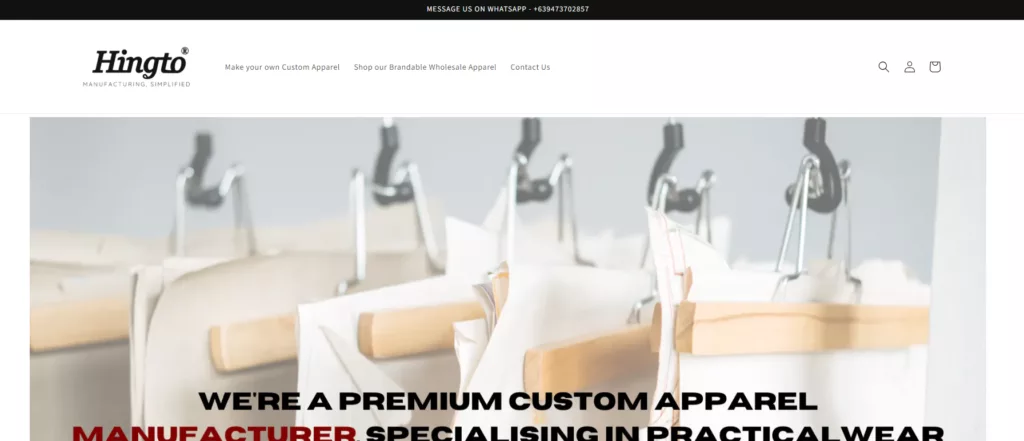
Generalist factories often miss the technical specs required for squats and sprints. Hingto focuses specifically on performance activewear and swimwear with Australian-based management. They handle the entire design-to-production cycle, offering specialized construction like flatlock stitching and laser bonding that standard CMT shops cannot execute.
- The Scale Reality: Fully custom programs require higher volumes. Startups should investigate white-label templates first. For custom cuts, ask for MOQs broken down by fabric and colorway.
- QC Prompts: Request lab dips and dimensional stability tests (shrinkage). You must verify fabric recovery—ensure it snaps back after stretching—and confirm how they manage dye-lot consistency.
- Pros: Deep expertise in compression and technical fabrics.
- Cons: Custom production MOQs are higher than general merchandise.
3. The Clothing Room
The Clothing Room solves the "who to hire first" problem. They act as your off-site production team, managing the entire workflow from rough sketches to finished inventory.
This model suits startups that need hands-on support coordinating tech packs, patternmaking, and CMT (Cut, Make, Trim). Instead of juggling separate suppliers, you deal with one accountable partner.
Because you pay for coordination, you must validate their value:
- In-house vs. Outsourced: Ask specifically which production steps they handle internally versus what they farm out to their partner network.
- Cost Breakdown: Request a quote that explicitly separates development, sampling, and bulk fees.
- Quality Control: Confirm who owns the final sign-off and how fit comments are tracked.
Pros: Drastically reduces the operational load on founders. Cons: Higher unit costs due to management fees compared to direct-to-factory.
4. CB Clothing — Best for Wholesale Blank Apparel
CB Clothing offers a low-risk route to market: premium blanks. Skip the months-long cut-and-sew process; buy unbranded tees and hoodies to move straight to decoration. This path works best for fast streetwear drops and corporate merch programs.
Vet the fabric weight (GSM). A 180–220 GSM tee provides a heavy, premium feel, while anything under 150 GSM often feels cheap. Verify shrinkage specs—anything over 5% is unacceptable. You must also ensure the fabric surface handles high-detail DTG printing and includes tear-away tags for private labeling.
Always confirm stock continuity before launching. Seasonal colors sell out fast, so clarify wholesale tiers to avoid supply gaps mid-campaign.
- Pros: High speed-to-market and simpler quality control.
- Cons: Generic silhouettes compared to custom patterns.
5. Sphinx Australia — Best for Mid-to-High-End CMT and Uniforms
Sphinx Australia specializes in structured garments and corporate uniforms. They serve procurement buyers who prioritize strict production control and compliance over rock-bottom prices. Unlike standard print shops, they focus on complex garment construction.
- Services: Validate Cut, Make, Trim (CMT) capabilities. Ask specifically about pressing, packing, barcoding, and warehousing rates.
- Commercials: Request MOQs per style. Ask explicitly how design complexity—such as custom pockets or reinforced collars—impacts your minimum order size.
- Compliance: Demand documentation for ethical claims. Clarify if production is local, offshore, or hybrid to satisfy supply chain transparency requirements.
Pros: Extensive service breadth, professional finishing, and robust documentation.
Cons: Unsuitable for micro-batches or experimental fashion runs.
6. KJ Production House — Best for Concept-to-Spec Development
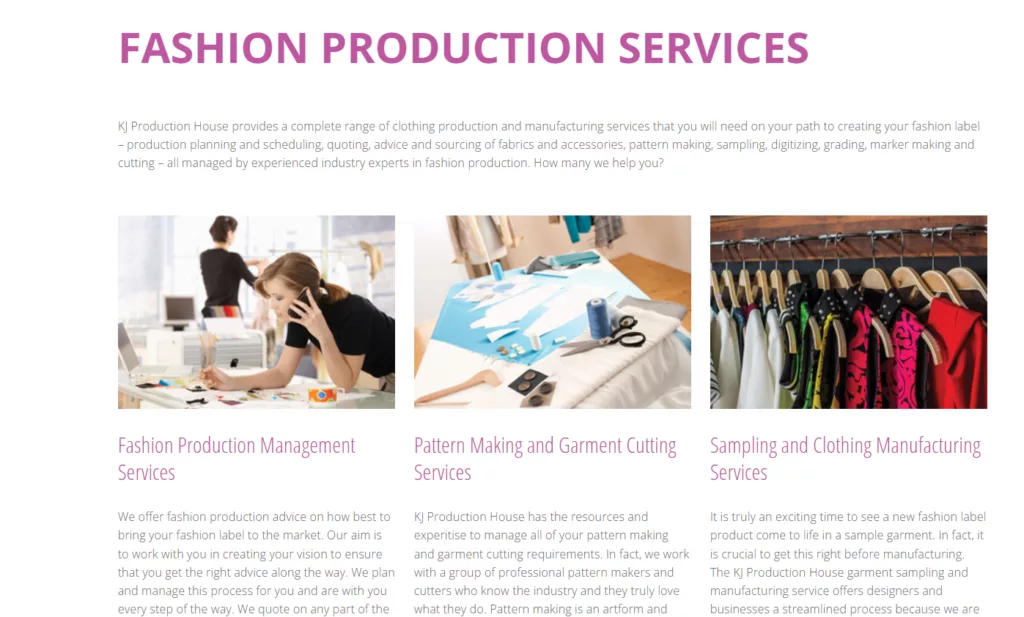
KJ Production House serves founders who need to convert rough ideas into manufacturing specifications. Most factories reject vague sketches; KJ handles this technical translation through patternmaking, sampling, and production management. This model minimizes the risk of costly first-run failures common with inexperienced buyers.
You must clarify whether they execute CMT (Cut, Make, Trim) in-house or manage a partner network. This distinction impacts your quality control and supply chain visibility.
Critical Vetting Prompts:
- Process: Request a "Sample Ladder." Confirm how many revision rounds are included and how they sync fit comments to the tech pack.
- Costs: Ask for a fee schedule that completely separates development costs (patterns/samples) from bulk manufacturing unit prices.
Pros: Drastically reduces pre-production errors. Cons: Development timelines are longer than direct-to-factory orders.
7. LP Garments — Best for Startup-Friendly CMT and Small Runs
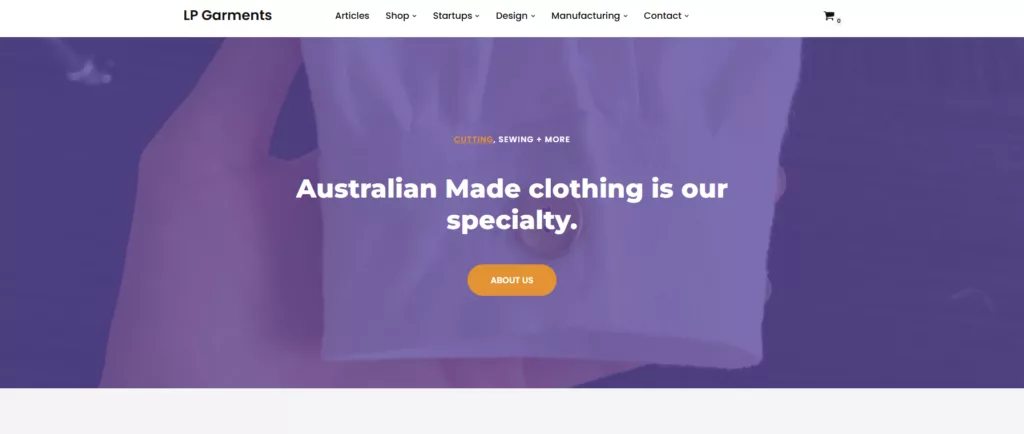
LP Garments operates as a boutique CMT (Cut, Make, Trim) specialist. Unlike mass-volume factories, they trade on finite production slots. This makes them the ideal partner for first collections and iterative fit work, but booking windows are tight.
You aren't just buying a product; you are securing time. Verify these specifics early:
- Technical scope: Confirm in-house patternmaking and grading availability. Ensure their category expertise matches your product type.
- MOQ reality: Ask for the "hard floor" minimum per style. Check if they support micro-runs for pilot launches.
- Operational capacity: Request specific dates for both sampling and bulk slots. Knowing the typical "cut-to-pack" window is crucial for your supply chain planning.
Pros: Direct collaboration on fit details. Cons: Limited throughput compared to industrial giants.
⚡ Power Move: Speed kills deals here. Do not approach them with rough ideas. Arrive with a complete Bill of Materials (BOM) and measurement specs. This allows them to quote immediately and locks in your production slot before a competitor takes it.
8. Phyre Apparel
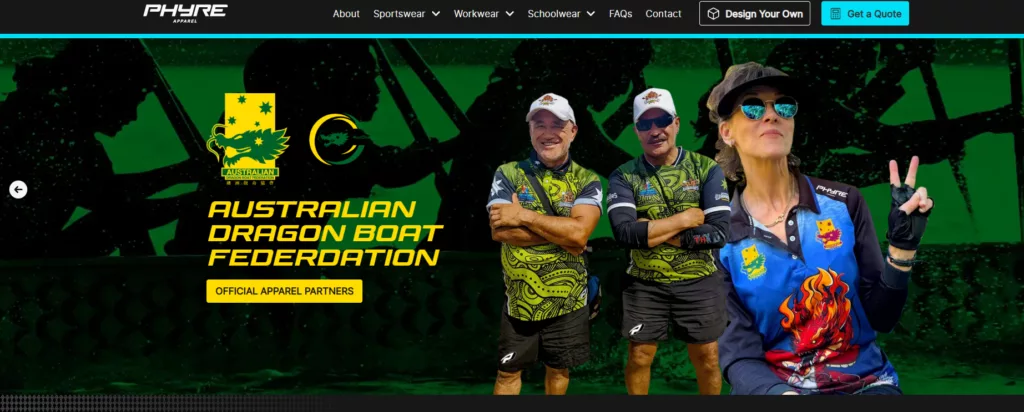
Phyre Apparel is a strong candidate for brands needing custom execution rather than standard blanks. However, you must verify their specific strengths match your product category. A factory great at corporate uniforms might struggle with technical activewear.
Treat your initial inquiry as an audit. Use this checklist to validate their fit among custom clothing manufacturers Australia :
- Production Scope: Ask if they handle patternmaking and grading in-house or if they are strictly CMT (Cut, Make, Trim).
- Quality Control: Request their written standards for spec tolerances and seam durability.
- Ethics: Ask for proof of claims, such as Ethical Clothing Australia accreditation or social audit reports.
The main upside is the potential for retail-ready, brand-forward garments. The downside is that you won't know their true limits until you submit a detailed package.
9. Legend Sportswear – Best for Teamwear Reorder Programs
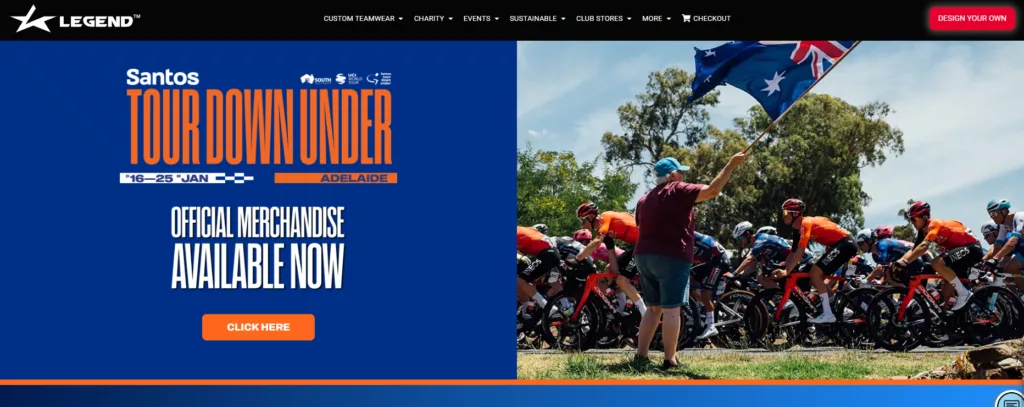
Legend Sportswear specializes in high-consistency sublimation and performance teamwear. They are built for recurring programs where a "Large" ordered today must match one ordered three years ago.
This focus makes them ideal for standardized club kits but less suited for complex fashion silhouettes. To verify durability, request their internal colorfastness test results before committing.
Commercial & Timeline Checks:
- Reorders: Confirm they hold your specific pattern blocks. Ask for the "top-up" MOQ—this is often lower than bulk minimums and is vital for mid-season replacements.
- Schedule: Demand a critical path that includes hard dates for strike-off (print sample) approvals.
10. EVO Sportswear — Best for Scaled Sportswear Orders When Deadlines Are Non-Negotiable
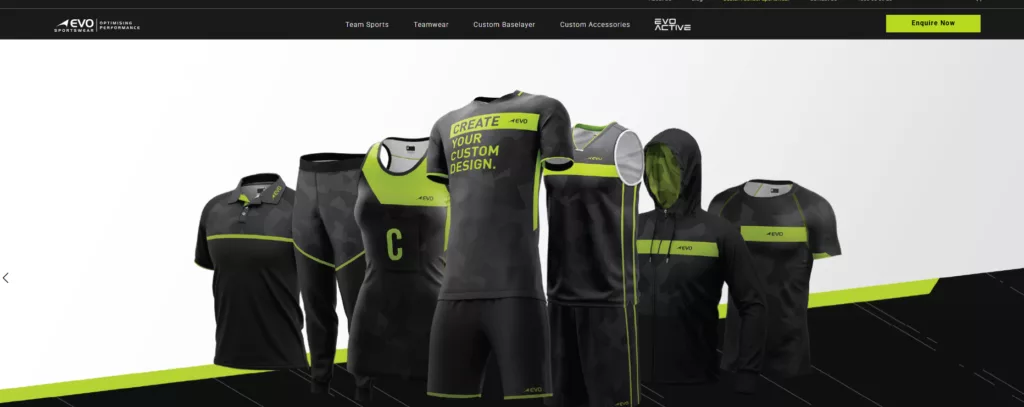
EVO Sportswear excels at high-volume sportswear programs where missing a launch date means missing the season. They prioritize strict delivery windows over small-batch flexibility.
To reduce risk, treat your order as a slot reservation. Ask specifically about their "line booking" process—production capacity often fills up weeks before you submit a purchase order. You must clarify Minimum Order Quantities (MOQs) per size and confirm if they allow lower-volume "top-up" runs for mid-season replacements.
Before signing, define quality expectations. Request their written policy on Acceptable Quality Limits (AQL) to know exactly how many minor defects trigger a total batch rejection.
- Pros: High operational reliability for scaled orders.
- Cons: Any ambiguity in your brief will stall the timeline.
⚡ Power Move: Submit a comprehensive tech pack and digital assets immediately. Do not accept "approximate" timelines; demand a written schedule that explicitly lists the sample approval date and the final ex-factory date.
The Australian Procurement Playbook: From List to Shipment
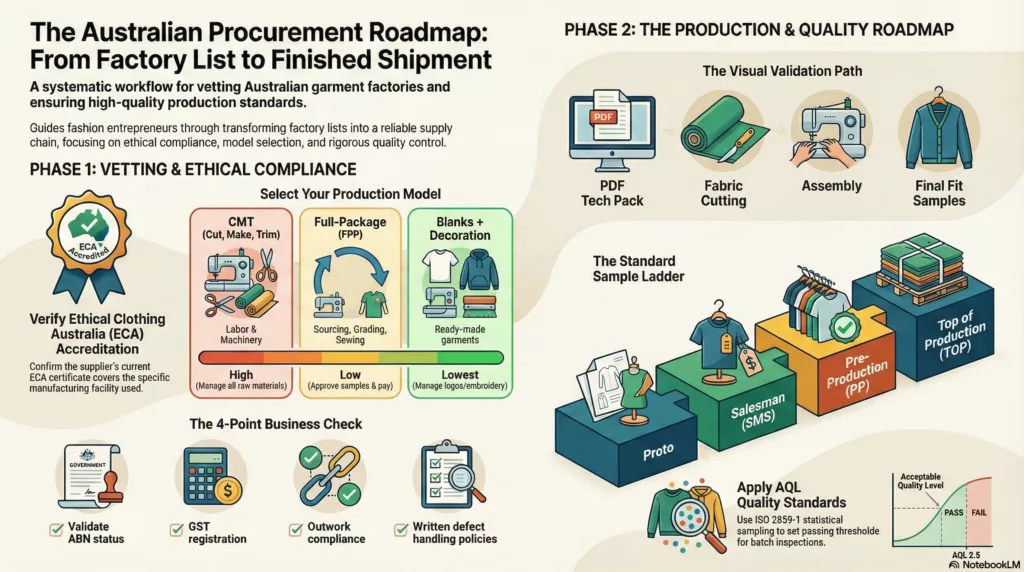
You have a list of potential factories. Now you need a system to vet them. Use this workflow to turn a list of names into a reliable supply chain. Follow these steps to minimize liability and secure your inventory.
A. Define Your Production Model
Australian factories typically operate in one of three ways. Determine which model matches your resources before you send an email.
- CMT (Cut, Make, Trim) You supply everything. This includes fabric rolls, zippers, buttons, patterns, and markers. The factory provides labor and machinery only.
- Your Burden: High. You manage the entire raw material supply chain.
- Full-Package Production (FPP) The factory controls the process. They source the fabric, grade the patterns, and sew the final product based on your tech pack.
- Your Burden: Low. You approve samples and pay for the finished goods.
- Blanks + Decoration You purchase ready-made garments (like AS Colour) and hire a print shop for logos or embroidery.
- Your Burden: Lowest. This works best for uniforms and promotional merchandise.
B. Verify Ethical Clothing Australia (ECA) Accreditation
Accreditation from Ethical Clothing Australia (ECA) is a critical due diligence step. This certification proves a factory pays legal wages and complies with Australian workplace laws.
Request the supplier's current ECA certificate. Check the scope of the accreditation. Confirm it covers the specific facility manufacturing your goods. This step protects your brand from supply chain scandals and ensures you support fair labor practices.
C. The 4-Point Vetting Checklist
Run these checks on any new partner. If they fail one step, disqualify them immediately.
- Identity Check: Enter their ABN (Australian Business Number) into the Australian Business Register. Confirm the business status is "Active" and the entity name matches their bank details.
- Tax Compliance: Verify they are registered for GST (Goods and Services Tax) via the Australian Taxation Office (ATO) lookup tools. Unregistered businesses often lack the scale for commercial orders.
- Workplace Compliance: Request their "Outwork" policy. Confirm they comply with Fair Work Ombudsman standards regarding subcontracting. You must know if they farm your order out to unregulated home sewers.
- Quality Systems: Demand a written "Defect Handling Policy." Define who pays for return shipping if 5% of the order fails inspection. Get this in writing before paying a deposit.
D. From Tech Pack to Physical Sample
Never approve bulk production based on a digital file. Follow this visual roadmap to validate quality.
- Step 1: The Tech Pack. Submit a PDF containing sketches, fabric weight (GSM), and strict measurement tolerances.
- Step 2: The Cut. The factory lays out fabric and cuts the pattern according to your marker.
- Step 3: The Sew. Operators assemble the garment. Inspect stitch density (SPI) during this phase.
- Step 4: The Fit Sample. Measure the physical sample against your tech pack dimensions.
- Step 5: TOP Check. Inspect the first few units from the final production run to ensure consistency.
E. The QC Baseline
Adopt the standard sample ladder to catch errors early.
- Proto: The rough first draft to test the pattern.
- SMS (Salesman Sample): A polished version used for photoshoots.
- PP (Pre-Production): The final contract sample. This acts as your quality standard.
- TOP (Top of Production): The first items off the actual line.
Use AQL (Acceptable Quality Limit) for inspections. This ISO 2859-1 standard uses statistical sampling to determine if a batch passes or fails. Set your defect thresholds in the contract.
Frequently Asked Questions about Custom Clothing Manufacturers Australia
Q1. What is a realistic MOQ for low-MOQ clothing manufacturers in Australia?
Most local factories require 50 to 100 units per style. This number depends heavily on the complexity of your design and the factory’s booking capacity. Always request the Minimum Order Quantity (MOQ) broken down by color and size break before you commit funds.
Q2. What does CMT (cut make trim) include and what do I need to supply?
CMT covers cutting, sewing, and finishing labor only. You supply the tech pack, graded specs, BOM, and usually the fabric — so keep tight control of material sourcing and confirm liability for fabric defects in the contract.
Q3. What is Ethical Clothing Australia (ECA) accreditation?
Ethical Clothing Australia accreditation verifies that a manufacturer complies with local labor laws and pays legal wages. It does not automatically guarantee environmental sustainability. You must still audit the factory's fabric manufacturing and waste protocols to ensure the product meets eco-friendly standards.
Q4. How do I shortlist factories fast without wasting weeks?
Send one PDF tech pack to three potential factories. Demand a written reply that includes their sample timeline, MOQ structure, and Quality Control (QC) policy. If they cannot answer these specific commercial questions within 48 hours, they will likely fail during production.
Q5. Should I start with wholesale blank apparel or custom cut-and-sew?
Start with wholesale blanks if you need speed and low financial risk. This allows you to validate your brand with simple decoration. Switch to custom cut-and-sew only when you need unique silhouettes or fabric blends to differentiate your intellectual property from competitors.