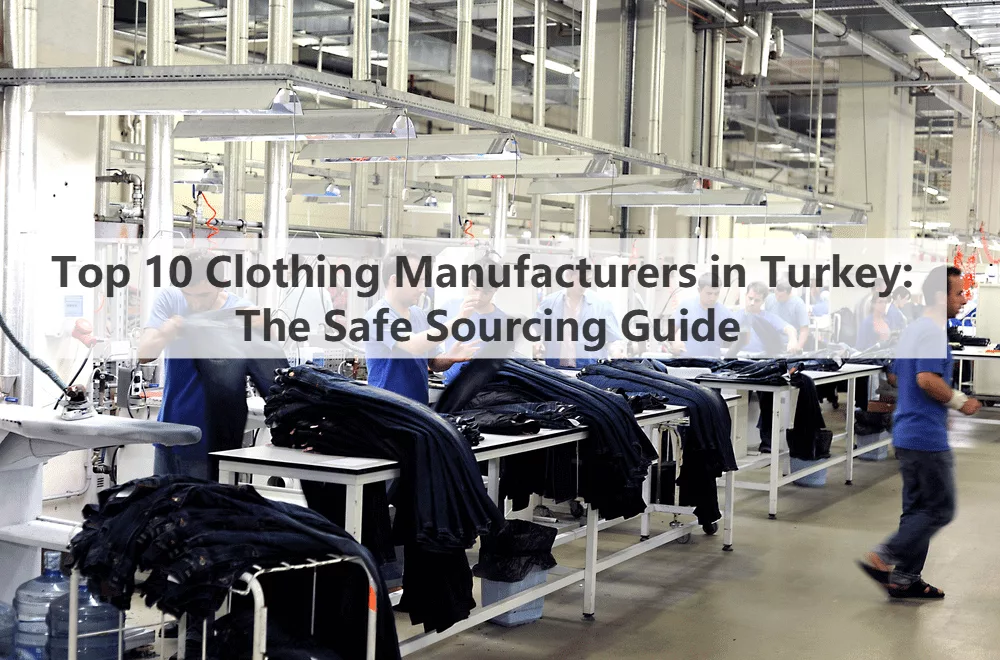

Manufacturing managers often trade speed for lower costs. Turkey breaks this compromise, but only if you vet partners correctly. This list categorizes the top clothing manufacturers in Turkey by capability to help you avoid expensive mismatches. Treat each entry as a potential partner profile.
Shortlist three candidates, then immediately request EU-Turkey Customs Union documentation and samples. We also cover fabric clusters and essential due diligence checklists so you can source with total confidence.
Clothing Manufacturers in Turkey Comparison Table
| Manufacturer | Location | Rating | Primary Strength | MOQ Range (Units/Style) | Key Export Markets |
|---|---|---|---|---|---|
| 1. Akcakaya Textile | Izmir | ⭐️⭐️⭐️⭐️⭐️ | Sustainability focus | 300-1000 | EU, North America |
| 2. Egedeniz Textile | Izmir | ⭐️⭐️⭐️⭐️ | Traceability systems | 500-1500 | UK, Scandinavia |
| 3. Sareteks Textile | Istanbul | ⭐️⭐️⭐️⭐️⭐️ | Multi-fabric integration | 400-1200 | EU wholesale |
| 4. MPY Textile | Istanbul | ⭐️⭐️⭐️⭐️ | Heavyweight knits | 200-800 | Streetwear USA |
| 5. Konsey Textile | Izmir | ⭐️⭐️⭐️ | Startup-friendly scaling | 100-500 | Emerging brands EU |
| 6. IMPAQQT Clothing | Istanbul | ⭐️⭐️⭐️⭐️ | Custom streetwear | 150-600 | Promotional US/EU |
| 7. Mayyana Textile | Izmir | ⭐️⭐️⭐️⭐️ | Uniform repeatability | 1000+ | Corporate global |
| 8. JEETEX | Istanbul | ⭐️⭐️⭐️⭐️⭐️ | Premium customization | 250-900 | Agencies worldwide |
| 9. Pand Textile | Istanbul | ⭐️⭐️⭐️⭐️ | High-volume capacity | 800-3000 | Mass retail Asia/EU |
| 10. Too Fabric | Istanbul | ⭐️⭐️⭐️⭐️ | Dual ready/custom tracks | 100-700 | Pilot-to-scale pilots |
Top 10 Clothing Manufacturers in Turkey
1. Akcakaya Textile (Izmir)
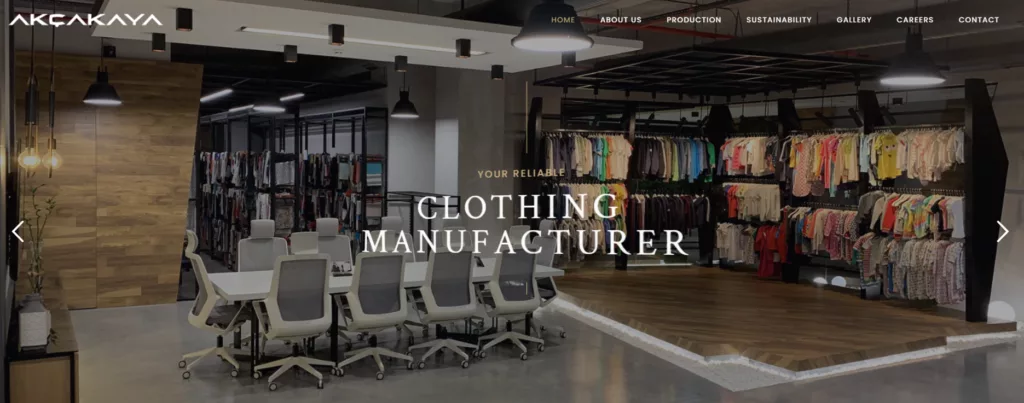
Based in Izmir, Akcakaya Textile differentiates itself through documentation. While many factories claim sustainability, Akcakaya validates it. They operate as a full-package private label partner specializing in organic and recycled knitwear essentials. Brands shortlist them to meet strict EU retailer requirements without risking "greenwashing" accusations.
Best for: Certified organic/recycled knit programs.
Verification Checklist:
- Audit certificates: Request current license numbers for GOTS or OEKO-TEX to verify the scope matches your product.
- Clarify MOQs: Confirm minimums for stock fabric versus custom runs. Ask if sample fees are credited against bulk orders.
- Check references: Ask for recent commercial invoices (with sensitive data redacted) to prove export volume to your region.
🚀 Actionable Insight: Never accept a PDF certificate at face value. Input the license number into the certifying body's public database to confirm it is active and covers your specific product category.
2. Egedeniz Textile
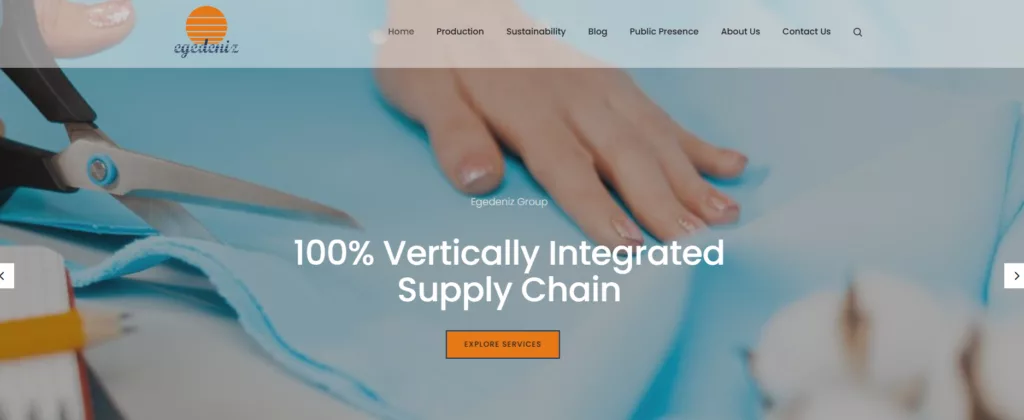
Egedeniz Textile is a strong candidate for organic cotton programs where documentation is non-negotiable. They prioritize traceability for premium basics, making them a solid fit if your retailers demand strict chain-of-custody proof. Use them to mitigate greenwashing risks, but always verify that their paperwork matches their production claims.
Best for: Brands building an organic-cotton capsule line or targeting EU/UK wholesale.
Due Diligence Checklist:
- Clarify the role: Confirm if they act as the mill, garment factory, or a vertical group managing both.
- Audit compliance: Check if their GOTS certificate covers your specific product categories and request their Transaction Certificate (TC) workflow.
- Confirm cotton QC: Demand specific shrinkage tolerances and shade consistency reports for jersey fabrics.
- Lock in gates: Define standard lead times for Proto, SMS, and PPS sampling stages.
3. Sareteks Textile
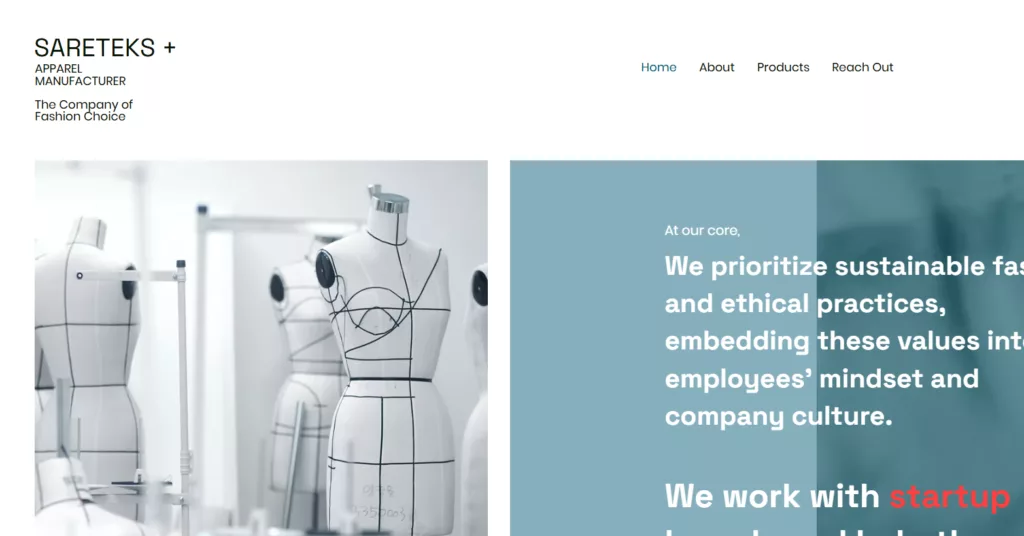
Managing separate factories for denim, wovens, and knits creates logistical chaos. Sareteks Textile consolidates this. Based in Istanbul, they handle everything from pattern making to final finishing under one roof.
This structure specifically suits brands launching multi-category collections without a massive production team, combining large-scale technical capability with the agility needed for mid-sized orders.
Due Diligence Questions:
- Split the MOQ: Ask for minimums by material type. Denim production often requires higher volume thresholds than jersey or basic cotton.
- Audit the paper trail: Request the specific license number for compliance claims. Verify status directly on the GOTS public database or relevant authority.
- Define "finished": Confirm if they handle private-label packaging and barcoding in-house or if that requires a third-party service.
🚀 Actionable Insight: Test color consistency. If your collection matches shades across different fabrics (like a hoodie matching sweatpants), order a cross-category sample set first. This ensures the dye house can maintain the same color code across different textures.
4. MPY Textile (Istanbul)
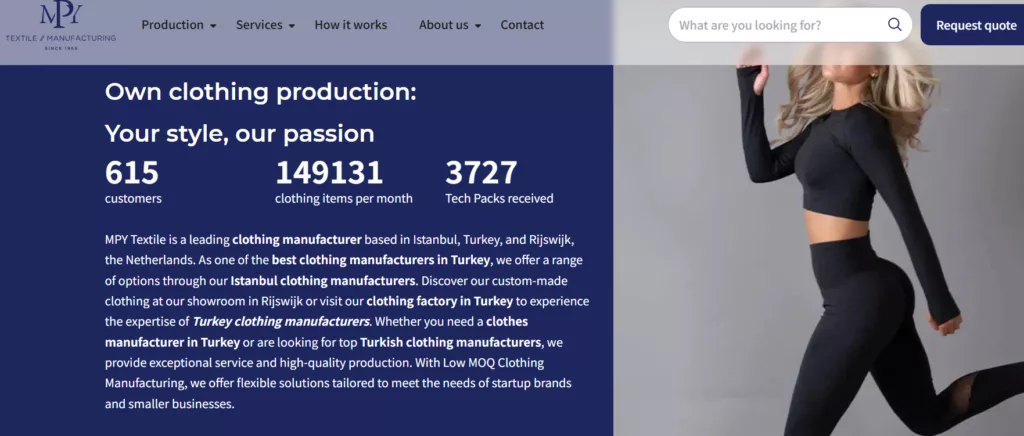
MPY Textile targets the Istanbul export market with a specific focus on heavy French terry and jersey knits. Unlike generalist factories, they prioritize scalable execution for streetwear brands over one-off promotional runs. This specialization ensures the fit consistency and fabric weight tolerances required by Western retailers.
Due Diligence Questions:
- MOQ Logic: Confirm if minimums apply per style, per color, or per fabric roll.
- QC Standards: Ask for their defect list and if they follow ISO 2859-1 (AQL) sampling or perform 100% inspection.
- Certifications: Verify if certifications apply to your specific fabric batch, not just the general facility.
5. Konsey Textile
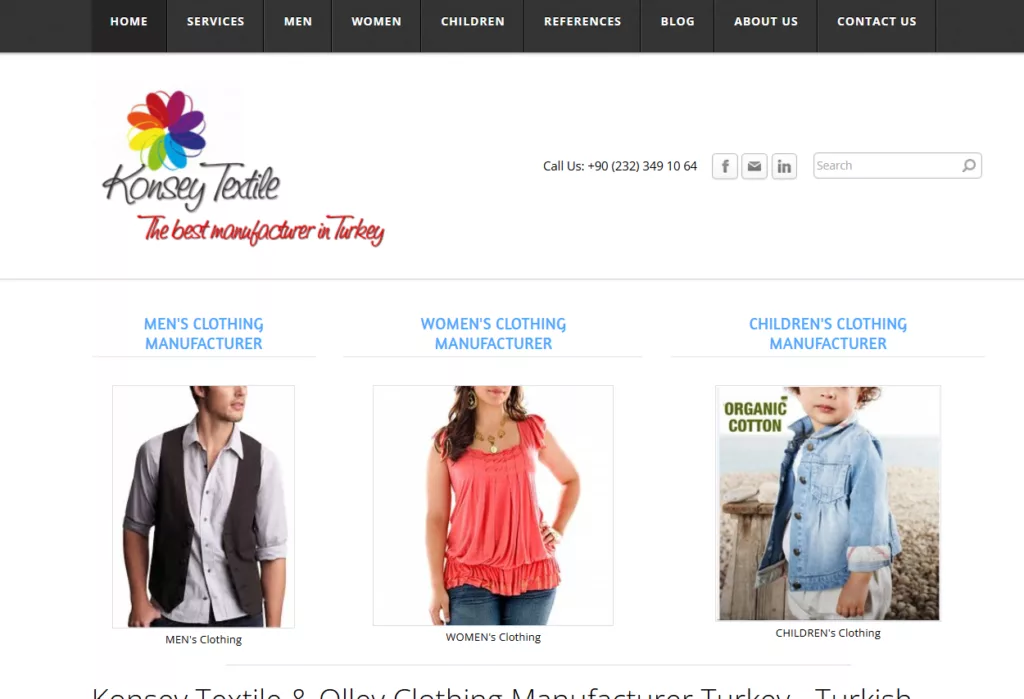
Konsey Textile bridges the gap between buying generic blanks and full custom manufacturing. They specialize in private label production for startup brands, focusing on high-margin basics like hoodies and tees. This allows you to differentiate with specific materials—such as GOTS-certified organic cotton—without the financial risk of ordering thousands of units.
This model helps you validate product-market fit before you scale.
Due diligence questions:
- Fabric Source: Ask if "low MOQ" applies to custom Pantone dyes or only leftover market stock.
- Sample Terms: Get the cost, timeline, and included revisions in writing before paying.
- Export Proof: Request a redacted Bill of Lading to prove recent shipments to your target market.
- Cadence: Establish a strict response time SLA for the sampling phase.
6. IMPAQQT Clothing (Istanbul)
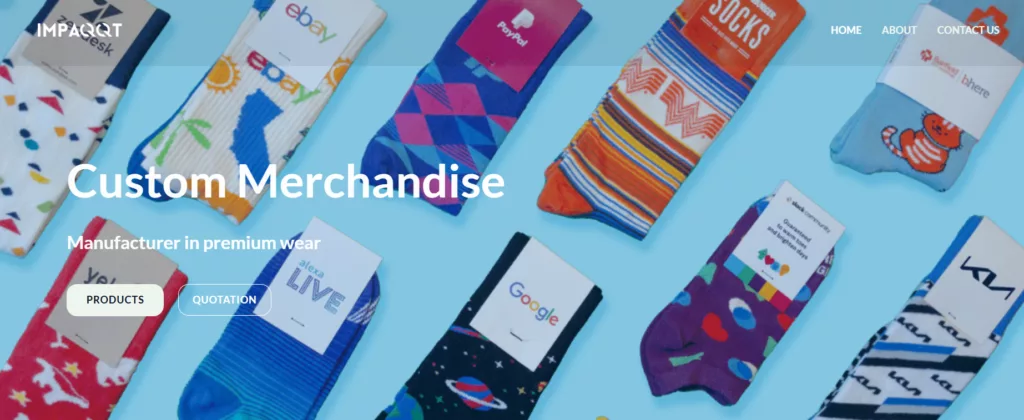
IMPAQQT specializes in custom streetwear, bridging the gap between wholesale blanks and enterprise production. Based in Istanbul, they target startups needing heavyweight hoodies and joggers without massive volume commitments. While accessible, custom cut-and-sew requires strict oversight to avoid costly production errors.
Ask these due diligence questions to protect your investment:
- Enforce sampling: Require physical sign-off on a Pre-Production Sample (PPS) before bulk cutting. Photos hide fabric weight issues.
- Verify decoration: Confirm if printing is done in-house. Outsourced decoration increases the risk of placement variance.
- Define tolerances: Set strict measurement tolerances (e.g., ±0.5cm) based on ASTM D6192 standards to prevent sizing drift during grading.
- Structure payments: Never pay 100% upfront. Negotiate a 30% deposit, with the balance due only after a final quality inspection.
7. Mayyana Textile (Izmir)
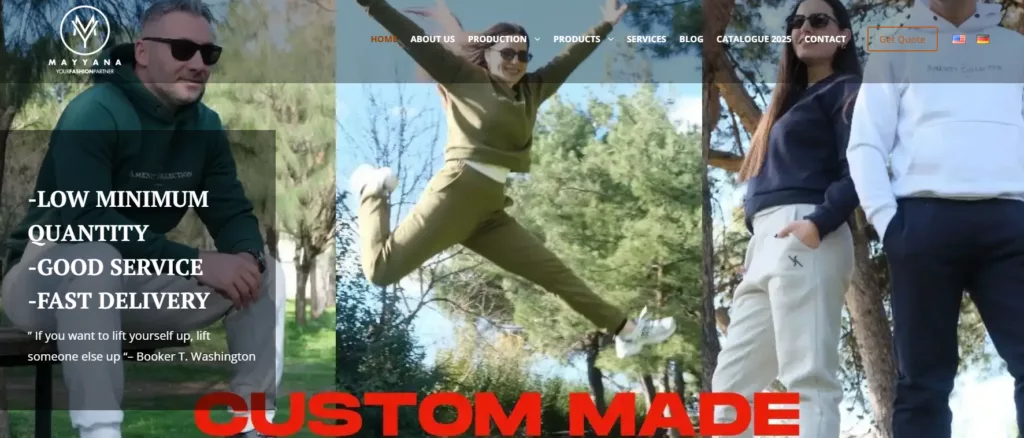
Unlike trend-focused factories, Mayyana Textile prioritizes the strict consistency required for corporate uniforms. Based in Izmir, they manage the full private label cycle—from fabric manufacturing to logistics—specifically for repeat programs. This vertical integration is critical for corporate clients who cannot risk shade variations between batches.
They ensure that thousands of units delivered next year match the technical specs of today's order.
Due diligence questions:
- Test repeatability: Ask for "shade band" records. You need proof they can match the exact Pantone color across production runs spanning years.
- Verify compliance: Request current audit summaries (BSCI, Sedex). Corporate tenders often reject suppliers lacking recent social compliance documentation.
- Check the pack: Confirm packaging capabilities. Can they apply SKU-specific barcodes and legally required polybag warnings?
**🧠 Expert Take:**Lock in your tolerance. Fashion factories often accept a ±2cm variance in sizing. For uniforms, this is too high. Specify a strict ±1cm tolerance in your manufacturing agreement to ensure consistent fit across employee batches.
8. JEETEX (Istanbul + EU-Facing Support)
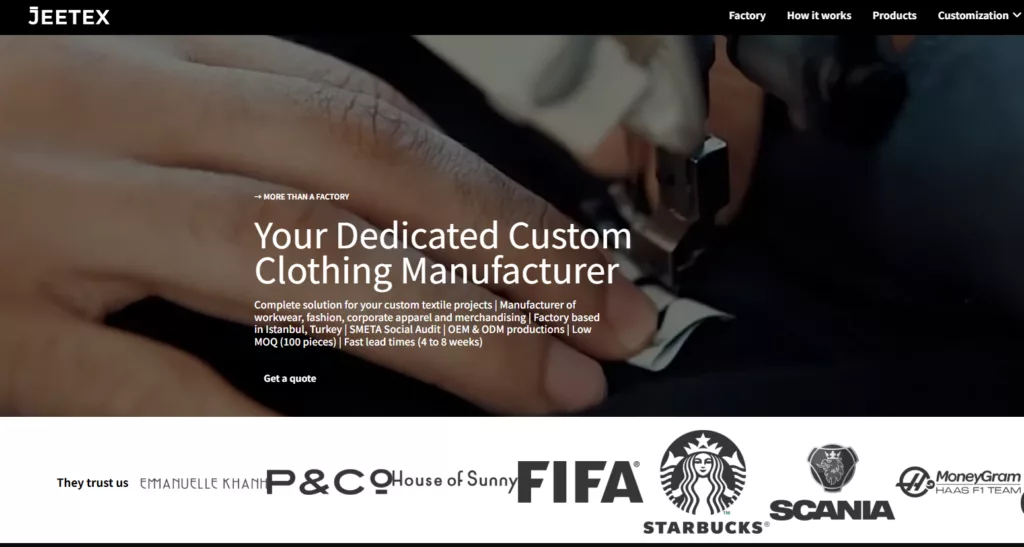
JEETEX solves the "cheap promo" problem often found with volume suppliers. They specialize in high-end customization for promotional apparel and heavy-duty workwear. Unlike factories that simply print logos on blanks, JEETEX manages complex branding details including custom trims, woven labels, and exact Pantone color matching.
Their Istanbul facility supports tight export coordination, ensuring retail-quality finishing. This makes them the right choice for agencies building branded collections where logo integrity and fabric quality matter more than rock-bottom pricing.
Due diligence questions:
- Clarify MOQs: Ask for specific minimums on stock fabrics versus custom-dyed colors.
- Validate color: Confirm the approval workflow for lab dips and request ISO-standard wash test reports to prevent peeling logos.
- Secure dates: Get written timeline commitments for sampling and bulk production, including a clear change-order policy.
9. Pand Textile (Istanbul)
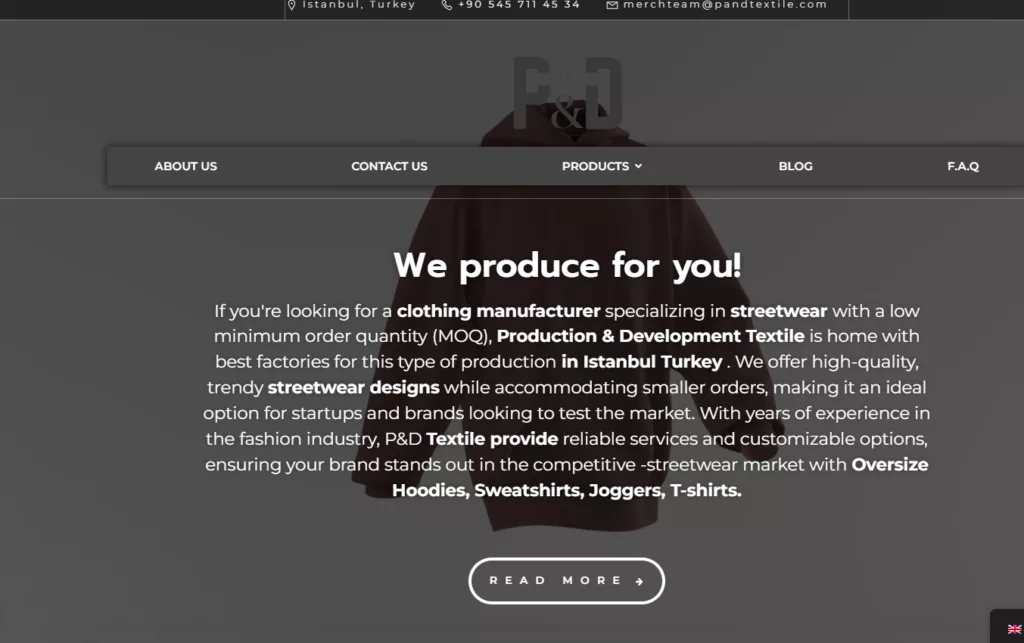
Pand Textile suits the "scale-up" phase where manufacturing capacity outweighs flexibility. They specialize in high-volume streetwear and basics, leveraging Turkey’s export-grade infrastructure to support massive repeat programs. However, their multi-facility network introduces subcontracting risks.
To ensure the hoodie sewn in January matches the one from June, you must enforce strict transparency.
- Map the workflow. Ask exactly which steps (dyeing, embroidery, sewing) happen in-house vs. outsourced. Hidden subcontractors are often where quality drift begins.
- Standardize QC. Mandate a written plan with specific defect classifications based on ISO 2859-1 sampling procedures rather than vague promises.
- Demand visibility. Request weekly video walkthroughs to verify fabric shade consistency across different production batches.
10. Too Fabric (Istanbul)
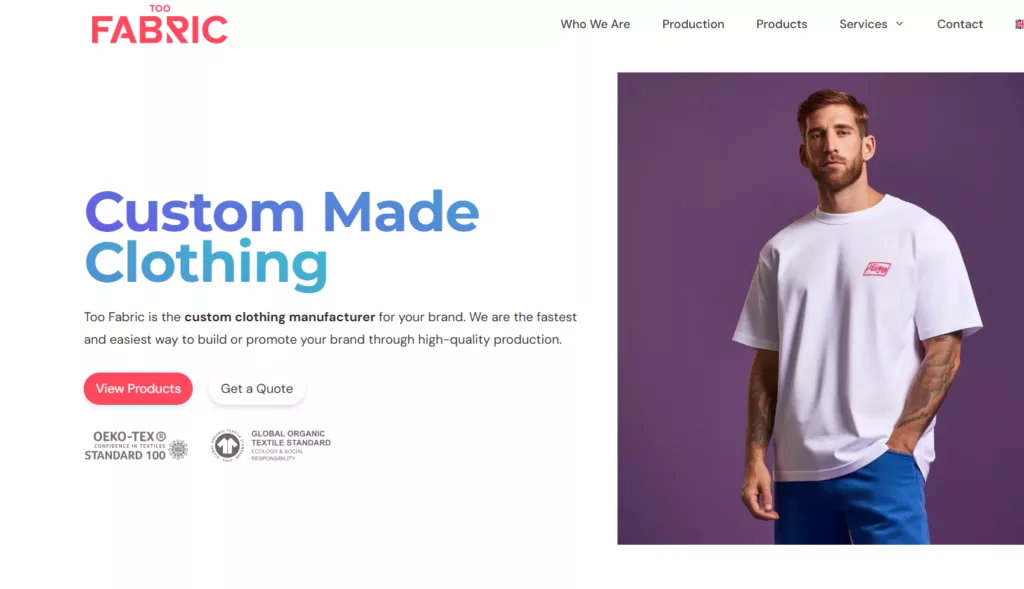
Too Fabric simplifies manufacturing by splitting production into two tracks: "Ready-Made" and "Custom Manufacturing." The Ready-Made program utilizes stock blanks for rapid pilot runs. You pick the base, add branding, and ship in weeks. The Custom track offers full design control typical of Turkey’s textile sector but requires higher volumes.
This structure lets you use stock items to validate demand before committing to complex production.
Due diligence questions:
- Define customization limits: Ask exactly what you can change on ready-made items (e.g., neck labels, drawstrings) versus what is fixed.
- Audit decoration: Confirm they adhere to ISO 105 standards for color fastness and print durability.
- Secure the future: Ask if they lock pricing and fabric availability for fast replenishment orders.
4-Step Manufacturing Action Plan: Search to Sample
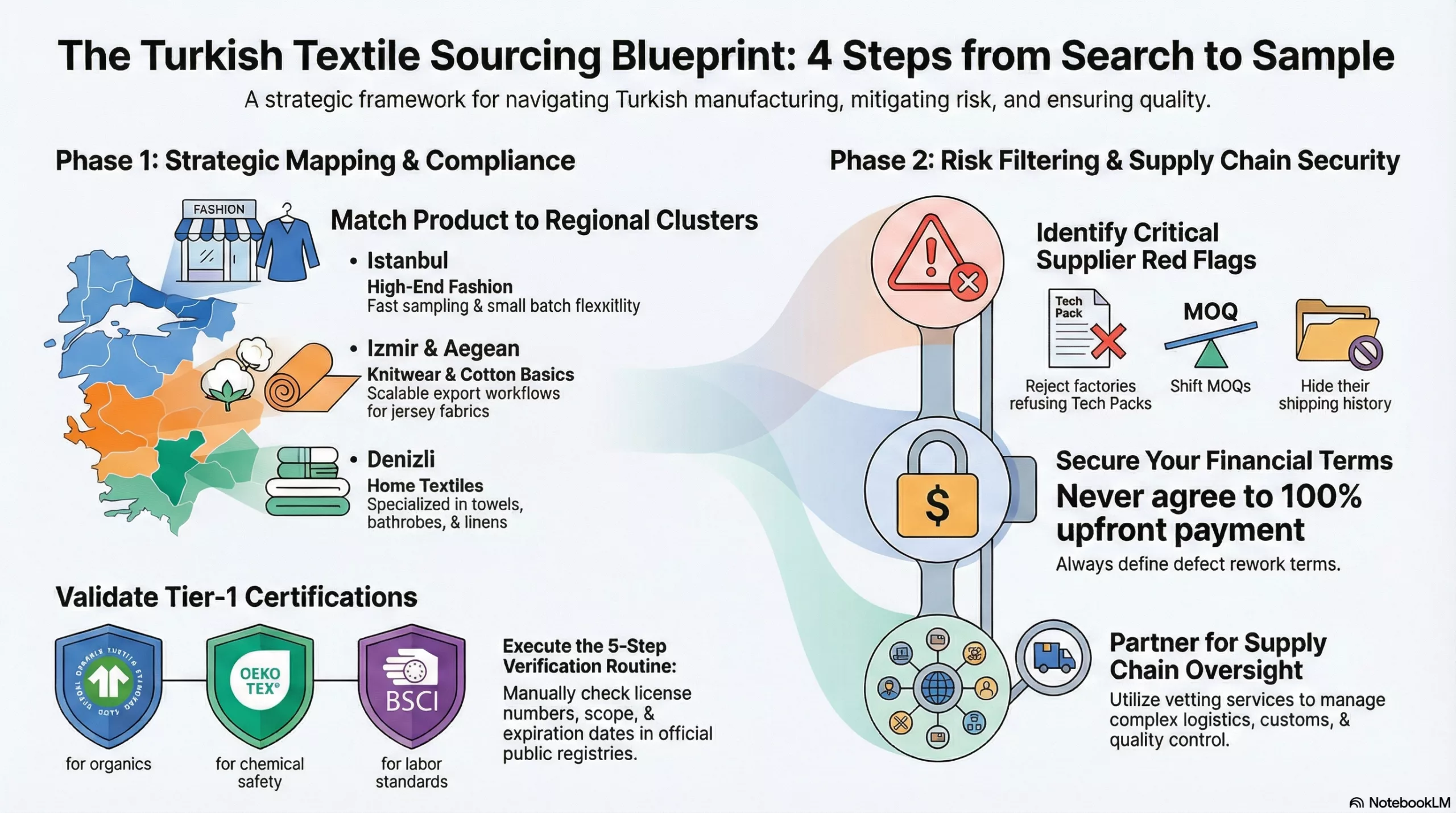
Turkish factories receive hundreds of vague inquiries daily. Use this four-step decision system to signal you are a serious buyer and protect your capital.
1. Match Product to Production Cluster
Turkey organizes manufacturing into specialized regional hubs. Manufacturing the wrong category in the wrong city results in higher costs and lower quality.
- Istanbul: Focus here for high-end fashion development. This hub offers fast sampling, handles smaller batches, and facilitates easy buyer visits.
- Izmir & Aegean Region: Source here for knitwear and cotton basics. This ecosystem excels at scalable export workflows for jersey fabrics.
- Denizli: Limit manufacturing here to home textiles. Use this cluster exclusively for towels, bathrobes, and spa linens. Do not ask Denizli factories to produce fashion cut-and-sew items.
Action: Filter your supplier list. Align the factory location with your specific product category.
2. Validate Compliance Certifications
Greenwashing is common in textile manufacturing. Verify every claim to ensure chemical safety and labor compliance.
- Global Organic Textile Standard (GOTS): Required for organic label claims. It tracks the chain of custody from farm to finished garment.
- OEKO-TEX Standard 100: Tests for harmful substances. Use this to prove compliance with chemical safety regulations like REACH.
- Amfori BSCI: A social audit framework. It verifies that the factory meets international labor standards.
Execute this 5-step verification routine:
- Request the license number. Never accept a generic logo on a website as proof.
- Confirm the scope. Check if the certificate covers your specific product class (e.g., garments vs. raw yarn).
- Check the dates. Ensure the certificate is valid for the current production year.
- Verify in the official database. Input the license number into the certifying body's public registry.
- Archive the file. Download the official record to maintain a strict audit trail.
3. Filter Risks in a Week
Test potential partners early to avoid wasted time. Reject suppliers who display these red flags during initial messaging.
- Refusal to use Tech Packs: Professional factories require strict tolerances. If a supplier resists working from detailed specs, expect quality control failures.
- Shifting MOQs: Suppliers must define Minimum Order Quantities clearly. Avoid partners who increase minimums after receiving your designs.
- Hidden History: Trust established exporters. Demand redacted Bills of Lading or client references to prove they ship to your market.
- Payment Demands: Never agree to 100% payment upfront on a first order. Reject any refusal to define rework terms for defective goods.
4. Secure Your Supply Chain
Manufacturing direct requires managing complex logistics, quality control, and cross-border customs.
LeelinePromotion acts as your global supply chain connector. We bridge the gap between manufacturing floors and your delivery deadline. Whether you need specific apparel manufacturing methods or guidance on apparel fabric types, we vet the factories so you do not have to.
Our team manages the entire process, from manufacturing diverse types of clothing to assembling custom promotional clothing kits.
Get a vetted shortlist and secure logistics. Contact LeelinePromotion Today to launch your project with confidence.
Frequently Asked Questions about Clothing Manufacturers in Turkey
Q1. What is a realistic "low MOQ" for private label in Turkey?
For stock fabrics, factories often accept 100 to 300 units per style. If you need custom fabric dyeing or specific prints, the minimum usually jumps to 500 or 1,000 units per color. This covers the mill's dyeing requirements. Always ask if the "low MOQ" applies to the garment assembly or the fabric production.
Q2. Which sample stages should I require before production?
Require three specific gates. First, the Proto Sample confirms the fit and pattern. Second, the Salesman Sample (SMS) allows you to photograph the product for marketing. Finally, the Pre-Production Sample (PPS) uses the exact bulk fabric and trims. Never authorize the deposit for bulk manufacturing until you physically sign and tag the PPS.
Q3. What quality control standard should I include in my contract?
Specify Acceptable Quality Limit (AQL) 2.5. This international standard defines how many defects are allowed in a batch. You must categorize defects into three tiers: Critical (unsafe), Major (unsellable), and Minor (aesthetic issues). Listing these terms in your Purchase Order protects you from paying for substandard goods. (Source: ISO 2859-1)
Q4. How do I verify certifications like GOTS or OEKO-TEX?
Do not trust emailed PDFs. Enter the certificate number into the official GOTS or OEKO-TEX databases, confirm the status is “Approved”, and check the scope covers your product class. Also ask for the renewal date so you are not relying on an expired certificate.
Q5. What documents confirm a factory is export-ready?
Ask for a sample Commercial Invoice and Packing List from a past shipment (with client info redacted). They must also provide accurate HS Codes for customs and define clear Incoterms (like FOB or DDP). If a supplier cannot produce these standard export documents instantly, they likely lack experience shipping to Western markets.
Need a secure supply chain? We vet the factories, audit the certificates, and manage the logistics. Contact LeelinePromotion today for a shortlist of pre-vetted clothing manufacturers in Turkey.