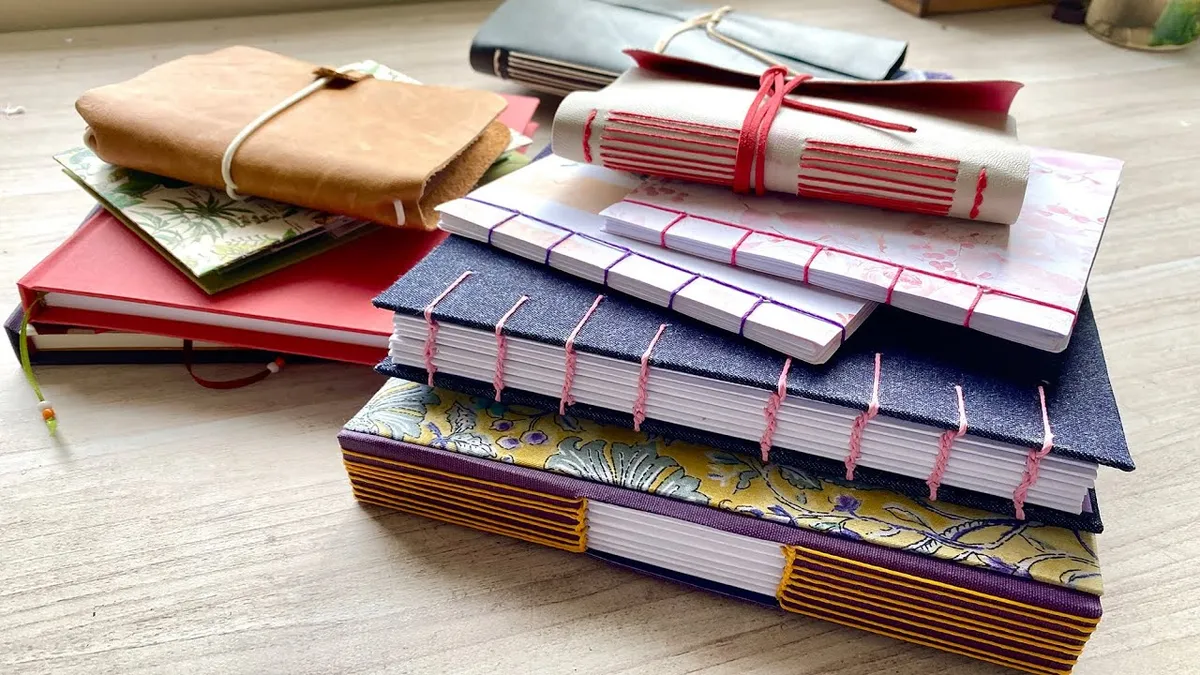

Notebook binding decides how a branded journal behaves in the hand — whether it lies flat, how many pages it holds, and how long it survives daily use. Eight constructions cover almost every promotional notebook order, from Smyth-sewn hardcovers and wire spirals to plastic combs and reusable disc planners. Each maps to a different page count, use case, and budget.
This guide compares the eight notebook binding types against the specs procurement teams actually weigh — lay-flat performance, durability, page range, and cost. It also covers the construction details that decide whether a notebook still looks new after a year, and the checks that catch a mismatch before a full run ships.
The page ranges and durability figures below match the constructions used in our custom promotional notebooks program, where binding is confirmed on the digital sample before production.
"Binding is the hidden backbone of branded notebooks. The prettiest cover will not save a notebook that cannot lie flat for writing."
———— Kristen Li, Stationery Sourcing
Key Takeaways
- Smyth-sewn is the durability benchmark. Signatures thread-sewn through the spine and case-bound into a hard cover hold past 10,000 opens — the standard for executive journals.
- Wire spiral wins on flatness. A double-wire spiral folds back a full 360°, so a planner sits open and hands-free on a desk.
- Page count drives the choice. Saddle stitch suits slim editions up to 64 pages; perfect and lay-flat bindings handle 100+ pages at different costs.
- Mechanical bindings can be edited. Wire, coil, comb, and disc spines let pages be added, removed, or replaced after the notebook is bound.
- Glue and wire quality decide real-world life. PUR adhesive and metal double-wire outlast basic hot-melt and plastic coil under daily handling.
The Eight Notebook Binding Types at a Glance
| Binding | How the pages are held | Lay-flat | Best page range | Relative cost |
|---|---|---|---|---|
| Smyth-sewn case | Thread-sewn signatures, hard cover | Flattens, 10,000+ opens | 64–192 pages | Highest |
| Double-wire spiral | Metal wire through punched holes | Flat at 360° | 60–100 sheets | Low–mid |
| Plastic coil | Plastic strand through punched holes | Flat at 360° | 60–150 sheets | Low |
| Plastic comb (GBC) | Plastic comb through punched slots | Flat, pages removable | 30–400 sheets | Low |
| Saddle stitch | Staples through the folded spine | Folds flat | Up to 64 pages | Lowest |
| Perfect binding | Glued square spine, soft cover | Stiff, slight curve | 100+ pages | Low |
| Lay-flat (OTAB) | Sewn block glued into a soft cover | Opens flat | 100–300 pages | Mid |
| Disc binding | Discs through punched holes | Flat, pages swappable | 30–200 sheets | Low–mid |
1. Smyth-Sewn Case Binding: The Executive Standard
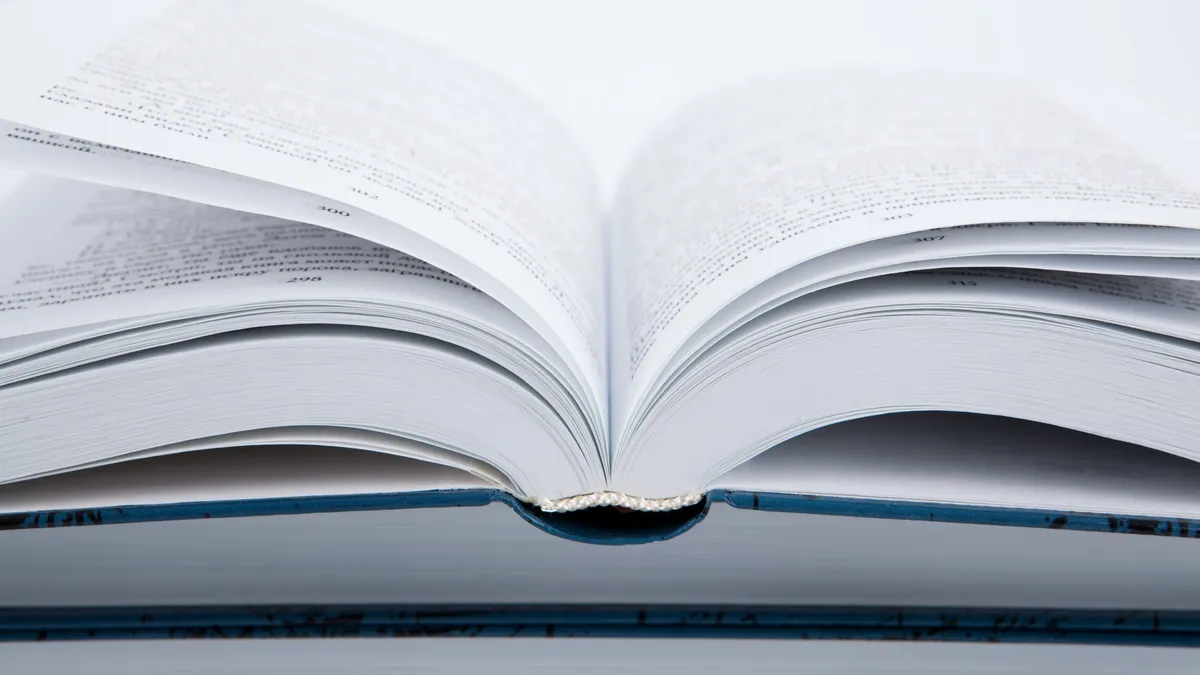
Smyth-sewn construction folds the inner pages into signatures, stitches them through the spine with thread, then case-binds the block into a hard cover. Because the pages are held by thread rather than glue alone, the block stays together under heavy use, which is why it reads as premium the moment it is picked up.
Smyth-sewn is often confused with over-sewn (side-sewn) construction, and the two behave differently. Over-sewn drives thread through the side of the block near the spine, which limits how far a book opens. True Smyth-sewn threads each folded signature through its centre fold, so pages open to the spine without cracking the gutter. When a spec sheet simply says "sewn binding", confirm which construction is meant.
🧠 Expert Take: When a quote says "sewn binding" but names no construction, ask whether it is Smyth-sewn or over-sewn — the answer decides how far the journal opens and how it sits on a desk.
Choose Smyth-sewn for:
- Executive journals and client-gift notebooks
- Any journal expected to stay in daily use for a year or more
- Hardcover editions with a PU leather, linen, or soft-touch cover and a debossed or foil-stamped logo
The trade-off is cost and setup. Sewing and case-binding add material and manual work, and sewn signatures are gathered and stitched in sections, so a sewn journal is most economical at higher volumes. That makes it the right call for premium gifting and less so for a short run of simple giveaways.
2. Double-Wire Spiral: Premium Lay-Flat
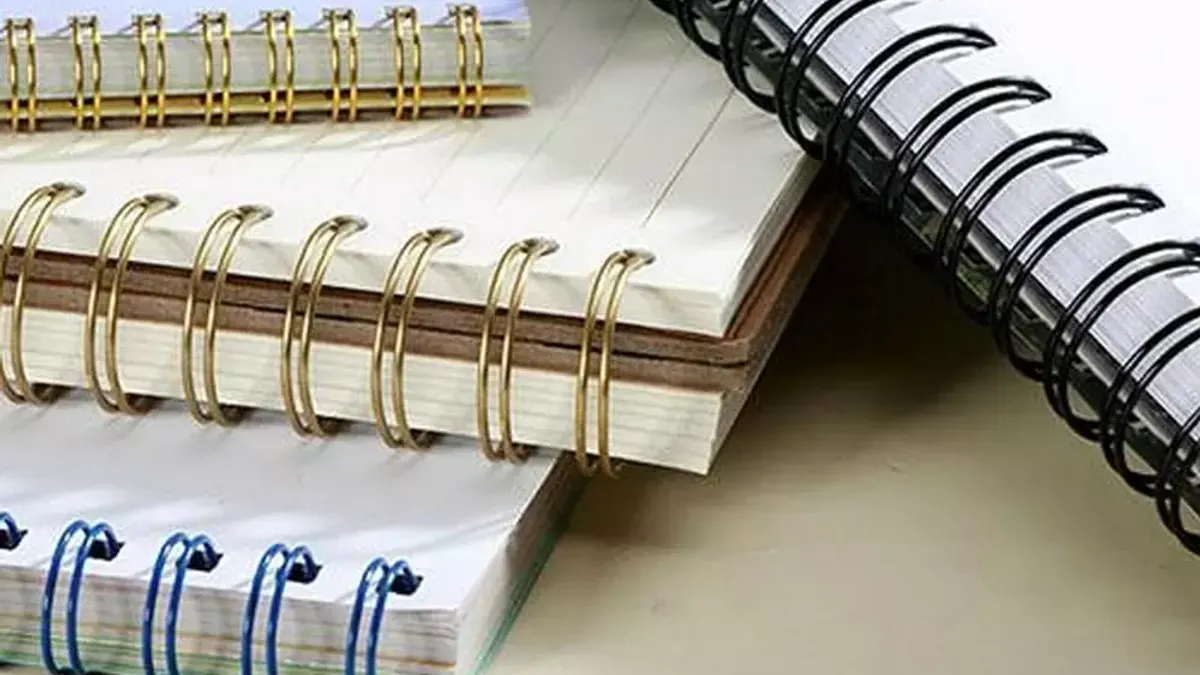
A double-wire spiral threads a continuous metal wire (often called Wire-O) through punched pages, so the book folds back a full 360° and a single page stays open with no hand pressure. That makes it the best binding for anything written in on a desk — planners, meeting notebooks, and event notebooks where one hand holds a pen and the other keeps the page flat.
Metal wire holds its shape for years, which is what separates it from the plastic coil that shares the "spiral" name. A coil can stretch or kink under rough handling; a wire loop keeps a clean 360° fold over a notebook's whole life.
🚀 Actionable Insight: Put the construction in writing on the spec. "Spiral" alone can ship as a plastic coil that kinks within months; "metal double-wire, 360° fold-back" locks in the lay-flat behaviour a planner actually needs.
Spiral notebooks typically run 60–100 sheets. The cover takes full-color edge-to-edge printing, which makes spiral the most cost-effective way to put a detailed design on a high-volume branded notebook for trade shows and conferences.
A frosted PP protective cover is a common add-on. It protects the printed cover in a bag and pairs well with a branded pen.
3. Plastic Coil: The Budget Lay-Flat Option
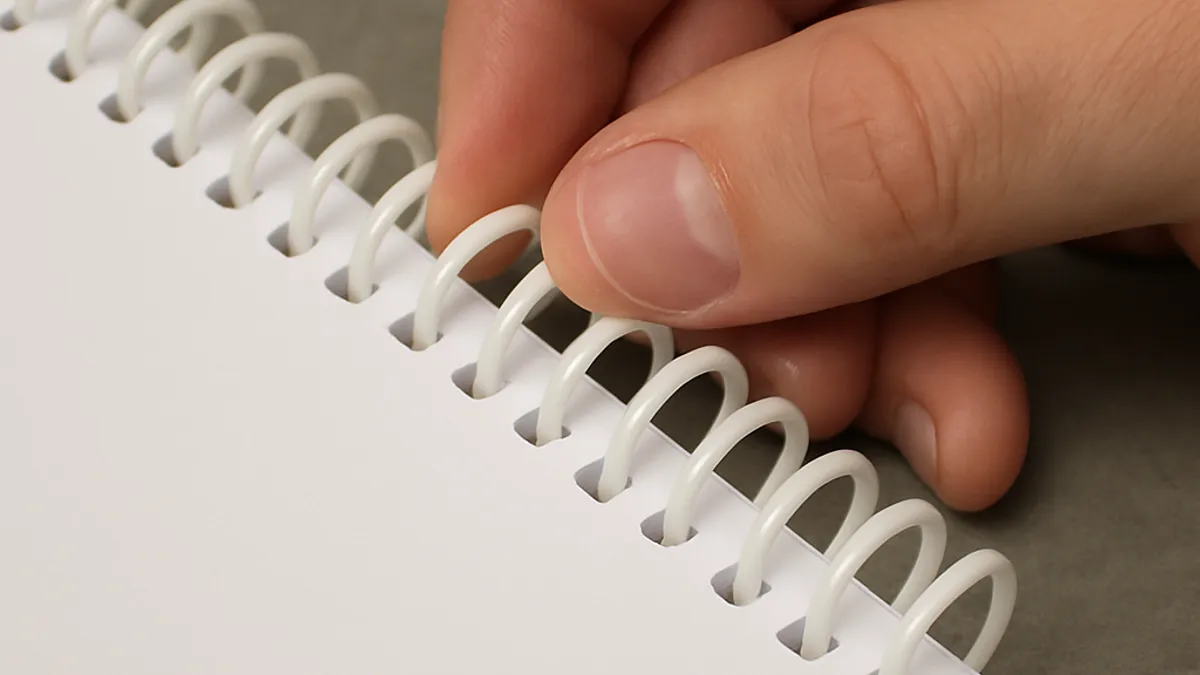
A plastic coil binding threads a helical plastic strand through punched holes — the budget member of the spiral family, and the most common binding on school and high-volume giveaway notebooks. Like a wire spiral, it folds back a full 360° for flat writing.
What coil gets right, and where it trades off:
- Lower cost than wire. Coil is the cheapest way to get 360° lay-flat pages, which is why it dominates student planners and bulk giveaways.
- Softer and lighter. A plastic strand adds little weight or stiffness, so a coil notebook packs flat.
- But less durable. A coil can stretch, kink, or pop out of its holes under rough handling, and it does not hold a crisp edge the way metal wire does.
Coil notebooks typically run 60–150 sheets. Choose coil when flat writing matters but the unit cost has to stay near the bottom of the range — training manuals, student planners, and high-volume event giveaways.
4. Plastic Comb (GBC): Editable Pages
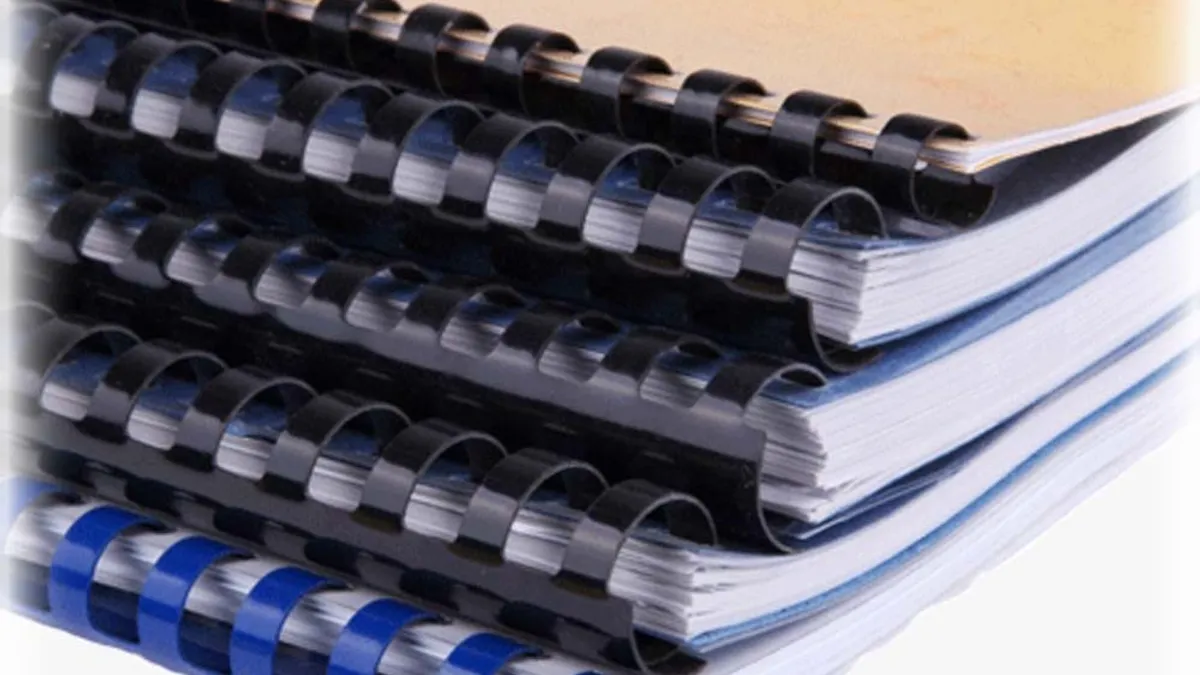
A plastic comb binding feeds a rigid plastic spine with curved teeth through rectangular punched slots. The comb is the point: it opens, so pages can be added, removed, or replaced after the notebook is bound — the reason comb is standard for workbooks, price lists, and any document that gets updated over time.
- Editable after binding. Reopening the comb and swapping pages takes seconds, which no glued or sewn binding allows.
- Wide page range. Comb holds anything from a slim 30-sheet handout to a 400-sheet reference manual.
- The trade-off is bulk. The comb spine is thick and scratches against a bag, the teeth can crack if over-flexed, and the finish feels less premium in the hand than wire.
Choose comb binding for training manuals, workbooks, and reference notebooks that a client will revise and reprint repeatedly rather than use once.
5. Saddle Stitch: Slim Editions Under 64 Pages
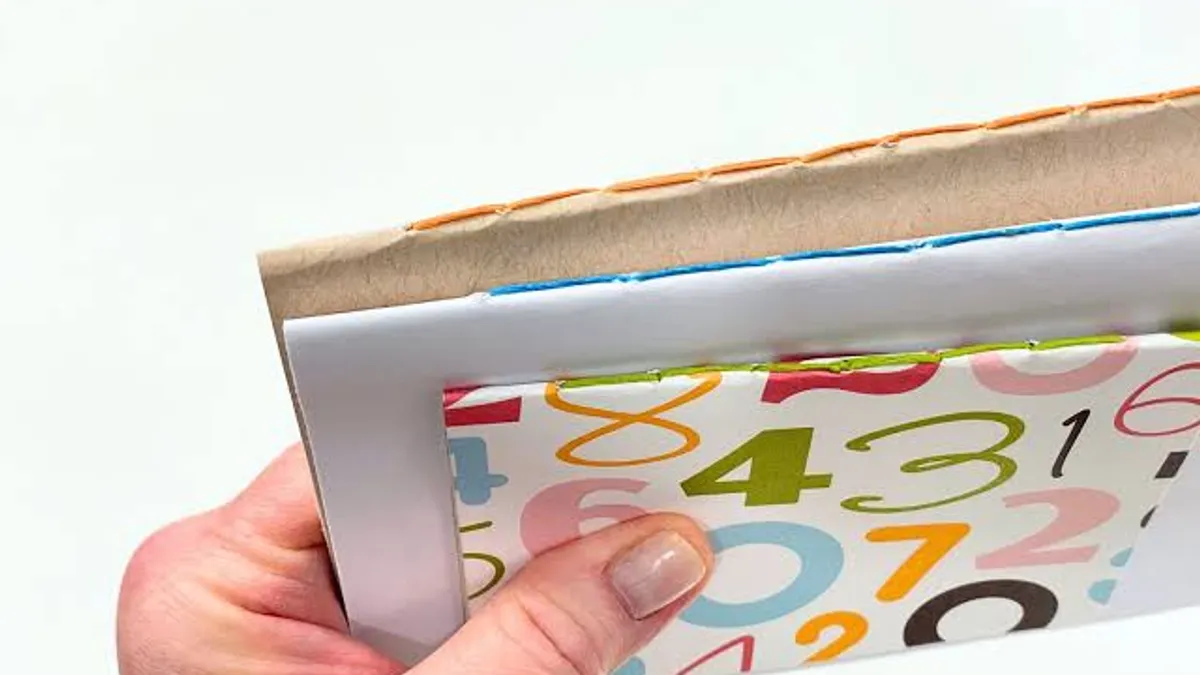
Saddle stitching folds the sheets in half and drives staples through the spine. It is the cheapest binding per unit and the fastest to produce, which suits slim booklets, pocket notebooks, and program-style editions that top out at 64 pages.
The page ceiling is the constraint. Beyond roughly 64 pages the spine bulges and the book will not close cleanly, so saddle stitch does not scale to a thick journal. For leave-behinds and event programs, that limitation rarely matters.
Note the page arithmetic: a saddle-stitched book is built from folded sheets, so its page total always lands on a multiple of four. A 62-page draft is padded to 64, and a 58-page draft to 60.
6. Perfect Binding: The Volume Cost Option
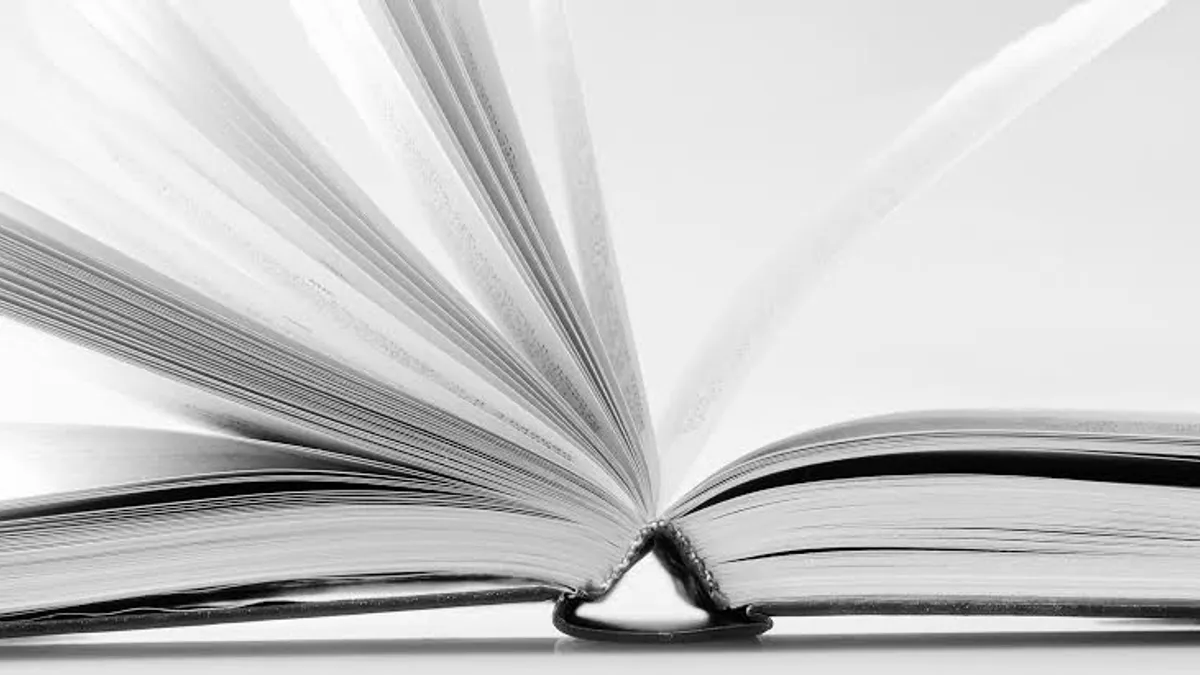
Perfect binding mills the spine flat and glues the pages into a soft cover — the construction used by most paperback books. It holds well past 100 pages and gives a softcover notebook a clean, squared-off spine that takes title printing.
The adhesive decides durability:
- EVA hot-melt: the cheapest option — softens in heat, so heavy use can loosen pages over time.
- PUR (polyurethane): bonds more flexibly and tolerates repeated opening far better, the spec to request when a softcover notebook has to last.
- Notch binding: small notches cut into the spine edge let the adhesive penetrate the page block for a stronger hold.
⚙️ Technical Detail: PUR cures by reacting with moisture in the paper rather than by cooling. That is why it stays flexible where EVA hot-melt turns soft in heat and brittle in cold — the difference between a softcover that lasts a year and one that sheds pages.
This is the binding to specify when volume and cost matter more than lay-flat writing. A perfect-bound notebook sits flatter in the hand than a case-bound hardcover but does not open fully flat, and it is less durable than Smyth-sewn under heavy daily use.
Choose perfect binding for large giveaways, conference notebooks, and softcover editions where the budget is fixed and the print run is long.
7. Lay-Flat (OTAB): A Softcover That Opens Flat
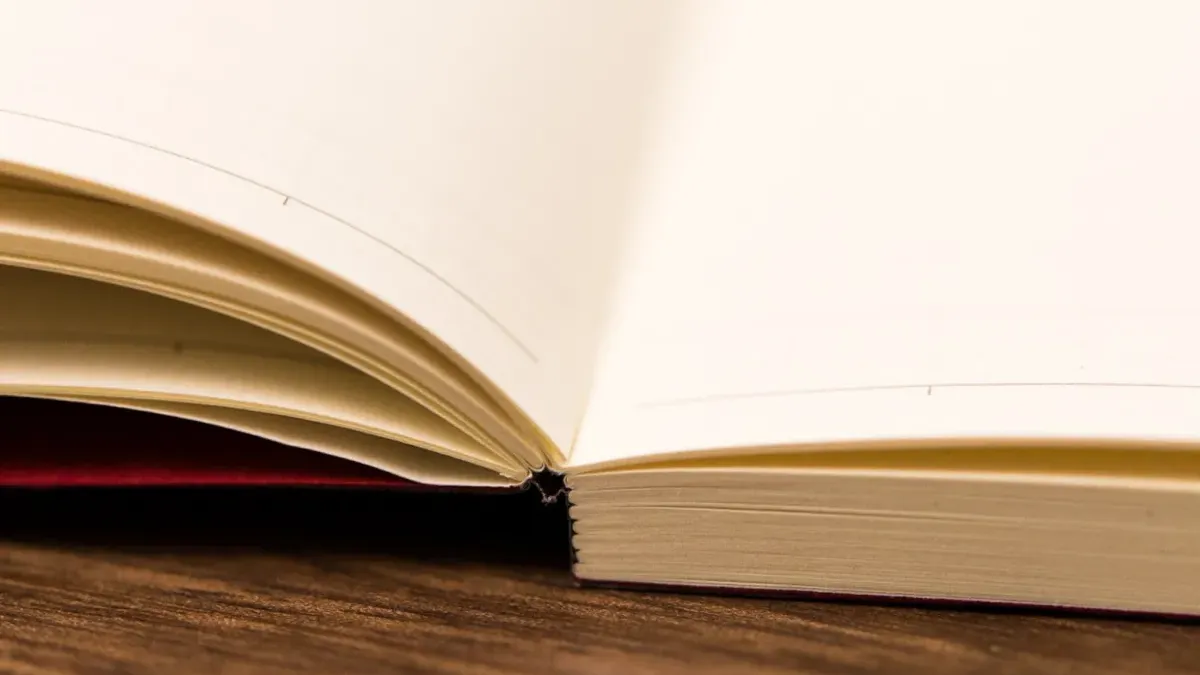
Lay-flat binding — often sold as OTAB — sews the page block and then glues it into a soft cover with a flexible hinge, so the notebook opens flat like a hardcover while keeping a softcover's weight and price. It bridges the gap between a flat-packed glued spine and a sewn hardcover.
- Opens genuinely flat. Pages lie open on a desk with no hand pressure, without the spiral look.
- Reads as premium. A squared, printed softcover spine gives the same shelf presence as a trade paperback.
- The trade-off is price. OTAB costs more than standard perfect binding and offers fewer cover finishes than a case-bound hardcover.
Choose lay-flat for premium softcover journals, planners, and corporate notebooks where the cover has to feel upscale but the pages have to stay open while writing.
8. Disc Binding: Reusable, Swappable Pages
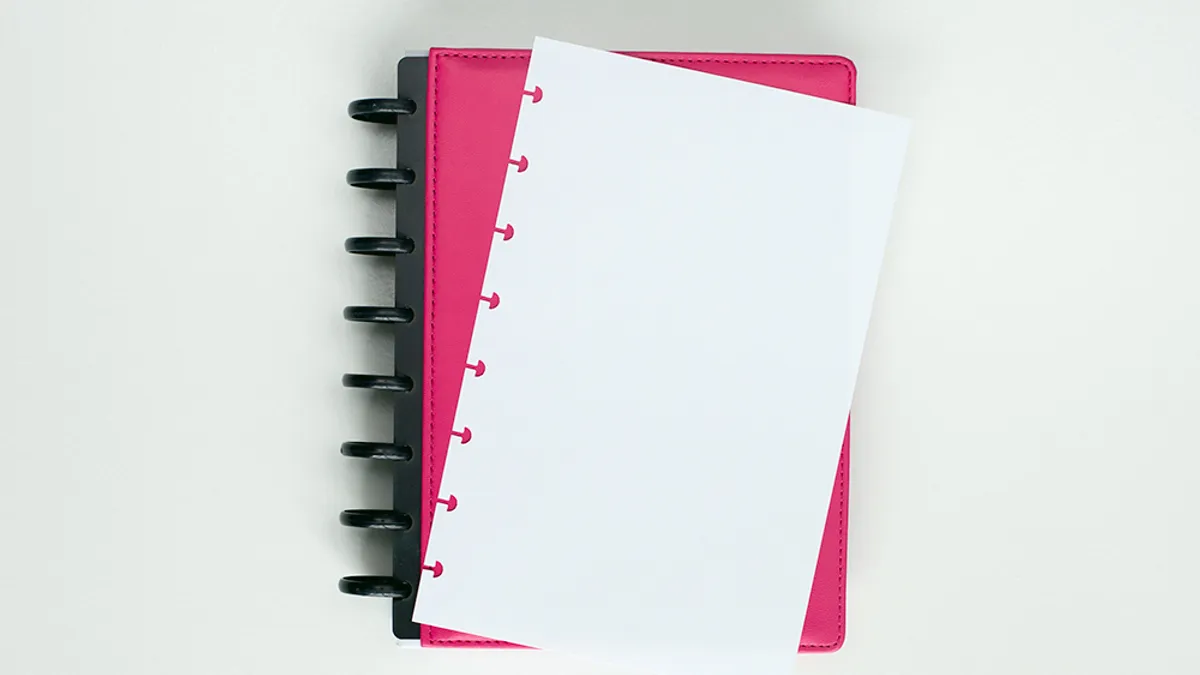
Disc binding punches pages with small holes that clip onto metal or plastic discs, so pages can be removed, reordered, and re-inserted without tools. It is the construction behind refillable planners and the "smart" notebooks that pair a writable page with a scanning app.
- Fully swappable pages. A disc notebook is a binder and a notebook in one — reorder sections or refill it once it is full.
- Lies flat and folds back. The disc spine opens flat for writing and folds on itself for storage.
- The trade-off is bulk. Discs add thickness and rattle in a bag, and refill rings cost more per use than a simple glued pad.
Choose disc binding for refillable planners, project notebooks, and branded journals a client will keep and reuse month after month rather than discard.
How to Tell the Bindings Apart
Binding is easy to mislabel on a spec sheet, so a buyer or inspector can confirm it by eye and by hand in under a minute. These six checks separate the eight constructions without opening a sample bag.
| What to look at | What it tells you |
|---|---|
| Spine shape | A rounded glued square spine is perfect binding; a flat rigid board is case binding; a wire loop along the edge is wire spiral; a plastic twist is coil; plastic comb teeth are comb binding; a row of clips is disc binding. |
| Open test | A book that folds fully back is spiral or coil; one that opens flat without folding back is sewn, lay-flat, comb, or disc; one that springs shut is a glued block. |
| Centre of the book | Thread visible in the middle fold of each signature means Smyth-sewn; a single glued edge with no threads means perfect binding; a sewn block glued into a soft cover means lay-flat. |
| Mechanical element | Wire, coil, comb, or discs along the spine mean the pages can be replaced or reordered; thread or glue alone means they cannot. |
| Page count | A page total that is not a multiple of four rules out saddle stitching. |
| Flex across the spine | A sharp crease at the glued spine after one hard open points to hot-melt glue under stress; a soft, even bend points to PUR, sewn, or lay-flat construction. |
These checks matter because a mislabelled binding is a spec failure, not a cosmetic one. A giveaway specced as lay-flat but shipped with a glued spine will stay shut on the desk, and the gap usually surfaces only after the boxes land.
How to Choose a Notebook Binding
Match the binding to two variables: how many pages the book needs and how it will be used.
| If the notebook will be... | Pages | Binding |
|---|---|---|
| An executive or client gift | 64–192 | Smyth-sewn case |
| A planner or meeting notebook | 60–100 sheets | Double-wire spiral |
| A budget giveaway notebook | 60–150 sheets | Plastic coil |
| A workbook or manual that gets updated | 30–400 sheets | Plastic comb (GBC) |
| A slim event program | Up to 64 | Saddle stitch |
| A high-volume softcover giveaway | 100+ | Perfect |
| A premium softcover journal | 100–300 | Lay-flat (OTAB) |
| A reusable, reorderable planner | 30–200 sheets | Disc |
When two bindings both fit, default to the one that matches the daily-use pattern:
- A notebook that must lie flat on a desk points to wire spiral, coil, or lay-flat.
- One that has to survive a year in a bag points to Smyth-sewn.
- A document a client will update points to comb or disc.
- A long softcover run at the lowest unit cost points to perfect binding.
Our recommendation: Choose the binding by how the notebook is used, not how it photographs. A spiral that looks utilitarian beats a stiff glued spine the recipient quietly stops using.
Binding and Paper: Getting the Pair Right
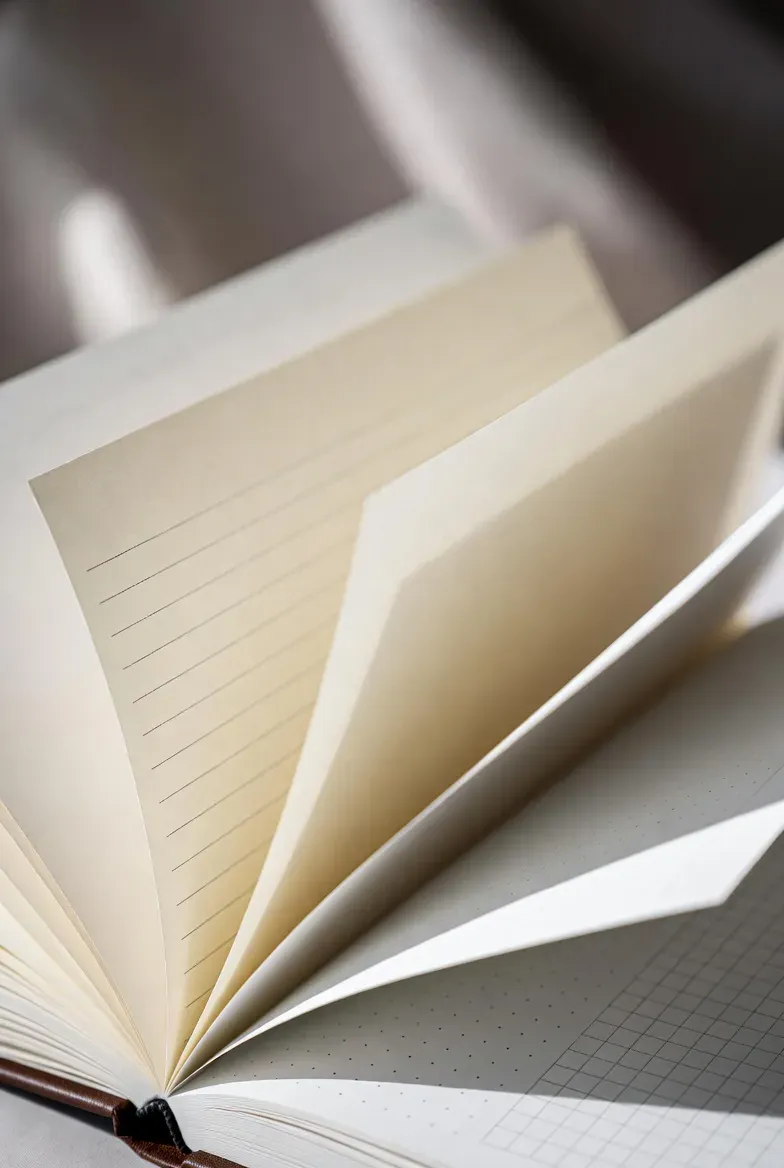
Binding and paper weight are chosen together. Heavier paper improves the writing feel but adds thickness, and thickness is what pushes a slim binding past its page ceiling.
The inner stock sets the tone as much as the binding does:
| Paper weight | Handles | Best for |
|---|---|---|
| 80 gsm | Ballpoint and gel pens | Everyday note-takers |
| 100 gsm | Fountain pens, markers | Executives, creatives |
| 120 gsm | Wet inks, no show-through | Premium journals |
Cream reduces eye strain for long-form writing, ivory feels classic, and bright white gives the most contrast. Ruled, dotted, grid, and blank layouts are available regardless of binding.
For a sewn, lay-flat, or case-bound journal, 80–100gsm is the usual pairing — smooth enough for ballpoint and gel pens, with enough opacity to limit show-through. For a fountain-pen or premium brief, step up to 100–120gsm, where wet ink dries without bleeding through to the reverse side.
Branding the Cover: Deboss, Foil, and Print
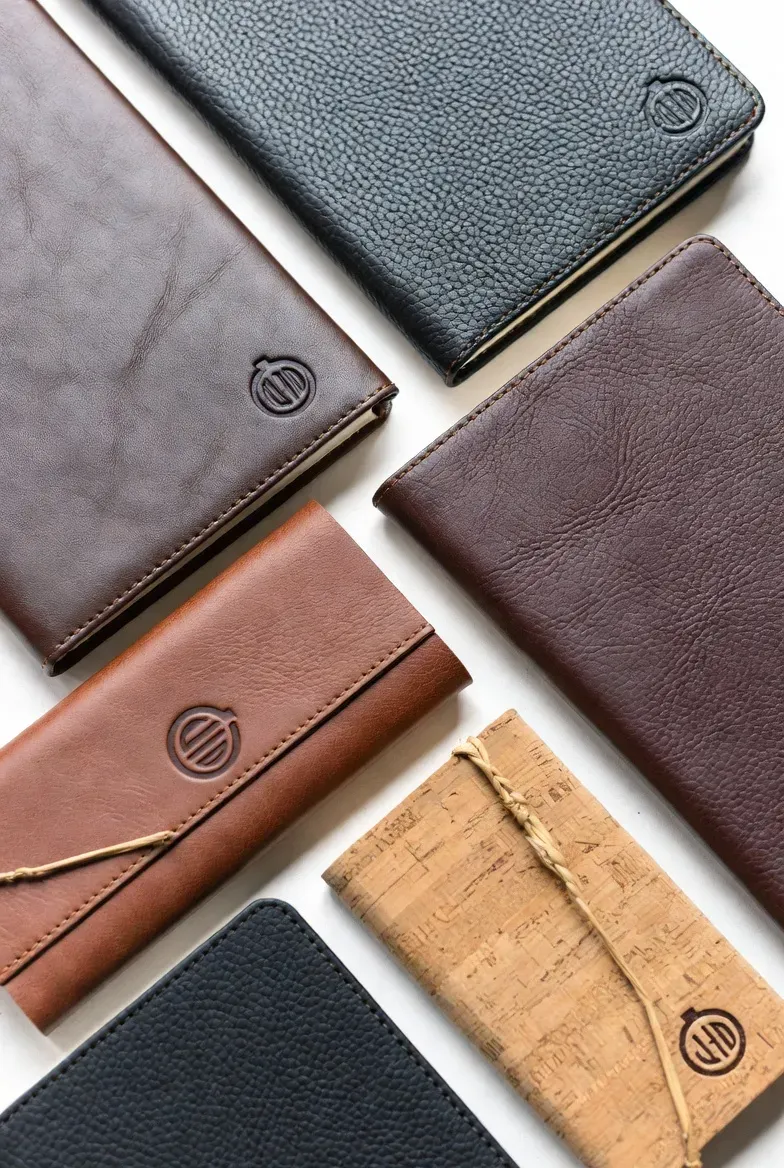
Binding determines the cover surface, and the cover surface determines which decoration works best.
Hardcover Smyth-sewn notebooks take a deboss or foil stamp cleanly on leather, linen, and soft-touch covers. Foil (gold, silver, copper, or rose gold) suits executive gifting, while a blind deboss keeps a logo understated. Spiral, coil, and saddle-stitched notebooks, with their lighter printed covers, are better served by full-color print and spot UV.
Full-color digital print remains the most flexible option across every binding, and it is the only method that reproduces gradients and photographs. Confirm the decoration method on the digital sample, since foil and UV shades are locked per finish.
Common Mistakes in Notebook Binding Orders
Most binding problems trace back to a spec written before the use case was pinned down. These are the six that recur on promotional notebook orders.
- Choosing binding by looks rather than use. A stiff glued spine photographs well but frustrates anyone taking notes standing up; a spiral looks less formal yet is the right call for daily writing.
- Ordering a thick saddle-stitched journal. Past about 64 pages the spine bulges and the book will not close cleanly, regardless of how good the cover looks.
- Assuming every "spiral" folds flat. A plastic coil can kink under load; metal double-wire holds a 360° fold for the life of the book.
- Speccing cheap hot-melt glue for a long-life softcover. A notebook meant to last a year should not ship on EVA hot-melt alone; the adhesive is usually the first thing to fail under daily handling.
- Picking comb or disc without costing the refills. These bindings are editable, but the spine and refill rings add per-unit cost that a simple glued pad avoids.
- Ignoring the folded-sheet page rule for saddle stitch. A page total that breaks the folded-sheet math gets padded or trimmed at prepress, which can shift the print date.
Bottom line: Every one of these mistakes is decided on paper, before a single notebook is made — pin the page count, the open behaviour, and the glue spec up front, then hold the factory to all three.
Frequently Asked Questions About Notebook Binding Types
1. Which notebook binding is most durable?
Smyth-sewn case binding, tested beyond 10,000 opens, is the most durable construction in the range. It handles daily use, repeated opening, and the wear of travel far better than glued or stapled bindings, which is why it is the default for executive journals.
2. What binding lets a notebook lie flat?
Double-wire spiral and plastic coil are the flattest — each folds back a full 360° and holds a page open with no hand pressure. Comb, disc, and lay-flat bindings open flat without folding back, and Smyth-sewn also flattens, so a sewn journal sits open on a desk.
3. What is the difference between Smyth-sewn and perfect binding?
Smyth-sewn stitches folded signatures with thread and case-binds them into a hard cover, so it lies flat and lasts for years. Perfect binding glues a square spine into a soft cover, which is cheaper and better for volume runs but opens less flat and wears faster under heavy use.
4. Is PUR or hot-melt glue better for perfect-bound notebooks?
PUR adhesive is the more durable choice. It stays flexible and resists heat better than standard EVA hot-melt, so pages hold through repeated opening. Hot-melt costs less and suits short-life, high-volume giveaways where the notebook rarely gets daily use.
5. Which binding lets me add or remove pages later?
Comb and disc bindings are built for it: a comb reopens to swap pages, and a disc planner refills or reorders without tools. Coil can be re-threaded but is fiddly, while sewn and glued bindings are permanent.
Getting the Binding Right on Your Order
Binding, paper, and cover decoration are specified together and confirmed on the digital sample before any production run. To compare bindings for a specific page count, cover style, and order volume, contact our team or browse the full custom promotional notebooks range and the wider custom office supplies category.