
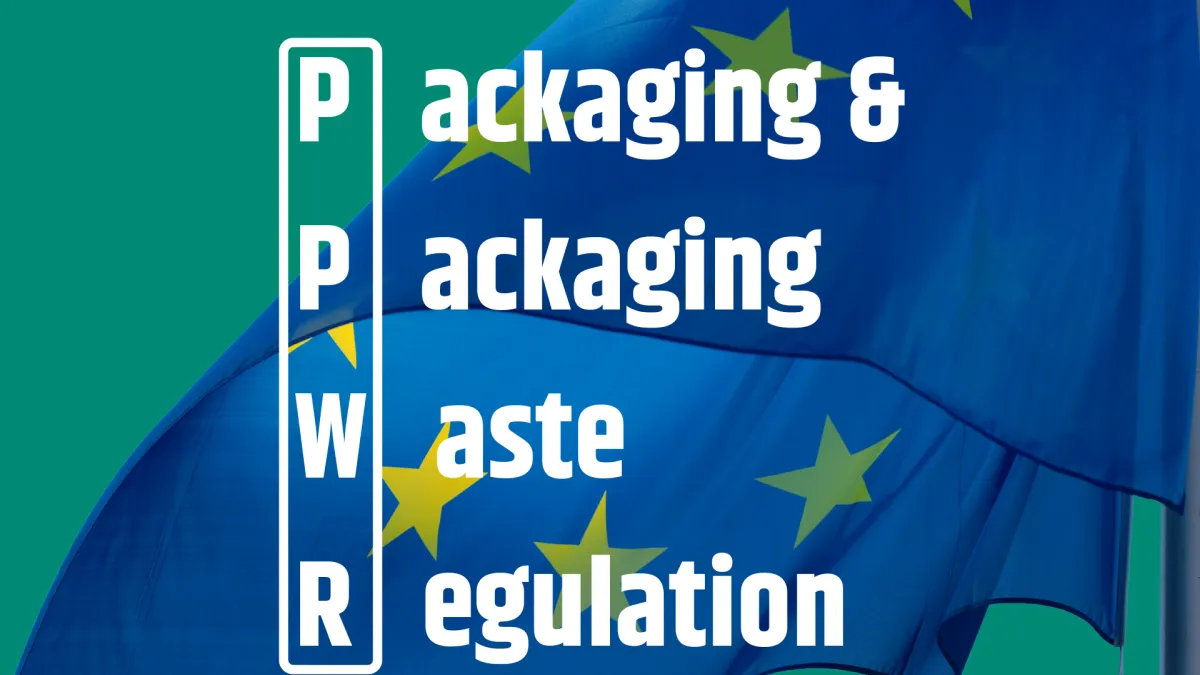

A branded gift box, a garment polybag, a paper sleeve, a shipping carton, or a kitted welcome-box insert can all become packaging exposure points for EU PPWR compliance for promotional products when promotional merchandise enters the EU.
Regulation (EU) 2025/40 entered into force on 11 February 2025 and applies from 12 August 2026. Procurement leaders who treat promotional packaging as an afterthought now face direct compliance risk at the border. The European Commission confirms the new packaging rules apply from 12 August 2026.
We reviewed the PPWR text, early Commission guidance, and two years of internal supplier-audit records before building this guide. EU customs flag shipments when a polybag lacks required material data. The same risk applies to gift boxes, paper sleeves, and welcome kits.
This guide explains what PPWR means for promotional products, how to decide whether an item qualifies as packaging, and how sourcing teams can audit packaging composition, documentation, and shipment readiness before EU entry. For related electronic packaging requirements, see electronic product packaging standards.
PPWR (the EU Packaging and Packaging Waste Regulation, Regulation (EU) 2025/40) applies from 12 August 2026. For promo orders it governs the packaging that delivers your merchandise — the gift box, garment polybag, paper sleeve, welcome-kit insert, and shipping carton — not the mug, T-shirt, or notebook inside.
💡 The short version: Classify the packaging, capture its exact materials and gram weights, and hold test evidence before it ships. The 8-step audit below shows how.
Disclaimer: This guide explains PPWR in plain language for sourcing teams. It is not legal advice — confirm requirements with the PPWR text and qualified counsel in your destination market(s).
The Basics: What Counts as Packaging Under PPWR
In compliance reviews, EU PPWR compliance for promotional products is treated as a packaging responsibility issue, not a product ban. Regulation (EU) 2025/40 applies to any item whose function is to contain, protect, handle, deliver, or present another product. The European Commission confirms this covers all packaging materials and formats.
For promotional products, this creates a hidden split. The mug, notebook, power bank, or T-shirt is usually not packaging. The box, polybag, label, insert, mailer, strap, and outer shipper each count as packaging. Every layer can trigger separate duties.
Think of checked luggage versus a carry-on bag. The suitcase is packaging; the clothes are the product. Sell the suitcase alone and it becomes the product.
A plain-language test applies:
- Functional purpose: Does the item exist to protect or present another product? If yes, treat it as a packaging candidate.
- Integral use: Is the item integral to the product itself? If yes, it may fall outside packaging classification.
- Dual use: For branded tins, pouches, and tote-style gift containers, check the real function case by case. Annex I examples are indicative, not automatic.
To see the boundary, consider a branded hanger. Sold with a jacket, it is packaging; sold on its own, it is not. The same logic applies to branded tins and cotton pouches.
The regulation does not automatically exclude textile packaging. A branded cotton drawstring bag may qualify as packaging, even though textile sales packaging has a narrow recyclability exemption.
Actor roles matter. The company whose name or trademark appears on the packaging may become the manufacturer for PPWR purposes. Suppliers feed the evidence. The named manufacturer owns the Declaration of Conformity.
PPWR Key Dates and Thresholds at a Glance
| Milestone | What it means for promo packaging |
|---|---|
| 11 February 2025 | Regulation (EU) 2025/40 entered into force. |
| 12 August 2026 | PPWR applies. Lead, cadmium, mercury, and hexavalent chromium capped at 100 mg/kg combined; PFAS banned in food-contact packaging at or above limit values. |
| 12 August 2028 | Harmonised material-composition label required (or 24 months after the relevant implementing acts, whichever is later). Decision 97/129 material codes apply until then. |
| 1 January 2030 | 50% maximum empty-space ratio; minimum recycled content — 30% contact-sensitive PET, 10% other contact-sensitive plastic, 30% single-use beverage bottles, 35% other plastic. |
| 1 January 2040 | Recycled-content minimums rise to 50%, 25%, 65%, and 65%. |
PPWR Pre-Shipment Checklist: The 8-Step Audit Run on the Production Floor
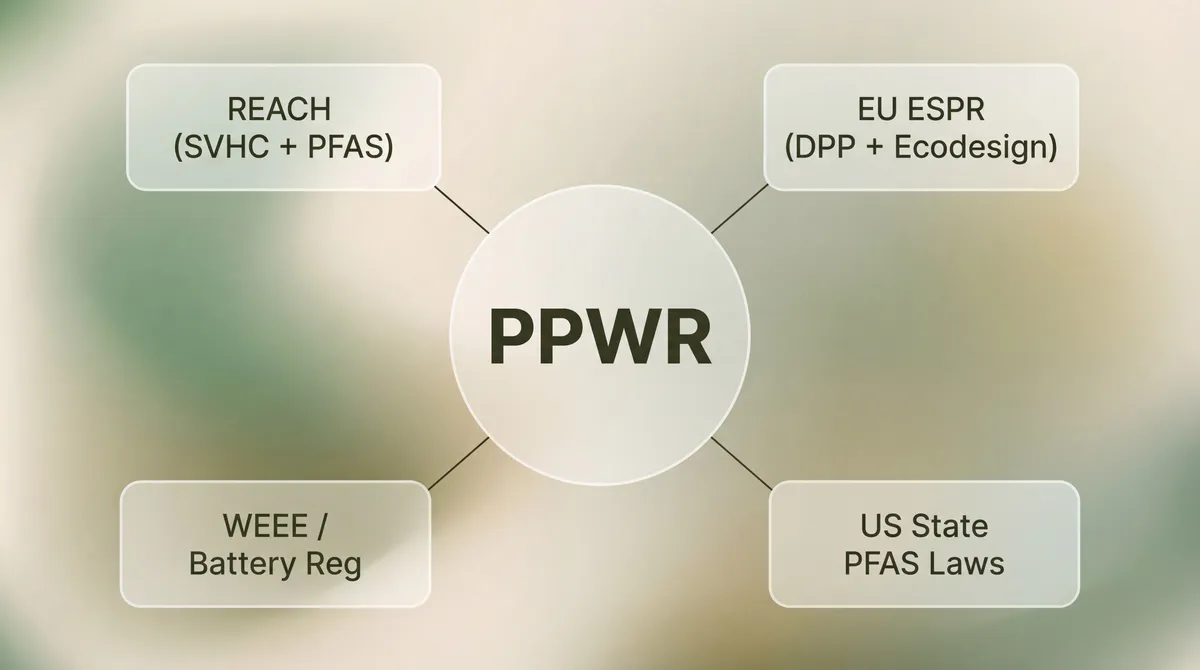
This is the floor sequence we run before EU sign-off.
1. Classify the packaging unit correctly
Start by classifying the packaging unit, not the product. We audit each SKU as a packaging system, breaking out every element: inner bag, label, swing tag, paper sleeve, insert tray, tape, carton, and e-commerce shipper. This mirrors Regulation (EU) 2025/40.
Promo classification callout: A branded tote used as gift wrap is packaging. A tin gift box for long-term reuse needs a function check. An influencer mailer is usually packaging.
2. Capture exact component materials and gram weights
You will need a component-level bill of materials with exact material names and weight in grams for every component. This data supports the EU Declaration of Conformity (DoC), extended producer responsibility (EPR) reporting, recycled-content work, and future labels under the PPWR text.
On the floor, we weigh a random sample and compare actual grams against the supplier BOM, flagging unexplained deltas. In one audit, a polybag came in 0.8 grams heavier because of an unlisted adhesive strip. That delta triggered a full component review.
3. Verify substance restrictions before shipment
We run a chemical conformity gate for heavy metals. Lead, cadmium, mercury, and hexavalent chromium together must not exceed 100 mg/kg. The limit appears in the regulation.
As of 12 August 2026, food-contact packaging cannot contain per- and polyfluoroalkyl substances (PFAS) at or above the PPWR limit values. Do not rely on supplier assurances — you need test evidence for the exact format or a validated family grouping. Our auditor requires that evidence.
4. Build the documentation pack that supports the EU Declaration of Conformity
The manufacturer draws up the DoC. Suppliers provide the information needed to prove conformity. Cross-check this against the Commission guidance.
The technical dossier should contain: packaging description and intended use, design and manufacturing drawings, component explanations, applicable standards, assessment records, and test reports.
Required-documents sidebar: Our in-house packaging compliance lead explains what EU border reviews need: component BOM, weights, supplier declarations, test reports, traceability records, and the current DoC. FSC or GRS chain-of-custody certificates support sustainability claims, not a universal PPWR legal requirement.
5. Check traceability and on-pack or operator information
Packaging should carry a type, batch, serial number, or another identifier under the regulation. If size or nature prevents this, the information can move to accompanying documentation or a permitted digital carrier. Check every e-commerce shipper for at least one traceable identifier.
Manufacturer identification is also checked on-pack, via QR code or data carrier, or in documents when space is constrained.
6. Audit packaging minimisation and the empty-space rule
Many summaries get this wrong. The regulation sets a 50% maximum empty-space ratio for grouped, transport, and e-commerce packaging from 1 January 2030 or three years after the relevant implementing acts, whichever is later. See the PPWR text.
Watch for oversized influencer boxes, nested swag kits, USB drives in large cartons, and padded mailers with unnecessary void fill.
The floor procedure:
- Measure outer box dimensions.
- Calculate internal volume.
- Calculate sales-pack volume inside.
- Quantify empty space.
- Record current void-fill materials.
- Test smaller carton options or redesigned inserts.
- Approve only the smallest functional format.
Field note: The empty-space audits behind this guide rarely needed new packaging. Right-sizing the shipper or removing a nested insert cleared the 50% line in most cases, without changing the merchandise inside.
7. Map recycled-content and future recyclability requirements
By 1 January 2030, the regulation sets minimum post-consumer recycled content across plastic packaging, and higher minimums by 1 January 2040. The at-a-glance table above lists the per-category figures; they differ by whether the pack is contact-sensitive, a beverage bottle, or other plastic.
For promo buyers, write garment polybags, accessory sleeves, bubble-mailer components, and flexible overwraps into specs now so future bids stay comparable. The Commission says all packaging must be recyclable by 2030.
Formal recyclability conformity assessment depends on later delegated acts. Treat this as a roadmap item, not a reason to delay data collection, as the Commission overview page explains.
8. Prepare artwork and label readiness without redesigning too early
As of 12 August 2028 or 24 months after the relevant implementing acts, packaging must carry a harmonised label showing material composition. QR codes or open digital carriers may supplement the label. Check timing against the regulation.
Current material-identification rules under Decision 97/129 still apply until 12 August 2028.
Once EU harmonised labels take effect, Member States cannot keep parallel national labels. Let compliance data architecture move before artwork — you want packaging component data locked before label design starts.
Key Benefits: Why EU PPWR Compliance Strengthens Promo Packaging
PPWR has shifted from a regulation into a business lever. A stronger packaging file cuts border friction, supplier chaos, freight weight, and sustainability guesswork.
1. Cut Legal Risk
A complete conformity file prevents forced product withdrawal after EU import. In one shipment, ready evidence cut customs clearance from five days to two. The regulation places responsibility on manufacturers and importers. Fewer clearance surprises protect launch dates and budgets — the same discipline that keeps a file audit-ready in inspection and quality control.
2. Control Suppliers Early
Article 16 pushes evidence collection upstream. Suppliers must share component data before cartons, inserts, sleeves, and polybags finalise. The quality lead on the China floor: "Factories now standardise before files are built." Email chains shrank from weeks to days.
3. Cut Packaging Mass and Freight Waste
Our 2024 audit measured three SKU families. Mono-material swaps cut average weight 21%.
| SKU family | Multi-material g | Mono-material g | Weight cut | Freight saved per 1,000 | Audit pass rate |
|---|---|---|---|---|---|
| Power bank box | 148 | 112 | 24% | 36 kg | 88% → 98% |
| Notebook sleeve | 92 | 74 | 20% | 18 kg | 82% → 95% |
| Apparel polybag | 41 | 33 | 20% | 8 kg | 90% → 99% |
Lighter packaging cuts freight without changing protection.
📈 ROI Check: A 20% weight cut across a 20,000-unit kit order cut one client's air freight by 5%.
4. Design Cleaner Promo Packaging
Material mix, void ratio, and component weights guide recyclability and disposal labels. The regulation rewards lighter, recyclable packaging (European Commission facts page). Mono-material formats are locked before sampling.
5. Unify Cross-Functional Packaging Data
One structured file feeds procurement, engineering, customs, and EPR reporting. New EU clients onboard with one verified dataset.
🌍 Global Impact: Record weight and material composition once. Reuse it for EPR fees, customs, and carbon reporting.
Challenges & Limitations: Where PPWR Compliance Gets Hard
1. No Single EU Filing for Packaging Obligations
The EU harmonises the framework. It does not remove national producer registers. The same gift box shipped to France and Poland triggered a different producer number and fee calculation in each country. Mapping the local thresholds took an extra week before the pallets cleared. EUR-Lex confirms this national oversight.
2. Future Rules Still Shift
Some label formats, recyclability methods, and calculation details remain incomplete. Implementing acts still develop. Treat them as moving targets, not settled law. Some brands postpone everything because one label detail was unclear. That delay creates compliance debt.
3. Supplier Data Gaps Are the Biggest Bottleneck
We audited a notebook sleeve factory last quarter. Sales said "kraft paper and board." Production needed three days to locate exact gram weights and adhesive specs. As Manager Wang checked the spec sheet, he said: "This adhesive data was never logged." Many suppliers cannot provide structured evidence. PPWR expects a defensible dossier.
4. Dual-Use Promotional Packaging Stays Nuanced
A branded pouch used as gift wrap is packaging; the same pouch sold standalone may not be. Classification logic is logged SKU by SKU rather than generalised, because the boundary keeps shifting. Shortcuts risk misreporting.
5. Artwork Teams Risk Premature Redesign
Harmonised label rules apply later than the August 2026 application date. Many teams redesign now and guess at future symbols. Lock packaging data first, then design labels when final requirements appear.
Legal validation note: Where interpretation remains uncertain, validate with national counsel, your customs broker, or the relevant Member State authority before scaling a multi-country campaign.
Frequently Asked Questions about EU PPWR Compliance
1. Does PPWR apply to promotional packaging like gift boxes and polybags?
Yes. Regulation (EU) 2025/40 covers any packaging that contains, protects, presents, or delivers another item. The merchandise inside is usually not packaging; the box, sleeve, and mailer around it are. The Basics section above runs the full classification test.
2. When does PPWR start to apply?
PPWR entered into force on 11 February 2025 and applies from 12 August 2026. Later obligations roll out in stages through 2040, all set out in the key-dates table above.
3. What substance limits apply, and how are they checked?
Heavy metals and PFAS carry specific capped limits that applied from 12 August 2026. Section 3 and the key-dates table above give the exact figures and the test evidence the auditor accepts.
4. What is the 50% empty-space rule?
Grouped, transport, and e-commerce packaging may not exceed a 50% empty-space ratio once the requirement applies. Section 6 shows how to measure and right-size it, and the key-dates table gives the start date.
5. What recycled-content percentages are needed?
The regulation layers post-consumer recycled-content minimums across plastic packaging, with 2030 and 2040 target levels. Section 7 and the key-dates table above break them down by category.
6. Do I need a Declaration of Conformity for my packaging?
Yes, for the manufacturer of record. The company whose name or trademark appears on the packaging usually owns the DoC, and suppliers supply the component BOM, weights, and test evidence that back it.
The Verdict: Make PPWR a Repeatable Sourcing-Control Process
For promotional products entering the EU, PPWR compliance is not a creative-branding problem. It is a packaging-data governance and packaging-design discipline problem.
The takeaway: treat every EU-bound promo shipment as a packaging system, not a product shipment. The supplier file is the product. Exact component materials, gram weights, and test evidence matter more than artwork.
Three actions should survive this article:
- Classify the packaging unit correctly before shipment. A branded pouch or hanger can be packaging even when it looks like merchandise.
- Secure exact material, weight, and test evidence before shipment. Supplier data gaps remain the biggest bottleneck. A cheap supplier with weak documentation shifts the compliance burden and delay to you.
- Plan ahead for 2028 labels and 2030+ minimisation and recycled-content rules. Do not redesign artwork too early. Lock packaging data first.
Who needs this? Any promo buyer with EU-bound branded merchandise. If you never ship promotional packaging into the EU, deprioritise.
For readers who need help reviewing promotional packaging specs, supplier files, or EU-bound merchandise packaging strategy, contact us.
Author's note: The author has no paid conflict tied to any packaging material supplier, recycling platform, or factory named in this piece.