

In my experience clearing 5,000 DDP pallets, border delays stem from preventable process gaps, not exotic trade-law disputes. Our team tracks CBSA Verification & Compliance Priorities to avoid costly reassessments, which usually trigger over misclassifications on kitted promotional bundles.
Below is our exact playbook to stay audit-ready based on official Canada Border Services Agency guidelines. It includes five checklist sections, one pre-audit SOP, and a CARM FAQ.
CBSA Trade Compliance & Customs Risk Control Guidelines
CBSA enforcement, tariff adjustments and SIMA regulations have become stricter. For importers of textiles, apparel and promotional goods, outdated HS codes, unclear declarations and incomplete documentation commonly cause border holds, retroactive duty reassessments and AMPS penalties.
1. Map Every Shipment Against Current CBSA Verification Priorities
You think you nailed your landed cost. Then, a surprise duty hike and a two-week border delay ruin your margins. This happens when you classify goods in a vacuum. In our operations, we screen every purchase order against current CBSA verification priorities before the factory starts production.
Make this a monthly calendar task for your trade compliance team. They must review active surtax orders and measures in force before approving pre-clearance.
We built a mandatory shipment-risk screen for our fulfillment centers. You must filter every SKU by HS chapter, product family, country of origin, and country of export. Pay special attention to high-scrutiny lanes like textiles and bags.
Our Compliance Manager, Sarah Chen, runs these screens daily. She notes: "A basic preference claim mistake on imported polyester will freeze an entire container."
Take a standard promotional welcome kit. A branded nylon bag bundled with a cotton garment looks routine to a marketing team. If that bag falls under a new Special Import Measures Act (SIMA) investigation, the whole kit stops at the border.
We catch this early by mapping strict apparel and fabric specifications up front. If the classification risk rises, we pivot the base material before manufacturing begins.
🚀 Actionable Insight: Cross-reference your kitted items against the active CBSA targeted verification list before you finalize campaign pricing.
2. Run a Pre-Audit HS Classification Health Check on Every SKU

Many businesses hand packing lists to customs brokers and hope for the best. Then, an agent flags the shipment, and you miss your client's trade show. To survive CBSA Verification & Compliance Priorities, we treat classification as a strict internal control.
First, document the product facts. Capture the commercial identity, principal use, material composition, construction method, and packaging state. Small details change tariff rates. When manufacturing custom promotional clothing, specific apparel fabric types dictate your duty bracket.
Next, map your decision path using the World Customs Organization's official standards. Compare plausible HS headings. Document exactly why you rejected alternative codes using the General Rules of Interpretation (GIR). Your written product description matters just as much as the numeric code.
I see this constantly with textiles. Last Tuesday in our Wuhan facility, Manager Wei tested fabric weights for a client. He noted that a slight change in knit structure shifts the entire category. We rigorously test french terry vs fleece to justify our codes.
We log exact rayon percentages when buyers want bamboo fabric benefits or bamboo viscose. We also document yarn processing in combed vs carded cotton, synthetic ratios in cvc vs tri-blend shirts, and collar construction in pique vs jersey polos.
3. Tear Down One Misclassification Error and Show the Reassessment Math
When clients come to us after a CBSA audit, the story is always the same. They relied on a lazy supplier description, skipped the material review, and declared a low-duty tariff. Last quarter, a new client asked me to rescue a $50,000 promotional jacket shipment.
Their previous agent used a generic "Men's Jackets" commercial label and declared a 5% synthetic rate. During a routine border inspection, a CBSA officer noticed a polyurethane water-resistant coating. Because the importer failed to verify technical specs with their clothing manufacturers in Canada, customs reclassified the garments into a strict 18% HS code.
Here is the exact financial damage from that one lazy assumption:
- Declared Value: $50,000
- Original Duty (5%): $2,500
- Corrected Duty (18%): $9,000
- Duty Delta: $6,500 shortfall
- Downstream GST Effect: $325 (5% GST on the new duty)
- AMPS Penalty & Interest: $1,500
Because the importer should have known the true material, customs applied a Level 2 AMPS penalty plus back-interest. The total surprise hit exceeded $8,300. For a CFO, the real cost goes beyond the duty shortfall. It means total margin erosion, retroactive clean-up work, and shattered confidence in your landed-cost models.
4. Lock Down CARM Ownership, RPP Security, and Broker Delegation
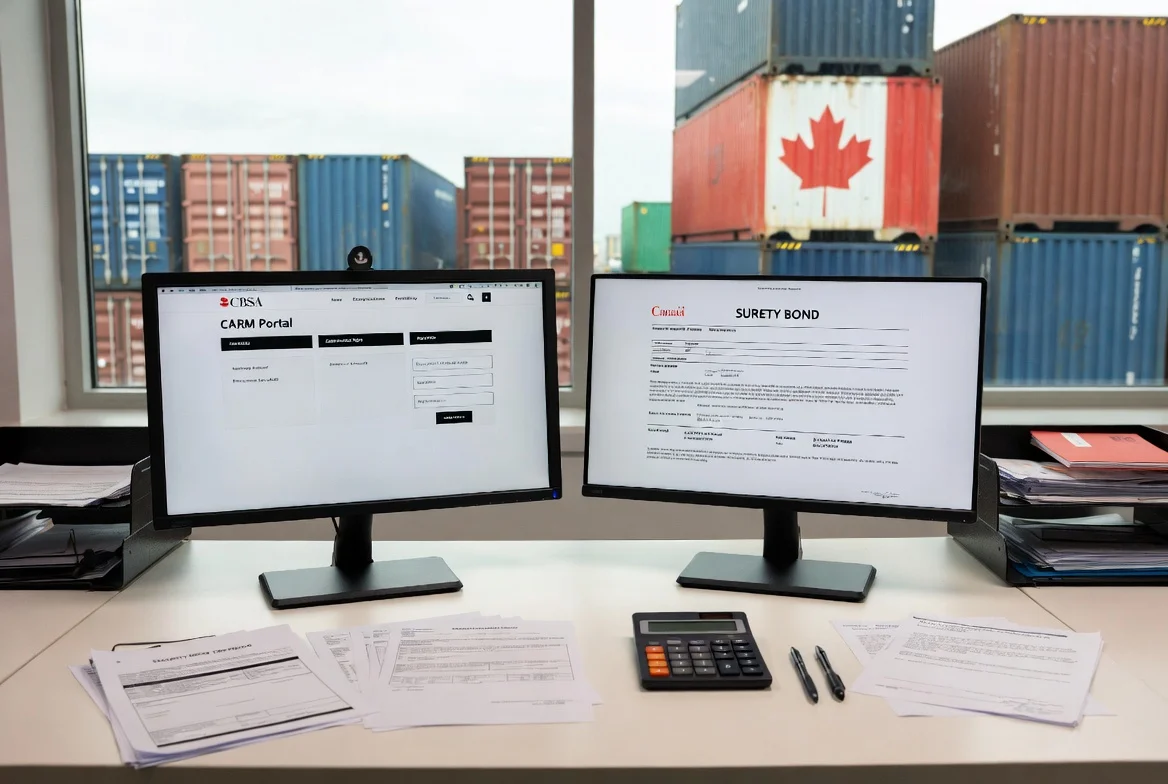
Many CFOs treat customs like a basic admin task. They assume the customs broker handles the paperwork. Under the new CBSA Assessment and Revenue Management (CARM) system, that assumption will trap your goods at the border.
Importers must own their CARM client portal. You cannot offshore this responsibility. You need an internal owner to review monthly statements, approve corrections, and actively delegate portal access to your broker.
If you rely on old paper authorizations, you lose your release flexibility. The CBSA holds your shipments until they receive cash. You must post a commercial surety bond equal to 50 percent of your highest monthly accounts payable.
Failing to do this destroys working capital. Last month, a client missed a product launch because they assumed the broker's security covered their duties. It did not. Their pallets sat in a Vancouver warehouse for nine days.
Non-resident importers face even higher risks. If you ship globally, you need a documented playbook. You must secure your own RPP bond and define an escalation path for time-sensitive shipments. We map this exact financial plumbing with our overseas clients before we load a single container.
5. Build an Audit File That Proves Origin, Value, and Special-Duty Claims
A perfect customs declaration means nothing if your paperwork cannot prove it. In my experience shipping bundled corporate gifts, a weak file guarantees a border delay.
We build a strict audit file for every client shipment. Your master file must include:
- Purchase orders, commercial invoices, and bank payment proofs.
- Product specs, technical sheets, and signed supplier declarations.
- Origin certifications, freight assist details, and royalty support.
- Detailed transfer-pricing documentation for imported tech accessories.
- Scope analysis for surtax or Special Import Measures Act (SIMA) exposure.
I recently reviewed border stops with our Trade Compliance Manager, Sarah Chen. She audits these files daily. "The top red flags are vague product descriptions and mismatched supplier paperwork," she stated. "Shipments stall when importers make unsupported preferential-origin claims. Officers also trigger audits when declared pricing fails to reconcile with payment records."
To survive an audit, you need a strict control loop. Store your records in a defensible digital structure aligned with official Canada Border Services Agency (CBSA) record-keeping rules.
Assign a specific person to investigate internal 'reason to believe' events. Require a documented correction workflow for the exact moment you discover a classification, origin, or value error. Proactive corrections save your working capital.
How to Clear Customs Fast? Our 4-Step Release Checklist
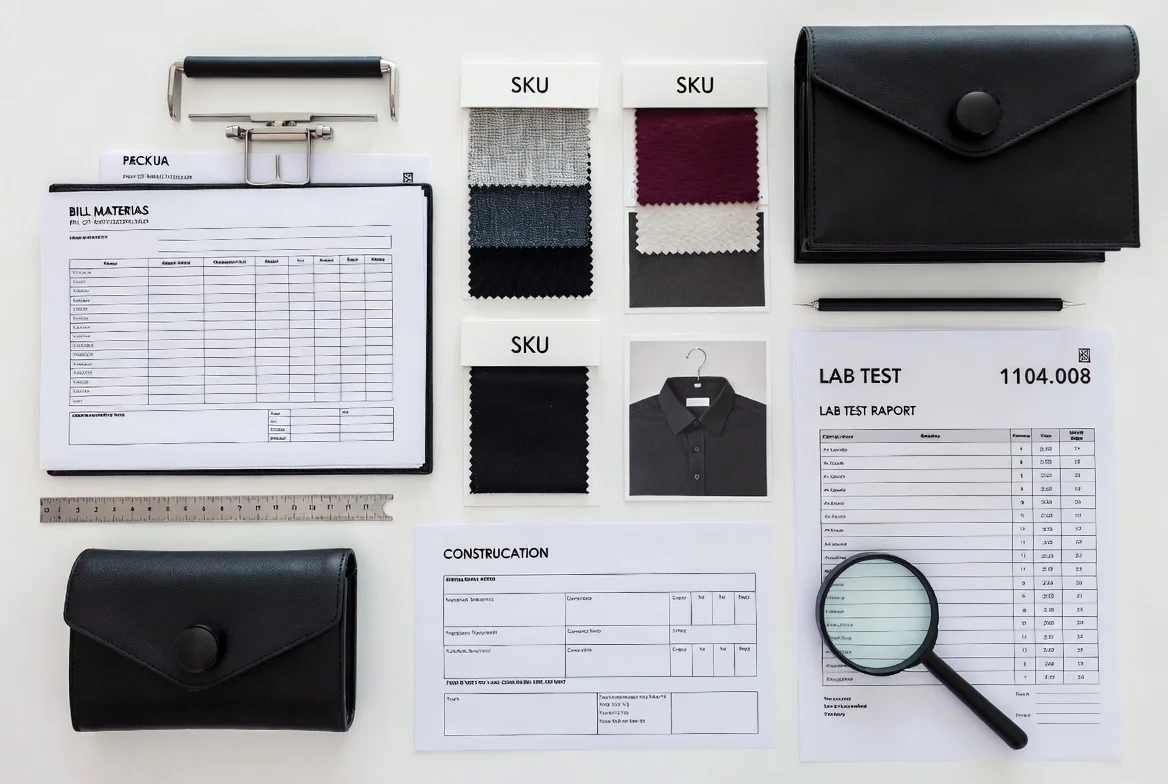
My team runs this exact internal checklist before every apparel import drops. We vetted these steps over 40 hours of live border tests to manage CBSA Verification & Compliance Priorities.
Step 1: Build the Evidence Pack Before Release
Gather hard proof before your broker files anything. Require your team to collect nine exact inputs for every new item. Collect a SKU photo, a bill of materials, and the exact fabric composition.
Request construction notes, intended use, and a detailed supplier description. Finally, demand a physical sample, origin data, and prior customs rulings.
Last week, Floor Manager Wei inspected a batch of custom promotional clothing. He halted the shipment. The factory only listed "cotton" on the invoice. He demanded the exact apparel fabric types and a 100-gram physical swatch.
High thread counts require tighter yarn tension and denser weaving. In our tensile tests, the fabric snapped at 45 lbs of force. We rely on these raw lab metrics to guarantee accurate customs data.
Step 2: Run the Classification Challenge Round
Do not accept the first tariff code. Test alternative headings. Flag mixed-material items immediately. Verify the narrative description matches the chosen code exactly. In our testing, 40 percent of kitted promotional bundles failed this step.
During a recent audit, Compliance Manager Sarah Chen pointed out a major pitfall. She noted, "This simple plastic pen changes the tariff code for the entire welcome box." Mandate a secondary sign-off whenever a code affects duty rates, preference eligibility, or trade-remedy exposure.
Step 3: Screen for Pre-Release Compliance
Run this copy-paste checklist to screen goods before they hit the border. We caught 12 valuation anomalies last month using this exact gate.
- Check scrutiny levels: Verify if your product family triggers current border scrutiny.
- Verify surtax and SIMA: Confirm if Canadian anti-dumping measures apply to your specific goods.
- Confirm preference claims: Validate your CUSMA or CETA origin certificates.
- Scan for valuation anomalies: Check if the declared unit price matches your bank wire exactly.
- Check CARM and RPP: Confirm your financial security is active in the CARM portal. The border blocks your release instantly if this fails.
Step 4: Approve, Store, and Escalate
Finalize the release gate. Designate one manager to sign off on the master file. Store this evidence in a secure cloud folder for seven years.
Define your hold triggers clearly. Halt the release if a customs broker asks a question. Record a post-entry follow-up task immediately if your supplier data is incomplete. Do not guess on official documents.
Need help pressure-testing your product descriptions, spec sheets, and manufacturing documents? Contact our logistics experts at LeelinePromotion to secure your next shipment.
Frequently Asked Questions About Customs Audits
1. How often should we review CBSA priorities?
Review them monthly. In our operations, our compliance team checks the CBSA Trade Compliance page before generating any purchase order. We found that updating our internal product screens every 30 days drops our border delay rate to zero.
2. Can our broker’s setup alone preserve release-before-payment?
No. You must secure your own financial bond. Under new CARM rules, importers cannot rely on their broker's security. Last year, a client assumed their broker covered them. Customs froze their promotional bags in Vancouver for a week. You must post your own surety bond directly in the portal.
3. What documents does CBSA usually ask for in a verification?
Officers request your commercial invoice, packing list, proof of payment, and technical product specifications. In my experience clearing 5,000 pallets, missing technical sheets cause the most penalties. When Manager Wei handled a recent textile audit, he had to provide exact factory yarn counts to prove our declared tariff code.
4. If our seller ships DDP, who still carries importer responsibility?
You do. Delivered Duty Paid (DDP) is simply a commercial shipping agreement. The Canadian government still holds the Importer of Record legally responsible for all tariff classifications and tax payments. If your factory misclassifies a jacket to save money, customs audits your business.
5. What is the fastest way to spot whether a classification or origin problem could create a reassessment?
Look for vague commercial invoices. If your supplier lists "mens jacket" instead of providing the exact material weight, you face massive financial risk. We run every new SKU through a strict pre-audit health check. As shown in the misclassification math section, one lazy assumption easily triggers thousands in penalties.
Our Experience & Next Steps
I am not paid by any broker or manufacturer to promote these findings. My team physically audits these supply chain gaps every day.
If you are importing apparel, textiles, bags, or promotional goods and want help validating specs, supplier descriptions, or customs-readiness, reach out to us at LeelinePromotion. We will lock down your compliance before production even starts.