
UK manufacturing offers speed, yet we found "Made in UK" labels often mask outsourced production. Finding genuine clothing manufacturers uk partners requires separating real factories from middlemen. We curated this shortlist to help you filter partners by MOQ and specific apparel manufacturing methods.
We evaluated these facilities based on sampling speed, QC standards, and transparency across various types of clothing. Use this guide to vet suppliers before requesting quotes at the end.
Top 10 Clothing Manufacturers UK Comparison Table
| No. | Manufacturer | Key Strength | Best For | Quality | Rating |
|---|---|---|---|---|---|
| 1 | Hawthorn | Flexible hybrid model offering accessible entry for startups | Emerging brands testing new designs | ✅ Good | ⭐️⭐️⭐️⭐️ |
| 2 | White2Label Manufacturing | Rapid turnaround with strong blank customization | Merch drops & time-sensitive launches | ⚙️ Fair | ⭐️⭐️⭐️⭐️ |
| 3 | Hook and Eye UK | Full technical development from sketch to graded sample | Precision garments & tailored fits | ✅ High | ⭐️⭐️⭐️⭐️⭐️ |
| 4 | Custom Junkies (Leicester) | Local responsiveness and in-person collaboration | Small brands needing agile production | ✅ Good | ⭐️⭐️⭐️⭐️ |
| 5 | Boohoo Leicester Factory | Ultra-fast lead times at large scale | Corporate fast-fashion manufacturing | ⚙️ Moderate | ⭐️⭐️⭐️ |
| 6 | Jeffrey Carr Ltd | Heritage craftsmanship with focus on wovens & knits | Premium brands valuing stitch detail | 🧵 Excellent | ⭐️⭐️⭐️⭐️⭐️ |
| 7 | ApparelTASKER | Specialized in finishing, embroidery, and rework projects | Fast-response rebranding & finishing | ✅ Good | ⭐️⭐️⭐️⭐️ |
| 8 | The Clothing Manufacturers | One-stop lifecycle solution (concept to bulk) | Brands seeking full-service workflow | ✅ Good | ⭐️⭐️⭐️⭐️ |
| 9 | Continental Clothing | Certified eco-blanks with global manufacturing & UK stock | Ethical lines & fast restocks | ✅ Good | ⭐️⭐️⭐️⭐️ |
| 10 | Farfield Clothing | Premium-level consistency and refined finishing | Heritage-style & luxury collections | 🧵 Excellent | ⭐️⭐️⭐️⭐️⭐️ |
Top 10 Clothing Manufacturers UK
1. Hawthorn
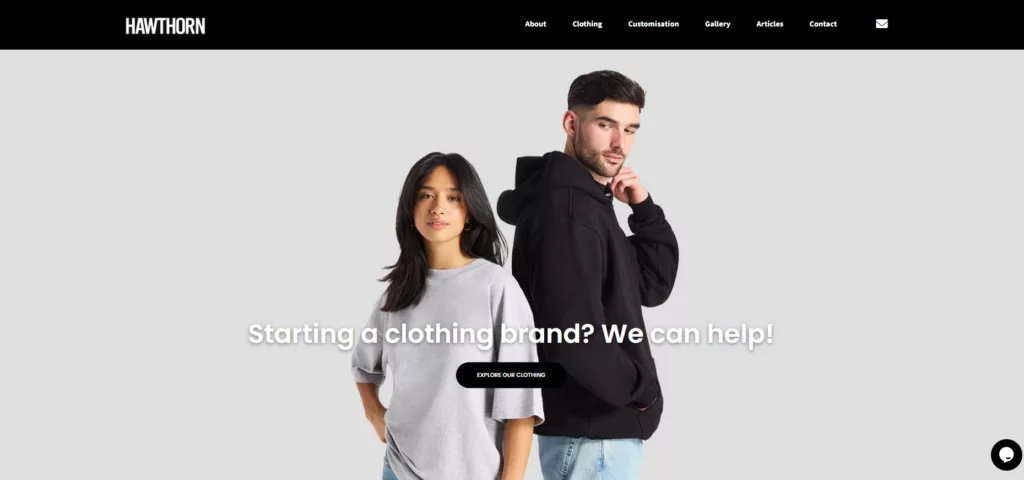
I recommend Hawthorn for early-stage brands because their 50-unit MOQ prevents you from tying up cash in unproven inventory. Note that while they are a clothing manufacturer UK entity, their model is hybrid. Design happens in London; production often occurs in Turkey or China.
The Trade-off:
- Pros: Lower unit costs and accessible tech pack support.
- Cons: Longer transit times than fully domestic factories.
Ask these questions:
- MOQ Structure: Does the 50-unit minimum apply per SKU, color, or fabric?
- Timelines: What are the lead times for samples, bulk, and fast-track re-orders?
- QC: Is inspection done in London or the overseas factory?
🚀 Actionable Insight: Don't rely on static photos. Demand video proof of seam construction and internal finishing on a physical sample before approving the bulk run.
2. White2Label Manufacturing
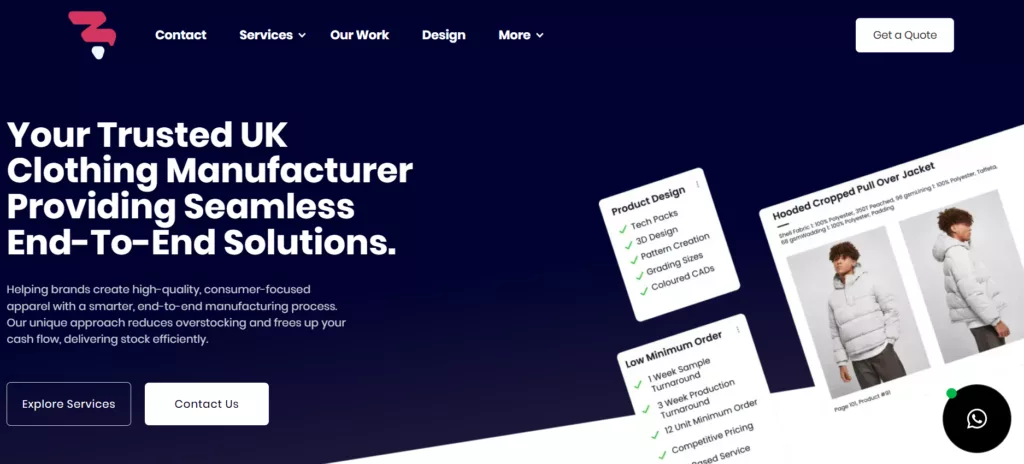
White2Label is my top pick for brands prioritizing speed over custom pattern development. They specialize in white label production—customizing existing high-quality blanks to launch collections in weeks rather than months.
But you must distinguish between true manufacturing and decoration. Ask specifically if your order is custom cut-and-sew or imported stock. You also need full re-labelling services to swap original factory tags for branded care labels with correct fiber composition.
For simple event merchandise rather than retail fashion lines, use our custom promotional clothing resource.
3. Hook and Eye UK
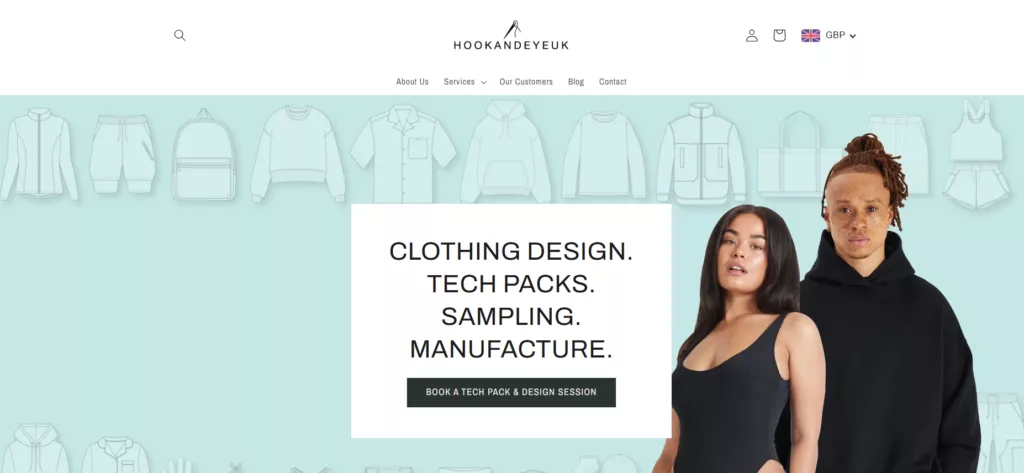
Most manufacturers reject rough sketches. Hook and Eye UK specializes in bridging this gap for founders who lack technical files. They handle the full pre-production workflow: tech packs, pattern cutting, grading, and sampling.
I often see new brands fail because they skip professional grading. Hook and Eye prevents this by managing fit iterations locally. While their per-unit costs exceed overseas options, you avoid the communication delays common with Asian manufacturing. The faster feedback loops on complex items like tailored jackets save money long-term.
4. Custom Junkies (Leicester Factory)
Leicester remains a critical hub for clothing manufacturers UK, but you must vet partners carefully regarding labor practices. Custom Junkies fits brands that need a responsive, local cut-and-sew partner.
In my experience, you cannot manage Leicester factories solely via email. Use the location to your advantage. Request a facility walkthrough to verify three specific factors:
- Speed: Can they turn around revised prototypes in under 48 hours?
- Manufacturing: Do you need to supply fabric, or do they handle it?
- Ethics: Are machinists direct employees or subcontracted? Demand audit documentation to ensure compliance.
5. Boohoo Leicester Factory
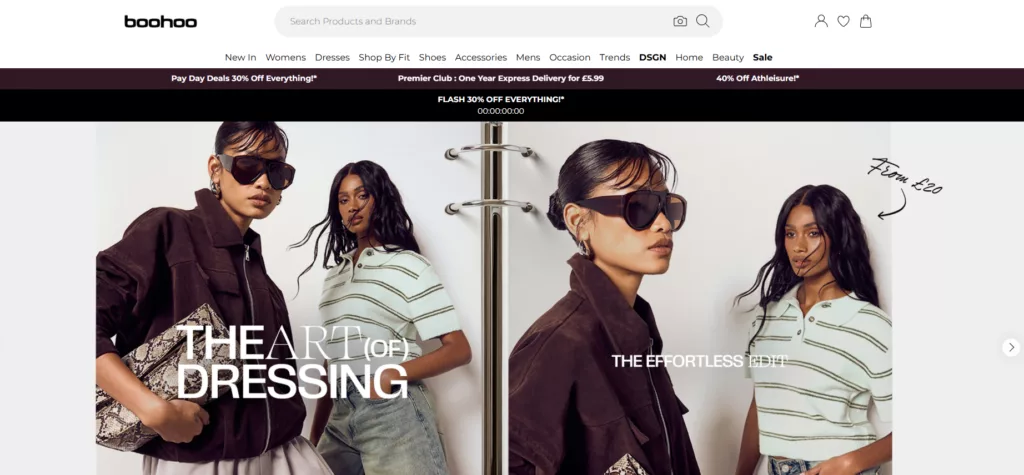
I list this option strictly for procurement teams benchmarking extreme speed. Leicester manufacturers define "fast fashion" by turning styles around in under two weeks. However, this scale introduces massive compliance risks.
You must treat this as a high-stakes verification exercise. Demand subcontractor disclosure and traceability to the specific production unit. In my experience, the main facility often passes audits while unauthorized subcontractors do not.
- Audit Scope: Request full Sedex or SMETA reports, not just summaries.
- Controls: Define exactly how they manage style changes and defect chargebacks.
6. Jeffrey Carr Ltd
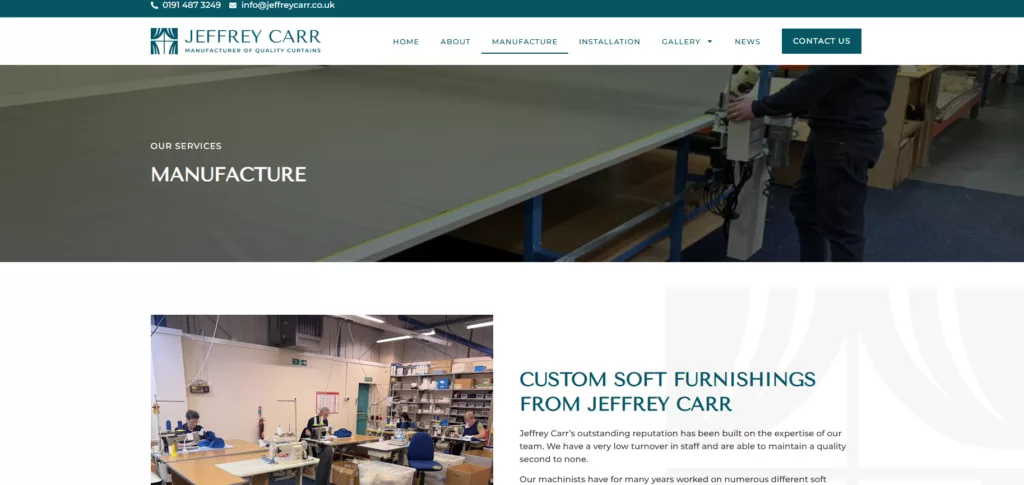
Jeffrey Carr suits premium brands prioritizing stitch perfection over speed. Heritage partners deliver consistency, but you must verify their niche. Most traditional clothing manufacturers in the UK specialize in tailored wovens or heavy knits—rarely both.
Clarify if MOQs apply per style or colour. A 300-unit minimum often means 300 of a single fabric run. You should also request their defect tolerance levels and ask how they handle rework during inline inspections.
- Pros: Superior workmanship, consistent sizing.
- Cons: Higher unit costs, strict minimums.
7. ApparelTASKER
Most UK factories reject "finishing-only" orders, but ApparelTASKER specializes in them. I recommend this partner for a specific "hybrid manufacturing" strategy: import bulk basics (or source high-quality blanks) and apply premium embroidery, dye, or prints locally in London. This allows you to react to viral trends in days, not weeks.
They are also my go-to for emergency "rework" projects, such as relabeling imported stock that failed initial QC.
- Ask: "What are your process limitations for finishing?" and "What is the MOQ per treatment?"
- The Trade-off: You gain extreme agility and traceability, but per-unit finishing costs are significantly higher than overseas bulk.
8. The Clothing Manufacturers
We recommend this partner for teams needing a single contact for the pattern-to-production lifecycle. In our experience, this unified workflow reduces technical errors but raises overhead costs.
Crucial Check: Verify in-house capabilities. We frequently find that "full service" agents subcontract the actual sewing. Demand transparency on brokered steps and clarify pattern ownership—ensure you keep the digital source files if you switch suppliers.
Comparing manufacturing hubs? Weigh this model against a clothing manufacturer China or clothing manufacturers in Turkey, or explore clothing manufacturing companies in New York and custom clothing manufacturers Australia.
9. Continental Clothing
Best for: Merchandise, uniforms, and startup capsules using blanks.
Continental Clothing is the ideal "responsible blanks" solution. You access ready-made garments backed by solid documentation like Fair Wear and GOTS. While stock sits in the UK for rapid delivery, the production reality is that manufacturing happens globally, often in Turkey.
This route offers speed and scalability, but you lose unique silhouettes. Competitors can buy the same hoodie, so you must differentiate through decoration.
Decoration Note: Heavy stitching distorts lightweight organic cotton. Check our puff embroidery guide to see how thread density affects fabric drape.
10. Farfield Clothing
Farfield Clothing is my go-to for brands that need consistent hand-feel and premium finishing. High-end customers notice immediately if a "heavyweight" fabric feels lighter on the second order, so the craftsmanship here is vital.
To protect your margins, you must control the inputs. Do not just approve a style; require signed "lab dips" for color accuracy and shrinkage test reports. I always advise clients to set specific measurement tolerances (e.g., +/- 0.5cm) in the contract. If you don't define these standards in writing, you have no grounds to reject a batch that fits poorly.
- The Trade-off: You get stronger brand consistency and fewer returns, but expect higher sampling fees and longer development cycles.
- Origin Check: Map the full chain (Fabric → Cut → Sew → Finish). I’ve seen brands face legal issues when their "Made in UK" marketing didn't match the actual fabric source.
Your 8-Step UK Manufacturing Action Plan
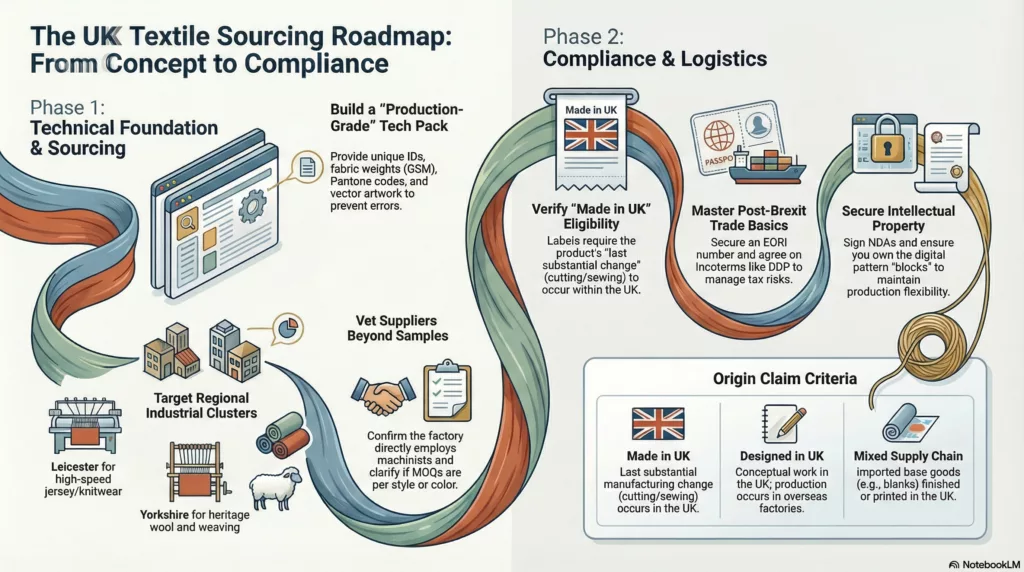
Manage your UK manufacturing partner with precision. Use this workflow to navigate strict origin rules, compliance checks, and post-Brexit trade barriers.
1. Define Your "Origin" Reality
Be precise with your labels. Misusing origin claims can lead to seized shipments or trading standards investigations. Distinguish between these three realities:
- Made in UK: The product undergoes its last substantial change (cutting, sewing, finishing) in the UK.
- Designed in UK: Your team sketches it in London. A factory in Asia produces it.
- Mixed Supply Chain: You import blank t-shirts from overseas and print them in Manchester.
Map Your Production Steps Trace the journey of your fabric. If you cut fabric in Turkey and only stitch it in Leicester, you cannot simply claim "Made in Britain." This specific label is a licensed trademark. Verify your eligibility with the Made in Britain organization before you print any packaging.
Author's Verdict: Procurement teams often assume "final assembly" equals origin. In our experience, UK customs officials scrutinize the "value-add" percentage. Keep a paper trail of exactly where each transformation happens.
2. Build a "Production-Grade" Tech Pack
Factories cannot guess your requirements. Vague specifications cause delays and costly sampling errors. Send a complete technical package to secure an accurate quote.
Required Checklist:
- Style Code: Assign a unique ID (e.g., SS24-HOOD-01) for version control.
- Bill of Materials (BOM): List specific fabric weights (GSM) and exact Pantone color codes.
- Measurements: Provide a size chart with tolerances (e.g., +/- 0.5cm).
- Grading Rules: Define how sizes scale from Small to XL.
- Construction: Specify stitches per inch (SPI) and seam allowance.
- Artwork: Use vector files (.AI or .EPS). Never send JPEGs for print files.
- Testing: Request shrinkage and color fastness tests.
3. Vet Suppliers with Four Questions
Look beyond the samples. Ask these operational questions to reveal hidden risks during your initial call:
- "Is your MOQ per style or per color?" (300 units per color is harder to sell than 300 mixed).
- "What is the sampling lead time vs. bulk production?"
- "How do you handle QC?" Demand in-line inspections. Catching defects after packing is too late.
- "Who sews the clothes?" Confirm they employ the machinists directly. We often find that "factories" in textile hubs act as brokers and subcontract to unregulated workshops.
4. Search by Regional Hub
Speed up your manufacturing by targeting the right industrial cluster.
- Leicester: Focus here for jersey fabric, fast fashion, and high-speed cut-and-sew capacity.
- Yorkshire: Look here for heritage wool, premium weaving mills, and fabric supply.
Action: Visit the facility. If a supplier refuses a site visit, treat it as a critical red flag.
5. Audit Your Sustainability Claims
Greenwashing destroys brand trust. Back up every claim with an auditable paper trail.
- Materials: If you specify sustainable cotton, request Better Cotton (BCI) chain of custody documentation.
- Chemicals: Ask for UK REACH compliance certificates. This ensures your zippers, dyes, and trims do not contain restricted toxic substances.
6. Master Post-Brexit Trade Basics
Shipping from the UK to the US or EU now involves significant paperwork. Missing codes will leave your stock stuck at the border.
- EORI Number: You need this identifier to move goods. Apply via GOV.UK if you are the importer of record.
- VAT Handling: Clarify who pays import VAT before shipping.
- Incoterms: Agree on terms like DDP (Delivered Duty Paid) defined by the International Chamber of Commerce. This places the responsibility on the supplier to handle taxes and delivery risks.
7. Protect Your Intellectual Property
UK design rights exist. However, they are difficult to enforce without clear contracts.
- Sign an NDA: Do this before you share your Tech Pack or unique designs.
- Secure Pattern Ownership: Clarify who owns the "blocks" (paper patterns). If you pay for development, you must own the digital files. This allows you to switch factories later without restarting the sampling process.
8. Have a Backup Plan: Where LeelinePromotion Fits
UK factories can hit capacity limits or offer pricing that breaks your margin. LeelinePromotion serves as your strategic contingency plan.
We act as a bridge. When local MOQs are too high or deadlines are too tight, we leverage our vetted network to produce high-quality custom goods. We handle the QC, consolidate shipping, and offer lower entry points for custom branding.
- Compare Options: Read our guide on apparel manufacturing methods to see if offshore production fits your timeline.
- Get a Quote: Contact us to build a production plan that protects your budget and your deadline.
Frequently Asked Questions about Clothing Manufacturers UK
What is the real difference between “Made in UK” and “Designed in UK”?
"Made in UK" is a legal claim. It means the product underwent its final substantial change—usually cutting and sewing—within Britain. "Designed in UK" often implies the brand sketched the item in London, but a factory in Asia produced it. We advise you to demand a production map or Certificate of Origin. This document proves exactly where the manufacturing process took place.
What is a realistic MOQ for a UK manufacturer?
For custom cut-and-sew orders, most factories require 250–500 units per style. High-end studios may accept 50 units, but your cost per item will likely double. In our experience, you can negotiate lower minimums if you use "stock fabrics" that the factory already has on their shelf, rather than ordering custom-dyed materials.
What lead time should I expect for sampling and first bulk?
Do not expect Amazon-speed delivery for custom goods. Sampling typically takes 2–4 weeks because it involves iterative fit testing. Once you approve the sample, bulk production takes another 4–8 weeks. We always tell clients that fabric availability is the main bottleneck. If the mill is late delivering the cloth, the sewing line cannot start.
What certifications prove a factory is ethical?
Do not rely on a simple "sustainable" logo on a website. Ask to see a recent SMETA audit report or a Fast Forward audit. These specific inspections check for safe working conditions and fair wages in UK factories. If a supplier hides these documents, they often rely on unregulated subcontractors.