
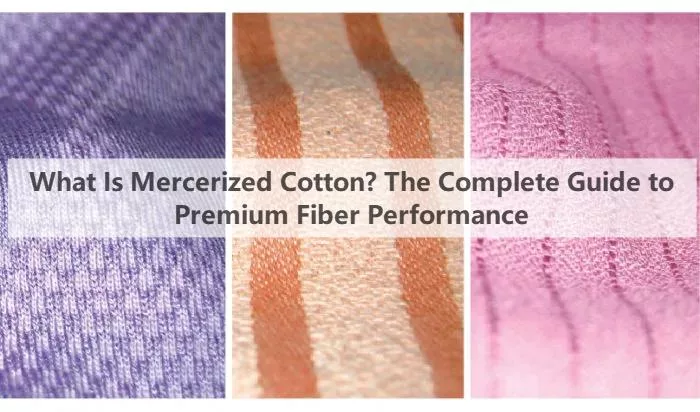

Why does one cotton tee fade into a fuzzy rag after ten washes, while another retains a silk-like gloss and deep color for years? The answer isn't a synthetic coating; it is a fundamental change in fiber geometry.
What is mercerized cotton? It is pure cotton that has been treated under tension with a caustic alkali solution. This process swells the fiber, converting it from a flat, twisted ribbon into a smooth, cylindrical tube. The result is a material that reflects light differently and absorbs dye deeper than untreated fibers.
Having sourced textiles for major corporate branding campaigns, we verify these traits through lab data, not just visual inspection. Real mercerization changes the performance specs of the fabric.
This guide examines the mercerization process, compares mercerized vs combed cotton, and outlines the tangible benefits of mercerized cotton —specifically reduced shrinkage and higher tear strength. We also cover how to validate these claims using ISO and AATCC testing standards, ensuring you get the performance you pay for.
If you are evaluating apparel fabric types for your next project, understanding this structural difference is essential.
What is Mercerized Cotton?
Mercerized cotton is cotton yarn or fabric treated with sodium hydroxide under tight tension to increase luster, strength, and dye uptake. Unlike standard cotton, which feels soft but matte, mercerized options possess a silk-like sheen and higher resistance to breakage.
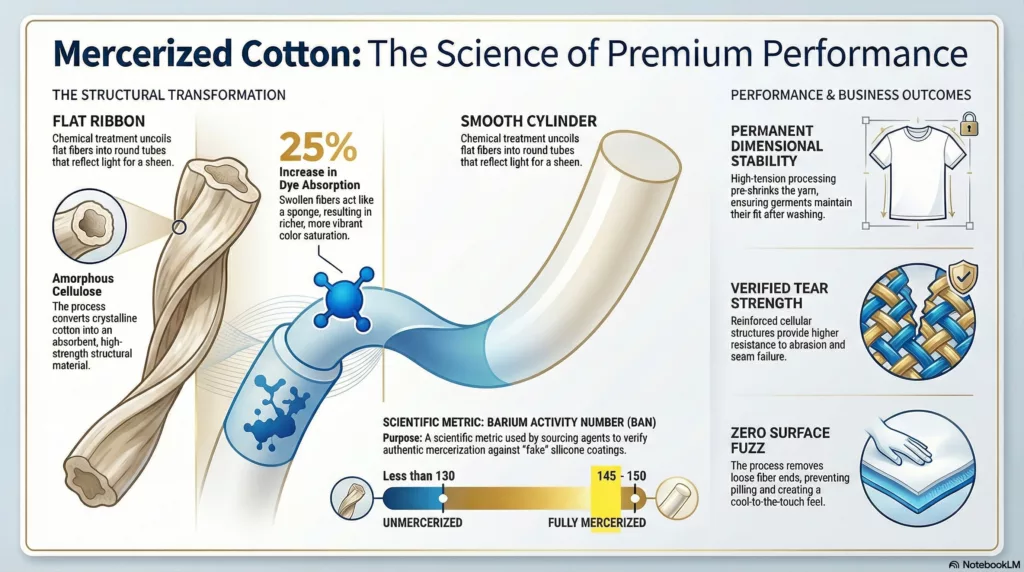
To understand why this matters, think of a raw cotton fiber as a deflated fire hose—flat, twisted, and dull. Mercerization is like turning the water on full blast. The chemical process causes the fiber to swell, uncoil, and transform into a smooth, cylindrical tube. This round shape reflects light rather than absorbing it, creating a polished finish.
Is Mercerized Cotton Synthetic?
No, it is 100% cotton.
Clients often confuse the glossy finish with polyester, but mercerization is a treatment, not a fiber. It alters the physical structure of the cellulose but remains a breathable, natural material.
However, always check the care label. In our manufacturing audits, we occasionally see this process applied to ring-spun cotton blends or poly-core threads to mimic a premium feel. The label "mercerized" describes the process, not the composition.
How to Identify It
When I inspect fabric samples under natural daylight, the difference is immediate:
- Zero Fuzz: The process burns off loose fiber ends, leaving a smooth surface.
- Vibrant Color: The swollen fibers absorb dye more deeply than standard cotton, resulting in richer saturation.
- High Strength: The structural alignment prevents the yarn from breaking easily.
A Note on Origins
John Mercer discovered the chemistry in 1844, but the process didn't become commercially viable until Horace Lowe introduced tension. As noted in the Encyclopedia Britannica, keeping the fabric stretched taut during the bath is essential to prevent shrinkage and lock in the luster.
💡 Key Insight: This tension creates the durability found in "Pearl Cotton" embroidery threads. It serves as the bridge between standard utility and luxury performance, a distinction we explore further in our comparison ofcombed vs. carded cotton.
Core Concepts: The Engineering Behind the Shine
We don’t measure mercerization by "shininess." In professional manufacturing, we measure it by structural transformation. Standard cotton is a biological fiber with irregularities; mercerized cotton is a chemically re-engineered material designed for high-stress performance and chromatic depth.
To understand why this fabric commands a premium, you must visualize the mechanical stress testing and chemical restructuring occurring on the factory floor. Here is the precise mechanism.
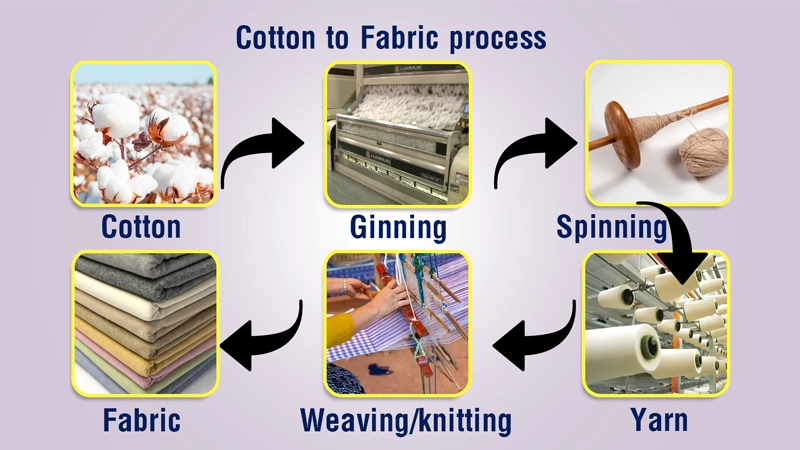
3.1 Step-by-Step: The Production Process
This is not a simple "dip-and-dry" finish. It is a strictly controlled chemical sequence where tension is the governing variable.
- Preparation (Scouring): We first scour the yarn to strip natural waxes and pectin. This ensures the chemical solution penetrates the fiber core instantly rather than sitting on the surface.
- Caustic Impregnation: The machine submerges the yarn in a Sodium Hydroxide (NaOH) solution (typically 20–25% concentration).
- Tension Application (The Critical Variable): While saturated and swollen, rollers stretch the yarn taut. This is the most important step. Without tension, the cotton shrinks by ~20% and loses strength. The applied linear force aligns the cellulose molecules, locking in the luster.
- Neutralization: We rinse the yarn while it remains under tension. An acid bath neutralizes the alkali, returning the pH to a safe 7.0.
- Final Finishing: The line moves to singeing (burning off surface fuzz) or dyeing.
3.2 Under the Microscope: A Structural Transformation
When our design teams inspect cross-sections, we look for specific geometric changes. This verification ensures the fabric will perform as predicted.
- Before Treatment (Raw Cotton): The fiber cross-section resembles a collapsed kidney bean. The fiber twists along its length (convolutions), creating a rough surface that scatters light. This scattering causes the "matte" look of standard cotton.
- The Reaction: The NaOH swells the cell wall. The fiber attempts to shrink, but the machine tension restricts it.
- After Treatment (Mercerized): The internal pressure forces the cross-section into a near-perfect circle. The longitudinal twists unravel, straightening into a smooth, glass-rod cylinder.
- The Result: Light hits the smooth cylinder and reflects back in a uniform direction. This creates a continuous highlight line—the "sheen"—rather than a diffuse glow.
3.3 Touch & Feel: The Tactile Experience
Makers and buyers can identify mercerized cotton without seeing it. We train our QC teams to recognize three tactile markers:
- Thermal Conductivity: The fabric feels noticeably cooler to the touch than upland cotton. The smooth surface reduces insulating air pockets.
- Fluid Drape: Knits lose their "lofty" or fluffy character. They drape heavily, behaving more like a silk blend.
- Workability: For custom promotional clothing, the yarn feels firmer and less elastic. It glides through sewing machines without grabbing, though the reduced elasticity requires precise tension settings.
3.4 The Chemistry of Color
Mercerization changes the fiber's chemistry, not just its shape. The swelling process breaks the crystalline structure of the cotton, converting it to amorphous cellulose.
This structural change increases the fiber's surface area and absorbency. It acts like a hungry sponge, absorbing up to 25% more dye than untreated cotton.
- For Consumers: Black t-shirts remain jet black rather than fading to charcoal.
- For Decorators: Colors match Pantone standards with higher fidelity.
3.5 Mercerized vs. Combed Cotton
Buyers often conflate these terms. They represent different stages of quality control.
- Combed Cotton (Mechanical): Occurs before spinning. Machines physically comb raw cotton to remove short, breakage-prone fibers. This creates a smoother base yarn.
- Mercerized Cotton (Chemical): Occurs after spinning (or weaving). Chemicals swell and align the fiber.
The Premium Stack: The highest quality shirtings are both combed and mercerized. We use this combination to ensure the fabric is free of impurities (combed) and permanently polished (mercerized).
3.6 Pearl Cotton Properties
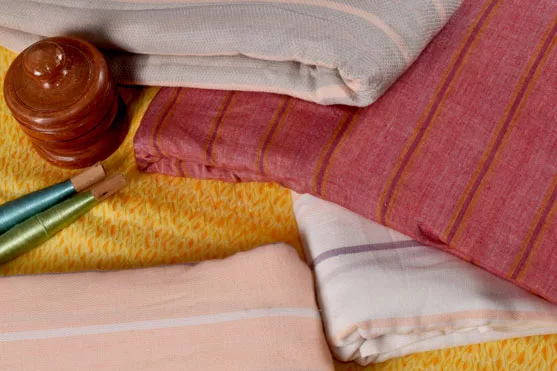
Pearl (or Perlé) cotton is the standard for high-end embroidery, and it is almost exclusively mercerized.
Pearl cotton relies on a high-twist, 2-ply construction. Mercerization reinforces this twist, providing high abrasion resistance. The thread creates a raised, rope-like effect on the fabric surface that catches light. We specify this for decorative hems where standard thread would look flat.
3.7 Verification: How to Spot Fakes
"Fake mercerization" is a common issue in global manufacturing. Suppliers may dip standard cotton in silicone softeners to mimic the slippery feel of mercerized goods. Here is how we verify authenticity.
The Home Check: Run the fabric through a hot wash cycle with strong detergent. Silicone coatings wash off, leaving the fabric dull. True mercerization is a permanent structural change; the luster persists after laundering.
The Lab Standard (Barium Number): For bulk procurement, we request the AATCC TM89 Barium Activity Number. This test measures the cotton's absorption capacity.
- BAN < 130: Unmercerized.
- BAN 145 - 150: Fully mercerized.
This metric scientifically proves the fiber underwent the necessary swelling and alignment.
🧠 Expert Insight: Understanding fabric density is crucial when ordering premium materials. See our breakdown ofwhat is GSM in fabric to pair the right weight with your mercerized finish.
3.8 References
- AATCC TM89 - Mercerization in Cotton (Official Method)
- ASTM D1445 - Standard Test Method for Breaking Strength
- Textile Research Journal - Structural Changes in Mercerized Cotton
Key Benefits of Mercerized Cotton: Why the Process Matters
We do not recommend mercerized cotton simply for its shine; we prioritize it because it solves the three biggest supply chain headaches: pilling, fading, and shrinkage. Choosing this material transforms a standard textile order into a long-term branding asset.
Here is how the chemical restructuring translates into measurable business outcomes.
1. Silk-Like Luster (The "Premium" Look)
The Result: The process burns off protruding fiber fuzz, creating a smooth surface that reflects light. The "So What?": This immediate visual upgrade separates retail-grade apparel from cheap "swag." In our experience manufacturing types of clothing, clients using mercerized finishes report higher perceived value from end-users.
Best For: High-end polos, dress shirts, and embroidery where clarity counts.
2. Verified Durability
The Result: Chemical alignment reinforces the yarn’s cellular structure, increasing resistance to mildew and abrasion. The "So What?": It prevents seam failure. Strength improvements in mercerized cotton are verifiable through ASTM D1445 tensile testing standards.
We see significantly extended lifecycles for products subjected to daily wear. Best For: Uniforms, tote bags, and sewing thread for heavy fabrics.
3. Richer Color Retention
The Result: The swollen fiber core absorbs up to 25% more dye than untreated cotton. The "So What?": Your brand colors stay accurate. A mercerized black shirt remains jet black after 20 washes, whereas standard cotton fades to gray. This is critical for maintaining strict Pantone compliance on corporate logos. Best For: Dark fabrics, bright reds, and logo-forward designs.
4. Dimensional Stability (Fit Consistency)
The Result: High-tension processing effectively "pre-shrinks" the yarn during manufacturing. The "So What?": It eliminates warping. When working with a clothing manufacturer in China, this stability ensures a "Large" stays a "Large" after laundering, reducing sizing complaints. Best For: Bulk uniform programs and fitted wardrobe staples.
🚀 Strategic Insight: Who Benefits Most?
| User Profile | What You Notice | The Business Impact |
|---|---|---|
| B2B Merch Buyer | Zero pilling or fuzz. | Elevated Perception: Reduces "cheap giveaway" complaints. |
| Fashion Brand | Color depth holds up. | Brand Integrity: Merchandise looks new for months, not weeks. |
| Home Sewist | Smooth, strong thread. | Pro Finish: Seams lay flat and resist breaking under tension. |
| Knitter/Crocheter | High stitch definition. | Visual Pop: Intricate patterns appear crisp rather than blurry. |
5.1 Tactile Reality: Firmness Over Fluff
Mercerization fundamentally alters the cotton fiber structure, smoothing the surface and removing natural loft.
- The Trade-off: The result is a "crisp" or "cool" hand rather than a soft, fuzzy texture. In our blind fabric audits, users often describe heavy mercerized knits as "boardy" compared to untreated ring-spun cotton.
- ⚠️ Critical Warning: Do not specify mercerized cotton for loungewear or fleece-lined items. It lacks the requisite coziness for next-to-skin thermal layers.
5.2 Absorbency Dynamics
The swelling process makes the fiber highly absorbent ("thirsty"), which improves dye uptake but complicates moisture management.
- Performance Gap: Unlike moisture-wicking synthetics, mercerized cotton holds water. In high-humidity environments, a heavy mercerized polo feels clammy and heavy as it retains sweat rather than dispersing it.
- 🛡️ Mitigation: For athletic gear, verify the weave structure. A piqué knit breathes; a flat jersey knit traps moisture.
5.3 The Cost Premium
The additional acid/alkali processing and singeing steps increase raw material costs significantly.
- The Metric: Expect a 20–30% surcharge over standard combed cotton.
- Decision Rule: We advise clients to pay this premium only for corporate uniforms requiring long-term color retention. For single-use event t-shirts, standard cotton offers better ROI.
5.4 Environmental Liability
Mercerization relies heavily on sodium hydroxide (caustic soda). Without strict controls, effluent discharge spikes wastewater pH levels.
- The Manufacturing Audit: We strictly limit our supply chain to mills utilizing closed-loop recovery systems. These facilities recycle up to 90% of the caustic solution, preventing environmental damage.
5.5 Fraud Risks & Quality Control
The "Fake Luster" Trap: Unscrupulous mills frequently mimic the mercerized look by dipping standard cotton in temporary silicone softeners. The shine washes out after one cycle.
- Verification: For high-stakes orders, we require AATCC TM89 (Barium Number) testing to quantify the chemical change in the fiber.
- Pilling Resistance: We stress-test fabrics—especially for tote bags—using the ISO 12945-2 Martindale method. Real mercerized cotton resists surface abrasion; silicone-coated fakes pill immediately.
5.6 Production Bottlenecks
Mercerization typically occurs at the yarn stage, prior to knitting.
- Lead Time Impact: This extra processing step adds 7–10 days to standard production timelines.
- ⚖️ The Trade-off: You gain strength and luster but lose speed. We build mandatory buffer time into the critical path for any order exceeding 5,000 units.
5.7 Import & Tariff Strategy
Importers must note that "mercerized" is a material description, not a standalone HS code category.
- Classification: Tariffs depend on the finished product (e.g., knitted polo vs. woven shirt). The higher value of the mercerized base goods will proportionally increase total duty payable.
- Resource: Verify current duty rates via the U.S. International Trade Commission before finalizing landed cost calculations.
Final Verdict: Is Mercerized Cotton Worth the Premium?
What is mercerized cotton? Mercerization transforms a standard commodity crop into a performance textile. It represents the bridge between natural comfort and synthetic durability. To ensure you make the right investment for your supply chain, review these core takeaways:
Recap: The 5 Essentials
- Mercerized cotton is cotton treated to become smoother, rounder, and shinier, offering higher strength and dye receptivity.
- It remains 100% cotton (unless blended)—the chemistry alters the fiber’s structure, not its identity.
- Select this material for luster, color depth, and durability (ideal for high-end shirts, polos, and pearl cotton threads).
- Avoid it if you prioritize maximum softness or moisture-wicking properties; the finish feels crisp and cool, not cozy.
- If quality is critical (especially for bulk orders), verify claims with standards-based testing (AATCC TM89 BAN; ISO tensile strength).
Decision Mini-Checklist
Before signing a purchase order, ask these four questions:
- Aesthetics: Do I require a glossy, crisp finish (Mercerized) or a matte, soft hand (Standard)?
- Longevity: Is retaining deep color (e.g., jet black uniforms) a non-negotiable KPI?
- Durability: Will the item face heavy abrasion (daily wear, frequent washing)?
- Validation: Do I require proof of performance via lab reports or spec sheets?
Next Steps
If you need high-performance visuals and durability, mercerized cotton justifies the cost. If you need low-cost giveaways, standard cotton suffices.
Need help choosing the right cotton for custom apparel or bulk merch—and verifying QC before you commit? Contact Us for Manufacturing Help
For more details on production options, explore our guide to custom promotional clothing.