

A dry, fuzzy texture immediately distinguishes cheap promotional t-shirts from the polished hand feel of retail-grade apparel. This tactile difference is not just a luxury. It is a structural variance that directly correlates with customer return rates and product longevity.
For Print on Demand (POD) operators, the wrong fabric choice results in poor ink adhesion and complaints about "scratchiness." For designers, it compromises drape and detailing.
What is ring spun cotton? Technically, ring-spun cotton is yarn produced by continuously twisting and thinning fibers into a tight, cohesive strand. Unlike standard open-end processing, this method aligns the fibers to significantly reduce surface hairiness and increase tensile strength. You can verify the impact of yarn twist direction and consistency in ASTM D1423 standards.
This article analyzes the engineering differences between ring-spun and regular cotton to help you make data-backed manufacturing decisions. We will cover:
- The structural distinction between ring-spun and open-end (carded) cotton.
- Why "combed" and "ring-spun" represent different manufacturing stages.
- How to interpret spec sheets for singles and GSM.
- Selecting the optimal fabric for Direct-to-Garment (DTG), screen printing, or embroidery.
If you are manufacturing premium blanks or custom manufacturing runs, our team helps verify yarn integrity and finishing specifications. Contact LeelinePromotion!
The Basics: Defining Ring-Spun Cotton
What is ring spun cotton? Fabric quality often gets lost in translation between the factory floor and the buyer's office. To evaluate a spec sheet accurately, you must distinguish between the raw material, the strand, and the final material:
- Cotton Fiber: The raw staple harvested from the plant.
- Yarn: Fibers twisted together into a continuous strand.
- Fabric: Yarns knitted (for tees) or woven (for shirts) into material.
What is Ring Spun Cotton?
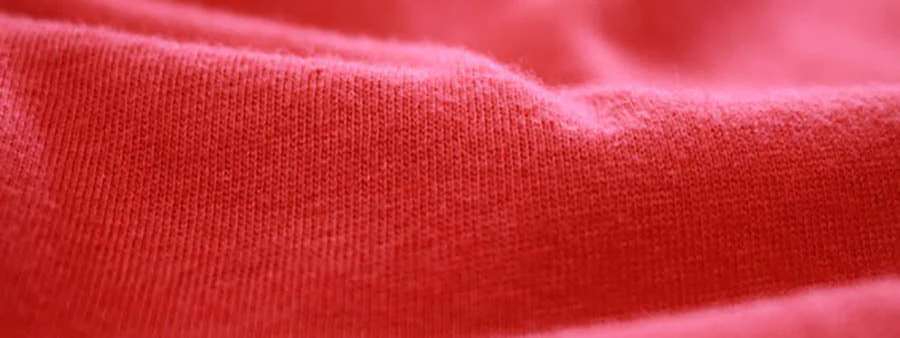
Ring-spun cotton is fabric made from yarn created by continuously twisting and thinning the cotton strands. It is a manufacturing process, not a distinct species of plant.
During production, long cotton fibers are twisted tightly around a ring mechanism. This is similar to the difference between a tightly braided cable and a loose bundle of twine. Because the fibers are aligned and compacted, the resulting fabric offers specific mechanical advantages:
- Smoother Hand Feel: Noticeably softer against the skin than standard "open-end" cotton.
- Surface Consistency: Fewer stray fibers create a cleaner canvas for printing.
- Durability: The tight twist prevents fraying and pilling over time.
These advantages are most visible in knitwear — in our piqué vs. jersey comparison, ring-spun jersey held its shape (≈3% shrinkage) far better than low-cost single-knit.
Quick Glossary: Reading the Spec Sheet
Use this glossary to decode factory quotes and ensure you aren't overpaying for basic materials.
| Term | Definition |
|---|---|
| Ring Spinning | The premium standard. Fibers are twisted and thinned for strength and softness. |
| Open-End (Rotor) | The economy standard. Fibers are wrapped loosely. Results in a rougher, "dry" touch. |
| Combed | A prep step where fine brushes remove short fibers, leaving only long, straight strands. |
| Carded | Basic cleaning that disentangles fibers but leaves impurities. |
| Singles (e.g., 30s) | Yarn fineness. Higher numbers = finer yarn. A 30 single is softer than a 20 single. |
| GSM | Fabric weight (Grams per Square Meter). Indicates density, not quality. |
If you are new to these terms, review our guide on apparel fabric types for visual examples, or explore apparel manufacturing methods to see the machinery involved.
Does Ring-Spun Mean "Best"?
Not automatically. Ring-spun yarn provides a superior foundation, but the final feel of the shirt depends on the finishing processes. According to CottonWorks, chemical treatments (like enzyme washes) and knitting density are equally critical to the end product. A ring-spun shirt with a loose knit may still feel cheap compared to a dense, well-finished open-end shirt.
💡 Key Insight: Ring-spun refers to the*yarn construction, not the fabric weight or finish. Always request a physical sample to verify the knitting density and hand feel.*
Core Concepts: The Mechanics of Yarn Formation
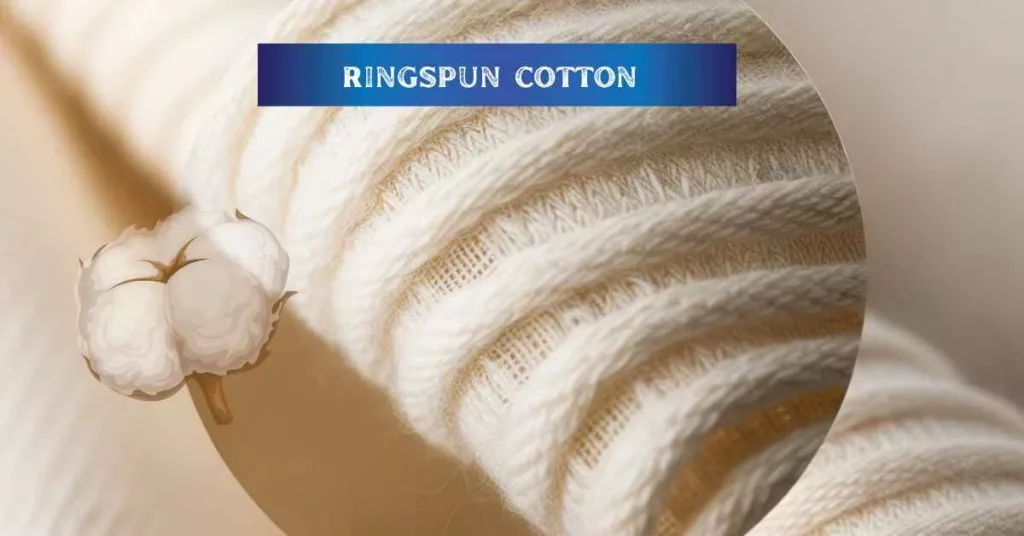
To evaluate the ROI of a garment, we must analyze the engineering behind the thread. The difference in hand feel between premium and budget cotton—that "retail quality" softness—is the result of physics applied during manufacturing: fiber alignment and twist consistency.
The manufacturing process acts as a filter. It begins with raw, chaotic cotton bolls and applies mechanical order. The method used to apply that order determines whether the final shirt feels like a soft retail garment or a stiff promotional giveaway.
A. The Cotton-to-Yarn Pipeline
Before the spinning frame starts, the raw material undergoes rigorous preparation to transform a chaotic mass into a uniform strand.
- Opening: Heavy machinery breaks down raw cotton bales, removing dirt, seeds, and heavy debris.
- Carding: Wire-toothed rollers brush the fibers to untangle them, creating a continuous, untwisted rope called a "sliver." This is the baseline preparation for all cotton yarn.
- Combing (Premium Step): Fine brushes filter the sliver to remove short, stubby fibers and impurities, leaving only long, straight strands.
- Drawing: Multiple slivers are combined and stretched (drafted) to blend the fiber mass and ensure even thickness.
- Roving: The fiber is drawn out into a thinner strand and given a slight twist to hold it together.
- Ring Spinning: The roving is fed into the spinning frame, drafted to its final size, twisted tightly, and wound onto a bobbin.
- Winding: The finished yarn is transferred from bobbins to large cones, ready for knitting.
B. The Physics of Ring-Spun Yarn
In ring spinning, drafting and twisting occur simultaneously. This creates a yarn structure where fibers are spiral-bound around a core, similar to a steel cable.
- Fiber Alignment: Because fibers are stretched extensively before twisting, they lie parallel to one another. When you touch the fabric, you contact the smooth sides of the fiber, not the prickly ends.
- Twist Consistency: The ring frame applies high, uniform torque. This locks the fibers together, reducing weak points.
- Reduced Hairiness: "Hairiness" is the technical term for fiber ends protruding from the yarn body. Ring spinning tucks these ends in, resulting in less surface fuzz.
C. Ring-Spun vs. Open-End (Rotor) Mechanics
The majority of budget promotional t-shirts use Open-End (OE) or Rotor spinning.
In Open-End spinning, fibers are not twisted from a continuous strand. Instead, they are blown into a high-speed rotor cup. Centrifugal force presses the fibers against the cup wall, and a yarn tail sweeps them up to form the thread.
- The Wrapper Fiber Effect: OE yarn is characterized by "wrapper fibers"—strands that wrap perpendicularly around the yarn core rather than spiraling with it.
- The Texture Result: This irregular structure creates a loftier, rougher surface. It feels "dry" because the fiber orientation is random.
- Visual Check: Under a microscope, ring-spun looks like a tight spiral; Open-End looks like a messy bird's nest.
D. Combed vs. Ring-Spun: Clearing the Confusion
A common manufacturing error is treating "Combed" and "Ring-Spun" as synonyms. They refer to different stages of the pipeline:
- Combed = Preparation (Step 3). Removes short fibers.
- Ring-Spun = Construction (Step 6). Twists the fibers.
Manufacturing specifications typically fall into three tiers:
- Carded Open-End (The Budget Standard): Standard prep + Fast spinning. Rough feel, lowest cost.
- Carded Ring-Spun (Mid-Tier): Standard prep + Premium spinning. Softer feel, moderate cost.
- Combed Ring-Spun (The Premium Standard): Premium prep + Premium spinning. Smooth surface, highest cost.
E. The Utility of Carded Open-End Cotton
While ring-spun is superior for fashion, carded open end cotton dominates the high-volume market for specific reasons.
- Definition: Cotton that has been aligned (carded) but not combed, spun using the faster rotor method.
- Pros: It is cost-effective and produces a "bulky" yarn. A 180gsm Open-End shirt often feels thicker and sturdier than a 180gsm Ring-Spun shirt.
- Cons: The surface is fuzzy. Over time, friction causes the short fibers to pull loose, leading to pilling (small fabric balls) faster than ring-spun alternatives.
Read the ASTM D1423 Standard on Twist Testing
F. Visualizing the Difference
To identify the yarn type without a microscope, observe the surface behavior:
- Ring-Spun Surface: Look for a tight, diagonal grain. The lack of stray fibers creates a sheen.
- Open-End Surface: Look for a "fuzzy" halo. The perpendicular wrapper fibers reflect light unevenly, creating a matte, textured look.
G. Print-Surface Mechanics
For print shops, yarn structure dictates image resolution. The smoothness of the yarn translates directly to the clarity of the print.
- Direct-to-Garment (DTG): DTG acts like an inkjet printer. If the canvas (fabric) is hairy, ink droplets settle on the fuzz rather than the fabric. When the fuzz moves, the image loses clarity (fibrillation). Ring-spun provides the necessary flat surface for HD prints.
- Screen Printing: Ring-spun cotton allows for finer mesh counts, enabling intricate details and halftones without the texture of the shirt interfering.
- Heat Transfer: A smoother surface ensures uniform contact between the adhesive and the fabric, reducing the risk of peeling.
🧠 Expert Insight: While ring-spun is the gold standard, results also depend on pretreatment. A Carded Open-End shirt with a heavy enzyme wash can mimic the hand-feel of ring-spun, but it will lack the long-term durability and pilling resistance.
The Business Case for Ring-Spun: Measurable ROI vs. Cost
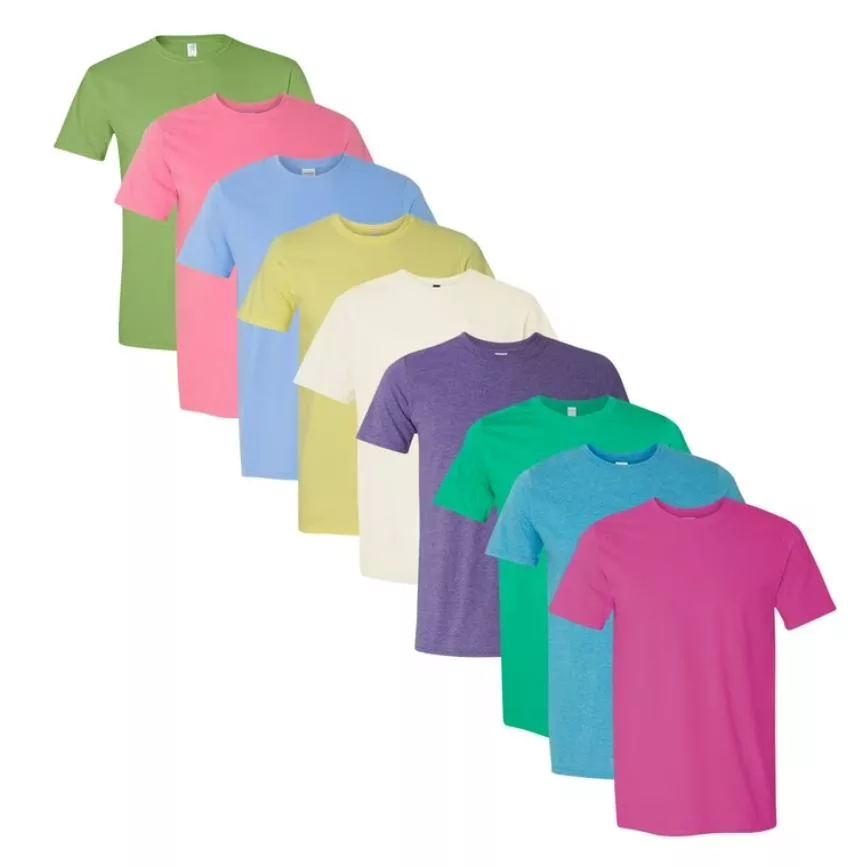
What is ring spun cotton? For manufacturing managers and POD operators, choosing ring-spun cotton is not a preference; it is a calculation of profit margins and brand reputation. While the upfront unit cost is higher than open-end options, the investment yields quantifiable returns in production efficiency and customer lifetime value (CLV).
Here is how the structural engineering of ring-spun yarn translates into business outcomes.
1. Increases Reorder Rates (Premium Haptics)
In e-commerce, the first physical touchpoint dictates the return rate. Ring-spun fibers are tightly twisted to eliminate the microscopic "barbs" found in standard cotton.
- The Outcome: This creates a "retail-ready" hand-feel immediately upon unboxing.
- The Metric: Smoother fabrics reduce "scratchy" complaints, significantly improving customer retention scores. According to [Link to CottonWorks/Cotton Incorporated on yarn spinning and cotton performance], tactile softness is a primary driver in apparel repurchasing decisions.
2. Reduces Print Rejection Rates
For Print on Demand (POD) businesses, surface texture determines yield. Ring-spun cotton provides a flatter, cleaner substrate that reduces fibrillation (loose fibers disrupting ink flow).
- Sharper Detail: Essential for designs with fine lines, halftones, or gradients.
- Consistent Coverage: Prevents the "speckled" look of ink settling on uneven fibers.
- Cost Efficiency: Smoother surfaces require less pretreatment fluid and ink passes to achieve vibrant solidity.
- Complex Graphics: Intricate artwork or photorealistic DTG prints.
- Retail Lines: Merchandise intended for boutique sale rather than giveaways.
- Fashion Fits: Explore fabric options for different garments to match the cut with the right drape.
3. Extends Brand Visibility (Durability)
Standard cotton degrades quickly; ring-spun cotton undergoes "premium aging." The continuous cable-like twist locks fibers in place, resisting mechanical stress during wash cycles.
- Pill Resistance: Significantly fewer loose fibers tangle into unsightly fuzz balls.
- ROI Context: A shirt that stays intact for 50 washes offers 5x the brand impressions of a promo tee that degrades after 10.
- Note: Durability also depends on GSM and stitch density.
4. Justifies Higher Margins (Perceived Value)
The slower processing time for ring-spun yarn increases the base cost, but this unlocks disproportionate pricing power.
- The Math: A consumer may value a rough promo tee at $5 but a soft, ring-spun garment at $25+.
- The Strategy: For custom promotional apparel manufacturing, this allows businesses to charge premium rates for merchandise that costs only marginally more to produce. [Link to an industry report on apparel quality drivers / return rates] indicates that perceived quality correlates directly with fabric smoothness.
Challenges & Limitations: The Manufacturing Reality Check
While ring-spun cotton is the standard for retail-quality apparel, it introduces specific friction points regarding cost, specification complexity, and quality control. Understanding these limitations is necessary to audit factory quotes effectively.
High Production Overheads
Ring spinning is a discontinuous process with significantly lower throughput than modern open-end machinery. This manufacturing inefficiency creates a 15–30% higher unit cost per blank garment. For high-volume, short-lifespan campaigns (like fun-run giveaways), this premium yields negative ROI compared to standard open-end options.
Vague Specification Risks
"Ring-spun" describes a twisting method, not a final fabric grade. Inexperienced buyers often receive garments that are technically ring-spun but feel thin or rough because the specification was incomplete. A 30-single (30s) yarn yields a soft, fine feel, whereas a 20-single remains coarse regardless of the twist.
Processing & Print Compatibility
A smoother surface raises the ceiling for print quality but requires stricter process control. Ring-spun cotton is susceptible to fibrillation, where small fibers break through the ink layer after washing. Without proper pretreatment and curing discipline, particularly in DTG printing, the result is a design that looks faded or "fuzzy" despite the premium base material.
The Certification Gap
Manufacturing "organic" or premium cotton does not certify the entire supply chain. A fabric may be knitted from GOTS-certified fiber but dyed using non-compliant heavy metals or finished with harsh chemical softeners in a separate facility.
⚠️ Critical Warning: Certification must cover the finished good. Review theOEKO-TEX Standard 100 scope to understand how authorities test for harmful substances at the processing stage, not just the farm level.
Bridging the Gap: LeelinePromotion’s Role
The difference between a "scratchy" promo tee and a retail favorite is factory-level vigilance. LeelinePromotion mitigates these manufacturing risks by implementing AQL-based Quality Control directly on the production floor. We validate yarn count, GSM, and twist consistency before bulk production, ensuring clients pay for measurable technical specifications rather than ambiguous marketing claims.
The Final Verdict: Choosing the Right Canvas for Your Brand
Ultimately, the choice between ring-spun and open-end cotton is not merely a preference for softness—it is a strategic calculation regarding brand perception and product longevity. While ring-spun cotton commands a higher manufacturing cost due to the time-intensive twisting process, it delivers a superior ROI through extended wearability and high-definition print clarity.
It effectively bridges the gap between disposable promotional items and retail-grade apparel.
However, value is contextual. For massive, single-use events, standard open-end cotton remains a pragmatic financial tool. The key is to match the fabric engineering to the end-use case, ensuring you aren't paying premium prices for a throwaway item, nor sacrificing brand reputation on a "scratchy" tee.
Recap: The 5 Essentials
- Ring-spun is a spinning method that continuously twists fibers for a smoother, stronger yarn.
- Open-end (rotor) production is faster and cheaper, resulting in a fuzzier, "dry" texture.
- "Combed" is a prep step; combed ring-spun combines premium cleaning with premium twisting.
- For POD and retail lines, ring-spun is essential for soft hand feel and crisp print resolution.
- Don't rely on the label alone; verify singles, GSM, and finishing treatments in your tech pack.
Decision Rubric
- Select Ring-Spun When: You are building a premium brand, require detailed DTG/screen prints, or prioritize customer retention and repeat wear.
- Consider Open-End When: You need the lowest cost per unit for high-volume giveaways, rugged workwear, or designs with minimal detail.
Take the Next Step
Manufacturing premium apparel requires more than checking a box. LeelinePromotion acts as your technical partner, verifying yarn integrity and manufacturing standards directly at the factory source.