
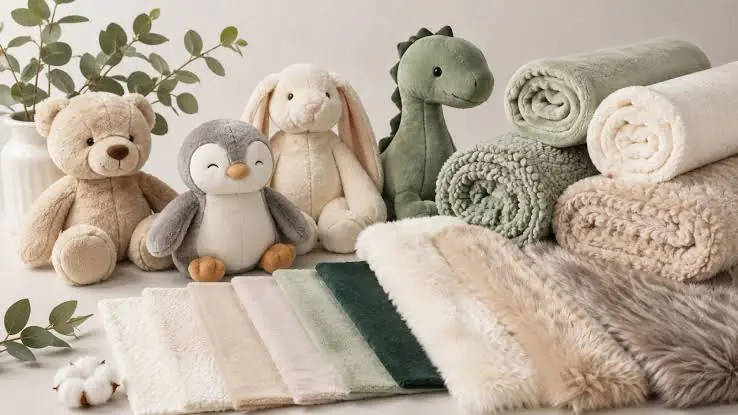

This plush toy materials list is not built from supplier brochures. My team sampled each option on the factory floor, ran AQL 2.5 incoming-QC checks, stitched logo trials, and pre-screened Prop 65 and OEKO-TEX paperwork.
Each entry covers usable GSM and pile zone, best SKU fit, cost and QC watch-outs, and where we approve or reject the material.
No factory pays for placement. The result is a repeatable approval spec for custom plush toys.
Key Takeaways
- Pile height decides embroidery readability. Short-pile Crystal Super Soft and velboa hold crisp faces; 5 mm minky and longer faux fur swallow stitches.
- GSM has a working range per body size. Small faces start at 200 GSM, medium bodies hold at 280 to 380 GSM, and premium cuddle SKUs need 400 GSM or more.
- Every pile fabric needs a nap arrow. Missing grain direction is the most common cause of twisted legs, shifted ears, and mismatched panels.
- Certificates cover the shell, not the toy. A finished plush still needs ASTM F963 or EN71 review on the assembled unit.
The 8 Plush Toy Fabrics at a Glance: Which One Wins Each Job
Pile height decides the job. Crystal Super Soft and velboa win face panels and small mascots, minky and sherpa carry hero bodies and winter capsules, faux fur sells realism and shelf drama, coral fleece protects the budget lane, organic cotton sells the label, and velour sells the gift. Each entry below gives the working GSM range, pile height, panel fit, and the verdict we would sign.
1. Crystal Super Soft: The Default OEM Plush Fabric for Crisp Faces and Controlled Cost
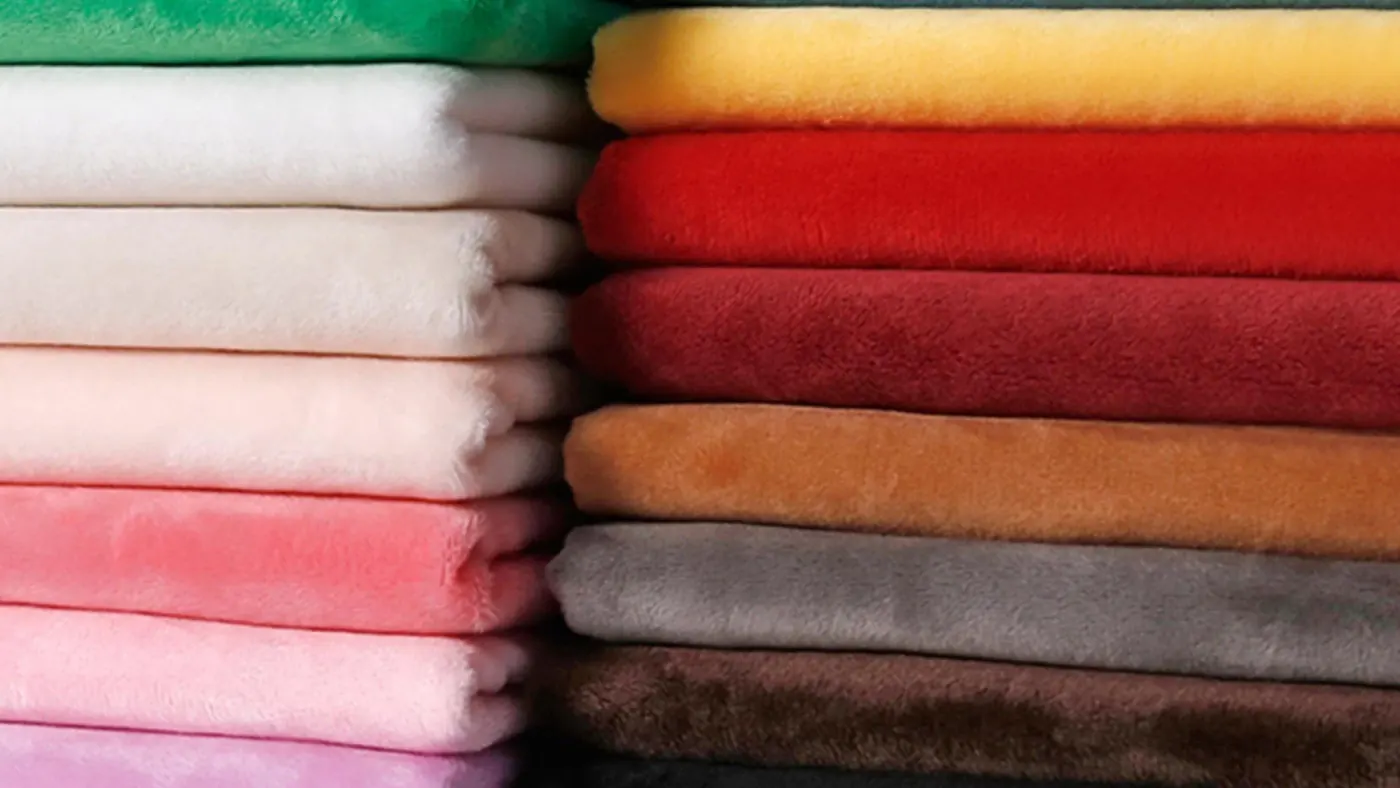 Most buyers ask for the softest hand feel. That is usually the wrong brief for a 15 cm mascot. In factory terms, Crystal Super Soft is a polyester knit pile with a short 1 to 3 mm surface.
We approve specs between 200 and 350 GSM. The tighter face holds shape, and lower seam bulk lets your sewing team turn small arms and ears without puckering.
Faces stay readable: embroidery sits flat and facial lines stay clean. Panels of 10 to 25 cm hold their shape through cutting, stuffing, and final QC. On curved cheeks, the fabric tracks better than heavy minky, which drags under the needle.
Watch the trade name. Mills sell different backings under "Crystal Super Soft." One loose-backed lot from the last 300-piece run nearly reached the cutting table.
Manager Chen flagged it at inspection. The panel is now named on the PO, and OEKO-TEX Standard 100 reports are pulled per dye lot. US orders also need CPSC small-parts and flammability checks.
Verdict: On face panels for 10 to 25 cm mascots, 1.5 mm Crystal Super Soft beats longer pile. It keeps embroidery crisp, so write "1.5 mm, 280 GSM, face panels" in the RFQ. For larger cuddle items, test 3 mm first.
2. Minky: The Premium Cuddle Fabric for Hero SKUs, Baby Plush, and Soft-Touch Panels
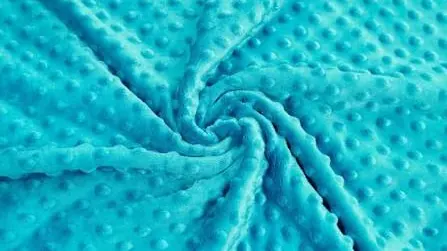 Minky is a deliberate upgrade, not the default soft fabric. Specify it when the body sells the gift. Working specs run 3 to 10 mm pile and 350 to 500+ GSM, measured by [ASTM D3776](https://www.astm.org/d3776-20.html). The 5 mm, 420 GSM grade suits cuddle-first bodies.
Hero SKUs fit best: 30 cm bears, baby plush, and soft-touch panels. The upcharge pays on perceived value. Avoid tiny expression-heavy faces, because the pile swallows 4 mm embroidery and heavy backing adds seam bulk on 8 cm arms.
On a 500-piece baby-plush run, Manager Chen rejected two rolls whose pile direction shifted mid-panel. Grain arrows are now marked on each cut ticket.
Use minky on body panels. Switch to 1.5 mm Crystal Super Soft for the muzzle, eyes, and tiny logo hits. That hybrid keeps cuddle feel without losing face clarity. Ask for ISO 12947 abrasion data on the high-touch gifts you plan to sell.
Verdict: Approve minky for bodies at 5 mm pile and 420 GSM minimum. Reject it for faces under 10 cm and any roll without a grain mark. Ask for a 24-hour compression recovery photo before bulk.
3. Velboa / Short-Pile Plush: The Best Material for Embroidery Readability, Mascots, and Small Character Goods
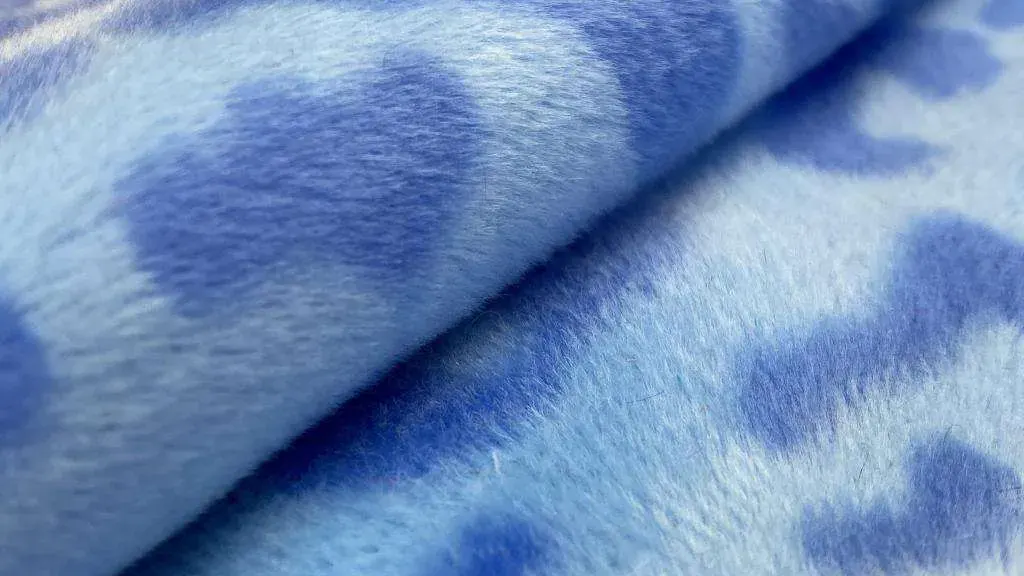 Velboa is the face and detail specialist. It comes in 1.5 to 3 mm pile with stable backing and a matte surface. Faces, logos, blind-box plush, keychains, and small paws all suit it. For hand feel and drape, choose Crystal Super Soft or minky.
Matte Velboa kills glare, so stitches read easily. Printed details stay cleaner after washing, and low lint keeps cutting and sewing moving. Mascot faces hold shape instead of sagging.
Two failures matter. Dark tones often fail saliva and sweat fastness, so run a 4-hour artificial saliva test on navy and black, plus ISO 105-E04 and AATCC 15 sweat checks.
Weak backing causes show-through and stuffing shadows. Log backing density at 120 g/m² minimum. Manager Chen caught a 500-piece dark green run that bled after sweat testing; a dye lot change and a batting layer removed the show-through.
Verdict: Approve Velboa at 1.5 to 2 mm for face panels, with 120 g/m² backing. Reject dark lots without a saliva fastness report. Test show-through before bulk.
4. Sherpa: The Cozy Texture Upgrade for Seasonal Plush and Lifestyle Retail Capsules
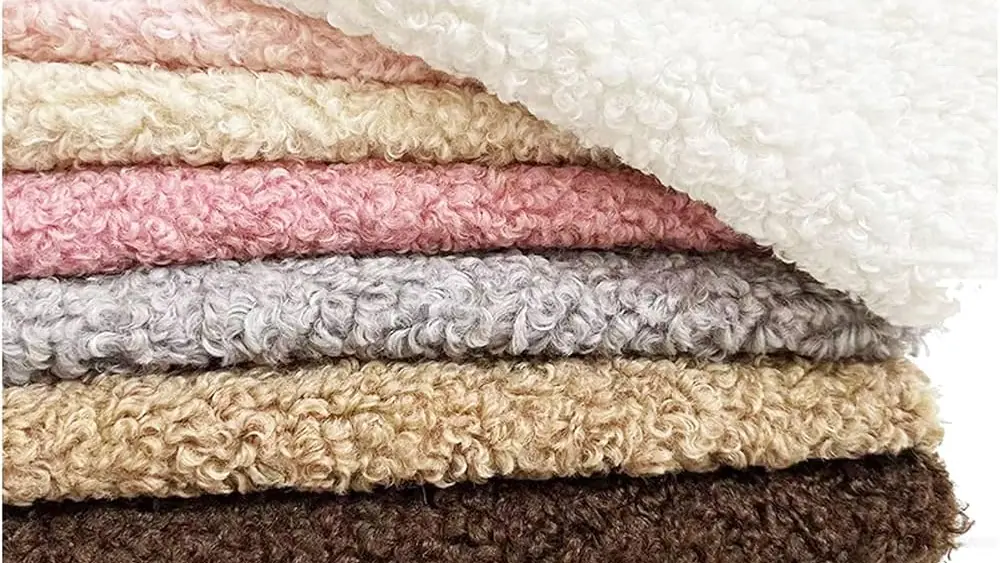 Sherpa is not a plush default. It is a curled, wool-like knit pile with a medium-to-heavy hand. That loft photographs cozy, not precise. Use it where the SKU needs winter warmth rather than micro-detail.
Best fits winter capsules, gift bundles, pillows, trims, and lamb-style animals.
An 800-piece holiday pillow run used 400 GSM sherpa with a 6 mm curl. It lifted perceived value beside a 280 GSM Crystal Super Soft body without changing the pattern.
Cost sits in process. Pile traps in seams, so sewing needs wider allowances and a brush-out after closing. Lint control becomes daily housekeeping.
Tight facial geometry blurs eyes and nose lines: Manager Chen rejected a 10 mm curl on a 12 cm lamb because it swallowed the 3 mm piping. Large curls also crush flat in vacuum-packed fulfillment, so vacuum-test before bulk.
Verdict: Approve sherpa for winter bodies and pillows. Use 6 to 8 mm curl at 360 GSM minimum on trims. Reject it for faces under 12 cm and any curl that loses loft after vacuum packing. Brush seams and log lint per 100 pieces.
5. Faux Fur / Long-Pile Plush: The Best Choice for Realism, Volume, and Premium Shelf Impact
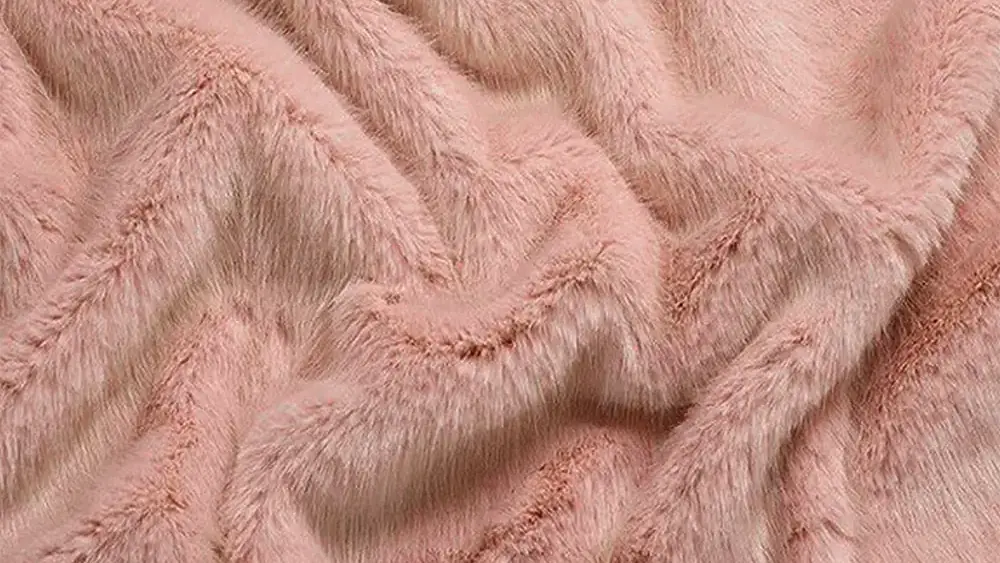 Faux fur is not a fabric. It is a grooming commitment. A long-pile skin can sell a $59 collector wolf, or bury a margin when the nap plan is weak.
Approve it for effect, not romance. Longer pile creates volume, species realism, and holiday gift energy. It belongs on manes, tails, ear trims, realistic animals, and display-led plush. The silhouette carries the sale; micro-embroidery does not.
A 300-piece collector wolf run used 25 mm faux fur on the mane and tail. Face panels stayed in 1.5 mm Velboa, which kept the eyes readable and stopped the fur from swallowing the nose stitch.
Costs hide in cutting and finishing. Pile raises scrap, line speed drops, and weak mills shed fibers at the needle and pack station.
Each seam needs trimming and brush-out. Pile depth must match SKU scale, and each pattern piece needs a nap arrow. Engineer broad curves and simple geometry before approving scale.
Verdict: Approve long-pile faux fur for manes, tails, and display animals. Reject it for faces under 12 cm and any pattern with tight inside curves. Run a shed test and a vacuum recovery check before bulk.
6. Fleece / Coral Fleece: The Budget-Stable Fabric for Simple Bodies, Fast Prototypes, and Value Lines
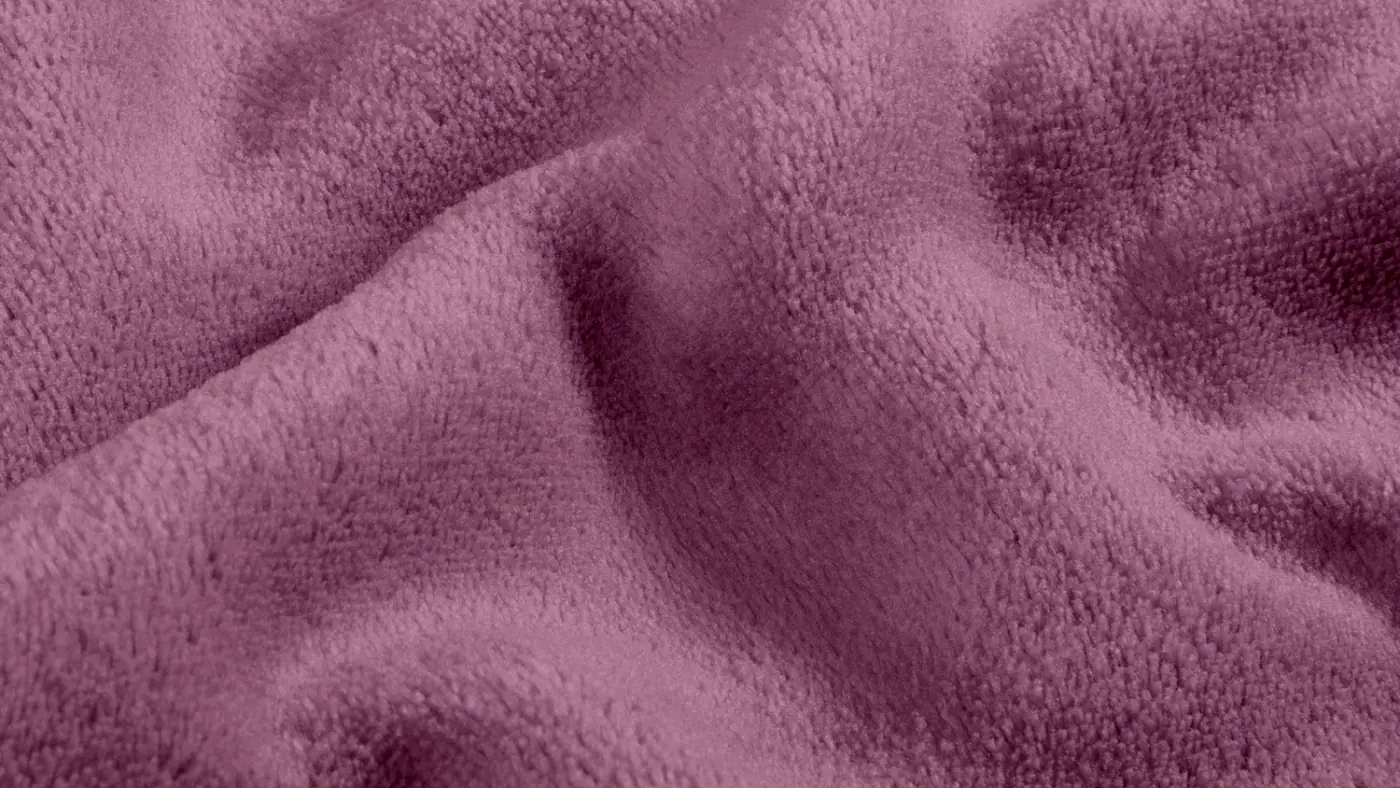 Cheap fleece gets a bad name because buyers skip the spec sheet. Treated as a controlled budget lane, coral fleece holds up. Lower cost does not have to mean low control.
Fleece is brushed and soft; it usually sews more easily than pile-heavy fabrics. That helps while prototypes change: you can revise a 20 cm body pattern without losing a week to pile direction and brush-out.
It fits promo plush, simple body shapes, apparel add-ons, early sample rounds, and price-sensitive programs that still need a kind hand-feel.
We approved 220 GSM coral fleece on a 600-piece promo blanket run; it ran faster than sherpa, with fewer skipped stitches on the flatlock.
Limitations show up fast. Cheap grades pill, premium shelves read fleece as flat, and licensed retail needs stronger differentiation.
Document anti-pill finish, GSM, and compression recovery before bulk. Cite the ASTM D4970 method for pilling, and read why fabrics pill before approving a low-cost grade.
If the SKU ships vacuum-packed, run a 24-hour vacuum test. One 180 GSM lot stayed creased after unpacking and was rejected.
Verdict: Approve coral fleece for simple bodies, promo plush, and early samples at 200 to 240 GSM with a written anti-pill finish. Reject any lot without compression recovery data for vacuum-packed orders.
7. Organic Cotton Knit: The Natural-Fiber Option When Brand Positioning Matters More Than Maximum Loft
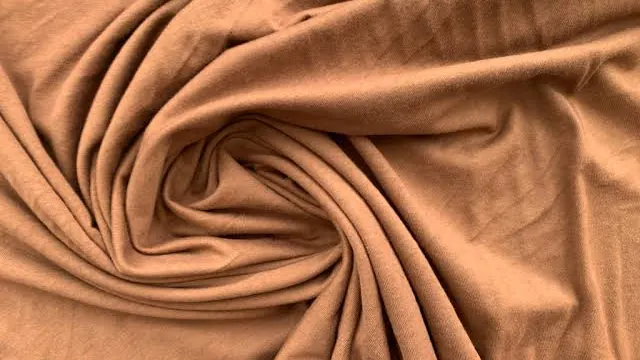 Organic cotton knit will never win a loft contest. It wins the label.
Approve it when the buyer's story is the product. Nursery, eco-positioned, and licensed natural-fiber lines want a matte, textile-forward finish. Cotton reads honest on a hangtag; polyester pile does not.
Doll bodies, baby-adjacent soft goods, loveys, fabric books, and gift sets fit best, especially when buyers ask for GOTS paperwork before hand feel.
Expect 3 to 6% first-wash shrinkage. Matte panels show wrinkles, cotton absorbs moisture and dries slowly, and dye lots vary more than polyester. Pre-shrink each program, write an AATCC wash protocol, and validate at 40°C before bulk.
Avoid organic cotton as the main shell for dense, highly stuffed forms. It lacks stretch and recovery for tight curves, seams pucker at high fill weights, and bodies sag over time.
A 400-piece doll body run saw three lots with shrinkage from 3.1% to 5.8%. The 3.1% lot was locked, and a pre-shrink step was added.
Verdict: Approve organic cotton knit for doll bodies and flat comfort goods at 180 to 240 GSM with a GOTS scope certificate and a 3-wash shrinkage record under 4%. Reject it as the main shell for dense stuffing.
8. Velour / Velvet: The Gift-Ready Material for Collector Plush and Limited-Edition Presentation
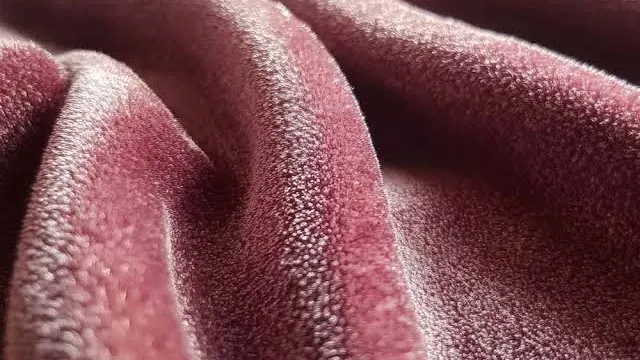 Velour sells the gift, not the play. Its short directional nap gives richer sheen and elevated gift feel. Collector bears, dress-up plush, decorative trims, and special editions suit it. Buyers pick it when shelf presentation must read premium.
It beats deep pile on silhouette. A 1.5 mm velour face holds cleaner lines than 10 mm minky or faux fur, which makes it a useful contrast fabric.
You get a premium cue without full faux-fur complexity. Velour shares a short directional nap with velvet, though pile and backing differ.
We used 220 GSM velour for chest patches and inner ears on a 200-piece collector bear run. Two problems surfaced: carton stacking crushed the nap on 12 pieces, and two dye lots shifted under store lighting. Delta E under 1.0 is now required between panels.
Care-label honesty matters. Velour can water-spot and lose loft after machine washing, so write "surface clean only" when true and never claim machine washable. The plush toy label requirements guide covers the remaining marks.
Store and pack flat. Skip vacuum packing unless 24-hour recovery is tested. Use individual poly bags and avoid heavy top loads.
Verdict: Approve velour for collector chest panels, trims, and gift-box accents at 200 to 240 GSM with a 1.5 mm nap. Reject it for rough-use children's SKUs, and reject lots without a Delta E shade report or pressure-mark packing plan.
How to Build a Plush Toy Materials Approval SOP Before Bulk Cutting
This sequence runs on all soft-goods programs. It catches fabric failures before the cutting table.
Step 1: Approve the Tech-Pack Material Callout
Lock the material name, GSM, pile height, backing density, stretch direction, nap arrow, and panel role in the bill of materials. Reject vague callouts like "soft plush."
Step 2: Pull Mill Swatch and Lab-Dip References
Request a production swatch and lab dip per dye lot. Match the lab dip to the Pantone target under D65 light, and keep the signed reference in QC.
Step 3: Lock Dye Lot and Measure by Panel Role
Freeze the dye lot number in writing. Measure GSM and pile height by panel role: face, body, trim, and ear.
Step 4: Record Stretch Direction, Backing, and Nap
Write stretch direction, backing density, and nap arrows on each cut ticket. Reject rolls that shift pile direction mid-panel.
Step 5: Run Embroidery and Filled-Part Trials
Stitch the logo on the actual fabric and stuff a 20 cm test body to check seam puckering and show-through. Add 2 mm batting behind any embroidery wider than 3 cm. Pilot 50 pieces before a 5,000-piece order.
Step 6: Pre-Screen Compliance Before Lab Submission
Do an incoming visual and odor check, then pre-screen flammability. ASTM F963 sets a burn rate of 0.1 inches/sec, so reject anything faster. Run an EN71-3 heavy-metal and azo-dye prescreen.
For US orders, confirm the finished-unit checks in our CPSIA compliance guide. Get role-based signoff from sourcing, QC, and the sample room.
Step 7: Release or Hold the Roll Before Bulk Cutting
Release the roll only when each step passes. Hold any lot with a missing dye lot, a failed odor check, or a failed pull test.
Use the verdicts above to set a target cost per panel. Send the tech pack to our contact page for spec-sheet development.
Our team can turn a promotional product design into a production-ready approval file. Pattern and fabric decisions are covered together in our guide to plush toy construction methods.
Frequently Asked Questions About Plush Toy Materials
1. What is the difference between Crystal Super Soft, minky, and velboa in a tech pack?
Crystal Super Soft runs 1 to 3 mm at 200 to 350 GSM. Minky runs 3 to 10 mm at 350 to 500+ GSM. Velboa sits at 1.5 to 3 mm with a denser matte backing. Write pile height, GSM, and backing in the tech pack; a bare trade name invites substitution.
2. What plush fabric GSM should I specify for small, medium, and premium plush bodies?
Small plush under 15 cm works at 200 to 280 GSM on face panels. Medium bodies of 20 to 30 cm hold shape at 280 to 380 GSM, and premium cuddle SKUs need 400 to 500 GSM minky.
A 240 GSM body on a 25 cm bear sagged after stuffing, so that spec moved to 320 GSM.
3. How does pile height affect embroidery readability?
Longer pile swallows stitches. A 4 mm stitch disappears under 5 mm minky but reads clean on 1.5 mm velboa. Keep faces under 10 cm in short pile, then run a stitch trial on the roll you will actually use.
4. What do siliconized PP cotton and GRS-certified rPET stuffing require?
Siliconized PP cotton has a silicone coat that adds slip, resists clumping, and recovers faster. Non-siliconized fill feels firmer and costs less, but it lumps under vacuum. Manager Chen compresses a 10 g sample for 24 hours and rejects any lot that stays flat.
GRS rPET needs a scope certificate plus a transaction certificate tied to the order number. A valid scope certificate without a TC is not approval, and our rPET certification guide covers both documents.
5. Does my plush fabric prove ASTM F963 or EN71 compliance?
No. Fabric reports cover only the shell. The finished toy still needs review for fill, dyes, seams, backing, eyes, and accessories, so submit the assembled sample, not swatches.
ASTM F963 small-parts and flammability checks run on the whole unit, and EN71 review covers the same finish. Fabric data supports the file; it does not close it.
6. When do I retest after a material substitution?
Retest whenever the shell, fill, dye chemistry, or accessory supplier changes. Swapping backing density can flip pull-test results, and new dye lots can fail migration.
Retest the finished unit for any change touching the child-contact surface. Cosmetic changes, such as embroidery thread color, usually need visual signoff only.
Editorial Integrity Statement: At LeelinePromotion, our integrity is our currency. We operate with strict editorial independence: we receive no kickbacks from manufacturers, use our own independent QA teams for all audits, and fund our own testing equipment.
The specifications here come from mill datasheets, published test standards, and our inspection records, not from vendor marketing.