

The eight main baseball cap types are structured, 5-panel, 6-panel, trucker, dad hat, snapback, strapback, and fitted.
Baseball caps are not a single product, though: five specifications decide the shape, the price, and how well a logo survives — crown structure, panel count, crown profile, closure, and brim. Two caps looking identical online can differ on all five.
This guide explains each style, then lists the specifications worth confirming before an order is placed. It is a buying reference for businesses, not a fashion roundup.
Key Takeaways
- Crown structure, panel count, profile, and closure decide fit and decoration. Style names are shorthand for common combinations of those variables.
- A 5-panel cap gives one seamless front for wide prints. A 6-panel adds a center seam cutting across large artwork.
- Structured fronts carry dense and 3D embroidery. Unstructured dad-hat crowns need lighter stitching and smaller marks.
- Closures are an inventory decision. Snapbacks and strapbacks adjust to many sizes, while fitted caps split an order into several SKUs.
- A typical front decoration area is about 4.5 in wide by 2.25 in high. Confirm the measured area on the actual blank before finalizing artwork.
- Bulk quality is checked with AQL 2.5 sampling under ISO 2859-1 on symmetry, seam centering, brim stiffness, closure strength, and sweatband comfort.
What Determines a Baseball Cap Type?
Retailers and factories name caps in three ways. "Structured" describes crown construction, "5-panel" describes panel count, and "snapback" describes the closure. One cap can carry all three labels, but five specifications decide how the finished product fits and decorates.
- Crown structure: structured crowns have a stiffener, usually buckram, behind the front panels. Unstructured crowns have none and follow the shape of the head.
- Panel count: five, six, or seven fabric panels stitched into the crown. The count changes the seam pattern and the usable front area.
- Profile: low, mid, or high crown height. Profile sets how much vertical space a logo has.
- Closure: plastic snap, fabric strap with buckle or slide, elastic stretch band, or no closure on a fitted cap.
- Brim: flat or pre-curved, with several stitch rows affecting stiffness and shape retention.
Every style below combines those five specifications. Knowing them makes supplier quotes easier to compare, because two "trucker hats" can differ in panel count, front fabric, and closure.
The 8 Baseball Cap Types Compared
| Style | Panels | Crown | Profile | Closure | Best decoration | Common use |
|---|---|---|---|---|---|---|
| Structured caps (construction) | 6 (typical) | Structured | Mid–high | Varies | 3D puff, dense flat embroidery | Team uniforms, corporate programs |
| 5-panel caps | 5 | Either | Low–mid | Snap or strap | Wide screen print, heat transfer, woven patch | Streetwear, event merchandise |
| Classic 6-panel caps | 6 | Either | Mid | Snap or strap | Flat embroidery, woven patch | Sports teams, retail basics |
| Trucker hats | 5–6 | Structured front | Mid–high | Snap | Heat transfer on foam, embroidery on twill | Outdoor crews, summer campaigns |
| Dad hats | 6 | Unstructured | Low | Fabric strap and buckle | Light flat embroidery, small patch | Casual retail, campus, lifestyle |
| Snapback caps | 6 | Structured | High | Plastic snap | 3D puff, large front embroidery | Streetwear, youth merchandise |
| Strapback caps | 6 | Structured | Mid–high | Fabric or leather strap | Embroidered patch, rear clasp engraving | Hospitality, premium retail |
| Fitted caps | 6 | Structured | Mid–high | None (sized) | Dense embroidery, flat logo | Teams, collector ranges |
1. Structured Caps (Construction)
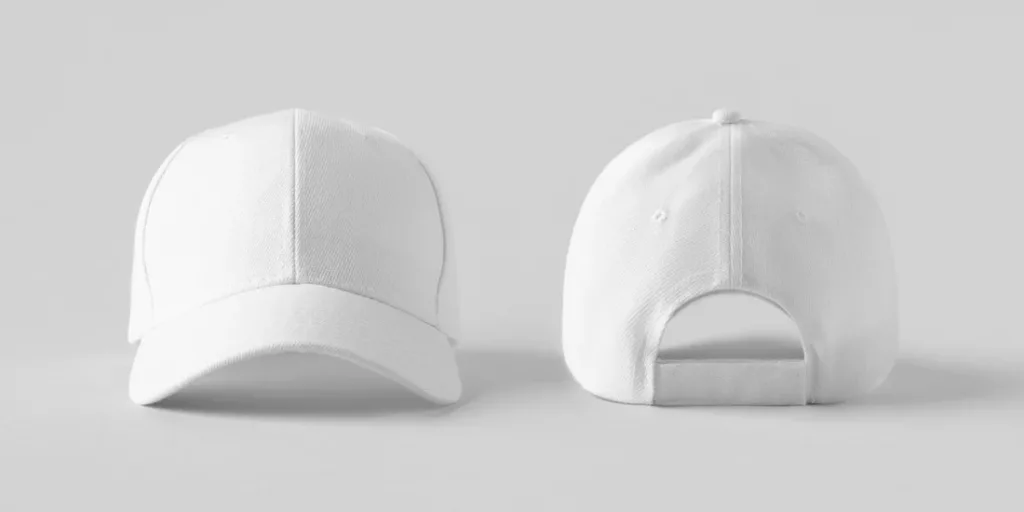
Structured caps carry a stiffened insert behind the front two panels. The insert is usually buckram, a stiff woven interfacing, and it keeps the crown upright instead of collapsing toward the head. Most structured caps in promotional programs are six-panel; the label describes construction rather than panel count.
The practical benefit is a flat, stable surface for dense embroidery and 3D puff. The trade-off is weight and packability: structured caps do not fold flat, so bulk cartons need inner support to prevent crown crush.
PO essentials: crown structure, stiffener type and weight, front panel count, and the stitch count for the front mark.
Watch for: uneven stiffener weight, puckering under dense stitching, and a front panel twisting off-square over the brim.
2. 5-Panel Caps
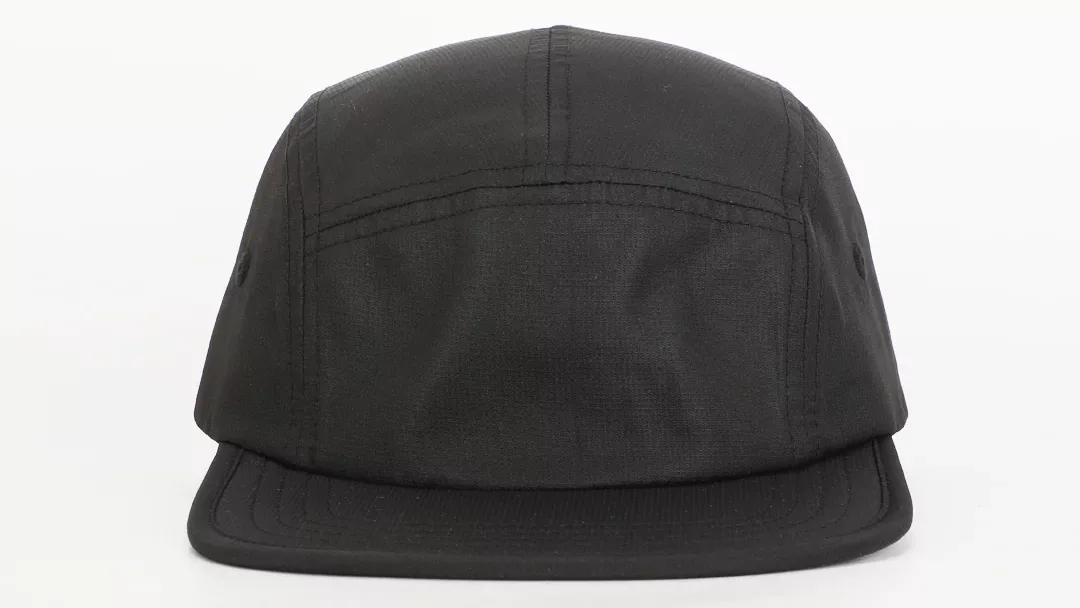
A five-panel cap joins the front into one uninterrupted panel. There is no center seam over the forehead, so wide screen prints, heat transfers, and oversized woven patches sit on a continuous surface.
That seamless front is why five-panels dominate streetwear and event merchandise. Embroidery still works, but dense fills are limited by the fabric, because there is no seam to release thread tension.
PO essentials: single-panel front width, fabric weight, decoration method, and the stitch count the blank can carry if the design is embroidered.
Watch for: prints wrapping past the front edge and distorting near the side seams, plus lightweight fabric sagging on a wide panel.
3. Classic 6-Panel Caps
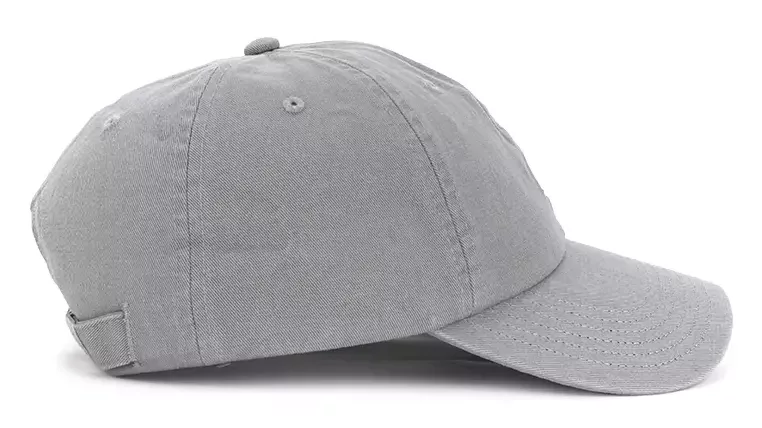
The six-panel cap is the default construction for teams, uniforms, and general promotional use. Six wedge-shaped panels meet at a center seam and a top button, producing the rounded crown most people picture.
The center seam is the specification most likely to catch buyers. A large logo placed across it can distort, and screen printing over a seam tends to crack. Embroidery and woven patches handle the seam better than flat ink.
PO essentials: center seam position, crown height, brim curve, and logo placement relative to the seam.
Watch for: off-center seams, a misaligned top button, uneven panel widths, and asymmetric eyelets.
4. Trucker Hats
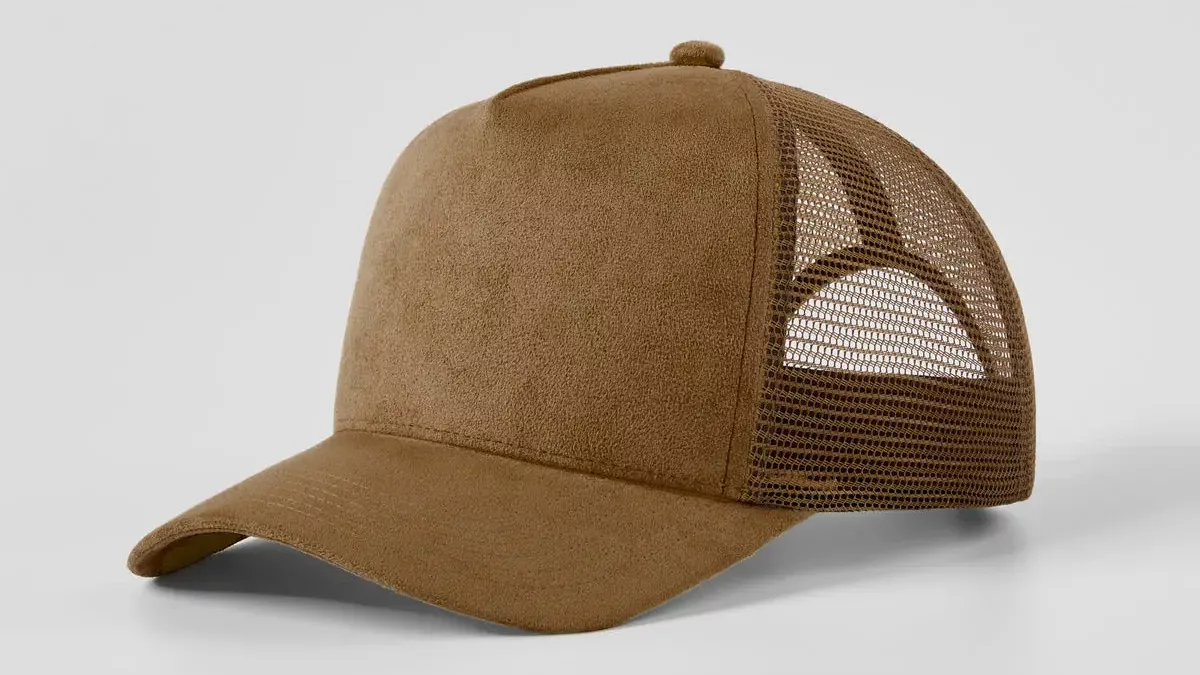
Trucker hats combine a structured front with a mesh back. The open mesh moves heat out, which makes this the usual choice for outdoor crews, summer campaigns, and workwear programs.
Front material drives decoration. Foam fronts take heat transfers and screen prints well; twill fronts hold embroidery and patches. Mesh color should be confirmed against the front panel, because a two-tone mismatch is visible immediately.
PO essentials: front material (foam or twill), mesh color and weight, panel count, and closure type.
Watch for: brittle mesh cracking when flexed, plastic snaps loosening after repeated use, and scratchy sweatbands.
5. Dad Hats
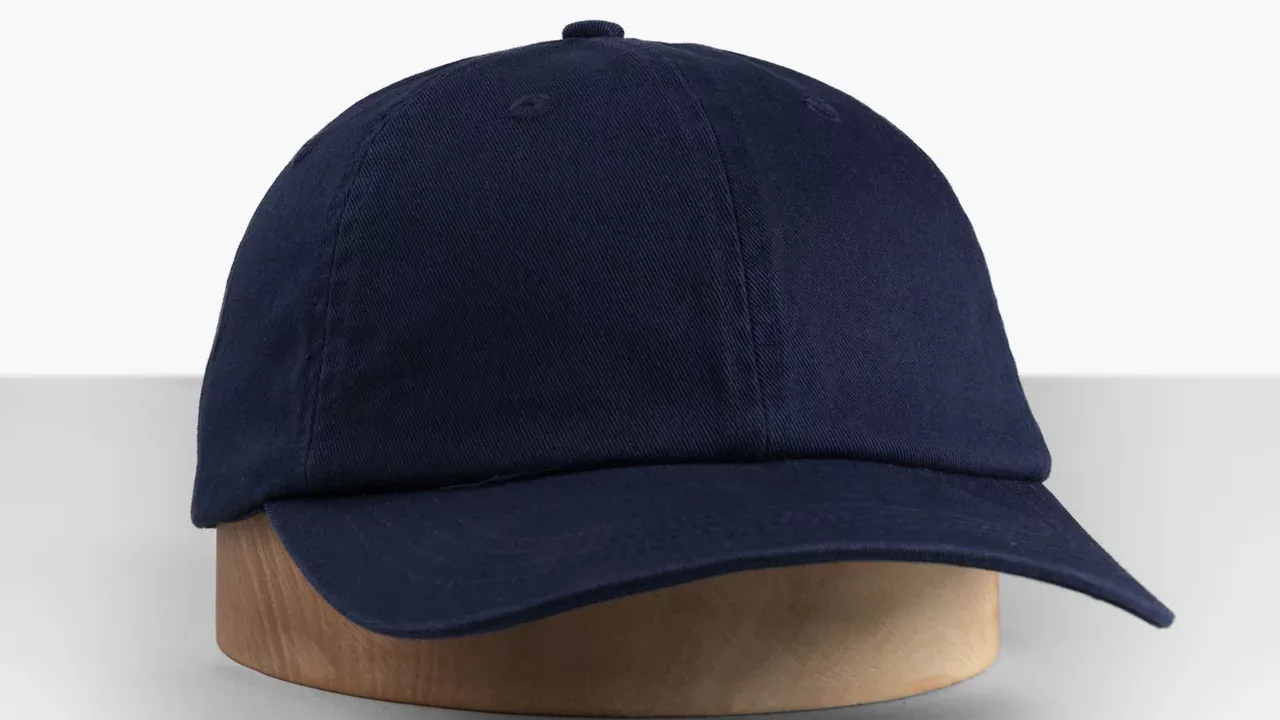
A dad hat is an unstructured, low-profile cap with a soft crown and a pre-curved brim. Without a stiffener it follows the head, which reads as relaxed rather than uniform.
The soft crown limits decoration. Flat embroidery works well at a modest size; heavy fills and 3D puff can pull the fabric and leave the front panel wrinkled. Washed cotton and canvas are the usual fabrics.
PO essentials: unstructured crown, fabric wash, brim curve, closure, and a conservative stitch count for the front mark.
Watch for: fabric puckering around dense logos, thin straps, and a brim going floppy after shaping.
6. Snapback Caps
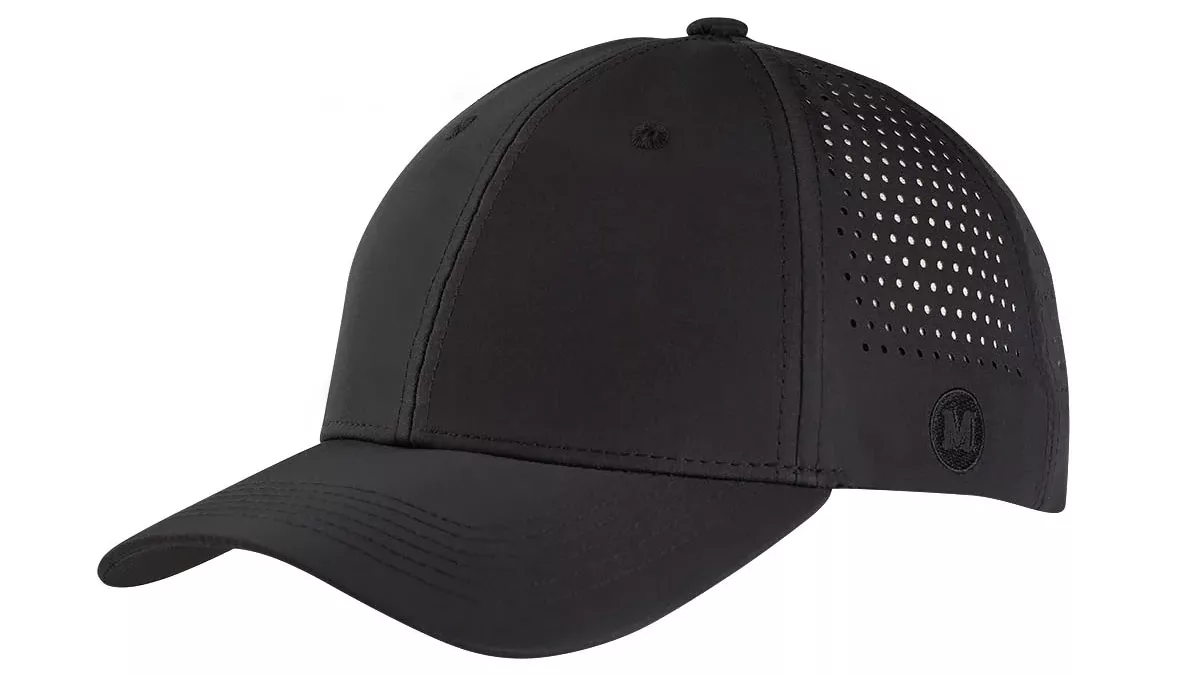
A snapback has a structured, high-profile crown and a plastic snap closure at the back. The tall front creates a strong billboard for a logo and gives the cap its streetwear look.
Snapbacks suit youth-oriented drops and fashion-led merchandise. The closure is the weak point on low-cost blanks, and the high crown changes logo scale: a small mark can look lost.
PO essentials: crown height, brim shape (flat or curved), snap material and color, and a logo size suited to the taller front.
Watch for: snaps cracking or losing tension, a leaning crown, and a stiff front failing to recover after packing.
7. Strapback Caps
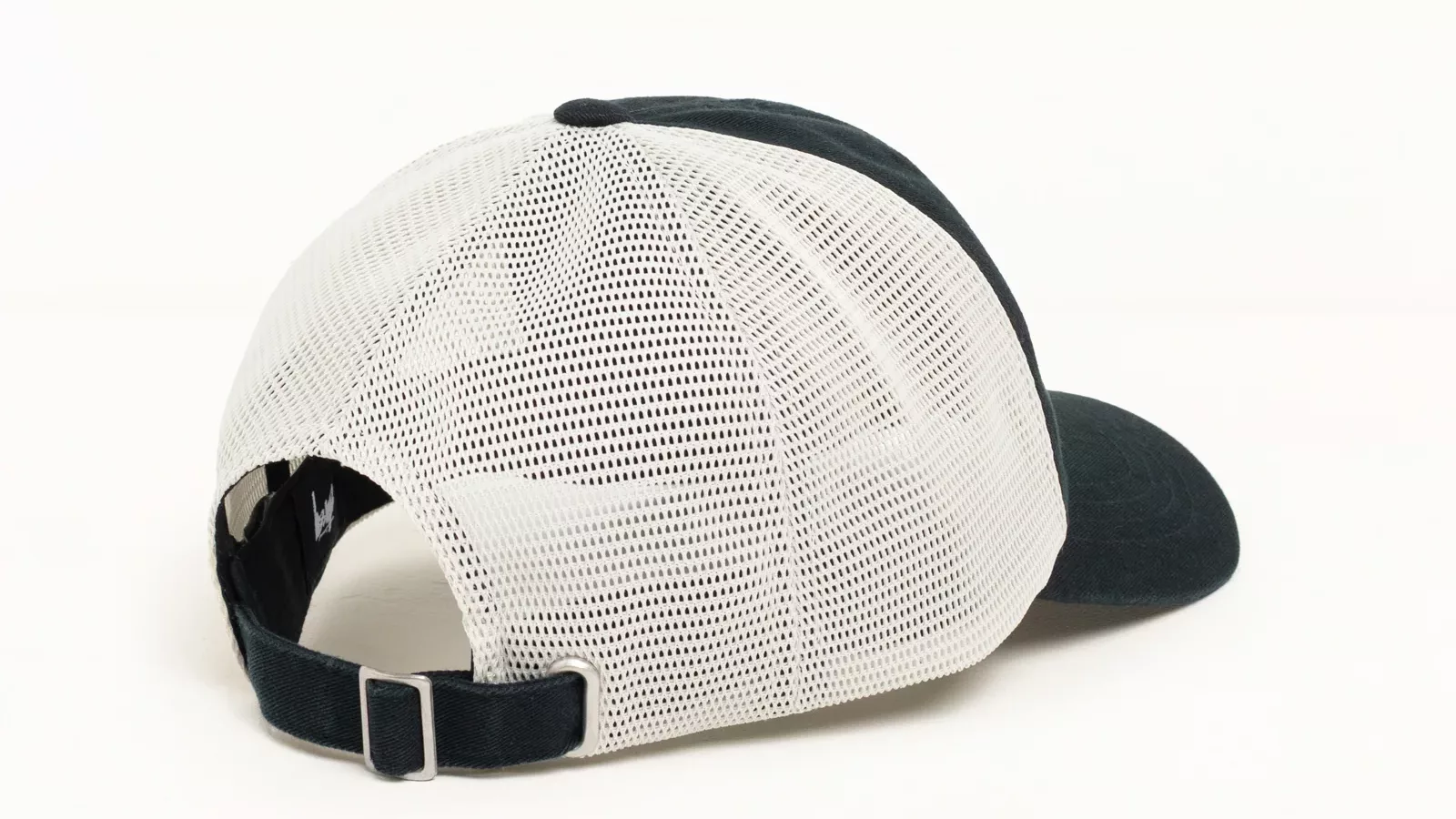
A strapback replaces the plastic snap with a fabric or leather strap and a metal buckle or slide. The result is a cleaner rear finish, reading as more premium than a plastic closure.
Strapbacks are common in hospitality, resort, and premium retail programs. The strap is also a branding surface: a small woven label or engraved clasp adds detail without disturbing the front.
PO essentials: strap material, buckle finish, anti-slip treatment, and the rear labeling or engraving method.
Watch for: straps sliding loose after a few adjustments, frayed strap ends, and sharp-edged buckles.
8. Fitted Caps
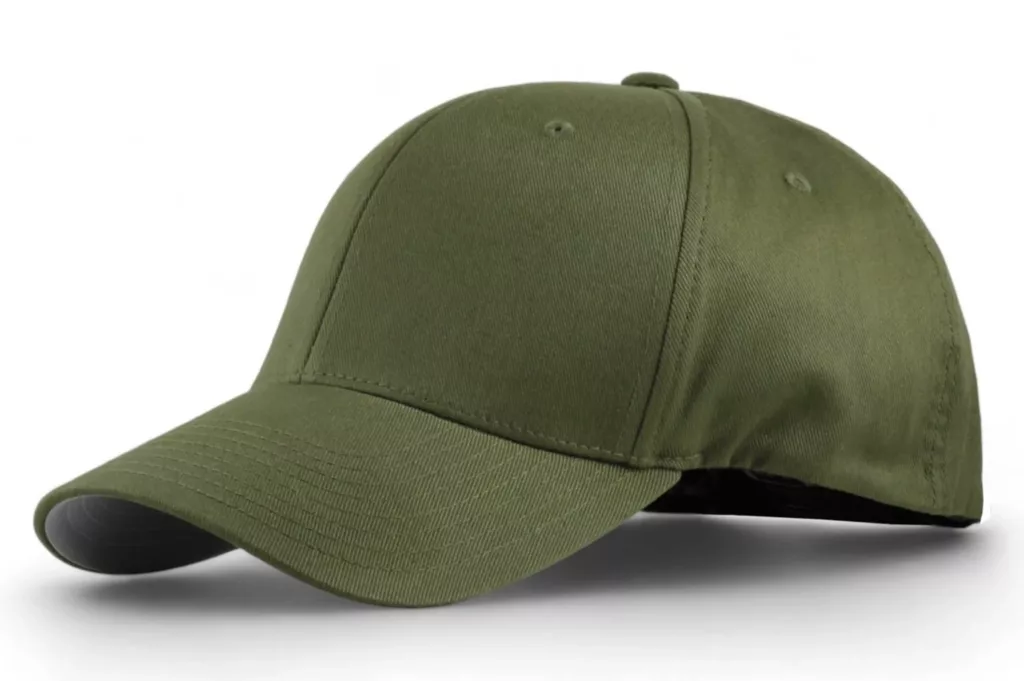
A fitted cap has no rear opening. It is cut to fixed sizes, usually 6⅞ to 7⅝ in US sizing, and relies on a shaped sweatband for fit.
The trade-off is inventory. One design becomes several SKUs, and a size curve out of step with the audience leaves dead stock. Fitted caps pay off for teams and collector ranges where fit is part of the product.
PO essentials: size range, size breaks, sweatband material, and carton labeling by size.
Watch for: shrinkage altering fit after washing, inconsistent sizing between production runs, and missing size labels.
Other Baseball Cap Variants
Four more silhouettes appear often enough to plan for, even though each is a variation on the constructions above.
- Rope caps: a braided cord runs along the base of the front panel, adding a retro golf or resort look. The cord occupies the lower logo area, so artwork should sit higher.
- 7-panel A-frame caps: an extra panel creates a taller, flatter front with more room for large marks. Common in fashion-led and outdoor programs.
- Stretch-fit caps: an elastic sweatband replaces the closure and covers several head sizes, cutting SKU count without a fitted size curve.
- Performance caps: lightweight polyester and perforated panels suit running and hot-weather events. Heat transfer usually works better than dense embroidery on these fabrics.
For bucket hats, visors, and other non-baseball headwear, see Types of Caps: 13 Styles.
Flat Brim vs Curved Brim
Brim shape changes the character of a cap as much as the crown does. It also changes how the cap packs and how the edge holds up.
| Brim | Look | Typical pairings | Note |
|---|---|---|---|
| Flat | Sharp, streetwear, fashion-led | Snapback, high crown | Holds shape in the carton but can feel stiff |
| Pre-curved | Classic, casual, team | 6-panel, dad hat, trucker | Curve should be symmetrical on both sides |
| Curved, extra stitch rows | Firmer, more durable edge | Workwear, outdoor | More rows generally mean a stiffer brim |
Stiffness comes from the inner board and the stitch rows, not from the fabric alone. Ask for the board thickness and the row count when the brim has to keep its shape after shipping.
Baseball Cap Decoration Area by Style
Decoration area is set by the blank, not by the artwork. The ranges below are planning figures for promotional caps. The binding number is the measured area on the actual blank, which a supplier should confirm on a digital proof.
| Style | Recommended method | Typical front area | Stitch guidance |
|---|---|---|---|
| 5-panel | Screen print, heat transfer, woven patch | Up to ~4.5 × 2.25 in | Keep embroidery under ~8,000 stitches |
| Structured 6-panel | Flat or 3D embroidery | ~4.5 × 2.25 in | Dense fills possible; confirm on a sew-out |
| Unstructured dad hat | Light flat embroidery | ~3.5 × 2 in | Keep under ~5,000 stitches |
| Snapback, high crown | 3D puff, large embroidery | ~4.5 × 2.5 in | Scale artwork up; small marks look lost |
| Trucker, foam front | Heat transfer, screen print | ~4 × 2 in | Foam does not hold dense embroidery well |
| Trucker, twill front | Embroidery, patch | ~4.5 × 2.25 in | Standard embroidery |
| Strapback | Embroidery, patch | ~4.5 × 2.25 in | Rear strap takes a small label |
| Fitted | Dense flat embroidery | ~4.5 × 2.25 in | Structured front supports high counts |
Treat stitch limits as starting points, not standards. Fabric weight, stabilizer, and digitizing decide the real limit, which is why a sew-out before bulk production is worth the wait.
Cap Decoration Methods Compared
| Method | Main limit |
|---|---|
| Flat embroidery | Fine detail depends on stitch density, and dense fills stiffen the panel |
| 3D puff | Needs foam and a stable panel; collapses unstructured crowns |
| Screen print | Cracks over seams and on stretchy or mesh surfaces |
| Heat transfer or DTF | Durability depends on press temperature and surface |
| Woven, leather, or PVC patch | Adds weight and needs a flat area with clean edge stitching |
Match the method to the blank before artwork is finalized; the decoration area table above gives the recommended method and usable front area for each style. A design working well on a cotton 6-panel can fail on a foam trucker front.
How to Choose the Right Baseball Cap Type?
Start with the wearer and the decoration, then pick the construction supporting both.
- Trade-show giveaway: a 5-panel or standard 6-panel with a one- or two-color screen print. Light, stackable, and inexpensive at volume.
- Team uniform: a structured 6-panel with flat embroidery, or a fitted cap when the roster can supply accurate sizes.
- Outdoor work crew: a trucker with a mesh back and a twill front for durability and airflow.
- Premium retail or hospitality: a strapback with a metal buckle and a small tonal mark.
- Streetwear drop: a snapback with a flat brim and 3D puff, sized for a tall front panel.
- Campus or lifestyle: a washed dad hat with a small flat mark.
- Event staff: a lightweight 5-panel or unstructured cap comfortable through a full shift.
If a program mixes several styles, confirm whether the minimum order quantity is counted per style or per order. That single detail often decides whether a mixed program is viable.
Fit and Size Guide
Measure the head above the ears and around the widest point. Adjustable caps cover roughly 21.5–24 in (55–61 cm) through the snap or strap, which is why they reduce sizing risk for giveaways.
Fitted caps need an exact size. Size charts vary by brand, so confirm the supplier's own chart and order a size curve based on the audience.
| Fitted size | Head circumference |
|---|---|
| 6⅞ | 21⅝ in / 55 cm |
| 7 | 22 in / 56 cm |
| 7⅛ | 22⅜ in / 57 cm |
| 7¼ | 22¾ in / 58 cm |
| 7⅜ | 23⅛ in / 59 cm |
| 7½ | 23½ in / 60 cm |
| 7⅝ | 23⅞ in / 61 cm |
Head shape also differs by market. Crown depth suited to one region can sit too high or too low in another, so confirm the intended market with the supplier before a fitted program is locked.
Quality Checklist Before You Order
Work through these points on the digital proof and the supplier's specification sheet. For bulk, verify them on a random sample.
- Symmetry: the center seam aligns with the brim center, and the top button sits level.
- Stiffener: the front panel does not pucker, and the buckram type is stated in writing.
- Stitching: consistent density, no skipped stitches, and clean thread trims.
- Brim: even curve, the correct number of stitch rows, and no ripple at the edge.
- Closure: snap tension or strap grip holds after repeated adjustment.
- Sweatband: stitched flat, absorbent, with no sharp edges.
- Color: production matches the approved standard under daylight, including mesh against the front panel.
- Labels and packing: correct care and size labels, carton marks, and inner support to protect crowns.
For bulk runs, define the acceptance criteria in the purchase order and inspect with AQL 2.5 under ISO 2859-1. Our inspection and quality control process explains how sampling levels and defect classes are applied.
Care, Washing and Material Options
Cap care depends on construction and fabric.
- Structured caps: spot clean with a damp cloth. Machine washing softens the stiffener and can distort the crown.
- Unstructured cotton caps: hand wash cold and air dry. Heat shrinks cotton and can change the fit.
- Mesh truckers: hand wash the front panel, rinse the mesh, and avoid scrubbing the mesh, which frays it.
- Performance caps: rinse after use and air dry away from direct heat. Detergent residue reduces moisture wicking.
For material selection, cotton twill is the default for embroidery, brushed cotton suits dad hats, and polyester or nylon suits performance and outdoor programs. See Best Material for Caps.
Recycled polyester (GRS-certified) and lower-impact cotton are available for programs with a sustainability brief. Ask for the certificate scope and the transaction certificate for the specific order, not only a brand-level claim.
The eco-certification verification guide explains what to request, and eco-friendly promotional items covers material options.
Sourcing Baseball Caps from China
LeelinePromotion manufactures custom promotional caps across these eight styles in China. Digital mockups are typically ready in 3–5 days, and every order is inspected before shipment.
Browse custom promotional caps for the full capability, or compare vetted cap manufacturers in China and cap manufacturers in the USA if a domestic supplier is part of the plan.
Send artwork, quantity, and deadline to get a written quote and a size or decoration recommendation.
contact us to start a cap program.
Frequently Asked Questions about Types of Baseball Caps
1. Which baseball cap type is best for promotional giveaways?
Start with the decoration, then the budget. A one-color logo on a large run points to a 5-panel or standard 6-panel with screen print, because both pack flat and decorate cheaply.
A detailed or multi-color logo needs embroidery on a structured front. Truckers suit summer events for airflow. Confirm the measured front area before choosing; a tall snapback can make a small mark look lost.
2. Is a 5-panel or 6-panel cap better for logos?
Choose by artwork width. A 5-panel front is one continuous panel, so wide horizontal marks and oversized patches sit without a seam. A 6-panel front has a center seam that splits large artwork. If the logo is narrow and centered, a 6-panel embroiders well; if it is wide or edge-to-edge, use a 5-panel or scale the mark down.
3. Can I mix different cap styles and colors in one order?
Usually yes, but confirm how the factory counts the minimum. Some factories apply the MOQ per style and per color, so five colorways of one cap become five minimums; others pool the quantity across a mixed program.
Ask for the rule in writing before the artwork is split. Mixed programs also need separate size labels and carton marks, which adds handling cost even at the same blank price.
4. Why do caps arrive crushed or misshapen?
Most damage comes from packing, not the cap. Structured crowns need inner support or a molded insert so stacked cartons cannot flatten the front panel.
Unstructured caps fold easily but can take a permanent crease, and brims stored under load can lose their curve. Ask how the factory packs: polybags, crown inserts and a stacking-marked carton. Inspect top and bottom cartons, not only the sample.
5. Which decoration survives washing best?
Embroidery usually lasts longest because the thread sits in the fabric and does not rely on an adhesive layer. Screen print and heat transfer sit on the surface, so both can crack when the fabric flexes or the cap is washed in hot water.
Woven and leather patches last well but add weight. In all cases, hand wash in cold water and air dry: heat and agitation shorten any decoration's life.
6. Is a trucker hat considered a baseball cap?
In common usage, yes. A trucker hat uses the same basic construction — a front crown with a brim — but replaces the rear panels with mesh. Some retailers list truckers as a separate category. For sourcing, the distinction matters mainly for fabric and decoration: foam fronts suit heat transfer, while twill fronts hold embroidery and patches.