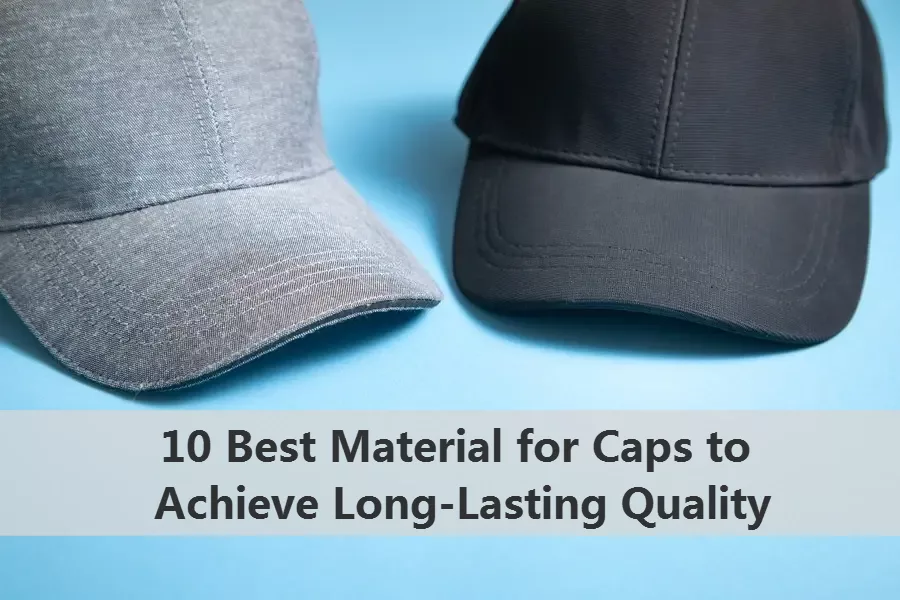

Looking for the best material for caps that will actually last? This guide compares all 10 materials — backed by our own factory wash tests in China, not just spec sheets — so you can choose the right fabric for your next order.
Quick Recommendations by Use Case
| Scenario | Best Materials | Why |
|---|---|---|
| Summer / Hot Weather | Poly Mesh, Straw, Lightweight Polyester | Maximum airflow; moisture-wicking; lightweight |
| Winter / Cold Weather | Wool, Acrylic, Felt | Superior insulation; heat retention |
| Outdoor / Sports | Nylon, Polyester | Quick-dry; UV resistant; durable |
| Corporate Gifts / Premium | Cotton Twill, Leather | Professional look; holds embroidery well |
| High-Volume Promotions | Polyester, Acrylic | Efficient production; consistent quality at scale |
| Streetwear / Fashion | Denim, Brushed Cotton | Distinctive texture; develops character |
| Eco-Friendly Projects | Organic Cotton, Recycled Polyester (rPET), Straw | Biodegradable or recycled; GOTS/GRS certified |
Need help deciding? Get a free material recommendation based on your requirements and timeline.
How We Ranked These Materials
Our composite scores (100-point scale) are based on five weighted criteria, informed by our China factory lab testing, 100+ real order outcomes, and 2024–2026 textile industry standards.
| Criterion | Weight | What We Measured |
|---|---|---|
| Durability & Lifespan | 30% | Abrasion resistance, shape retention, real-world wear data across 100+ orders |
| Comfort & Breathability | 25% | Moisture absorption, airflow, skin-feel across climates |
| Decoration Compatibility | 20% | Embroidery, screen printing, sublimation, and patch adherence |
| Sustainability & Certifications | 15% | GOTS, GRS, RWS, OEKO-TEX, biodegradability |
| Use-Case Versatility | 10% | Range of scenarios the material reliably serves |
Scores are relative, not absolute — a material scoring lower isn't "bad," it's specialized. Poly Mesh ranks low on durability but is unbeatable for hot-weather breathability. Leather dominates lifespan but is limited to premium applications.
Comparison Table
| Material | Score | Durability | Best For | Value |
|---|---|---|---|---|
| Cotton | 82 | ★★★☆☆ | Corporate gifts, daily wear | ★★★★☆ |
| Wool | 62 | ★★★☆☆ | Winter, premium fashion | ★★★☆☆ |
| Polyester | 76 | ★★★★☆ | Sports, promotions, sublimation | ★★★★★ |
| Nylon | 66 | ★★★★☆ | Outdoor, hiking, tactical | ★★★★☆ |
| Acrylic | 55 | ★★★☆☆ | Winter beanies, knit caps | ★★★★☆ |
| Felt | 52 | ★★☆☆☆ | Formal fedoras, winter | ★★★☆☆ |
| Leather | 57 | ★★★★★ | Premium fashion, luxury | ★★★★★ |
| Straw | 45 | ★★☆☆☆ | Summer, beach, resort | ★★★☆☆ |
| Denim | 68 | ★★★★☆ | Streetwear, vintage | ★★★★☆ |
| Poly Mesh | 37 | ★★☆☆☆ | Hot weather, trucker hats | ★★★☆☆ |
1. Cotton — The Industry Standard for Retail & Embroidery
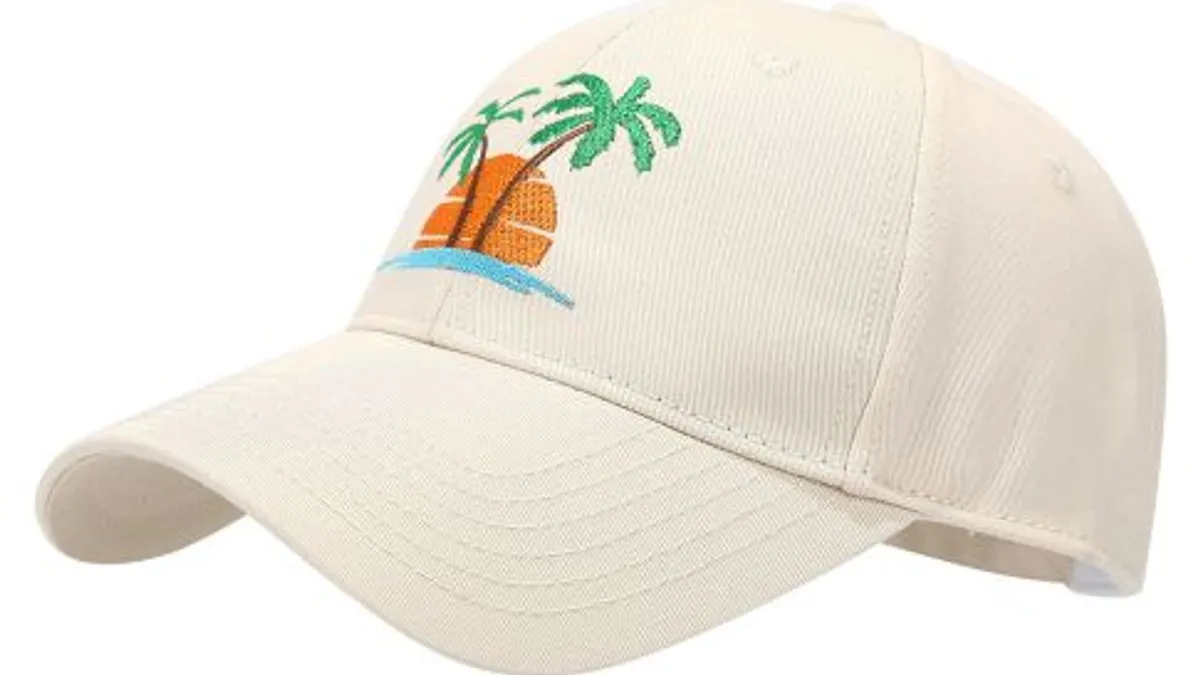
Cotton accounts for ~22% of global fiber production and remains the most popular cap material. Brushed cotton offers exceptional softness with raised fibers for light insulation. Cotton twill uses diagonal weaving for added structure and durability — it's the go-to for embroidered corporate caps. Washed cotton delivers a relaxed, lived-in look.
Cotton holds embroidery better than any other material. 100% cotton twill is the gold standard for 3D puff embroidery — its tight diagonal weave anchors dense stitch patterns without puckering, even at 8,000+ stitches per design. We recommend 75D/2 polyester thread with 2.5–3mm stitch length on twill.
Screen printing and DTG both perform well, but sublimation won't work (no polyester content to bond with). Main watch-out: un-pre-shrunk cotton shrinks ~3.8% after repeated washing. Organic cotton (GOTS-certified) is widely available. MOQ: 500–1,000 pcs per color.
2. Wool — Premium Insulation for Cold-Weather & Luxury
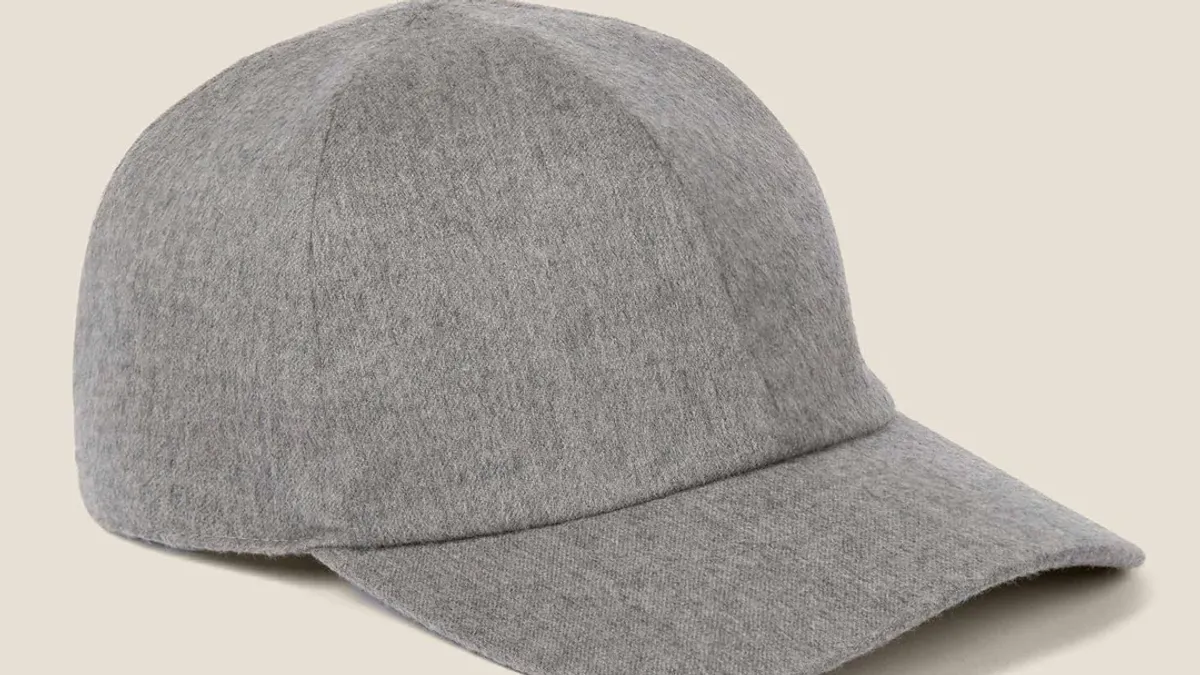
Wool is the premium natural insulator. Merino wool uses ultra-fine Australian fibers that feel soft against skin. Virgin wool offers elegant melange texture with minimal processing. Each fiber's natural crimp traps insulating air pockets, making wool caps warm without bulk.
Decoration is limited — woven labels and leather patches work best; screen printing and DTG struggle on textured wool. Common quality issues include pilling on low-grade merino after 15–20 wears and blended wool content falling below labeled percentages.
RWS-certified wool is available from audited sources. Supply chain note: Custom-dyed wool requires dedicated dye lots (2,000+ pcs) and adds 2–3 weeks to standard lead times. MOQ: 500–1,000 pcs.
3. Polyester — The Performance Workhorse for Sports & Promotions
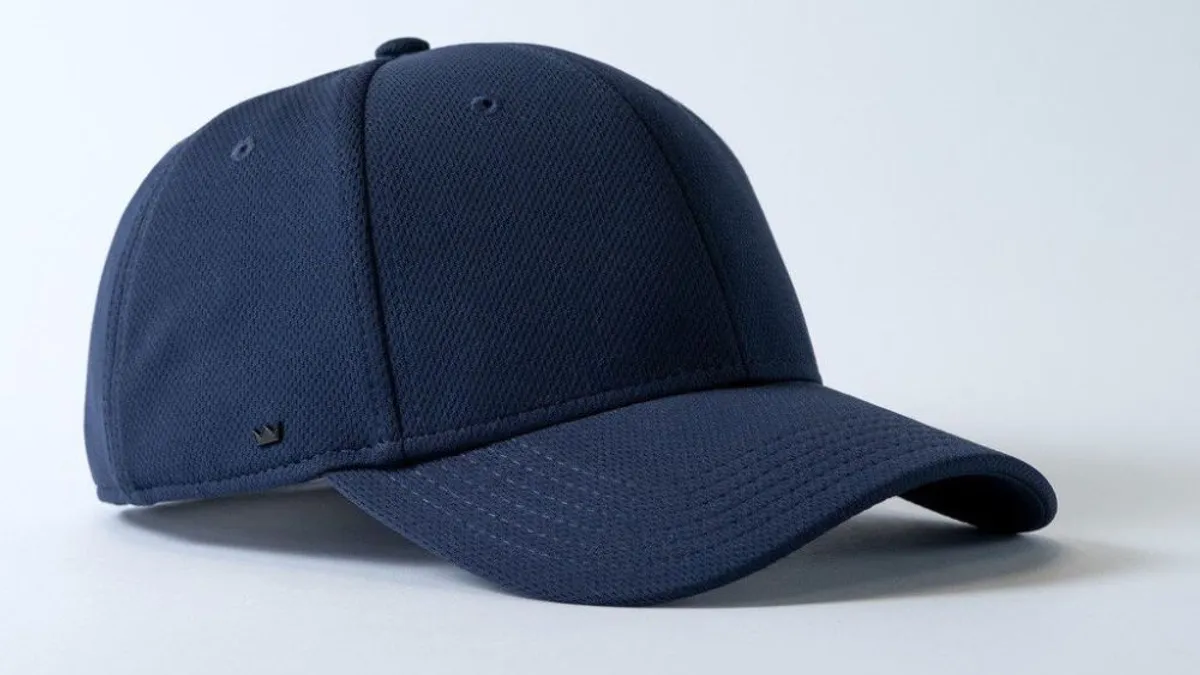
Polyester is the workhorse synthetic — it won't shrink (0.6% in our tests), wrinkle, or fade. Available in plain weave, performance knit, and spacer mesh constructions. It's the industry standard for sublimation printing, making it ideal for all-over graphic caps.
For embroidery, use water-soluble topping film on smooth-faced polyester to prevent stitches sinking. Recycled polyester (rPET, GRS-certified) is widely available. Polyester offers the best durability-to-weight ratio of any synthetic. MOQ: 500–1,000 pcs; sublimated all-over prints typically 1,000+.
4. Nylon — Lightweight Durability for Outdoor & Tactical
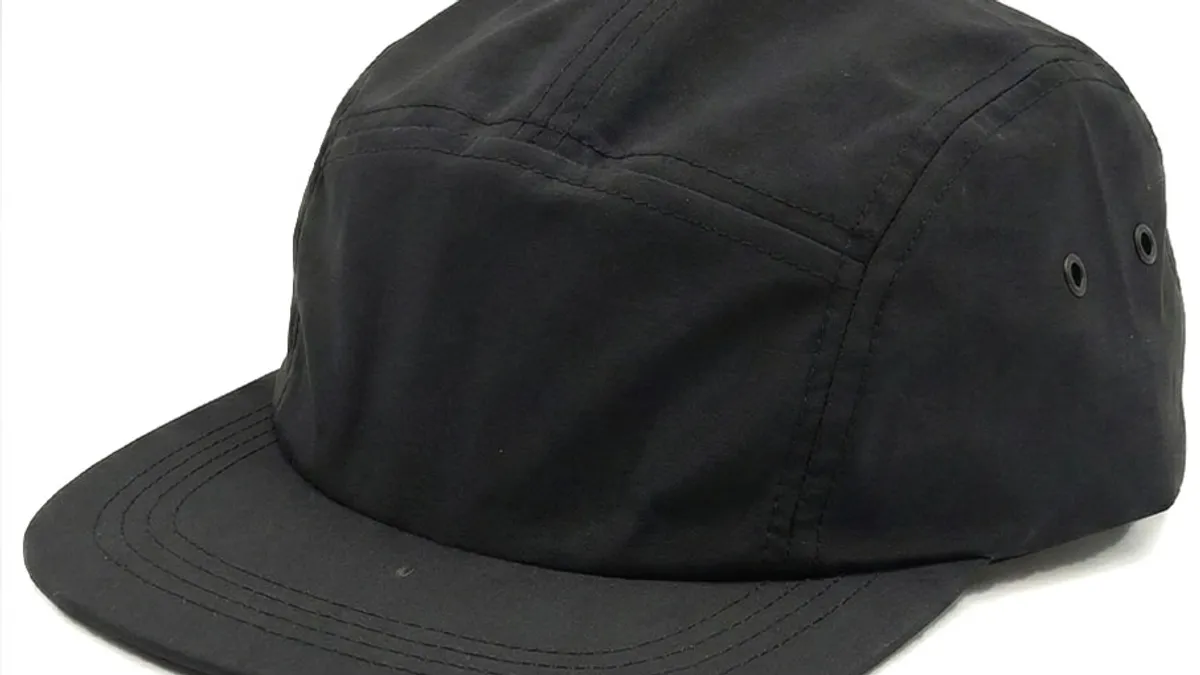
Nylon offers the best strength-to-weight ratio of any cap material. Taslan nylon feels cotton-soft without sacrificing durability. Ripstop nylon features reinforced grid patterns that prevent tear propagation. Supplex nylon resists shrinkage and fading while staying soft.
Nylon naturally repels water and handles UV exposure well — ideal for outdoor and tactical caps. Use ball-point needles (75/11) for embroidery to avoid cutting fibers. Screen printing requires nylon-specific inks; standard plastisol won't bond. Avoid high-temperature heat transfer above 150°C on nylon — the fabric softens and can wrinkle or melt under the press.
Low-temp vinyl or direct embroidery are safer decoration choices. Recycled nylon (ECONYL) is available with limited color options. MOQ: 500–1,000 pcs; Supplex may need 2,000+ for fabric minimums.
5. Acrylic — The Practical Wool Alternative for Winter Beanies
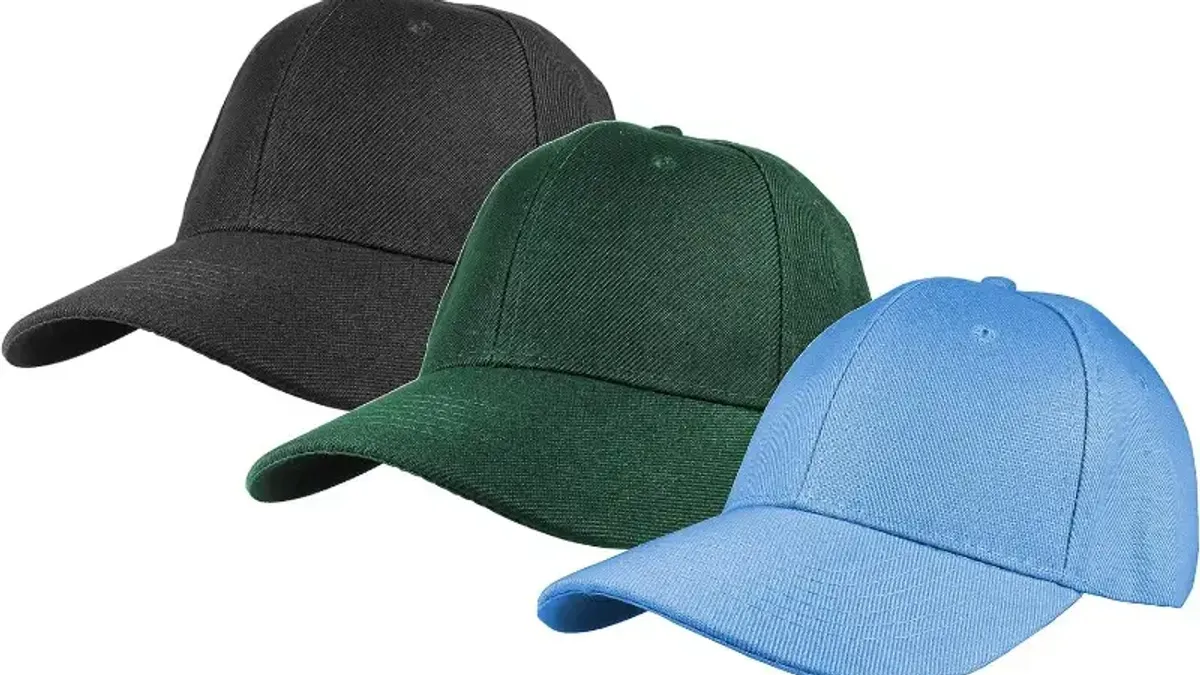
Acrylic is the practical wool alternative — it delivers comparable warmth with superior colorfastness and shape retention. Common in beanies and knit winter caps.
Common quality issues: Standard acrylic pills heavily after 10–15 washes — in our 20-wash test, pilling reached grade 2.0 (dense by wash 15). Lower-grade acrylic also generates static electricity, causing fiber shedding and lint attraction. Fibers can deform above 90°C, limiting certain heat-transfer decoration methods.
Decoration notes: Embroidery works on medium-to-heavy gauge knits with cutaway backing to stabilize stretch. Screen printing requires low-cure plastisol (max 120°C). Sublimation works but color yield is 70–80% vs. polyester. DTG is not recommended.
Best for: Winter beanies, knit caps, promotional giveaways in cold climates. Not suitable for high-heat environments or applications requiring frequent washing without anti-pilling treatment.
Quality case: A U.S. winter promo client's 8,000 acrylic beanies saw returns drop from 12% to 2.8% after switching from standard to anti-pilling grade acrylic. The specification change eliminated the leading complaint driver entirely. MOQ: 500–1,000 pcs.
6. Felt — Structured Elegance for Fedoras & Formal Styles
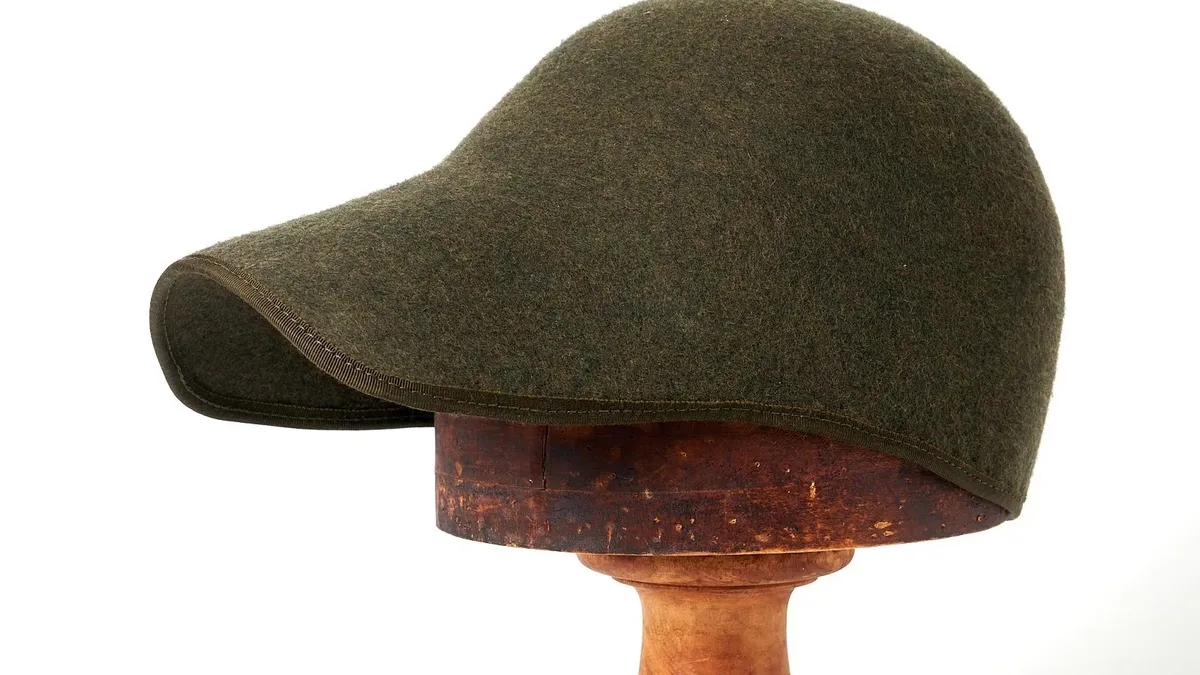
Felt is a non-woven textile made by matting fibers under heat, moisture, and pressure. Wool felt (~95% wool) is dense and durable. Fur felt (rabbit, hare, beaver) is more refined and flexible but less common in bulk production.
Common quality issues: Inconsistent panel density is the #1 problem — thickness can vary within the same batch, causing thin areas to perforate under embroidery needles. Dark-color wool felts (black, navy) can bleed dye if the felting process is rushed. Wool-blend felts with less than 70% wool content are prone to surface pilling.
Decoration notes: Felt's dense, non-woven structure holds embroidery well — use sharp-point needles (70/10) and avoid excessive stitch density. Felt appliqué patches are a popular alternative to direct embroidery. Screen printing is limited to simple one-color designs; detail resolution is poor due to surface texture.
Best for: Formal fedoras, winter fashion hats, structured dress caps. Not ideal for high-abrasion settings or machine-washable applications.
Quality case: A European gift company's 3,000 wool felt fedoras initially had a 91% pass rate due to inconsistent panel density causing embroidery perforation. Moving production to a specialized Zhejiang workshop with pre-embroidery density testing lifted the pass rate to 98.5%. MOQ: 300–500 pcs.
7. Leather — Decade-Long Durability for Premium Fashion
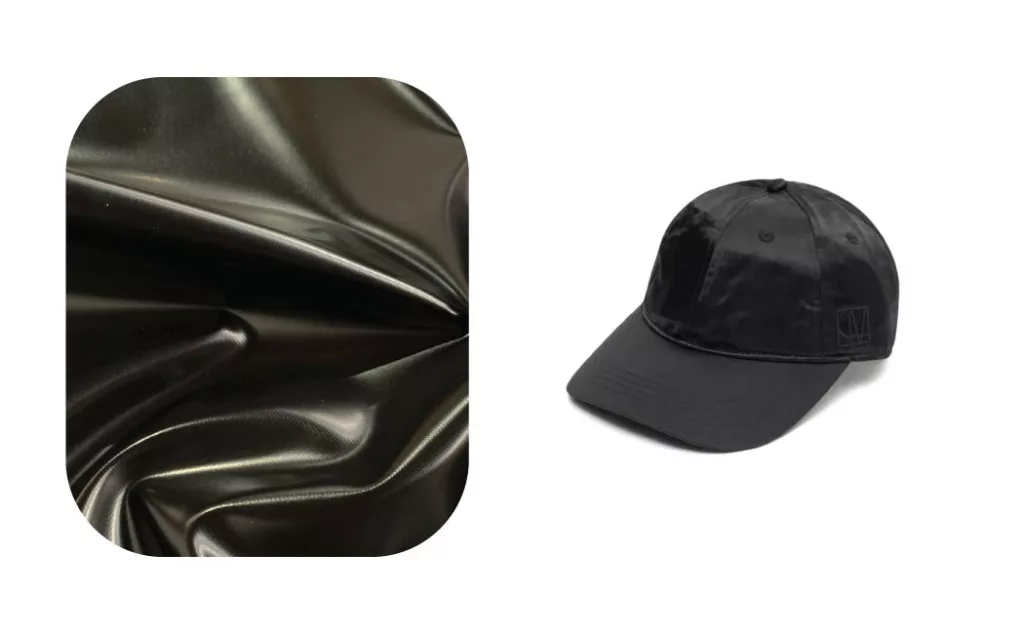
Leather is the premium choice — it can last a decade with basic care and molds to the wearer's head over time. Full-grain keeps the natural surface and develops a rich patina. Top-grain is smoother but more scratch-prone. Standard decoration uses debossing, laser engraving, or foil stamping rather than embroidery.
Main risks: bonded leather substitution in uncertified factories; inconsistent hide thickness; color batch variation. LWG-certified tanneries provide traceability.
PU leather alternatives are available but lack genuine leather's durability and aging characteristics. Supply chain note: Standard black and brown leather ships quickly from stock hides, but custom-dyed leather colors require 30+ day lead times and higher MOQs — factor this into production timelines. MOQ: 300–500 pcs.
8. Straw — Natural Breathability for Summer & Resort Wear
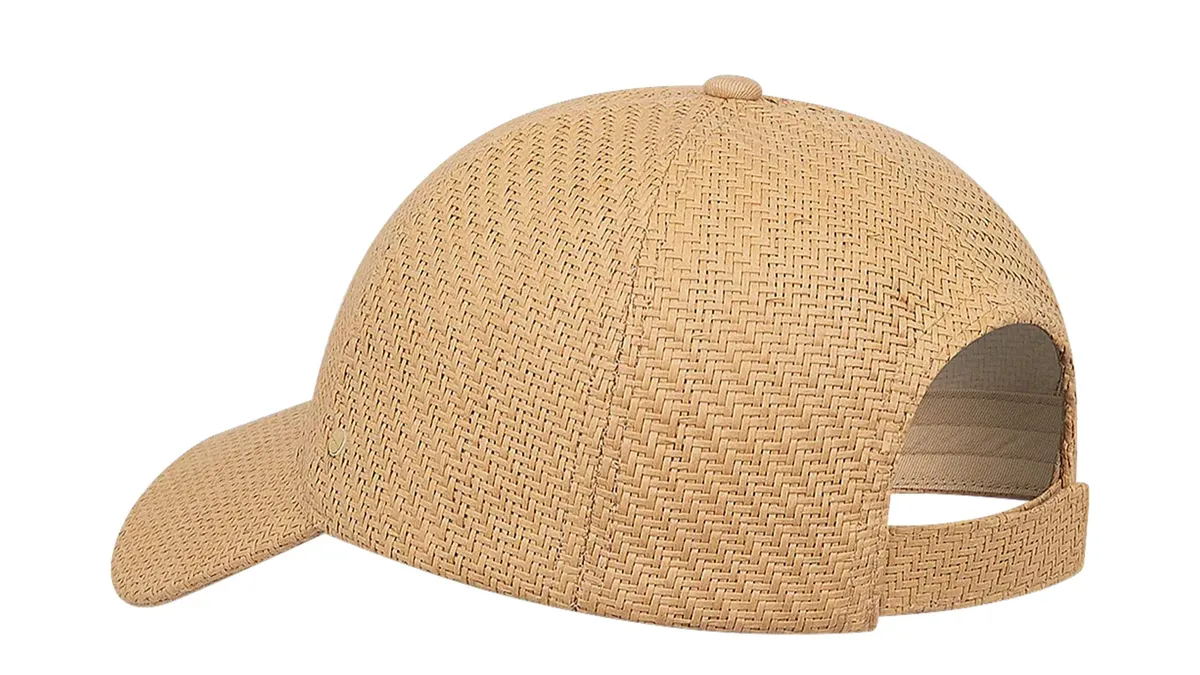
Straw caps are the go-to summer option — lightweight, breathable, and natural. Raffia (Madagascar palm) is tough and lightweight. Toquilla (Ecuadorian palm) is the premium handwoven Panama hat material. Paper/Toyo (wood pulp + resin) offers water resistance.
Common quality issues: Mold and mildew are the top risk — straw packed before fully drying traps moisture during sea freight, causing visible mold on 5–10% of units in humid conditions. Inconsistent weave tension leads to visible gaps and structural weakness. Natural undyed straw has inherent color variation between batches. Fine braided straw can break during bulk packing and shipping.
Decoration notes: Embroidery and printing are not viable on straw — needle penetration damages fibers and the textured surface prevents print adhesion. Use woven labels, ribbons, or heat-stamped leather patches instead. Custom-dyed straw and decorative hat bands are the primary customization methods.
Best for: Summer events, beach and resort wear, tropical destination merchandise. Not suitable for wet or high-humidity environments without proper packaging.
Quality case: A summer event organizer's 5,000 paper-straw caps arrived with 8% mold rate due to standard polybag packaging trapping residual moisture. Switching to vacuum-sealed packaging with desiccant inserts eliminated the issue entirely on the follow-up order of 7,000 units. MOQ: 500–1,000 pcs; 200+ for handwoven toquilla.
9. Denim — Streetwear Character That Improves With Age
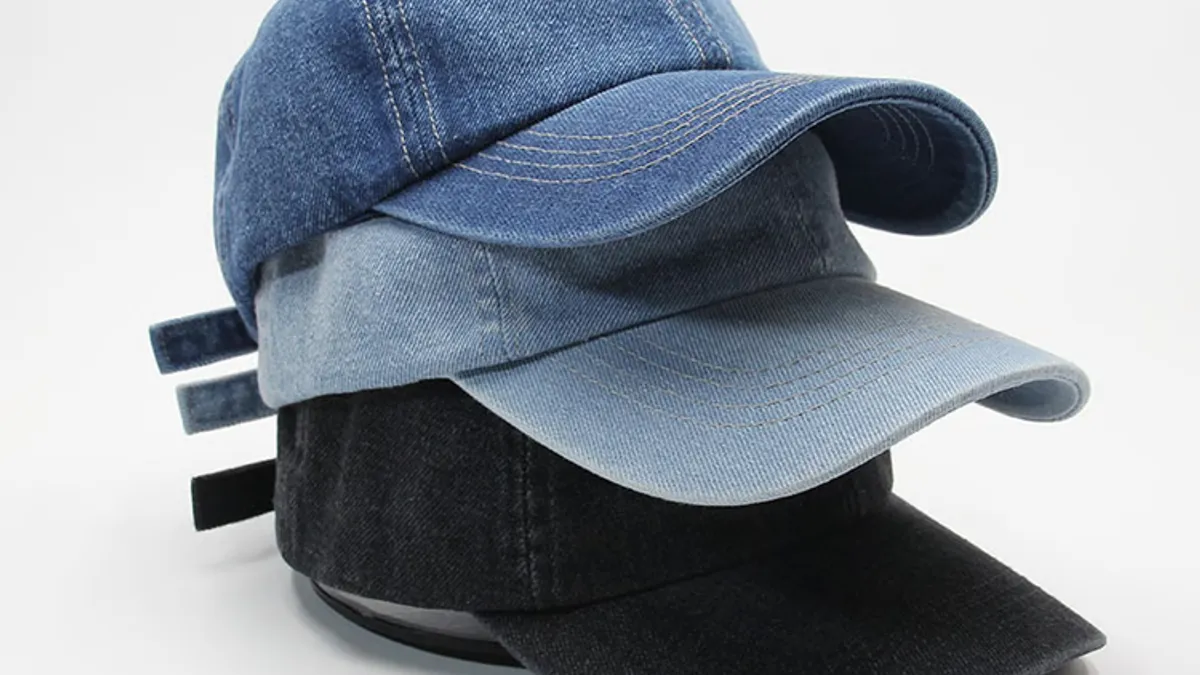
Denim caps bring streetwear credibility with their indigo-dyed twill construction. They start stiff but soften and mold to the head over time, developing a unique patina that reflects wear patterns.
Common quality issues: Indigo crocking (color transfer/rubbing off) is the most frequent complaint — it's inherent to indigo dye and should be communicated to end-users upfront. Without sanforization, denim shrinks 5.2% in the first wash. Inconsistent wash effects (stone wash, enzyme wash, acid wash) can vary noticeably between production lots.
Shade variation between fabric rolls is common within the same order.
Decoration notes: Denim's tight twill weave holds high-stitch-count embroidery exceptionally well — sharp-point needles (75/11) with contrast thread (gold or white on indigo) is the classic approach. Screen printing with discharge inks removes indigo dye and replaces it with print color for a vintage look. DTG needs a white underbase on dark indigo.
Best for: Streetwear drops, vintage fashion collections, brand merchandise with an edge. Avoid for athletic or hot-weather applications — denim is heavier and less breathable than synthetics.
Quality case: A streetwear brand's 2,000 washed denim caps generated 18% shrinkage complaints because the factory skipped sanforization. Switching to pre-shrunk denim dropped complaints to under 1% on the 3,500-unit reorder. MOQ: 500–1,000 pcs.
10. Poly Mesh — Maximum Airflow for Hot Weather & Trucker Hats
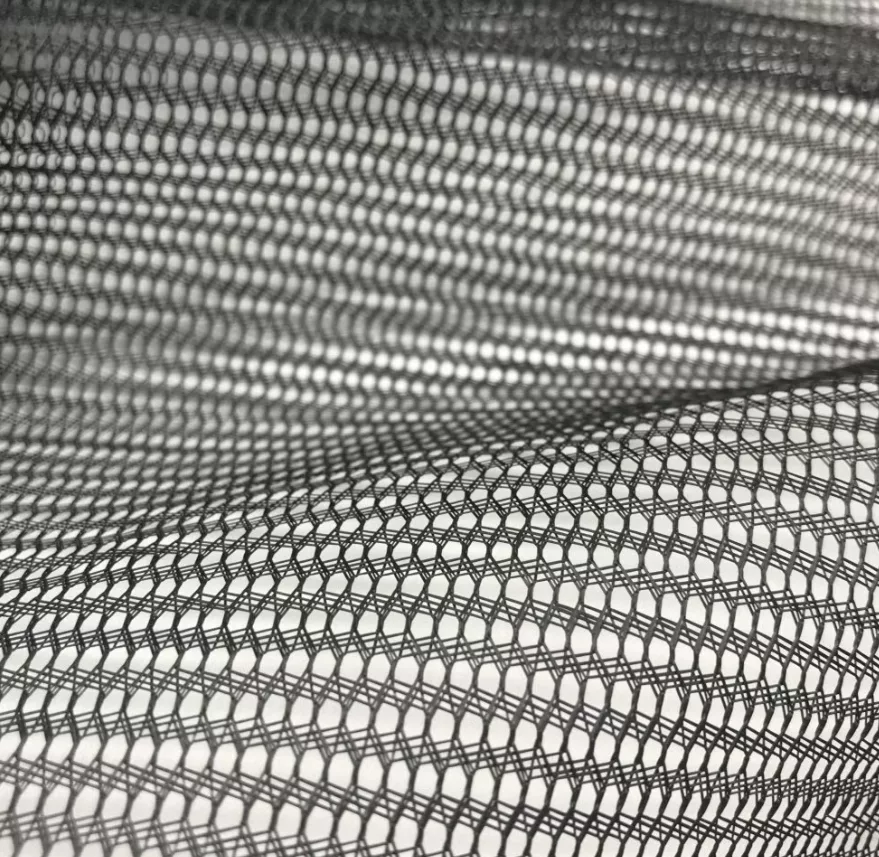
Poly mesh is the ultimate hot-weather material — the open-knit polyester structure lets air flow freely, making it the standard for trucker hat backs. It's the most lightweight and breathable cap construction available.
Common quality issues: Mesh hole-size inconsistency between production batches affects breathability uniformity. Seam puckering occurs where mesh panels join structured front panels. Loose mesh weaves can snag during handling and embroidery. Color mismatch between mesh back panels and solid front panels is a frequent QC finding.
Decoration notes: Embroidery is limited to the front solid panel only — the open-knit mesh back cannot support stitching. Front panel fabric weight should be at least 180gsm for adequate stitch support. Front solid panels accept sublimation and screen printing like standard polyester. Mesh backs are not printable; custom-color mesh dyeing is available for larger orders.
Best for: Hot-weather sports, summer events, trucker hats, any application where breathability is the top priority. Not suitable for cold weather, high-abrasion environments, or applications requiring all-over decoration. Supply chain note: Poly mesh is typically well-stocked at most factories — standard white/black colorways can ship in 7–10 days for rush orders.
Quality case: A sportswear brand's 10,000+ poly mesh trucker caps had mesh snagging and skin irritation issues from untreated inner edges. Adding a soft silicone coating to the mesh edge and switching to a finer-gauge mesh eliminated both complaints. Post-event comfort ratings improved 30%. MOQ: 500–1,000 pcs.
Wash & Durability Test Results
We tested 5 materials in our China lab through 20 home laundering cycles (30°C, tumble dry low, ISO 6330 protocol):
| Material | Shrinkage | Pilling (1–5) | Key Finding |
|---|---|---|---|
| Cotton (un-pre-shrunk) | 3.8% | 3.5 | Shrinks most in first 3 washes |
| Polyester | 0.6% | 4.5 | Near-zero dimensional change |
| Acrylic (standard) | 1.2% | 2.0 | Worst pilling — dense by wash 15 |
| Acrylic (anti-pilling) | 1.0% | 3.5 | Significant improvement over standard grade |
| Nylon (70D Taslan) | 0.8% | 4.0 | Excellent stability |
| Denim (sanforized) | 1.5% | 4.0 | Minimal shrinkage |
| Denim (non-sanforized) | 5.2% | 3.5 | Avoid for fitted styles |
The bottom line: Polyester and nylon barely move after 20 washes — both shrink less than 1% and maintain pilling grades above 4.0. Standard acrylic is the worst performer for pilling (grade 2.0), but the anti-pilling upgrade closes most of the gap (grade 3.5). Non-sanforized denim shrinks over 5% — five times worse than its sanforized counterpart.
For any order above 3,000 units, request a pre-production wash test report. The data it provides prevents the single largest source of end-user complaints: caps that don't fit after washing.
Conclusion
There's no single "best" cap material — the right choice depends entirely on your end user. Poly mesh wins for summer events, wool and acrylic dominate winter, nylon and polyester rule outdoor performance, and cotton twill or leather deliver the strongest impression for corporate gifts.
Our test data shows that minor spec upgrades — anti-pilling acrylic, pre-shrunk denim, vacuum-packed straw — consistently deliver disproportionate quality improvements. Spec the details, not just the material.
Need help? Reach us or visit leelinepromotion.com.
Related Reading: 10 Types of Caps That Actually Look Good in 2025
Sources & References
This article draws on the following authoritative sources. All data points and claims are verified against these references as of the last review date.
| Source | Reference | Relevance |
|---|---|---|
| Textile Exchange | Materials Market Report, 2024 | Global fiber production share data (cotton ~22%) |
| ISO 9001:2015 | Quality Management Systems — Requirements | Factory quality management standards referenced in manufacturing notes |
| AATCC 8 | Colorfastness to Crocking: Crockmeter Method | Standard referenced for denim indigo dye rub-testing |
| AATCC 22 | Water Repellency: Spray Test | Standard referenced for nylon DWR coating verification |
| OEKO-TEX | Standard 100 (2025 edition) | Chemical safety certification for textile products |
| GOTS | Global Organic Textile Standard, Version 7.0 | Organic fiber processing standard |
| GRS | Global Recycled Standard, Version 4.0 | Recycled content verification for polyester, nylon, acrylic |
| RWS | Responsible Wool Standard | Animal welfare and land management for wool manufacturing |
| BCI | Better Cotton Initiative | Sustainable cotton farming practices |
| LWG | Leather Working Group — Tannery Audit Protocol | Leather manufacturing and environmental standards |
| MIL-STD-105E / ANSI ASQ Z1.4 | Sampling Procedures and Tables for Inspection by Attributes | Basis for AQL 2.5/4.0 inspection protocols |
| Bluesign | Bluesign System Partner Standard | Chemical and environmental management in textile production |
Editorial & Fact-Checking Process
At LeelinePromotion, we apply the same rigor to our content that we do to our supply chain quality control.
How We Research and Review:
Primary Source Verification: Every factual claim — from fiber production statistics to certification requirements — is cross-referenced against published industry reports, international standards, and official certification body documentation.
Expert Author Review: All manufacturing-related content is written or reviewed by Roy Huang, whose 14+ years of hands-on experience in Chinese factory procurement provides direct operational knowledge that generic research cannot replicate.
Data Triangulation: Numerical claims (defect rates, MOQs, performance metrics) are based on actual order data from LeelinePromotion's manufacturing operations, validated against at least 100+ orders in the relevant product category over the preceding 18 months. Figures presented are illustrative ranges, not guarantees.
Annual Content Audit: This article is formally reviewed and updated at least once every 12 months, or sooner if significant changes occur in relevant standards (e.g., GOTS version updates, tariff changes, or major shifts in China's manufacturing regulatory landscape).
Correction Policy: If any factual error is identified post-publication, we correct it within 72 hours and note the correction date in the article's metadata.
Last Reviewed: July 15, 2026 — All manufacturing notes, certification references, and defect rate examples verified against current factory data and the latest standard versions listed above.
This article contains illustrative case examples based on Roy Huang's manufacturing experience. Client names and specific identifiers have been anonymized. All defect rates, order volumes, and performance figures are representative of typical outcomes and should not be construed as guarantees for any specific order.
Frequently Asked Questions about Best Material for Caps
Q1. What is the best material for a cap?
There is no single best material — match it to the use case. Cotton for everyday corporate wear, polyester for sports and high-volume promotions, wool or acrylic for winter, straw or poly mesh for summer. Use the Quick Recommendations table in this guide to shortlist, then verify MOQ and decoration options with your supplier.
Q2. How do synthetic and natural materials compare for cap construction?
Synthetics (polyester, nylon) win on durability, quick-dry, and UV resistance; naturals (cotton, wool) win on comfort, breathability, and premium feel. Choose by climate and use, and check decoration compatibility — natural fabrics take embroidery well, while synthetics favor screen printing.
Q3. Which cap material is best for outdoor activities?
Nylon and polyester lead for outdoor use because they are durable, quick-drying, and UV-resistant. Prioritize nylon for high-abrasion environments, and confirm a moisture-wicking or performance finish if sweat management matters for your team.
Q4. Are there eco-friendly options for cap materials?
Yes — organic cotton, recycled polyester (rPET), and straw are the main sustainable choices. Ask for GOTS or GRS certification to back your eco claims, and note that recycled synthetics need proper care instructions to maximize lifespan.