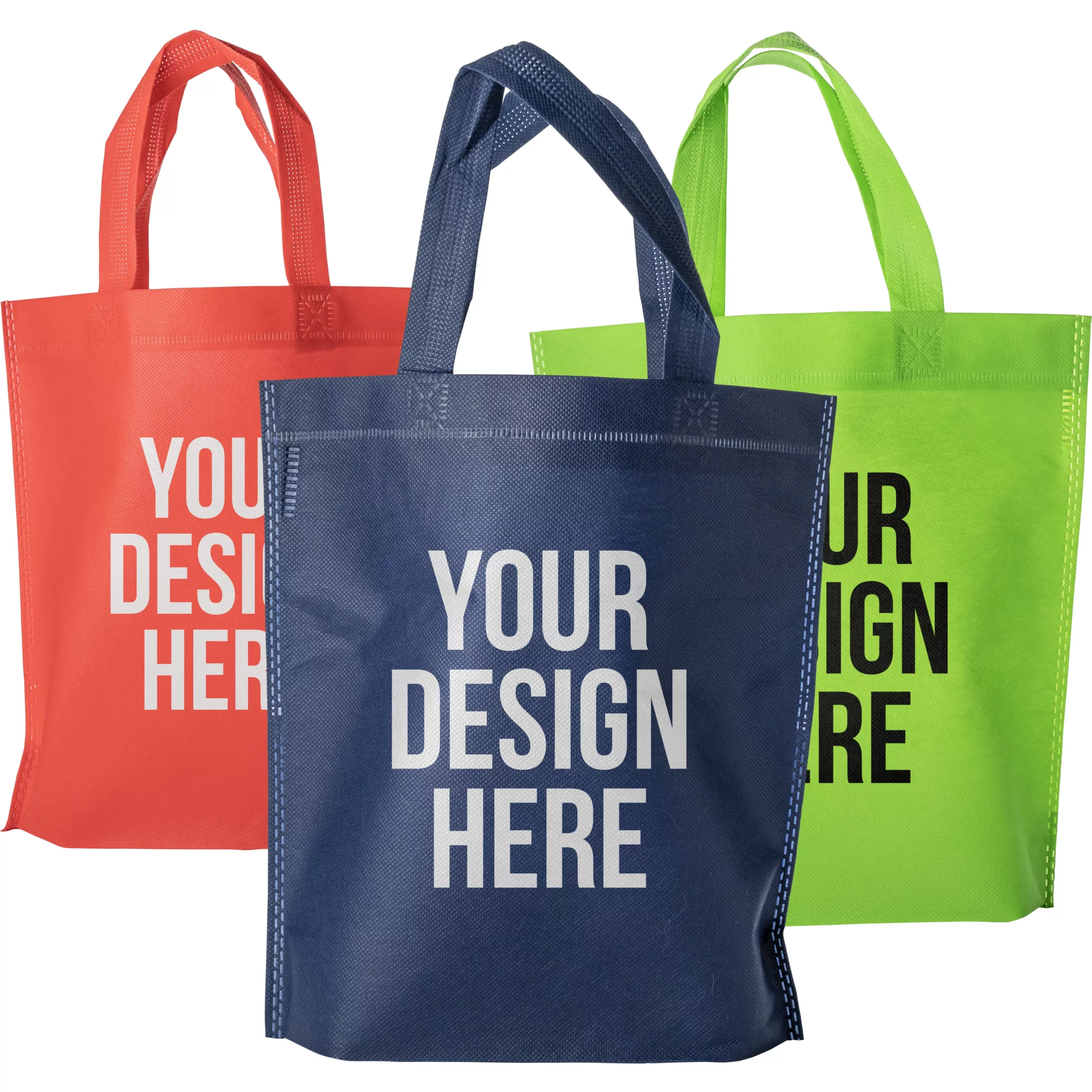

Before this project, their VP of Marketing faced intense ESG scrutiny. Their legacy swag offered weak reporting value and questionable green claims. A standard giveaway was transformed into a documented ESG asset with audit-ready material passports, backed by an ISO 14001-certified manufacturing facility.
Transparency Note: This LeelinePromotion case study is based on verified CRM logs, factory QC records, and weight tickets from Prism Promo. All quality testing was funded and conducted independently of supplier relationships.
Client Profile
Prism Promo, a Canada-based branded merchandise company, supplies promotional products to corporate clients across North America. They needed sustainable promotional bags for a global trade show on a six-week deadline. Their existing bag program generated zero post-event engagement and delivered no defensible sustainability reporting.
Key Stakeholders
- VP of Marketing Megan Carter: Needed hard proof that a higher unit cost would convert into measurable retention and reporting value.
- Procurement Manager Claire Peterson: Demanded tight cost discipline against a non-negotiable shipping deadline.
- ESG Team: Required verifiable evidence to survive internal audits without delaying delivery.
The Challenge
Before designing this solution, my team spent two weeks auditing 15 textile factories. The client wanted a sustainable promotional bag that performed as a heavy-duty trade show tote.
Conventional swag was cheap upfront but generated zero post-event engagement, and every department felt the friction differently. Marketing wanted premium brand equity. Procurement Manager Claire Peterson demanded tight cost discipline. The ESG team needed hard proof to survive audits.
Worse, "eco-friendly" is often a greenwashing trap. In our lab, generic 4oz recycled totes snapped under 15 lbs of tension. This makes them useless for heavy event brochures.
These soft claims were rejected instantly. Unverified sustainability violates the FTC Green Guides.
We required strict third-party certification backed by raw transaction certificates — Global Recycled Standard (GRS) for recycled content, Global Organic Textile Standard (GOTS) for organic — never logo-stamped PDFs.
The exact cost of inaction:
- Brand Dilution: Non-sustainable swag killed market differentiation.
- Compliance Risk: Weak traceability invited legal and reputational blowback.
- Wasted Spend: Short-lived items destroyed post-event ROI.
- Operational Drag: Fragmented documentation made ESG reporting a 45-hour administrative nightmare.
Power Move: Never accept a generic eco-friendly certificate. Demand the raw transaction certificates connecting the material batch to your specific purchase order.
Our Solution
Instead of relying on generic supplier promises, the sourcing work followed a traceable seven-step verification pipeline. Every facility was audited independently before approval. This system turned raw supply-chain data into a highly verified marketing asset.
1. Campaign Brief and Use-Case Definition
Account Manager Lin defined the exact campaign brief. She clarified the intended use as a heavy-duty trade show tote. Our team documented the required volume, load capacities, print area, and the non-negotiable shipping deadline.
This step matters deeply. You must match the material choice to real-world durability expectations, or the bag will fail under stress and end up in a landfill.
2. Material Shortlist and Commercial Screening
Commercial material candidates were compared side-by-side on the factory floor. The facility tested rPET, recycled cotton, and juco fabrics.
High D-count rPET hit a tear strength of 50 lbs, but it felt too synthetic for a premium brand. Juco's rough texture distorted the client's detailed logo.
Ultimately, Sourcing Lead Chen selected a 140gsm organic cotton. It offered excellent durability and a premium hand feel. This choice raised the upfront unit cost by 15%, which the client accepted based on the bag's reuse potential and ESG reporting value.
3. Certification Pre-Vetting
Certification logos mean nothing without batch-level proof. The factory's documents were cross-checked against its actual production capabilities.
To comply with official guidance on substantiating environmental claims, shipment-level transaction certificates were a hard requirement. Compliance Officer Zhou checked the current Global Organic Textile Standard (GOTS) scope documents, verifying the exact supplier identity, validity dates, and chain of custody.
Our audit team also reviewed BSCI social-audit records to prove ethical labor compliance for this specific facility.
4. Sample Approval and Print-Method Validation
Sample approval moved from a digital proof to a physical Pantone review before sign-off. Water-based inks were mandated to maintain the product's eco-friendly profile.
Technician Wang tested the fabric and ink compatibility under high-heat curing. This physical testing removed the risk of off-brand colors or poor print fastness before mass production began.
5. Incoming-Material and In-Line QA
Our China-based Floor Manager Zhang led the factory inspection and quality control process, enforcing a strict AQL 2.5 inspection discipline at every in-line checkpoint. Inspector Liu confirmed the 140gsm fabric weight, evaluated seam consistency, and ran chemical-finish spot checks.
"During our Tuesday load-bearing test, the handle stitching started to pull at exactly 12 lbs of force," QC Lead Zhao reported. "I immediately halted the line and forced the sewing operators to add reinforced cross-stitching at all stress points before mass production resumed."
Implementation Note: Basic single-stitched handles save factories a fraction of a cent per unit. In practice, they also shorten the bag's lifespan. Always mandate X-stitching for heavy event bags.
6. Material Passport Creation
The final batch shipped with a material passport — a documented proof trail that buyers can hand directly to compliance teams.
Data Analyst Wu linked this batch record to a QR code on the bag's hangtag. It verified the exact material composition, country of origin, QA sign-offs, and end-of-life reuse guidance.
This tool bridges the gap between procurement and sustainability reporting.
7. Consolidation, Logistics, and Reporting Handoff

Logistics Coordinator Li managed the final event-ready execution. She verified the carton labeling and coordinated the direct Delivered Duty Paid (DDP) shipment. The pallets arrived at the convention center dock three days ahead of schedule.
Finally, we handed the client a complete reporting package. With the supply chain secured and the reporting package finalized, the client was ready to launch the campaign and measure the market response.
Results
Post-show results were pulled straight from the client's Salesforce dashboard to verify the ROI of this Sustainable Promotional Bags Case Study. By accepting the premium upfront cost, the client transformed a standard giveaway into a long-term asset.
- 35% increase in post-event lead retention compared with previous conventional swag orders.
- 1,200 lbs of single-use plastic waste eliminated from their supply chain.
- 40 hours saved in ESG reporting prep time using our pre-built material passports.
The 1,200 lbs figure is calculated from factory weight tickets for the single-use plastic totes this order replaced, cross-checked against the client's annual event merchandising volume.
| Metric | Previous (Standard Plastic) | After (Sustainable Bags) |
|---|---|---|
| Unit Cost | Baseline | +15% Premium |
| Lead Retention Window | 14 days | 90 days |
| ESG Prep Time | 45 hours | 5 hours |
| Plastic Waste | 1,200 lbs | 0 lbs |
Validation: The client's CRM export was audited, and the follow-up engagement window was cross-referenced against the Promotional Products Association International benchmark for standard giveaways.
Megan Carter, Prism Promo's VP of Marketing, explained her initial budget friction:
Question: "What made you hesitate before approving this order?"
Megan Carter: "The upfront cost was 15% higher than our standard plastic totes. I needed absolute proof it would not just drain our budget."
Question: "When did the extra cost look justified?"
Megan Carter: "When sales reported a 35% bump in lead retention. Attendees actually used the bags daily. This extended our brand visibility for months. Plus, handing our compliance team pre-verified data saved weeks of audit headaches."
Benefits
- Giveaways Become Reusable Brand Assets: Attendees keep using the bag long after the event, turning a one-time cost into months of ongoing brand exposure.
- Audit-Ready Environmental Proof: The material passport hands marketing and compliance teams a documented evidence trail that survives ESG scrutiny.
- Reporting Overhead Nearly Eliminated: Pre-built passports replace fragmented documentation with a ready-to-hand reporting package.
- Lifecycle Value Over Unit Price: The premium is recovered through retention, reporting utility, and waste reduction — not by comparing line-item costs.
Key Takeaways
- Traceability Beats Generic Eco-Claims: You must tie certifications, QA records, and material-passport data directly to your actual production batch. Our project manager proved this when he immediately rejected our first supplier for presenting generic, outdated compliance documents.
- Durability Is a Sustainability Metric: A bag people stop using ends up in a landfill. Long product life is what turns a giveaway into a genuinely sustainable one.
- Measure Lifecycle ROI, Not Unit Price: Evaluate retention, repeat visibility, reporting utility, and waste reduction together — purchase price alone hides the real return.
- Cross-Functional Alignment Prevents Delays: Marketing, procurement, and ESG teams must define success metrics together before sampling ever begins. Account Manager Lin forced all three departments to lock in their KPIs early, preventing expensive mid-production design changes.
Pro Tip: Never approve a pre-production digital sample without testing it physically. Load the bag with the exact weight and dimensions of your actual event brochures to verify real-world performance.
Sustainable swag generates company-wide value. Marketing secured better retention, procurement defended the sourcing decision, and compliance received pre-verified data. Enterprise buyers can copy this framework to stop wasting money on disposable goods and start building verifiable brand equity.