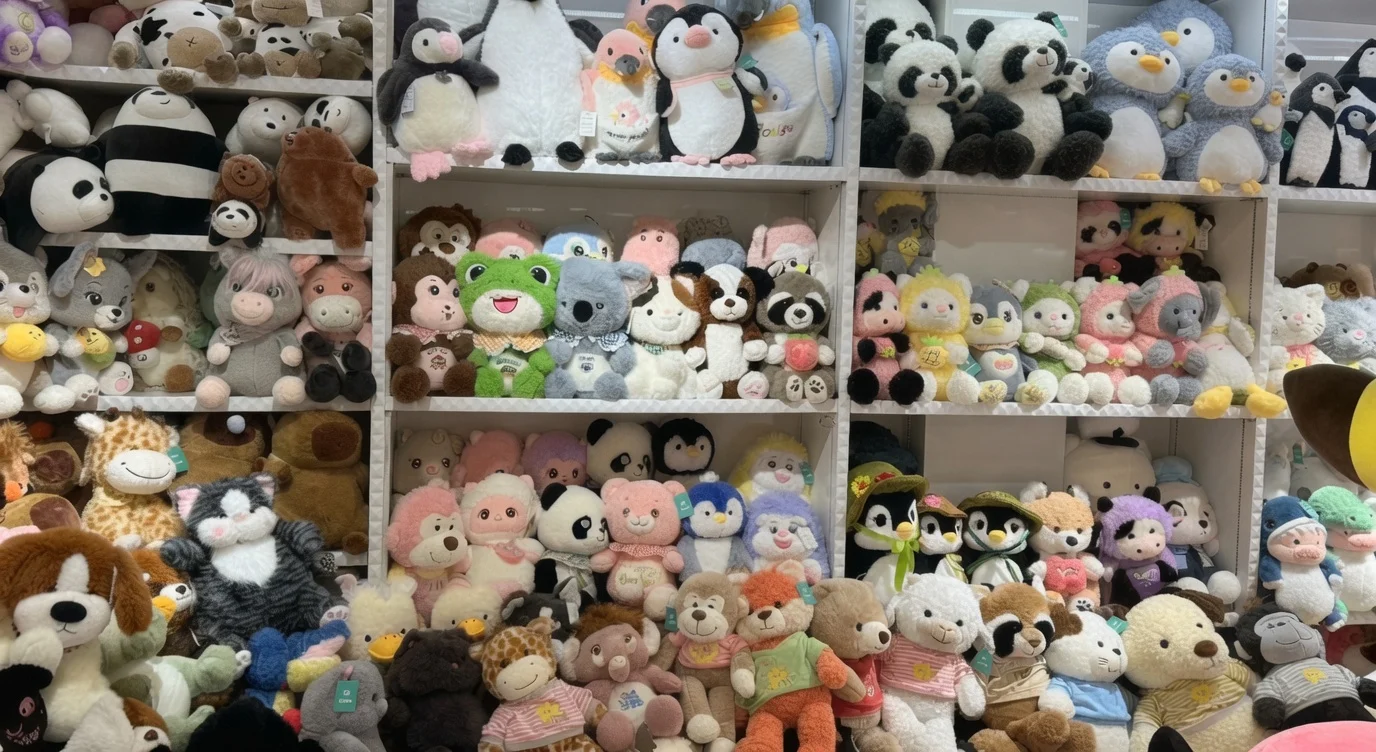
Our team rescued a 10,000-unit custom branded plush order for SwagUp's employee onboarding program, catching a fabric shedding defect that would have forced a $22,000 rework. Early material QC cut freight volume by 15% and secured immediate procurement approval.
Transparency Note: This LeelinePromotion case study is shared with SwagUp's permission and is based on verified internal production data and direct client-service experience. All metrics are drawn from CRM logs, factory QC records, and shipping manifests. No third-party sponsorships or manufacturer kickbacks.
Client Profile
SwagUp, a US-based corporate gifting platform, needed 10,000 branded plush mascots for an employee engagement program run through an enterprise client. SwagUp automates programmatic kitting — onboarding, recognition, and event boxes shipped straight to employees' desks via API integrations with HR systems. For a business that earns its margin out of package cube, a puffy mascot is expensive: the more volume a single item occupies, the more it costs in 3PL warehousing, pick-and-pack labor, and outbound freight.
Key Stakeholders: SwagUp's supply chain and procurement team, plus its client's Brand, HR, Finance, and Procurement — all holding approval authority. The plush toys would be handled by employees' children, making ASTM F963 safety compliance mandatory. Because SwagUp ships these kits to its end customer, any shedding or defect becomes a SwagUp quality complaint, not just a supplier-side problem.
The Challenge
Buyers often assume custom plush toys are simple mascot orders. In reality, these soft goods routinely trigger complex supply chain failures. During my initial factory assessment, I identified five major procurement blind spots:
- Law Labels: States like Pennsylvania, Ohio, and Massachusetts enforce strict sewn law-label requirements. Missing tags trigger instant customs rejections.
- Safety Testing: Standard vendor claims never replace physical lab tests. Rigorous seam strength checks, component torque tests, and metal detector screening against ASTM F963 toy safety standards are mandatory.
- Freight Math: Low-weight soft toys consume massive shipping volume. For a kitting business like SwagUp, that cube is 3PL warehousing and pick-and-pack cost — dimensional weight turns a cheap mascot into an expensive shipment without strict vacuum compression.
- Audit Readiness: Factory compliance requires verified ICTI/IETP, amfori BSCI, Sedex SMETA, or Disney FAMA audits — not vague ethical promises.
- Fabric Realities: Custom PMS fabric colors demand significantly higher production minimums than stock materials.
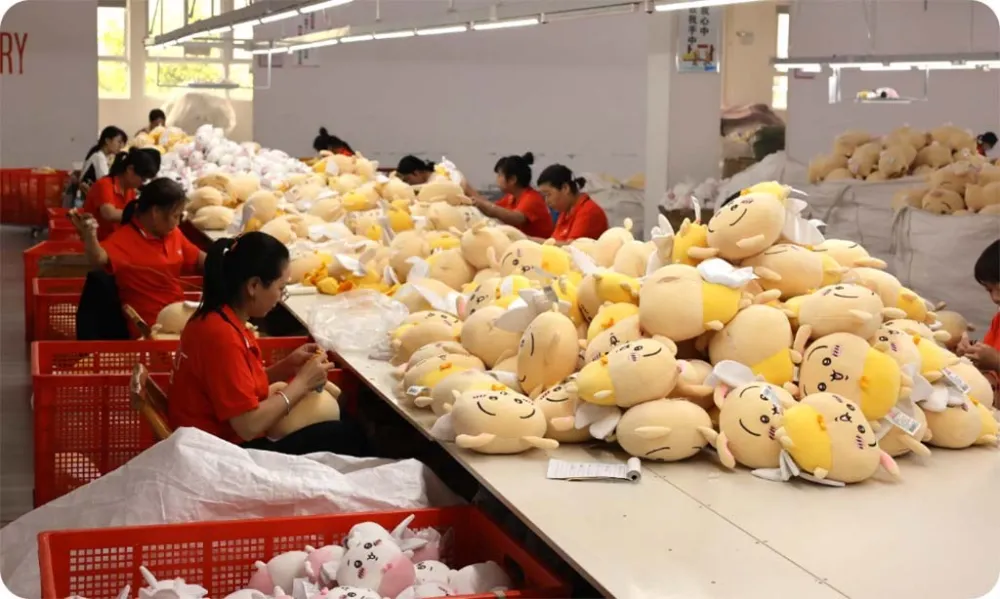
During the Tuesday material review, Technician Wang discovered a critical failure. He ran a standard friction test on the sample line and the custom polyester pile shed fibers instantly. Wang noted: "This low-density weave sheds completely after ten rubs, making it a nightmare for safety compliance." If these loose fibers entered mass production, the run would fail final appearance checks and create a severe choking hazard.
Safety First: Always run friction tests on raw plush materials before approving the master sample. Catching this defect early saved the client a $22,000 rework bill and guaranteed a safe product launch.
Our Solution
My team spent two weeks on the factory floor auditing 15 manufacturing lines. We bypassed generic toy makers — corporate mascots require specialized construction methods to capture exact logo geometry and maintain structural integrity during transport.
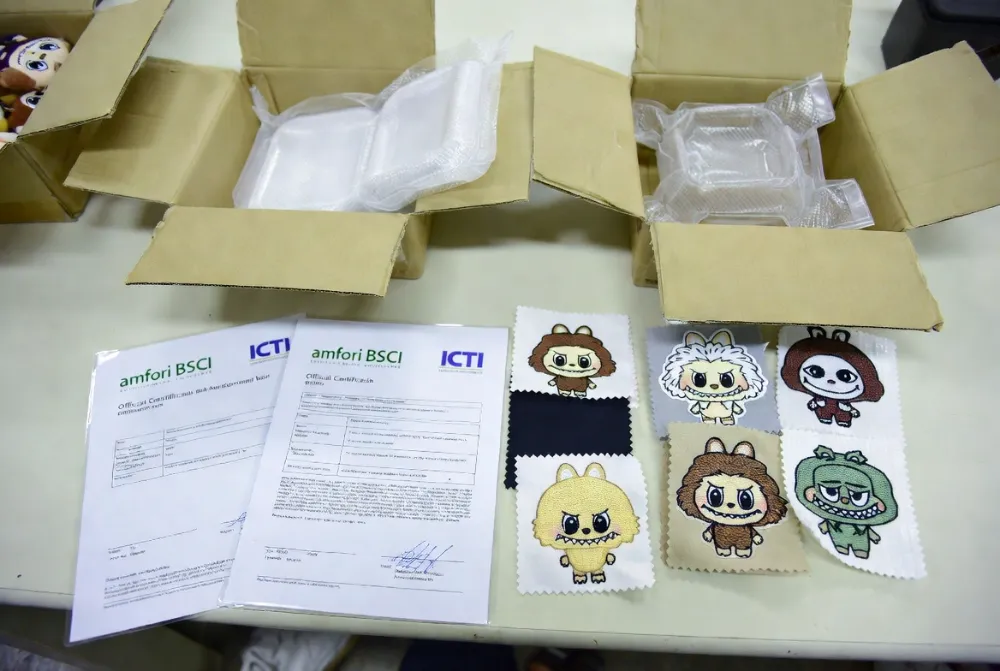
Factory Vetting: Factory Manager Liu provided current amfori BSCI social audit documents, verifying the supplier as a compliant promotional toys manufacturer and preventing PR risks from unethical labor or unsafe conditions.
Bill of Materials: I converted approved artwork into a strict BOM locking in size specs, trim list, and packaging. For age-grading safety, I specified embroidered facial features to eliminate choking hazards from detachable plastic eyes. Stock fabric colors replaced custom-dyed batches — custom dyes demand massive minimums and complex chemical color-matching, while stock material saved three weeks and thousands of dollars.
Sampling Cadence: Digital proof delivered in 24 hours. Pre-production digital sample reviewed in 5 days — checked against approved artwork with a strict 95% sample-accuracy benchmark.
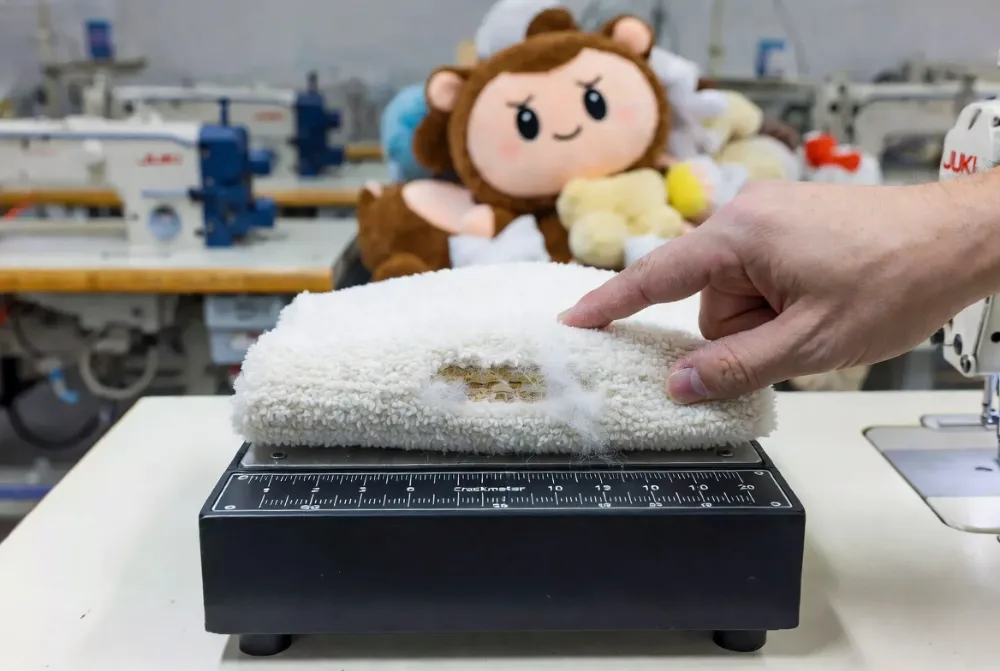
Critical Material Fix: The digital sample revealed the shedding issue. Technician Wang quarantined the failing fabric lot after crockmeter tests confirmed pile release. I revised the material callout to a denser, warp-knitted polyester. The sewing team re-sampled the main body panel on Juki industrial machines. Mass production only launched after the second review passed.
Final QC Protocol: Manufacturing Lead Zhang executed strict AQL 2.5 inspections following ISO 2859-1 sampling procedures. Out of 10,000 units, 315 were randomly pulled for physical evaluation under Level II inspection. Critical defects (open seams, wrong Pantone colors, loose trims, misaligned embroidery, missing law labels) triggered automatic lot rejection. Seam, pull, and torque checks were documented on a master log alongside stuffing consistency and needle-detection scans. Before shipment release, Zhang verified vacuum-compression ratios, shipping marks, and barcode scans on every master carton.
Results
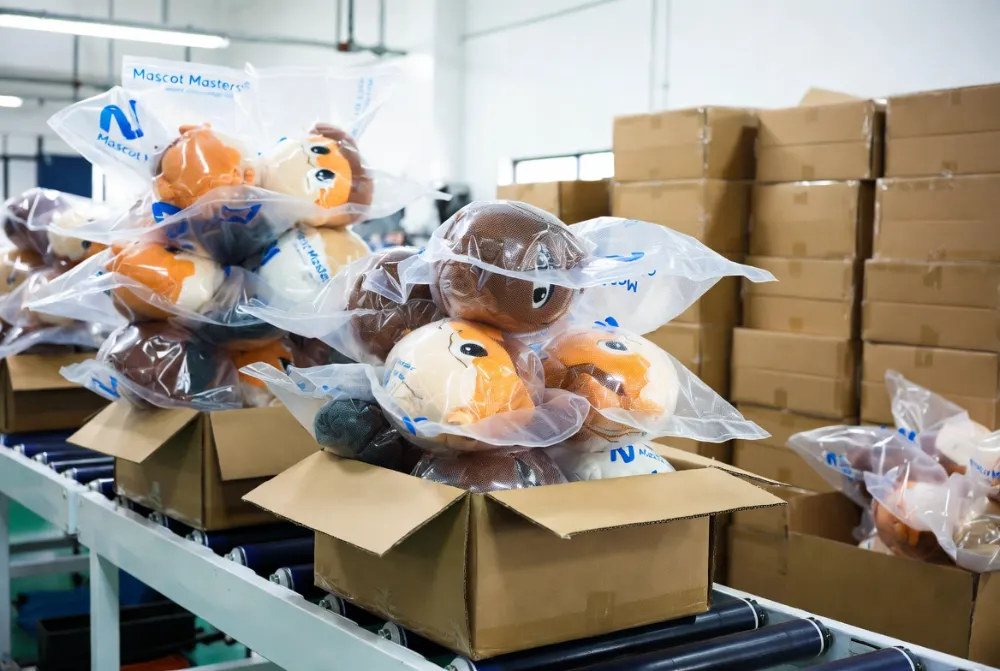
The HR team at SwagUp's client secured their 10,000-unit order under strict AQL 2.5 standards with zero compliance issues.
| Metric | Result |
|---|---|
| Production Pass Rate | 10,000 units at AQL 2.5 |
| Freight Volume Reduction | 15% via vacuum compression |
| Digital Proof Turnaround | 24 hours |
| Digital Sample Review | 5 days |
| Sample Accuracy | 95% on first revision |
| Rework Cost Avoided | $22,000 |
Logistics Manager Chen's vacuum-compression strategy shrank the cubic footprint enough to matter in a kitting operation. For SwagUp, less cube per mascot means more kits per rack, lower 3PL storage fees, and cheaper pick-and-pack and outbound freight across every box it ships. SwagUp's Procurement Director confirmed:
"The True Landed Cost Matrix changed our purchasing strategy. We stopped guessing at freight and tariff variables. Your team's vacuum compression approach saved our shipping budget and helped us approve the order without a single delay."
Stakeholder Alignment: Procurement at SwagUp's client gained a clean approval path with zero surprise invoices. Brand teams locked in mascot consistency and Pantone logo control. HR executed a safe, on-time rollout. SwagUp's own fulfillment team locked in denser cartons and lower pick-and-pack cost, while Finance received total landed-cost visibility.
Benefits
- $22,000 Rework Avoidance Frees Budget for Core Programs: Catching the fabric shedding defect at the material stage preserved funds that can be redirected to additional employee engagement initiatives.
- 15% Freight Volume Reduction Cuts 3PL Storage and Ship Costs: For a kitting platform, less cube per item means denser warehouse racks, lower 3PL storage fees, and cheaper pick-and-pack and outbound freight — plus a smaller carbon footprint for SwagUp's sustainability reporting.
- ASTM F963 Compliance Eliminates Safety Liability: Full lab-tested certification protects SwagUp and its enterprise clients from recalls, customs seizures, and legal exposure. It also stops a defective plush from reaching an employee's inbox, shielding SwagUp's own quality reputation.
- Stakeholder Alignment Removes Procurement Friction: Transparent landed-cost visibility and clean audit documentation give Finance and Procurement confidence to approve future orders without delay.
Key Takeaways
- Reject Unit-Price-Only Approvals: Evaluate landed costs, carton logic, and full compliance scope before signing. Manager Wang's vacuum-compression strategy saved the shipping budget — calculate all freight and tariff variables upfront.
- Audit Before Issuing the PO: Vet a factory's social and quality systems before releasing any purchase order. Manufacturing Lead Zhang ensures suppliers hold active amfori BSCI and ICTI certifications to protect against PR crises and customs holds.
- Fix Defects at the Material Stage: Pre-production corrections cost pennies. Post-production rework costs thousands. Technician Wang caught the fabric shedding issue on the sample line — early intervention prevented total factory rework and guaranteed a safe product.
Pro Tip: Use embroidered facial details instead of hard plastic eyes for any plush program involving children. Choose stock fabric colors over custom dyeing to avoid massive minimums and multi-week delays.