

Choosing the best material for pens sets your brand's perceived value, controls unit cost, and determines how well your logo lasts.
Trade-body research found that about 87% of recipients keep a promotional product for more than a year. A pen that actually gets used keeps your logo in front of clients far longer than most ad formats.
The short answer: For mass giveaways, use recycled plastic. For client gifts, use brass or stainless steel. For sustainability-led campaigns, use rPET, wheat straw, or wood.
This guide compares 11 pen materials with strengths, drawbacks, typical bulk pricing, MOQs, and branding methods for each. If the choice is specifically metal versus plastic, start with our metal vs plastic pens comparison. If you're sourcing custom promotional pens, start here.
How to Choose a Pen Material? A Decision Framework
The most reliable pattern we see across client orders: the more targeted the audience, the more budget you can justify per unit. Plastic wins for reach, metal wins for relationships.
| Campaign goal | Recommended materials | Why |
|---|---|---|
| Mass reach (trade shows, events, students) | Plastic (rPET, recycled ABS) | Lowest unit cost, fast production, wide color range |
| Client & VIP gifting | Brass, stainless steel | Premium weight, clean laser engraving, long brand recall |
| Executive / prestige | Titanium, carbon fiber | Ultimate strength-to-weight, high-end status |
| Eco / sustainability messaging | rPET, wheat straw, cornstarch, wood | Recycled or renewable inputs with an on-message story |
| Artisan / limited edition | Resin, exotic wood | Handcrafted, one-of-a-kind, higher price point |
How We Ranked These Materials?
The 11 materials below are ordered by overall suitability across typical promotional and corporate-gifting use cases, weighed against five criteria.
| Criterion | Weight | What it covers |
|---|---|---|
| Durability & lifespan | 30% | Wear, corrosion, denting, and how long a logo stays legible |
| Hand-feel & writing quality | 20% | Weight balance, grip, and writing smoothness |
| Branding compatibility | 15% | Laser engraving, anodizing, printing, and inlay results |
| Sustainability | 15% | Recyclability, recycled or renewable inputs, and certifications |
| Cost & MOQ | 20% | Per-unit price at volume and practical minimums |
A lower-ranked material isn't "bad" — it's specialized. Brass suits premium gifting, plastic wins on reach and cost, and celluloid serves a niche. Use the decision framework to match a material to your campaign.
Best Pen Materials at a Glance
Prices below are typical bulk ranges from our 2025–2026 sourcing programs and vary with finish, mechanism, and order volume.
| Material | Best For | Typical Price | MOQ | Branding |
|---|---|---|---|---|
| 1. Brass | Legacy, patina, upscale gifting | $2.50–$6.00 | 500+ | Laser engraving |
| 2. Stainless Steel | Durability, modern professional | $1.50–$5.00 | 500+ | Laser engraving |
| 3. Aluminum | Lightweight, color variety | $1.00–$4.00 | 300+ | Anodizing, printing |
| 4. Titanium | Strength & prestige | $3.00–$10.00+ | 300+ | Laser engraving |
| 5. Plastic (Modern) | High volume, eco-friendly | $0.10–$0.60 | 300–1,000 | Printing |
| 6. Resin | Unique artisan designs | $3.00–$15.00 | 100+ | Inlay, printing |
| 7. Acrylic | Vivid color, high gloss | $1.00–$4.00 | 500+ | Printing, engraving |
| 8. Wood | Natural warmth, craftsmanship | $1.50–$6.00 | 200–500 | Laser engraving |
| 9. Celluloid | Classic luxury, collectibles | $5.00–$20.00+ | 100+ | Engraving |
| 10. Carbon Fiber | High-tech performance look | $3.00–$8.00 | 300+ | Inlay, engraving |
| 11. PEEK / Ultem | Extreme durability | $3.00–$10.00+ | 300+ | Machined, engraving |
1. Brass

Brass is a copper-zinc alloy, typically 85/15 or 70/30 in pen production. It delivers the heaviest, most balanced feel of the common metals — around 1.5 oz for a compact pen — which reads as premium the moment it's in the hand.
Sourcing note: standard yellow brass can contain lead, so specify lead-free brass for everyday-carry programs.
Pros:
- Develops a unique golden-brown patina with use; every pen becomes one of a kind
- Strong corrosion resistance and low maintenance
- Crisp, permanent laser engraving
Cons:
- Heavier, which adds to mail-out postage
- Higher unit cost than aluminum or plastic
- Patina makes units look different over time
Typical price: $2.50–$6.00 · MOQ: 500+ · Best for: corporate gifts, signing ceremonies, executive programs.
Expert Opinion:
"Beyond durability, factor in the acoustic feedback—the 'click'—of a pen's mechanism; a precise, satisfying sound, often achieved with brass components, subconsciously elevates the perceived quality of your best material for pens choice."
———— Steven Kuang, Co-founder at Comvea.com
2. Stainless Steel
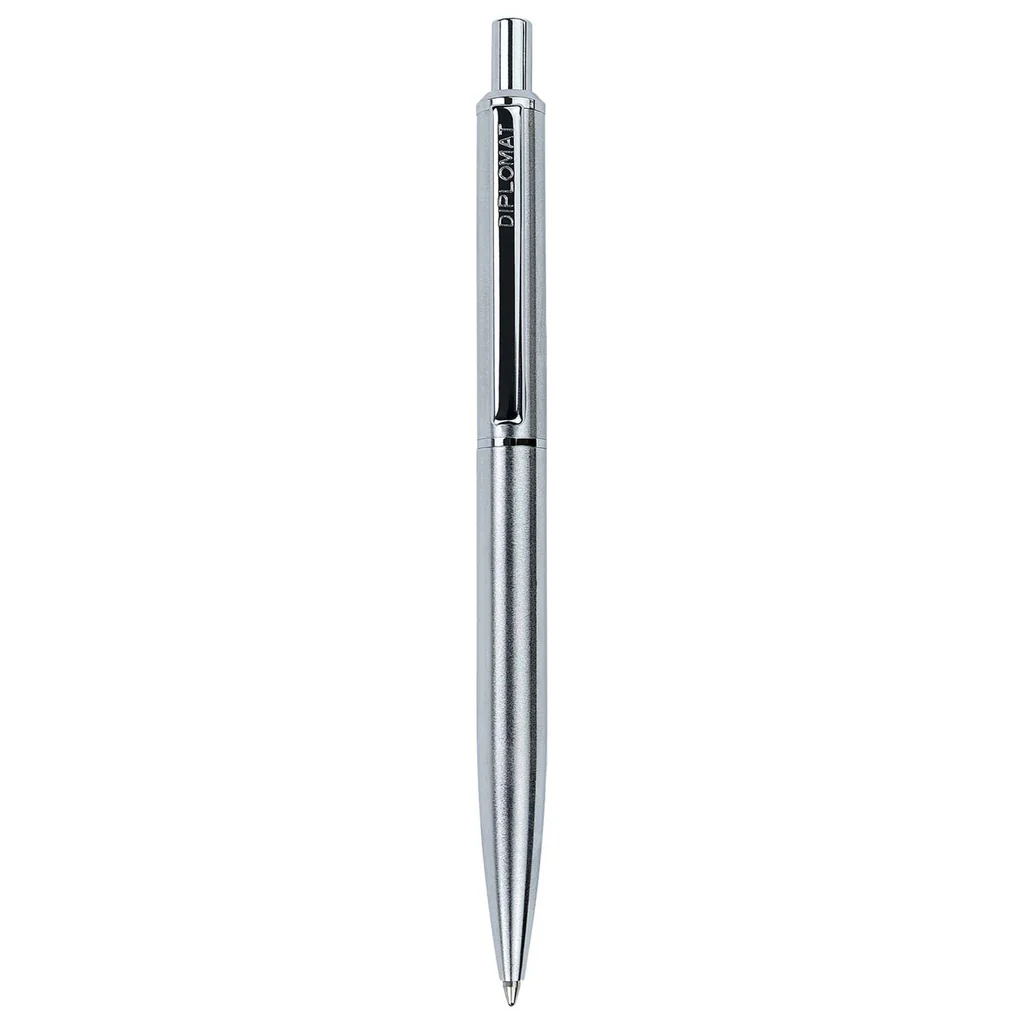
Stainless steel is the default pick when you want long-term durability and a modern, professional look. Its corrosion resistance keeps it reliable even in humid or demanding office environments.
For coastal or high-humidity programs, 316-grade steel adds molybdenum for extra corrosion resistance.
Pros:
- Excellent strength and anticorrosive qualities; lasts for years
- Precise CNC machining holds tolerances as tight as ±0.01 mm for consistent writing
- Steel tips hold the tungsten carbide ball for smooth, leak-free ink flow
Cons:
- Heavier than aluminum and titanium (20–45 g barrels)
- Can feel cold to the touch in winter markets
- Cost sits above plastic and aluminum
Typical price: $1.50–$5.00 · MOQ: 500+ · Best for: client gifting, office programs, luxury collections.
3. Aluminum

Aluminum is a strong choice when you need lightweight comfort, design flexibility, and an upscale feel without the price of brass or titanium.
Hard-coat anodizing (type III) roughly doubles the wear layer versus standard anodizing — worth it for pens that get dropped in bags.
Pros:
- Density of 2.71 g/cm³ means pens weigh roughly two-thirds less than stainless steel — less hand fatigue over long sessions
- Anodizing adds durable Pantone-matched colors in almost any shade, and laser engraving works cleanly
- 100% recyclable; recycled stock cuts cost and supports sustainability
Cons:
- Softer than steel; can dent if dropped repeatedly
- Thin-wall barrels may flex under heavy pressure
Typical price: $1.00–$4.00 · MOQ: 300+ · Best for: conferences, office use, color-forward brand programs.
4. Titanium

Titanium combines exceptional strength with light weight. It weighs about 40% less than stainless steel while delivering roughly double the strength-to-weight ratio, which makes it a natural fit for executive gifting and high-end branding.
Most titanium pens use grade 5 (Ti-6Al-4V); grade 2 is softer and cheaper to machine.
Pros:
- Outstanding corrosion and scratch resistance; looks new for years
- Unique "bouncy" yet firm writing feel praised by enthusiasts
- Engraves cleanly; supports glass breakers, TiButton® locks, or carbon fiber inlays
Cons:
- Highest material cost of the common metals
- Grey finish is harder to brand in color than anodized aluminum
Typical price: $3.00–$10.00+ · MOQ: 300+ · Best for: executive gifting, luxury campaigns, long-term brand retention.
5. Plastic (Modern)
Plastic remains the volume king for pens. The shift now is from virgin polystyrene and ABS toward recycled and biodegradable options.
Dark plastic barrels can be laser-marked for a high-contrast logo that won't wear like print.
Pros:
- Lowest unit cost — typically $0.10–$0.60 in bulk
- Lightweight, fast production, and the widest color and shape range
- Recycled PET and ABS cut lifecycle emissions versus virgin resin
Cons:
- Lower perceived value than metal
- Print can wear over time; engraving is weak on budget plastics
- Most non-recycled plastic pens aren't biodegradable
| Pen type | Material | Refillable | Biodegradable | Best for |
|---|---|---|---|---|
| Recycled plastic pen | rPET, recycled ABS | Sometimes | No | Corporate, office use |
| Cornstarch pen | Cornstarch biopolymer | No | Yes | Promotions, events |
| Wheat straw pen | Wheat straw, PLA | Sometimes | Yes | Students, everyday use |
Typical price: $0.10–$0.60 · MOQ: 300–1,000 · Best for: trade shows, events, mass giveaways. See our guide to types of promotional pens for style options.
6. Resin

Resin pens use epoxy bodies that embed glitter, dried flowers, metal wire, or brand colors — ideal for limited editions and handmade collections.
Specify UV-stabilized resin if pens will sit in sunlight — unstabilized epoxy yellows over time.
Pros:
- Endless creative possibilities — glass-like clear or opaque finishes
- Every pen is effectively unique; commands a higher price point
- Strong fit for artisan and event-specific themes
Cons:
- Higher cost and lower output; hard to scale for large orders
- Color consistency across batches takes skilled production
Typical price: $3.00–$15.00 · MOQ: 100+ · Best for: limited editions, boutique events, collectibles.
7. Acrylic

Acrylic (PMMA) offers crystal clarity and deep, brilliant colors at a moderate price — a glossy, polished look on a promotional budget.
Glossy acrylic shows micro-scratches; a matte finish hides them and still feels upscale.
Pros:
- Injection molding gives consistent, defect-free barrels
- High-gloss finish looks polished and refined
- Easily printed or engraved with brand colors
Cons:
- Harder and more brittle than some plastics; can crack on impact
- Glossy surface shows fingerprints
Typical price: $1.00–$4.00 · MOQ: 500+ · Best for: professional gifting, vivid brand programs, creative-industry clients.
8. Wood
Wood brings warmth and craftsmanship no plastic or metal can match. Each pen carries a unique grain and feel.
Resin-stabilized wood resists cracking and can be machined precisely — a good middle ground for bulk orders.
Pros:
- Rare woods — cocobolo, ebony, rosewood, blackwood — create high-end gifts
- Walnut and maple are affordable and easy to mass-customize
- Hardwoods take a high-gloss finish well and engrave with high contrast
Cons:
- Wood tone varies between units, which surprises some buyers
- Exotic woods cost more due to rarity
Typical price: $1.50–$6.00 · MOQ: 200–500 · Best for: custom gifts, luxury collections, sustainable promotions.
Expert Opinion:
"When manufacturing the best material for pens, always audit your supplier's material traceability, especially for metals and woods, to ensure it aligns with your corporate sustainability mandates and mitigates supply chain risk."
———— Ivy Hu, Manufacturing Agent, Promotional Products/Gifts
9. Celluloid
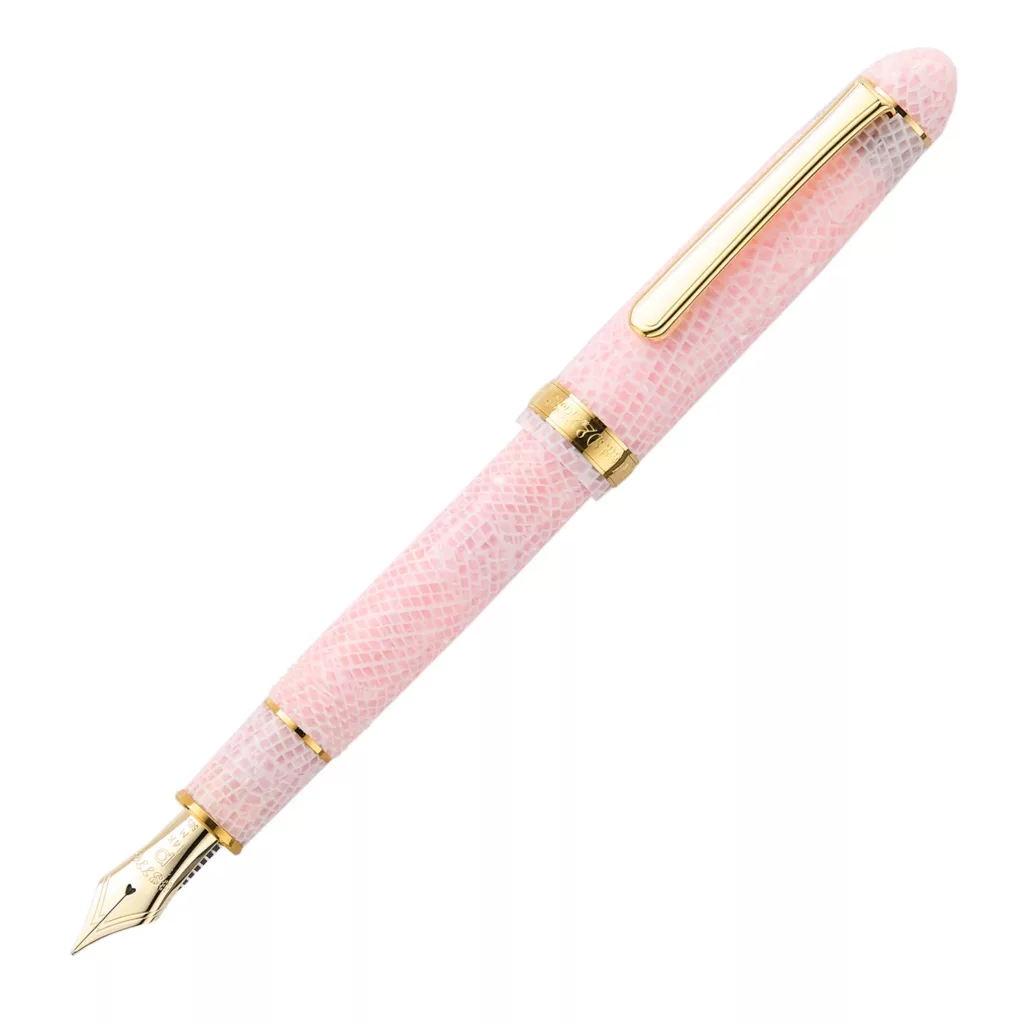
Celluloid is prized for distinctive tortoiseshell, pearl, and abalone patterns. It's now rare in production — modern celluloid-look pens are often acrylic or resin — so treat it as a niche, collectible option.
Genuine celluloid can outgas over decades and corrode metal nibs, which is one reason it was phased out.
Pros:
- Thousands of color and pattern options
- Lightweight yet solid hand-feel with a warm, organic touch
- Ages into a patina that collectors value
Cons:
- Historical celluloid is flammable and can shrink or crack with age
- Limited current production and supplier availability
- Highest cost tier for genuine material
Typical price: $5.00–$20.00+ · MOQ: 100+ · Best for: upscale business gifts, collectible lines.
10. Carbon Fiber
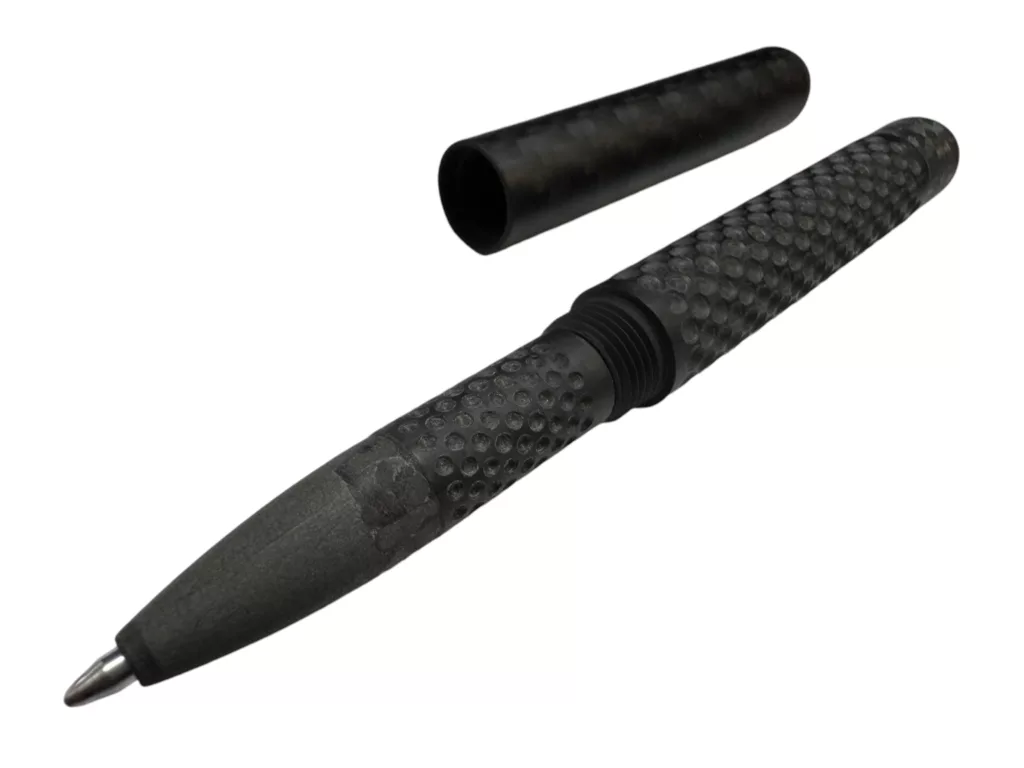
Carbon fiber delivers high-tech looks with extreme strength and light weight. High-end fibers reach tensile strengths of roughly 3.5–7 GPa, but a finished pen's strength depends on the resin and layup.
A woven-twill layup gives the classic 'carbon' look; unidirectional fiber is stiffer but plainer.
Pros:
- Exceptional strength-to-weight ratio; far lighter than metal
- Rigid, solid feel with no flex
- Modern weave pattern is a strong visual differentiator
Cons:
- Finished composites typically handle about −60°C to 200°C — not the fiber's manufacturing temperature
- Higher cost; limited color options beyond the weave
Typical price: $3.00–$8.00 · MOQ: 300+ · Best for: tech brands, high-performance gifting, professional programs.
11. Premium Engineered Plastics (PEEK, Ultem)
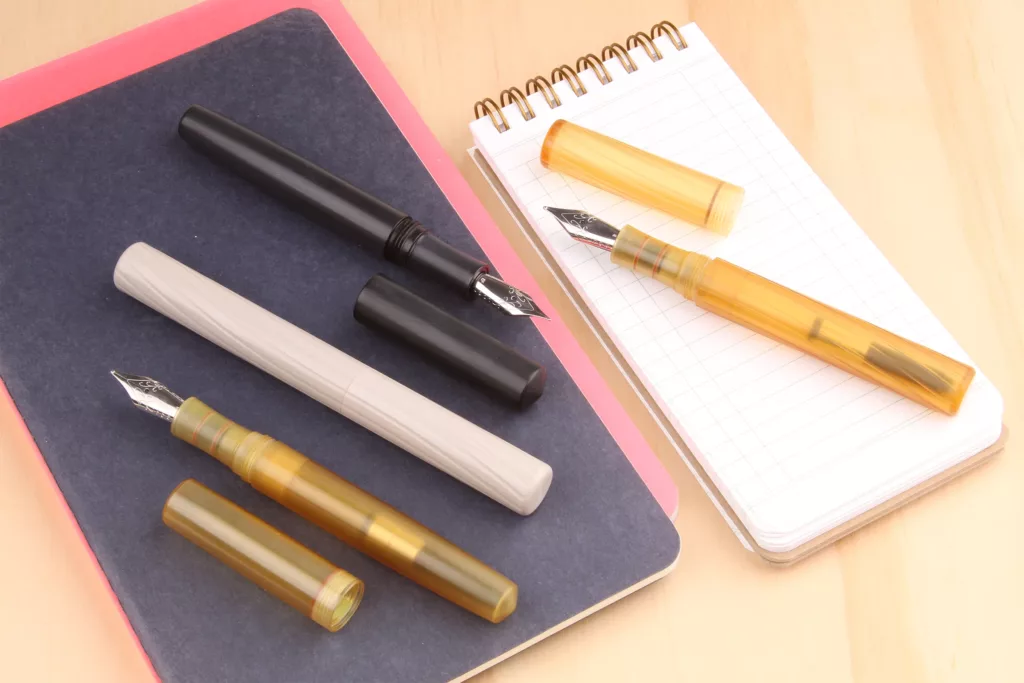
PEEK (Polyether Ether Ketone) and Ultem (Polyetherimide) are engineered plastics that outlast metal in demanding conditions.
At typical pen volumes, PEEK is usually CNC-machined rather than injection-molded, which is why it's priced like a high-end metal.
Pros:
- PEEK resists continuous use at up to 250°C
- Both resist chemicals and prevent ink staining
- Ultem offers amber transparency or deep black, with a smooth writing feel
Cons:
- Highest cost of the standard plastic categories
- Fewer suppliers than standard plastics
Typical price: $3.00–$10.00+ · MOQ: 300+ · Best for: industrial-grade programs, high-end promotional gifts, luxury pen campaigns.
Conclusion
The takeaway: plastic for reach, metal for relationships, wood and recycled materials for sustainability.
Match the material to your audience, budget, and brand story, then let a supplier handle finish and engraving quality. For help selecting a material, contact our team or request a quote.
Ready to source? Start with our guide to top metal pen manufacturers in China, or compare options for pen manufacturers in Canada and pen manufacturers in Germany. Before you order, run our promotional products quality-control guide.
Frequently Asked Questions about Best Material for Pens
Q1. Which pen material gives the best perceived value for corporate gifting?
Brass or stainless steel. They feel dense and premium and engrave cleanly. Match the finish to the recipient tier — keep stainless for broad gifting and reserve brass or higher-end metal for executive-level clients.
Q2. What's the cheapest pen material for large promotional orders?
Plastic — but do not default to the cheapest resin. Choose a plastic that still prints cleanly and matches your brand colors; recycled PET keeps cost low while supporting sustainability goals.
Q3. Which pen materials work best for eco-friendly campaigns?
rPET, recycled ABS, wheat-straw, cornstarch, and FSC-certified wood. Pair the material choice with your sustainability messaging and verify the recycled or biodegradable claims with documentation.
Q4. How do I decide between plastic, metal, and wood?
Let the audience and goal decide: plastic for mass reach, metal for perceived value and lasting impressions, wood or recycled materials for sustainability-led campaigns. A tiered approach — plastic at scale, upgraded metal for VIPs — stretches budget effectively.
Q5. What's the most durable pen material for heavy use?
PEEK, Ultem, and stainless steel lead for durability. If weight matters, prefer stainless as the everyday balance of strength, price, and engraving quality.