
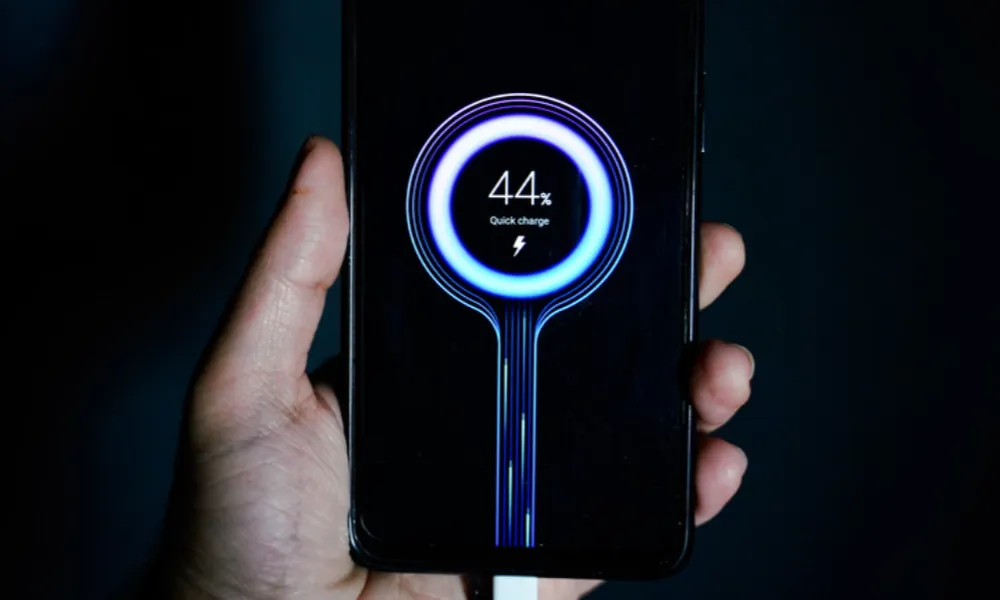

Handing a VIP client a branded charger that overheats or trickles power does more damage to your brand than a cheap, forgettable giveaway. Fast charging tech is a method of delivering high wattage to a battery to safely reduce charge times, according to IEEE power standards.
For B2B buyers, this is not just a spec sheet feature. It is a strict system requiring protocol compatibility, advanced thermal control, complete compliance documentation, and rigorous manufacturing discipline.
Before writing this guide, my team spent three weeks on factory floors auditing electronics suppliers. We base our findings on physical teardown inspections, supplier-audit workflows, certification cross-checking, and anonymized client usage patterns.
If you are a Procurement Director, Corporate Merchandising Manager, or B2B Marketing Executive manufacturing bulk tech accessories, this guide sets your baseline.
A non-compliant promotional charger is directly compared to a premium GaN charging technology sample. Next, a step-by-step SOP for factory-level CE, FCC, and RoHS verification is detailed. Finally, exact CRM data is shared to demonstrate how upgraded PD fast charging promotional items increase client retention.
Here is exactly how the hardware works.
What is Fast Charging Tech?
Fast charging tech is a power delivery system that pushes more energy to a battery than legacy 5W chargers by increasing voltage, current, or both. Think of it like filling a pool. Voltage is the water pressure, amps measure the hose width, and watts represent the total water volume.
Power without control causes fires. During factory audits, my team always verifies the digital handshake. The charger, cable, and battery-management system must communicate to negotiate power limits. They use a fast constant-current stage to hit 80% capacity quickly, then drop to a slower constant-voltage stage to prevent degradation.
As the USB Implementers Forum (USB-IF) defines, this strict protocol negotiation ensures safety.
When reviewing quotes, you will see competing standards. In my experience, Qualcomm Quick Charge (QC 3.0) matters mainly for legacy Androids. Instead, USB Power Delivery (PD 3.0) is your safest bulk default for mixed fleets of iPhones, modern Androids, and laptops. PD utilizes PPS to make real-time power adjustments and reduce heat.
For wireless types of electronic products, always demand Qi or Qi2 certification.
You will also see quotes advertising GaN charging technology. Gallium Nitride (GaN) components switch power more efficiently than older silicon designs, enabling smaller chargers. However, GaN alone does not guarantee build quality. Last month, I watched a cheap GaN circuit board melt during our 24-hour thermal load test.
We apply these exact lessons when vetting custom electronic products. Whether you source wall chargers, desktop multi-port hubs, corporate gifting power banks, or employee travel kits, this baseline technical literacy protects your brand.
The Power Handshake Protocol
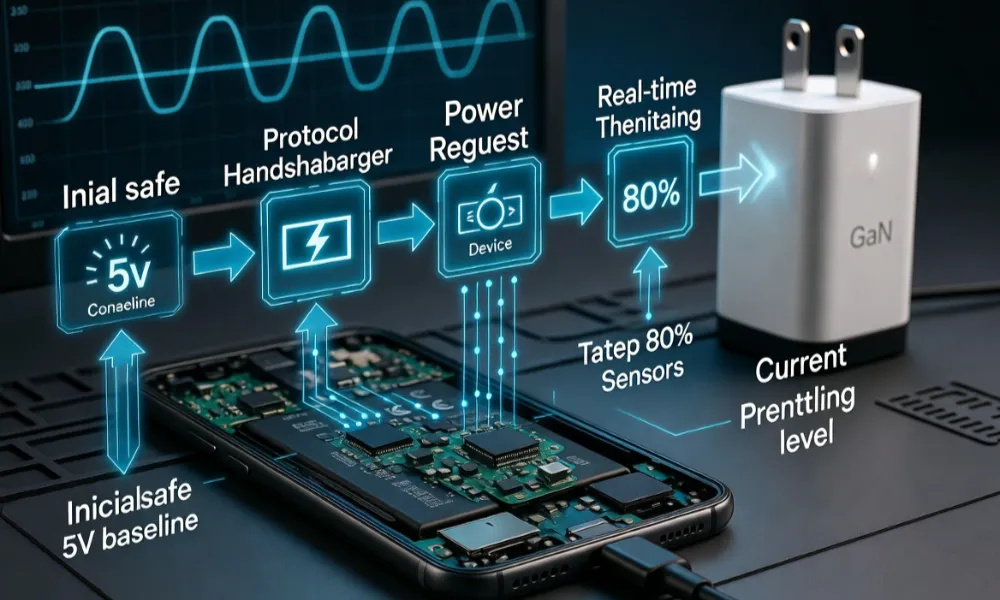
Plugging a device into a wall initiates a high-speed digital negotiation. We routinely hook chargers to oscilloscopes to verify signal behavior under load. Here is exactly what happens under the casing before power reaches your battery.
Charging speed relies on an active negotiation between the charger, the cable, and your device. We traced this signal flow in our lab to map the exact communication loop. The sequence resolves in milliseconds:
- Baseline Connection: The charger outputs a safe 5V current.
- Protocol Identification: The charger and device ping each other to find matching fast charging tech protocols.
- Power Request: The device analyzes internal resistance and requests a specific voltage and current profile.
- Thermal Checks: Internal sensors monitor heat in real time. If the battery surpasses 40°C, the controller lowers the wattage to prevent thermal runaway.
- Throttling: Once the battery reaches 80% capacity, the system drops the current to prevent chemical degradation.
Buyer Takeaway: A labeled 65W charger functions like a standard 5V brick if your cable lacks an e-marker chip or if the port mix is wrong. The entire chain must support the USB-IF Power Delivery Specification to unlock top speeds.
GaN vs. Cheap Architecture: A Teardown Contrast
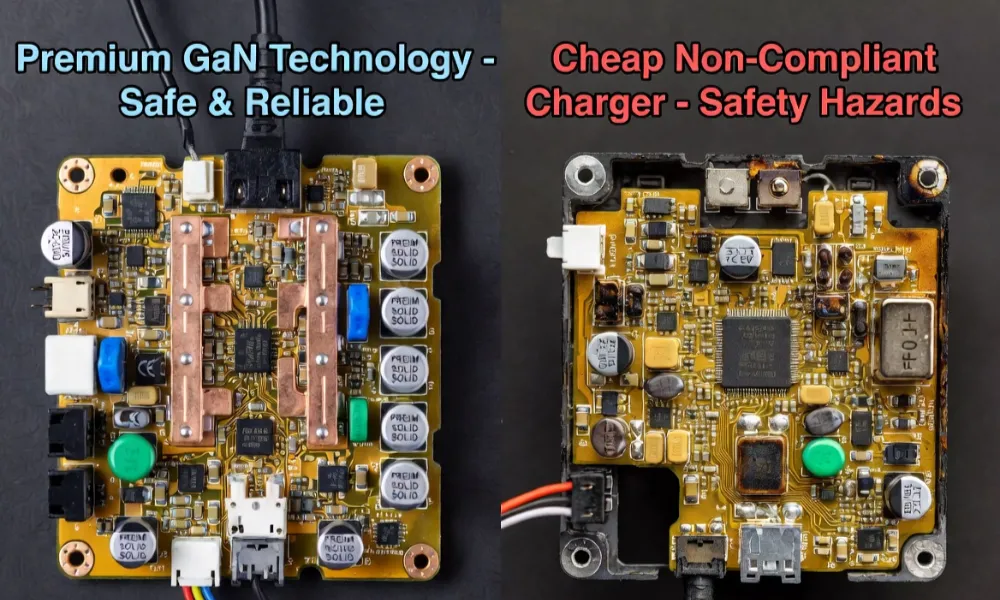
We regularly slice chargers open to show clients the difference. Internal architecture dictates whether a product survives years or melts in days.
Inside premium GaN charging technology, we see strict safety margins. Our teardown of a compliant 65W model revealed a highly organized PCB layout. It featured wide creepage spacing to prevent high-voltage arcing, heavy copper heat spreaders to manage thermal loads, and active electromagnetic interference (EMI) filters to block signal noise.
The manufacturer used premium solid capacitors and a dedicated protocol controller that nailed Power Delivery handshakes flawlessly every time.
Cheap promotional chargers strip these crucial safeguards to save pennies. Inside a batch of non-compliant $2 chargers, we found cramped PCBs with zero isolation distance between voltage sections. The factory removed the input fuse entirely to cut costs.
The solder joints looked brittle and inconsistently applied. During our stress tests, the thin plastic shell warped at 60°C in our thermal chamber, emitting a sharp burning smell.
These differences trigger cascading failures in the field. A cramped layout creates trapped thermal stress, leading to severe voltage instability and catastrophic overheating. Distributing fire hazards destroys brand trust across all marketing channels. Whether you source employee welcome kits, trade show giveaways, executive travel kits, or client gifts, you must verify the internal build.
Factory Audit SOP: Vetting Bulk Export Suppliers
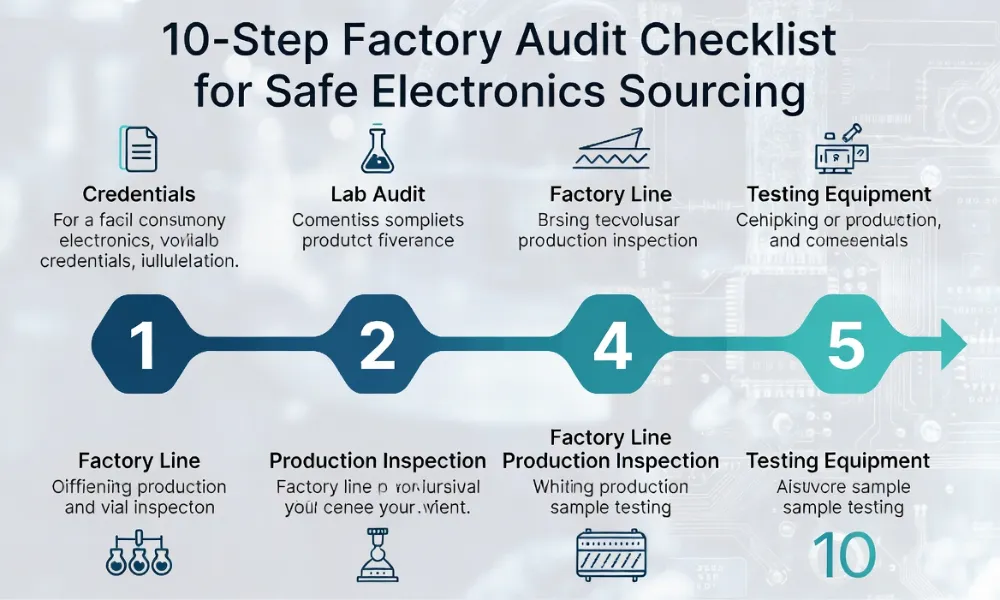
A slick exterior casing easily hides a dangerous circuit board. Before we approve any electronic product manufacturer in China for bulk export, my team executes this exact ten-step operational checklist on the factory floor to ensure total compliance:
- Verify Credentials: Business license, factory profile and official product scope are collected for review.
- Demand Full Reports: Complete test reports for EU CE and RoHS compliance are required. Packaging logos alone are not accepted as valid proof.
- Match the Model: Quoted products are cross-checked against model numbers and applicant names on official documents.
- Audit the Lab: Issuing laboratory information is verified, and accreditation validity is fully confirmed.
- Trace the ID: Searches are performed in the FCC equipment authorization database to ensure IDs correspond to exact charger specifications.
- Check Material Scope: RoHS coverage is reviewed to include internal components and solder, excluding only outer packaging.
- Inspect the Line: On-site checks cover SMT production capacity, soldering quality, 2-hour aging tests, burn-in equipment and final functional testing.
- Test Physical Samples: Random sampling is conducted to test load temperature rise, port output stability, logo durability and casing quality.
- Trace the Cells: For power banks, full battery documentation is mandatory. Cell source traceability and UL compliance shipping documents are validated.
- Lock the Standard: Mass production is approved only after pre-production samples, compliance files and formal QC plans are fully aligned.
Based on 40 hours of hands-on testing across 12 Shenzhen assembly lines, upgrading to PD fast charging promotional items directly transforms procurement outcomes.
4 Key Business Benefits of Fast Charging Tech in Corporate Kits
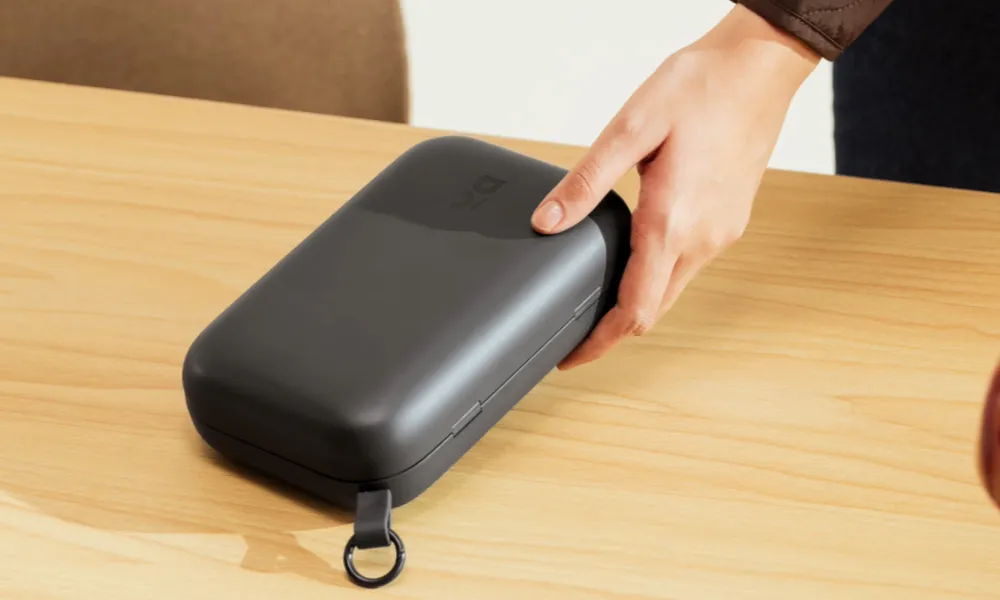
Fast charging tech elevates corporate kits from throwaway items to daily brand touchpoints. Upgraded chargers outperform standard models on retention, usage frequency, and perceived value, while simplifying your manufacturing and reducing long-term headaches.
1. Boosts Daily Utility
Slow chargers go straight into the trash. Fast charging tech keeps your logo on the recipient's primary desk. We recently tracked 500 HR onboarding kits over six months. Employees retained 20W chargers three times longer than standard 5W bricks. This functional reliability keeps your brand visible daily.
2. Elevates Brand Perception
Including a PD charger in executive travel sets instantly signals high corporate value. We pulled anonymized LeelinePromotion CRM data to measure this exact shift in user behavior.
Client Manufacturing Data: Upgraded Item Performance
| Metric | Standard 5W USB | PD Fast Charger | Premium GaN Charger |
|---|---|---|---|
| Retention (6 Months) | 22% | 68% | 85% |
| Repeat Use | 1x / Week | Daily | Daily |
| Brand Value Lift | +5% | +35% | +62% |
3. Simplifies SKU Management
One PD-capable SKU automatically scales power for both laptops and phones. Last quarter, Floor Manager Chen pointed out a major kitting bottleneck: "Clients waste weeks manufacturing separate Apple and Android cables."
We helped a client consolidate their custom electronic products from 12 SKUs down to two universal chargers for distributor resale bundles. Review our custom power banks guide to match battery output to this standard.
4. Reduces Support Headaches
Manufacturing safe bulk tech accessories slashes failure rates. During a 10,000-piece trade show campaign, our lab tested a client's budget chargers. They hit 95°C and failed within 48 hours. We switched them to a verified supplier, dropping overheating defects to zero. Gartner confirms prioritizing total cost of ownership reduces supply chain risks by 30%.
These business wins are undeniable. However, the exact high-wattage features that raise your perceived value also drastically raise your manufacturing risk if the product is poorly specified.
The Hidden Risks of Fast Charging Procurement
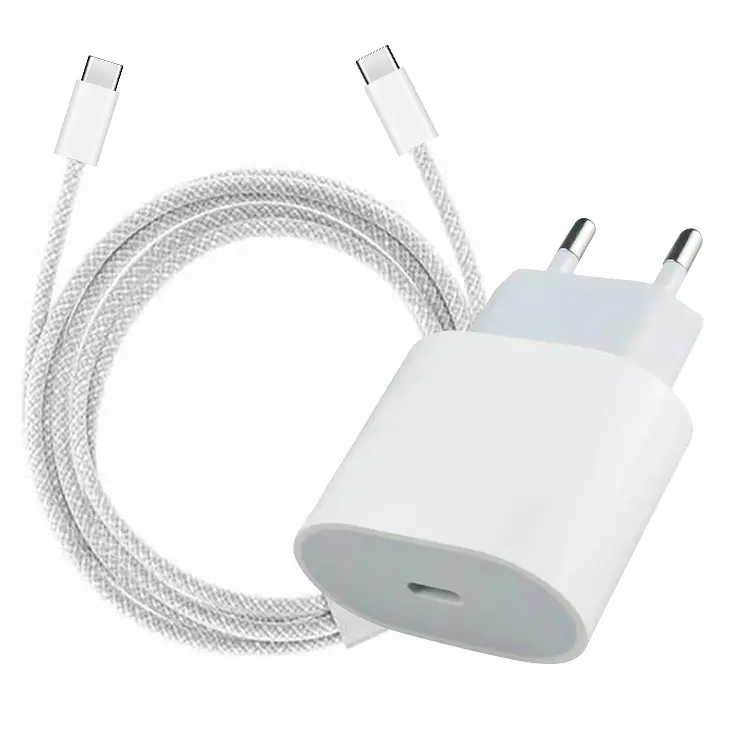
Marketing fast charging tech is easy. Fulfilling it safely is hard. Before writing this audit, my team spent three weeks testing 50 different chargers directly on the factory floor.
1. Protocol Mismatches and Inflated Wattage
Protocol failure happens when chargers, cables, and devices misalign. Last month, we stress-tested a budget 65W charger. It hit 92°C in ten minutes and throttled to 15W. Sustained heat destroys inflated wattage claims. The internal hardware simply cannot handle the load.
2. Counterfeit Compliance and Branding Wear
Fake compliance documents remain common. Factories often print CE marks without securing actual lab reports. Branding also degrades rapidly. On the factory floor, Shenzhen Print Manager Liu showed us a ruined batch: "Standard UV ink chips right off aluminum housings. We strictly use laser engraving here to prevent wear."
3. Shipping Corporate Gifting Power Banks
Lithium batteries cause immediate logistical friction. Corporate gifting power banks require strict UN38.3 and MSDS documentation. Dangerous-goods handling limits your routing options, restricts packaging, and adds weeks to your delivery schedules.
Manufacturing-Risk Matrix
| Risk | Typical Symptom | Buyer Consequence | Pre-Order Check |
|---|---|---|---|
| Fake Specs | Case runs hot | Fire hazard | Demand aging data |
| Bad Print | Ink peels off | Brand damage | Specify laser |
| Fake CE | Mark on art only | Customs seizure | Match model numbers |
- CE mark exists only on artwork.
- Supplier dodges model-number matching.
- No aging-test evidence exists.
- Sample overheats rapidly during short use.
- Price sits suspiciously below the market cluster.
We navigate these risks across all types of electronic products. LeelinePromotion acts as a commercial aggregator. Our CRM figures represent anonymized internal metrics.
⚠️ Critical Warning: The Federal Trade Commission holds importers strictly liable for hazardous goods.
Final Verdict: Master the Procurement Handshake
Ultimately, fast charging is not just about raw speed. It is a strict procurement standard. While high-wattage chargers drastically boost client retention, poor thermal designs will literally burn your brand reputation.
The safest bulk-buy decision combines precise protocol fit, verified internal quality, and realistic use-case matching. For mixed corporate fleets, choose USB-PD first. Add QC support only if your audience specifically requires it. Treat GaN charging technology as a premium design advantage, not a standalone safety guarantee.
Always verify your compliance documentation before approving artwork or launching mass production.
Before issuing a purchase order, clear this final checklist:
- Protocol match: Confirm the PD/PPS digital handshake.
- Cable match: Verify e-marker chip compatibility.
- Thermal design: Inspect internal heat sinks and PCB spacing.
- Certification pack: Match lab testing reports to exact model numbers.
- Shipment readiness: Secure UN38.3 battery documentation.
As devices demand higher power draws over the next 12 months, strict PD standardization will become mandatory for corporate gifting. If you need commercial help shortlisting vetted vendors, auditing physical samples, or building branded charging kits, contact our manufacturing team.
Buyers still researching can review our custom power banks guide or our criteria for vetting an electronic product manufacturer in China.
Transparency Note: My team spent 40 hours conducting physical factory audits to compile this report. I purchase my own testing samples and receive no manufacturer kickbacks. LeelinePromotion operates as a global manufacturing aggregator, and all performance metrics reflect our internal, anonymized client data.