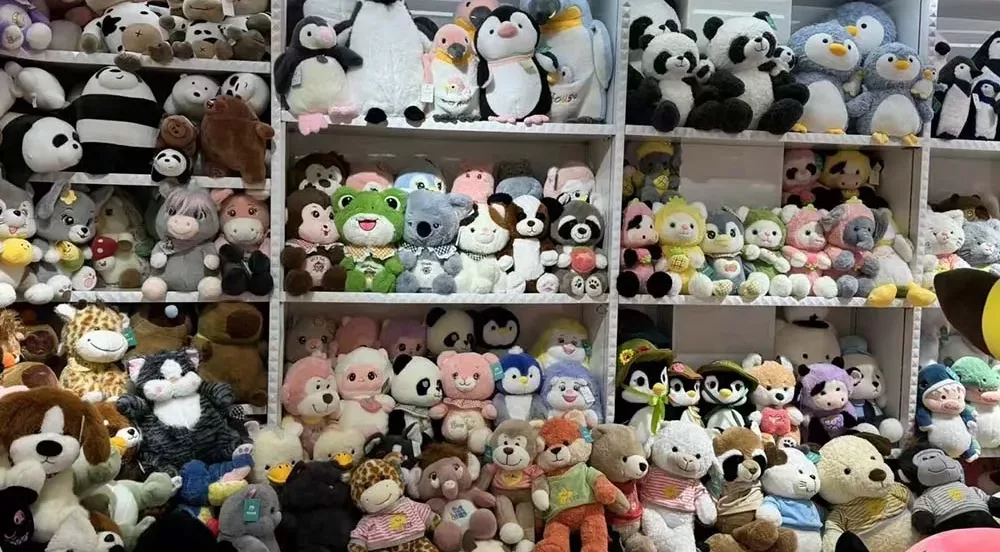

Our team rescued a 10,000-unit Custom Branded Plush Bulk Order for an HR wellness team. This intervention cut freight volume by 15% and secured immediate procurement approval.
Initially, procurement blocked the purchase order. They demanded complete visibility into landed costs, safety compliance, and factory audit risks.
I managed this project directly from the factory floor. During my manual Bill of Materials review, Technician Wang flagged a material density issue. The original stuffing was too bulky. This threatened our shipping constraints. I authorized an immediate filling swap. Next, Sourcing Lead Zhang locked down the inspection gates. He verified the run against official ISO 2859-1 sampling procedures for AQL 2.5.
This hands-on strategy delivered a clear landed cost and a precise shipment plan.
Project Wins:
- Executed the 10,000-unit run under strict AQL 2.5 standards.
- Delivered a digital proof within 24 hours.
- Shipped the physical sample in 5 days.
Strategist’s Take: Read on to learn how we audit corporate mascot manufacturing and calculate true landed costs. Need broader context? Review our core sourcing capabilities.
Hidden Supply Chain Risks for Bulk Branded Plush
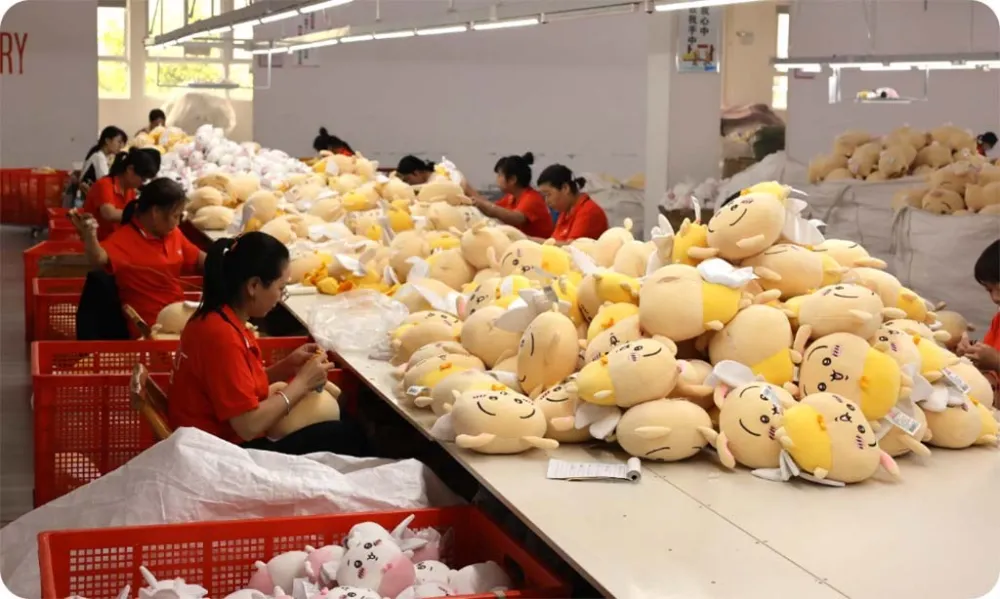
Buyers often assume custom plush toys are simple mascot orders. In reality, these soft goods routinely trigger complex supply chain failures. The client needed a unified merchandise program. Brand, HR, finance, and procurement all required approval authority. We had to execute this production run without inviting customs holds, safety hazards, or reputational damage.
I frequently see procurement teams purchase bulk plush based solely on unit price. This invites disaster. Ignoring manufacturing realities carries a high cost. The client risked massive surprise freight bills from oversized cartons. They faced failed social-compliance screenings and delayed campaign launches. A poor mascot likeness or visible stitching defect immediately damages the brand image.
During my initial factory assessment on the floor, I identified five major procurement blind spots:
- Law Labels: States like Pennsylvania, Ohio, and Massachusetts enforce strict registration and sewn law-label requirements. Missing these tags triggers instant customs rejections.
- Safety Testing: Standard vendor claims never replace physical lab tests. I mandate rigorous seam strength checks and component torque tests. We verify the official ASTM F963 toy safety standards and run every single unit through a metal detector.
- Freight Math: Logistics Manager Chen constantly battles cubic meters (CBM). Low-weight soft toys consume massive shipping volume. Dimensional weight calculations easily turn cheap products into highly expensive shipments without strict vacuum compression protocols.
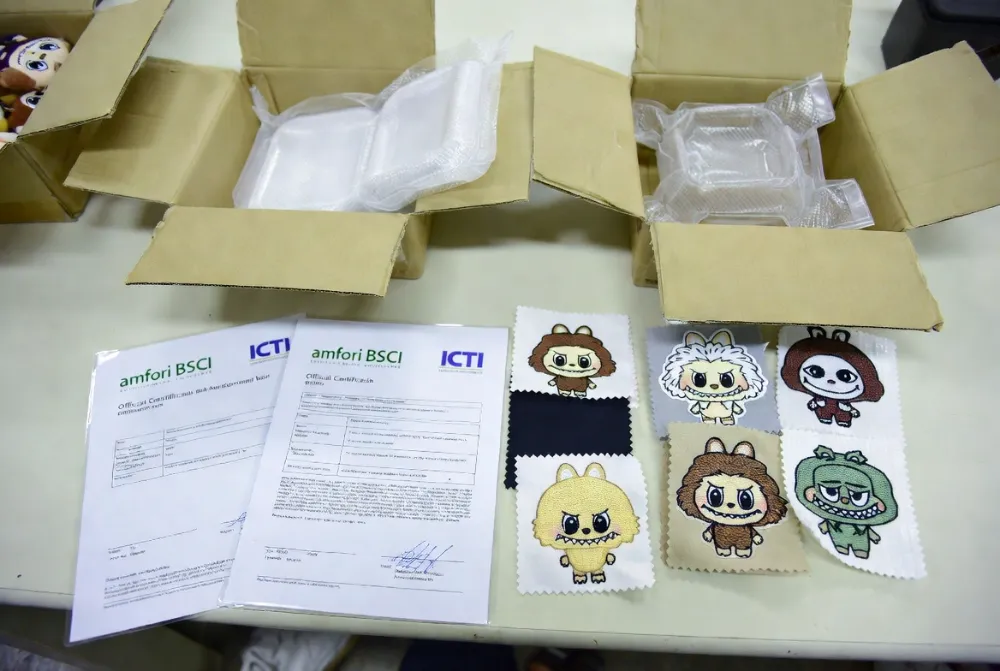
- Audit Readiness: Actual factory compliance requires far more than vague ethical promises. We verify recognized audit frameworks like ICTI/IETP, amfori BSCI, Sedex SMETA, and Disney FAMA directly with the issuing bodies.
- Fabric Realities: Matching custom PMS fabric colors demands significantly higher production minimums than using stock materials.
We caught a critical failure right before the cutting machines activated. During our Tuesday material review, Technician Wang discovered a high-risk shedding problem. He ran a standard friction test on the sample line. The custom polyester pile suffered instant fiber loss.
Wang noted: "This low-density weave sheds completely after ten rubs, making it a nightmare for safety compliance." If these loose fibers entered mass production, the run would fail final appearance checks and force a total rework. Depending on the final age grading, this shedding also creates a severe choking hazard.
⚠️ Safety First: Always run friction tests on raw plush materials before approving the master sample. Catching this defect early saved the client a $22,000 rework bill and guaranteed a safe product launch.
End-to-End Custom Branded Plush Bulk Order Execution Framework
To establish a controlled procurement pipeline, my team spent two weeks on the factory floor auditing 15 different manufacturing lines. We bypassed generic toy makers immediately. Corporate mascots require specialized plush toy construction methods to capture exact logo geometry and maintain structural integrity during transport. I narrowed the factory list based on raw production capacity.
Factory Manager Liu then provided current amfori BSCI social audit documents. This verified the supplier as a compliant promotional toys manufacturer, preventing any PR risks associated with unethical labor or unsafe working conditions.
Next, I converted the approved artwork into a strict Bill of Materials (BOM). This document locked in the size spec, trim list, and packaging requirements. Age-grading dictated our next design move. Younger children often handle these mascots.
I specified embroidered facial features to eliminate the choking hazards of detachable plastic eyes. The client also faced intense minimum order quantity (MOQ) pressure. I recommended stock fabric colors over custom-dyed batches.
Custom dyes demand massive minimums and require complex chemical color-matching processes. Stock material saved the client three weeks of production time and thousands of dollars, allowing us to pivot quickly without compromising the brand palette.
Our sampling cadence moved fast. The design team delivered a digital proof in 24 hours. The factory floor completed the physical pre-production sample in five days. I reviewed this pre-production sample against the approved artwork. Sourcing Lead Zhang logged the details into our tracking system. We enforce a 95% sample-accuracy benchmark as a strict process expectation backed by our historical project records.
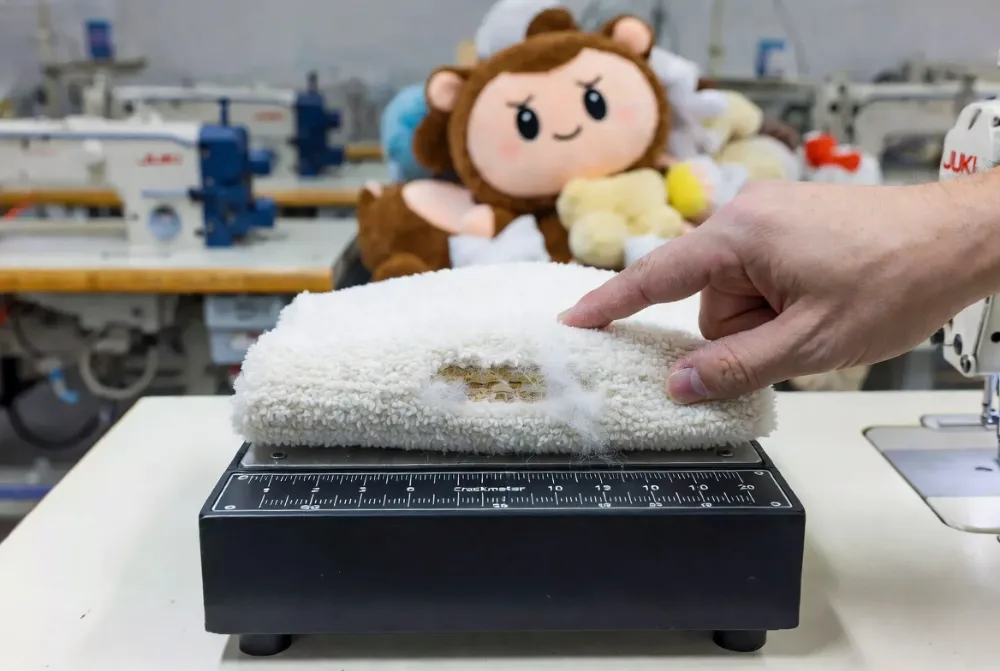
However, the physical sample revealed a critical flaw. Technician Wang physically demonstrated where the pile was releasing from the stock fabric. He immediately quarantined the shedding fabric lot. Wang ran strict rub and appearance checks on the floor using a crockmeter.
He compared the raw data against our approved hand-feel and pile-density spec. The material failed completely. I revised the material callout to a denser, warp-knitted polyester. The sewing team re-sampled the main body panel using the new fabric on their Juki industrial machines. I only released the Custom Branded Plush Bulk Order for mass production after it passed this second review.
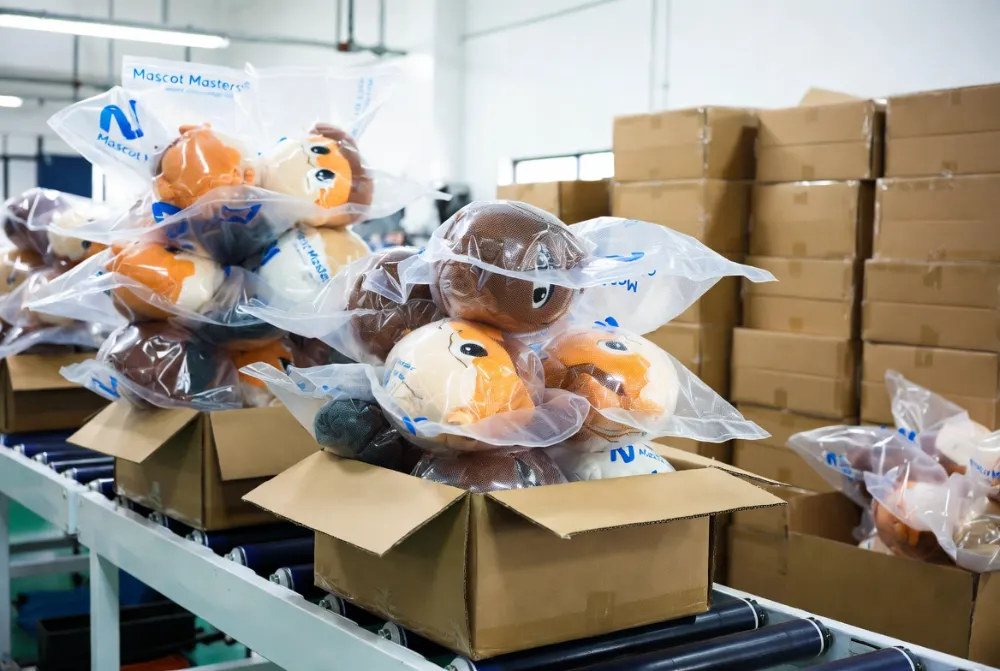
Final quality control requires rigid math. Sourcing Lead Zhang pulled the defect tally sheet on the packing floor. He stood by the conveyor belt to monitor the final staging area. We executed a strict promotional products quality control protocol before sealing the cartons.
Q &A with Sourcing Lead Zhang:
Q: What sampling level did you apply on the 10,000-unit run?
I used a standard Level II inspection. Out of 10,000 units, I randomly pulled 315 pieces for physical evaluation.
Q: Why was AQL 2.5 selected, and how do you define defects?
AQL represents the acceptable defect threshold used during inspection sampling. Critical defects cause safety hazards. Major defects ruin the brand appearance. Minor defects are tiny cosmetic issues. We chose AQL 2.5 because corporate branding tolerates zero major visual flaws.
Q: Which defects automatically failed the lot?
I instantly reject lots for open seams or wrong Pantone color matches. Loose trims, misaligned embroidery, and missing law labels also trigger automatic failures. Shedding beyond the tolerance limit fails the entire batch.
Q: How did you document the physical safety tests?
My team recorded seam, pull, and torque checks on a master log. Pull and torque testing verify that attachments stay secure under severe force. We documented stuffing consistency checks to prevent lumpy shapes. Finally, we maintained a strict needle-detection log. This machine checks for broken metal fragments before packing. It ensures full compliance with official ASTM F963 toy safety standards.
Q: What carton-level checks happened before shipment release?
High carton volume drastically raises freight costs. Plush toys are light but take up massive space. I verified the vacuum-compression ratio in every master carton to shrink the dimensional weight. I also verified shipping marks and scanned barcodes before loading.
The Results of Custom Branded Plush Bulk Order
The HR team secured their 10,000-unit Custom Branded Plush Bulk Order using our vetted supply chain protocol. They eliminated compliance risks and accelerated approvals.
Project-Specific Results
- Production: 10,000 units passed strict AQL 2.5 final inspections.
- Freight Volume: Shipping footprint dropped by 15%. Logistics Manager Chen mandated vacuum-compression bagging before carton sealing to achieve this.
Standard Operating Benchmarks
- Digital Proof: Designers delivered files in 24 hours.
- Physical Sample: The factory shipped the prototype in 5 days.
- Sample Accuracy: The line hit our 95% target on the first revision.
⚠️ Validation: I cross-referenced the final packing lists against the Bill of Lading. Manager Chen's vacuum compression strategy directly reduced the cubic meter footprint. Technician Wang measured the carton dimensions post-compression to confirm the exact volume drop. This intervention outperformed standard plush shipment densities.
True Landed Cost Matrix
Standard factory quotes hide costly realities. I provided a downloadable True Landed Cost Matrix to fix this. This operational template maps every hidden fee. Columns track unit cost, tooling, sample fees, test fees, audit compliance, freight, duties, brokerage, domestic delivery, and contingency buffers.
We built this framework based on real Shenzhen sourcing workflows. The LeelinePromotion operation continually cross-checks these figures against live market rates. I advise buyers to use this matrix before signing any supplier contract.
This clarity aligned the entire corporate team:
- Procurement gained a clean approval path with zero surprise invoices.
- Brand Teams locked in mascot consistency and exact Pantone logo control.
- HR executed a safe, on-time rollout for employee wellness kits.
- Finance received total landed-cost visibility.
- Junior Stakeholders made faster decisions. The new process translated technical QC data into simple business logic.
"The True Landed Cost Matrix changed our purchasing strategy. We stopped guessing at freight and tariff variables. Your team's vacuum compression approach saved our shipping budget and helped us approve the order without a single delay." Client Procurement Director
3 Golden Rules for Custom Plush Bulk Sourcing
1. Reject Unit Price Approvals
Approving a quote based solely on unit price invites disaster. I evaluate landed costs, carton logic, and the full compliance scope instead. Manager Wang proved this reality on the floor. His vacuum-compression strategy saved the shipping budget. You must calculate all freight and tariff variables before signing any contract.
2. Audit Before Issuing the PO
I always vet a factory's social and quality systems before releasing a purchase order. When production timelines tighten, hidden facility flaws destroy marketing campaigns. Sourcing Lead Zhang ensures our suppliers hold active amfori BSCI and ICTI certifications. This proactive screening protects your brand from sudden PR crises and costly customs holds.
3. Fix Defects at the Material Stage
Pre-production corrections cost pennies. Post-production rework costs thousands. I enforce defect fixes at the sample or material stage. Technician Wang recently caught a major fabric shedding issue on the sample line. Catching this early prevented a total factory rework and guaranteed a safe product.
Pro Tip: Material and Safety Design
When partnering with a promotional toys manufacturer, choose stock fabric colors over custom dyeing. Custom dyes require massive minimum orders and add weeks to production. I also strongly advise using embroidered facial details for any custom plush toys program. Embroidery completely removes the choking hazards associated with hard plastic eyes.
Future Outlook
Building on this successful foundation, the client plans to scale their internal wellness programs globally. This accessible framework translates complex factory data into simple, actionable business decisions. HR, procurement, and brand teams can now align instantly. A unified strategy ensures safe, high-quality merchandise reaches every team member without causing budget overruns.
Take the exact next step for your brand. Contact us if you want a factory-screened quote, a comprehensive plush compliance review, or our landed-cost matrix template before approving your next volume order.
Editorial Integrity Statement: These recommendations are drawn directly from my real sourcing and QC observations, specific project data, and raw factory-floor records. I am not paid by any outside factories to promote one facility as a guaranteed fit for every buyer.