
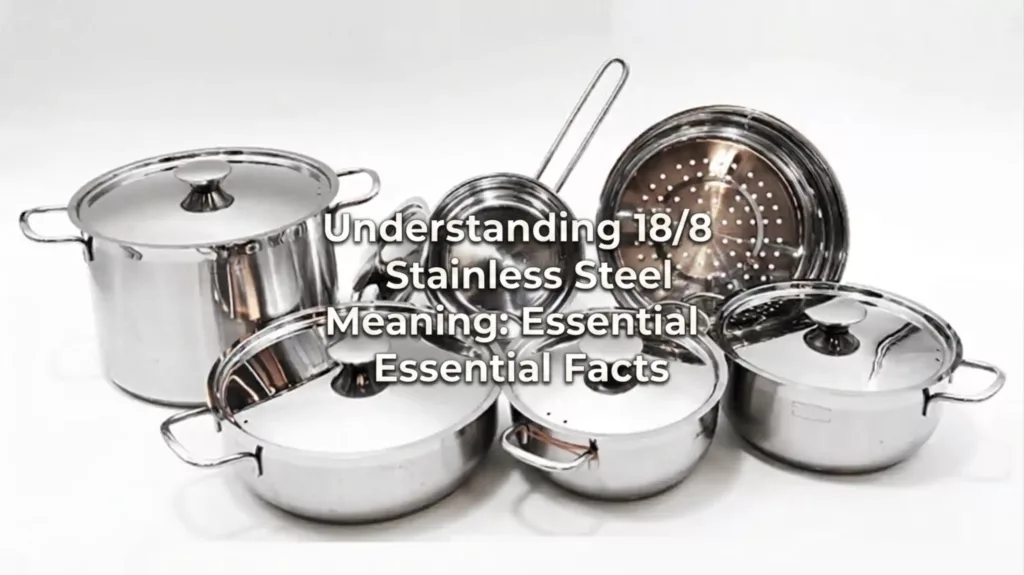

18/8 stainless steel is trade shorthand for an alloy with nominally 18% chromium and 8% nickel — the AISI 304 family. The name is a ratio, not a formal grade.
For drinkware, a ratio stamped on a base proves nothing by itself. The grade and the applicable standard belong on the purchase order.
Key Takeaways
- 18/8 is a ratio, not a grade. Its formal equivalents are AISI 304, UNS S30400, EN 1.4301 and JIS SUS304.
- The spec window is wider than the name. ASTM A240 allows 18.0–20.0% chromium and 8.0–10.5% nickel for 304.
- 201 is still non-magnetic. 201 replaces most of the nickel with manganese (Ni 3.5–5.5%, Mn 5.5–7.5%), so a magnet cannot separate the two grades.
- Verify at two points. A mill test certificate per heat before production and an XRF spot check on incoming material; reject lots below 18.0% chromium.
- 18/8 is not a marine grade. Chlorides, bleach and long dishwasher dwells cause pitting; 316 adds 2.0–3.0% molybdenum for those environments.
What Does "18/8" Actually Mean?
The two digits are weight percentages in the melt: 18% chromium, 8% nickel, with iron filling most of the remainder and carbon held low. Chromium is the corrosion element.
Where oxygen reaches the surface, chromium forms a passive oxide film a few nanometres thick, and the film re-forms within minutes of a scratch. This is why a brushed bottle does not rust at every scuff.
Nickel changes the crystal structure rather than the surface. At roughly 8% and above, the alloy holds an austenitic face-centred cubic structure at room temperature. Austenite is what lets a flat blank be deep-drawn into a tall body without splitting, and it is also why annealed 304 is non-magnetic.
Because the name describes a ratio rather than a specification, two mills can both ship "18/8" and land at opposite ends of the permitted range. Purchase-order language matters more than the marketing copy.
"Type 304 per ASTM A240, chromium 18.0% minimum, nickel 8.0% minimum, mill test certificate per heat" is enforceable. "18/8 stainless" is not.
18/8 vs 304 vs 304L: Which Should You Specify?
304 and 18/8 describe the same grade, so the real choice is between 304 and the low-carbon variant 304L.
Type 304L is the same family with carbon capped at 0.03% instead of 0.08%. Lower carbon reduces chromium-carbide precipitation in the heat-affected zone of a weld — the mechanism behind weld decay. For drawn and welded bottle bodies facing aggressive cleaning, 304L is the safer callout.
Seamless bodies and unwelded parts gain little from the low-carbon variant. Confirm which version the mill certificate names: a 304 certificate does not prove a 304L coil.
18/8 vs 18/10 vs 201 vs 316 vs 430
| Grade | Cr (%) | Ni (%) | Other | Chloride resistance | Cost index | Typical use |
|---|---|---|---|---|---|---|
| 201 | 16.0–18.0 | 3.5–5.5 | Mn 5.5–7.5 | Low | ~0.8× | Budget promo, dry use |
| 304 (18/8) | 18.0–20.0 | 8.0–10.5 | C ≤0.08 | Good | 1.0× | General drinkware |
| 304L | 18.0–20.0 | 8.0–10.5 | C ≤0.03 | Good, weld decay resistant | ~1.0× | Welded bottle bodies |
| 316 | 16.0–18.0 | 10.0–14.0 | Mo 2.0–3.0 | Very good | ~1.3–1.5× | Coastal, acidic, marine |
| 430 | 16.0–18.0 | — | Ferritic, magnetic | Moderate | ~0.7× | Trim, magnetic parts |
Ranges reflect ASTM A240 limits for flat-rolled 300- and 400-series product; 430 is included for comparison. The cost index is indicative and moves with nickel pricing — confirm against a current mill quote.
Three differences matter in practice.
201 is the substitution risk. 201 keeps chromium in a similar band but swaps most of the nickel for manganese to cut cost. Polished, the alloy looks like 304, passes a magnet, and holds a logo.
What 201 cannot do is survive the same chloride exposure: pitting appears first along weld lines and in crevices under silicone sleeves and lid gaskets. A specification should therefore name the grade, not the ratio. See custom promotional drinkware for how that callout is written.
18/10 is a marketing term. In cookware, the label usually describes a grade with about 10% nickel — often a 304 within the ASTM range, sometimes a 316 body. In drinkware, the same shorthand appears on higher-nickel 304. Paying a premium for the ratio without a grade callout buys uncertainty; when a supplier quotes 18/10, ask which grade and which standard.
316 earns its premium only in chloride service. Molybdenum at 2.0–3.0% raises resistance to pitting in salt water, road salt and some acidic beverages. Inland office giveaways rarely need this grade. Coastal hospitality programmes and marine-adjacent promotions usually do.
Why Is 18/8 the Default for Custom Drinkware?
Four properties line up at volume, and none of them depends on buying the most expensive grade.
Formability. Austenitic 304 stretches evenly under a deep draw, so the neck, shoulder and base of a bottle can be formed from a single blank. Grades with less nickel tear more often at the shoulder, which shows up as polishing and rework cost rather than a lower metal invoice.
Finish. The alloy takes both mirror polish and brushed grain and keeps them through normal handling. Laser engraving reads as a crisp, high-contrast mark because the surface is uniform.
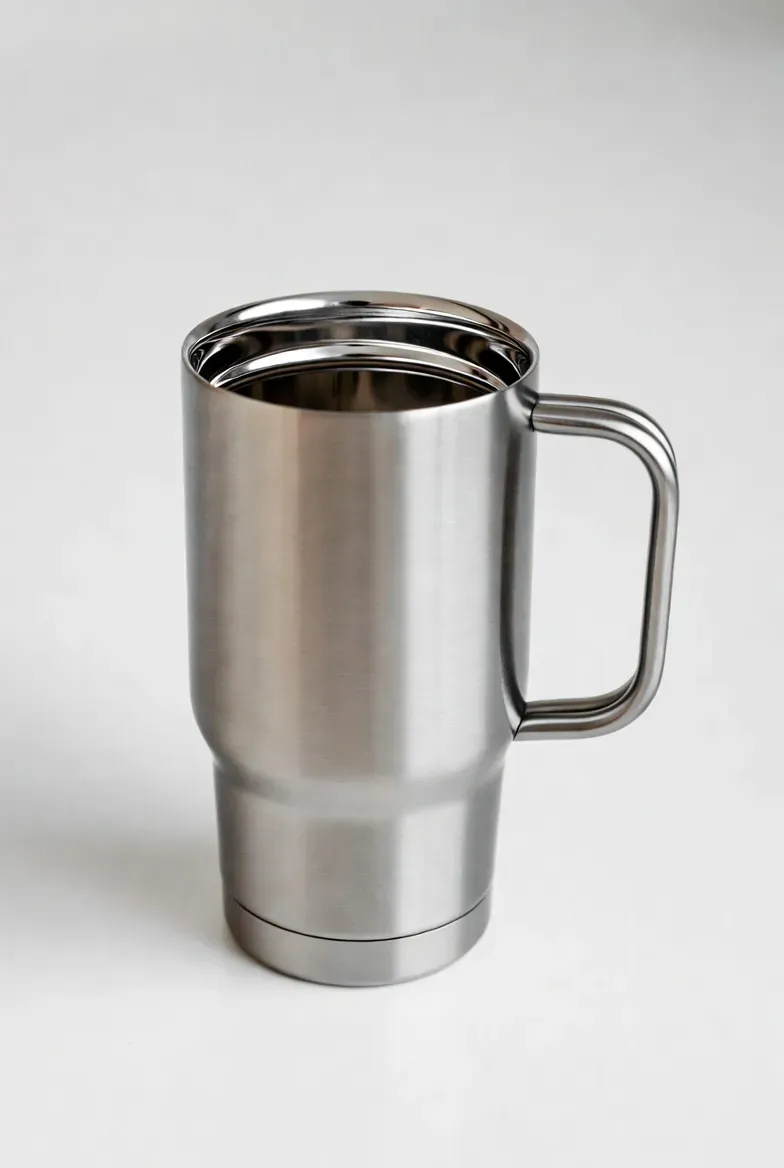
Food contact. Stainless is inert and non-porous, so the surface does not absorb flavours or harbour residue the way a scratched plastic liner can. The FDA Food Code accepts stainless as a food-contact surface. That property comes from the alloy and the finish together — a rough interior weld bead is a hygiene problem regardless of grade.
Repairability. The passive film re-forms after polishing, so a scuffed tumbler can be refinished instead of scrapped. Materials for drinkwares compares this grade against glass, ceramics, Tritan and aluminium on the same criteria.
For a programme that mixes types of drinkware — bottles, tumblers, cans and mugs — specifying this grade as the default keeps the whole range consistent in look, weight and compliance paperwork, which is why volume programmes standardise on 304.
Where Does 18/8 Stainless Steel Fail?
Pitting is localised. A chloride ion attacks the passive film at one point, the pit deepens, and the surrounding surface stays bright. The first sign of trouble is often a single speck inside the base rather than broad discolouration.
Crevices under gaskets, threaded lids and silicone sleeves are the worst locations, because oxygen cannot reach the surface to rebuild the film.
Chlorinated cleaners are the most common cause in service. Bleach-based sanitisers, long soaking in chlorinated water and pool-water rinses deplete the film faster than the passive film can rebuild, and the damage concentrates on interior welds.
For barware and hospitality lines, print a cleaning instruction with the packaging: warm water, mild detergent, no chlorinated sanitiser, no overnight soak.
Dishwashers are a milder version of the same problem — heat, alkaline detergent, chloride in the water supply and a long dwell time. Annealed 304 usually copes, but repeated cycles in hard, high-chloride water can leave rust spots at weld lines and in crevices.
Programmes aimed at coastal markets should run a full wash cycle in the destination's water rather than assume a laboratory result carries over.
Welding is the other weak point. Carbide precipitation at the weld boundary removes chromium from the surrounding metal, and the depleted band corrodes first.
Two controls address the problem: use 304L for the body, then passivate after welding to ASTM A967 so the chromium-oxide film is restored across the seam. Heavy oxide from TIG welding should be pickled and descaled to ASTM A380 before passivation.
A note on test methods. ASTM B117 salt spray is a screening test, not a service-life predictor. Austenitic grades often show cosmetic rust in the chamber that does not correlate with field performance, and a 201 body can pass a short spray test and still pit within a year of real use.
Treat salt-spray hours as one input alongside grade, weld quality and the chloride exposure of the end market.
How to Verify 304 Before Mass Production?
A magnet is not a test. 201 and 304 are both austenitic and both non-magnetic when annealed, so the online magnet trick distinguishes neither grade nor quality. Cold working can make 304 slightly magnetic, which adds a false negative to the false positive.
Effective controls are documentary and chemical, and they belong in four steps.
- Write the grade and standard into the purchase order. Sheet and strip: ASTM A240. Bar and wire: ASTM A276. Add minimum chromium and nickel, and specify 304L where the body is welded.
- Collect a mill test certificate for every heat used. Match the heat numbers on the certificates to the coils actually consumed on the line, and keep the certificates with the shipment documents.
- Run an XRF spot check on incoming material and on finished goods. Handheld XRF reads chromium, nickel, manganese and molybdenum in seconds. A 304 lot should read chromium at or above 18.0%; readings in the 16–17% band with manganese near 5% point to 201.
- Verify welding and passivation, then inspect before shipment. Passivation to ASTM A967 after welding, cleaning and descaling to ASTM A380, and a pre-shipment inspection at AQL 2.5 with a written report.
The paper trail those steps produce is what an auditor will actually ask for:
| Document | What it proves | What to check on the copy |
|---|---|---|
| Mill test certificate (MTC) | Heat-level chemistry from the mill | Heat number matches the coil consumed; Cr ≥18.0%, Ni ≥8.0% |
| XRF scan record | Chemistry of the delivered lot | Cr ≥18.0%; Mn below 5% (201 typically reads 5.5–7.5%) |
| Passivation record | Oxide film restored after welding | Standard cited (ASTM A967), line or bath, date, batch reference |
| Migration test report | Food-contact compliance for the target market | Grade and finish named; standard number; accredited laboratory |
| Pre-shipment inspection report | Workmanship and defect levels | AQL 2.5 sampling plan, acceptance number, photo record |
The same four controls sit inside a wider inspection and quality control programme.
For a supplier-side benchmark of how the documents should look, the factory profiles in insulated drinkware manufacturers in China show what a credible mill-certificate workflow contains.
Is 18/8 Stainless Steel Food Safe?
Yes, for normal food and drink contact, provided the finished article passes the destination market's migration test. The alloy is not the compliance document.
What a buyer needs is a migration test report for the destination market, naming the grade, the finish and the standard it was tested against.
- United States. The Food Code treats stainless as an accepted food-contact surface. Coatings and linings fall under 21 CFR 175.300, and state-level heavy-metal warning rules apply where nickel, lead or cadmium exposure exceeds the threshold.
- European Union. Regulation 1935/2004 provides the framework and 2023/2006 sets good manufacturing practice; Germany adds LFGB requirements, which many EU buyers quote directly.
- China. GB 4806.9-2023 governs metal food-contact materials and is the standard domestic factories already test against.
Ask whether the report covers the exact grade and finish being quoted. A certificate for a polished 304 tumbler does not automatically cover a 201 bottle with a coloured coating. The compliance center lists the documents each market expects.
Lids, straws and liners are separate materials with separate rules. A 304 body paired with an unverified plastic lid is not a compliant product, which is why BPA-free bottle specifications belong in the same conversation as the steel grade.
What Drives Cost, and Where Does 201 Look Cheaper?
Nickel is the cost driver. The metal trades on the LME, moves daily, and most mills quote with a nickel pass-through clause.
Volatility drives substitution: a supplier who quoted a fixed price can protect margin by shipping a lower grade, and the difference stays invisible until pitting starts. A substitution also voids the test report behind an existing Proposition 65 warning, because the document was issued for the approved alloy.
The 201 saving is real but narrow. The metal invoice falls; polishing time, rework on torn shoulders and field-failure risk rise. On a decorated programme the finishing steps — polishing, engraving, coating — usually cost more than the metal, so a cheaper blank buys less than the quote implies.
The practical response is to compare grade-specific quotes rather than "stainless bottle" quotes, and to put the grade callout in the contract so any change needs written approval.
When shortlisting a regional drinkware supplier, also check whether the factory buys coil directly from a mill or through a trader; the longer the chain, the harder heat-number traceability becomes.
Frequently Asked Questions about 18/8 Stainless Steel Meaning
1. Is 18/8 stainless steel the same as 304?
In ordinary use, yes. 18/8 is the nominal ratio and 304 is the formal grade, with ASTM A240 permitting 18.0–20.0% chromium and 8.0–10.5% nickel. 304L, capped at 0.03% carbon, is also sold as 18/8. For purchasing, write "Type 304 per ASTM A240" and leave the shorthand off the contract.
2. Does a magnet test prove stainless steel quality?
No. Annealed 201 and 304 are both austenitic and both non-magnetic, and cold working can make 304 slightly magnetic. The test therefore produces false passes and false failures. Use a mill test certificate plus an XRF reading of chromium and nickel.
3. Does 18/8 stainless steel contain lead?
Not as an alloying element. Type 304 is iron with chromium and nickel, and lead is not part of the specification. Risk enters through other components — solder, coatings, printed inks or decorative attachments — which is why food-contact migration tests and a Proposition 65 review should cover the finished article, not only the steel.
4. What is 18/0 stainless steel?
18/0 usually describes a ferritic grade in the 430 family: about 18% chromium and no intentional nickel. The grade is magnetic and less resistant to chlorides than 304, so 18/0 suits trim and dry-use parts rather than a bottle body that holds drinks. At a lower price, confirm which parts of the product use that grade.
5. Will laser engraving cause a 304 bottle to rust?
No, provided the mark is cleaned properly. Laser engraving removes the passive chromium-oxide film at the mark, and a clean, oxygen-exposed surface rebuilds the film within hours. Heavy engraving that leaves heat tint or embedded debris can interrupt the process, so specify post-engraving cleaning and, for high-chloride markets, a passivation step.
6. Can a 304 bottle hold coffee, juice or sports drinks?
For normal use, yes, provided the bottle is rinsed soon after. Acidic juice, sports drinks and salty mixes lower the pH and add chlorides, which raises pitting risk at weld lines and under gaskets. Prompt rinsing and air drying matter more than the grade. For daily high-acid or coastal use, specify 316.
Ready to specify a drinkware programme on verified 304? Contact us with your target market and volumes, and we will map the grade, finish and compliance documents to the destination.