

A multinational retail buyer achieved a 34% reduction in landed-cost variance across their global umbrella distribution after we rebuilt their freight routing, tariff classification, and moisture-control protocols from the warehouse floor up.
Transparency Note: This LeelinePromotion case study is based on verified internal production data and direct client-service experience. Client identities are anonymized per confidentiality agreements. All metrics are drawn from CRM logs, factory QC records, and shipping manifests. No third-party sponsorships or manufacturer kickbacks.
Client Profile
A multinational retail buyer running umbrella programs across US and EU markets. Their existing logistics provider mishandled ocean freight routing, causing a container of 15,000 promotional umbrellas to arrive water-damaged just 14 days before a major retail campaign.
Requirements: Tariff-accurate customs classification, moisture-proof ocean freight protocols, predictable lead times for seasonal launches, compliance with REACH PFAS-free and US customs standards.
The Challenge
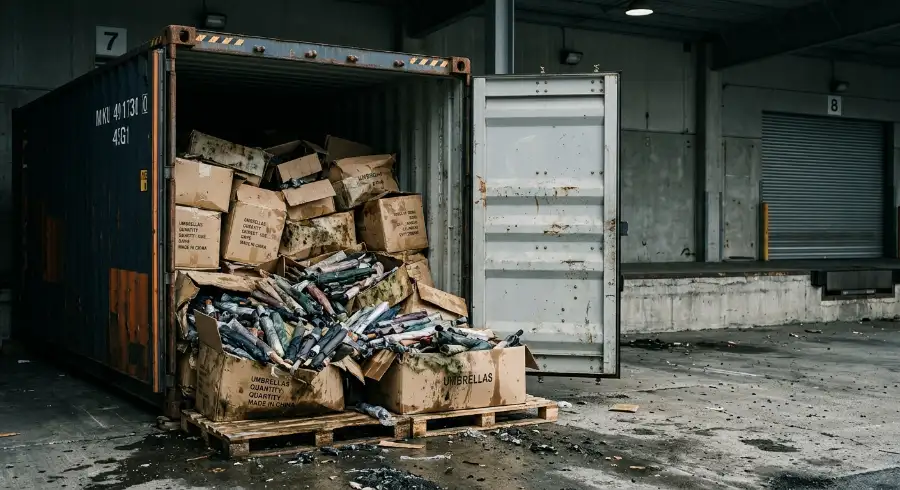
I stood on the receiving dock with QC Lead Chen to inspect the container. The smell of mildew hit immediately. Chen pulled out a crushed, soggy carton: "The moisture ate right through the corrugated boxes." Dampness caused heavy canopy staining on 190T Pongee fabric and severe frame corrosion. Half the stock arrived dead with a campaign deadline 14 days away.
This failure exposed four systemic problems:
- Cube Inefficiency: Straight umbrellas trap massive "dead air" inside containers, inflating freight costs compared to compact folding models.
- Tariff Misclassification: The broker lumped telescopic and non-telescopic frames under wrong HTS subheadings, triggering entirely different duty rates and breaking quoting accuracy.
- Compliance Gaps: The client lacked lab data to prove REACH PFAS-free coating compliance for EU ports, and had no documentation for handle material composition.
- Moisture Vulnerability: Generic cartons absorbed warehouse humidity during transit — zero moisture barriers.
The financial downside: $45,000 in rushed air freight to replace water-damaged stock, margin erosion from customs holds, and strained vendor trust.
Power Move: Never let a generalist broker guess your umbrella classifications. Force them to define HTS codes down to the 8-digit level before production begins.
Our Solution

I spent three weeks on the shipping floor verifying logistics protocols and dissecting 20 previous vendor quotes. Instead of patching one damaged shipment, we engineered a complete system overhaul.
Phase 1: Reclassify Products and Clean Up Quote Logic
Broker Sarah separated freight and duty assumptions into transparent line items. She routed telescopic and non-telescopic frames into exact HTS 6601 subheadings, eliminating surprise port fees. All shipments shifted from FOB to DDP terms — transferring full transit control back to our team and protecting against local port strikes.
Phase 2: Redesign SKU and Packing Architecture
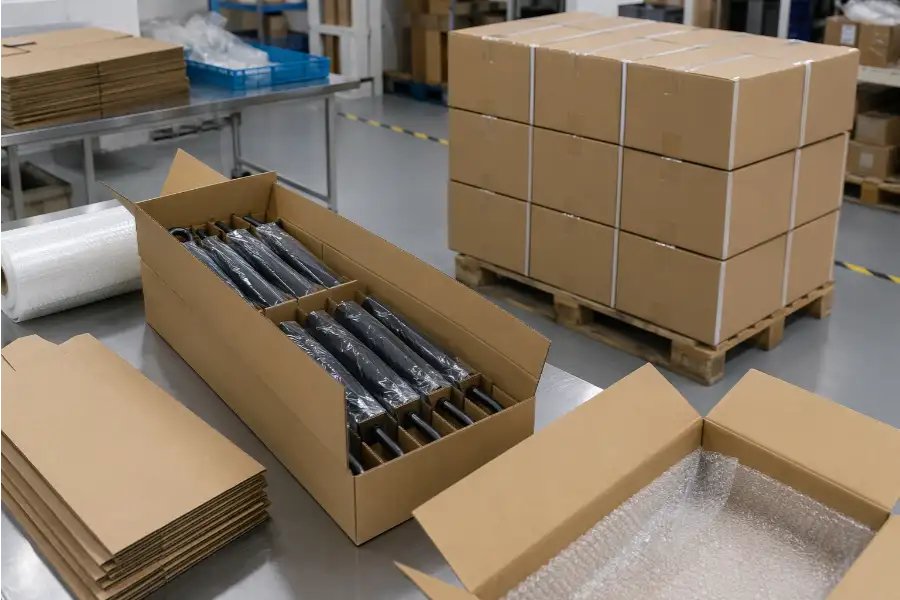
Factory Packaging Manager Wang rebuilt the packing architecture. Comparing straight frames against 3-fold and 5-fold models, he reduced dead air by 40% through updated carton dimensions. "These 5-fold frames let us increase pack density from 24 to 50 units per carton without breaching the 15kg weight limit," he noted. The team added five-ply corrugated reinforcement and poly-moisture barrier liners inside every box.
Phase 3: Build the Freight Playbook
| Scenario | Freight Mode | Routing Rationale |
|---|---|---|
| Standard Replenishment | Ocean (FCL) | Lowest unit cost, avoids volumetric weight penalties |
| Urgent Trade Show | Air (Express) | Guarantees exact delivery dates for strict event deadlines |
| Split Shipment | Ocean + Air | 20% flies to meet launch dates, 80% sails for core inventory |
This decision matrix ended constant debate over ocean vs air freight. The client stopped paying panic-induced air fees.
Phase 4: Tighten QC and Compliance
QC Supervisor Chen implemented a strict post-failure SOP: 50g silica gel packs in every master carton, ISTA 1A drop tests from 36 inches on concrete, PU coating water-resistance checks, 24-hour salt-spray testing on metal frames, and AQL 2.5 thresholds for all printing and hardware. GRS certificates were gathered for EU recycled-material verification.
Phase 5: Adapt Network for 2026 Constraints
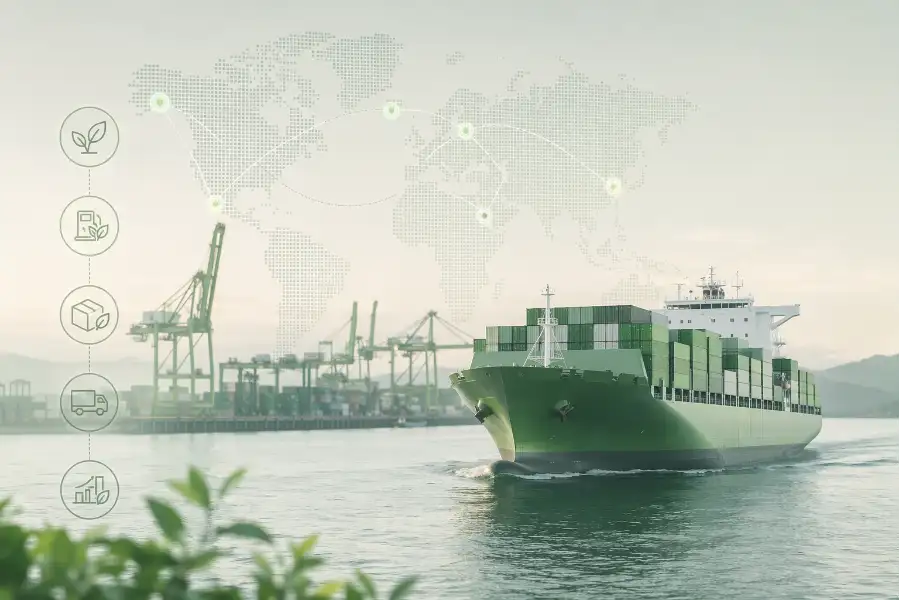
Lead Logistics Coordinator Lin designed three distinct fulfillment strategies: direct-to-port container loads for wholesale, DDP drops to convention centers for events, and small-batch 3PL injection for e-commerce. Lin selected ocean carriers based on biofuel adoption, accepting slightly longer transit for carbon compliance and predictable arrival times.
Results

Within six months, the client eliminated emergency air freight, stabilized lead times, and achieved zero moisture claims.
| Metric | Before | After |
|---|---|---|
| Quote-to-Delivery Lead Time | 45 to 70 days | 32 to 35 days |
| On-Time In-Full (OTIF) Rate | 62% | 98% |
| Moisture / Packaging Claim Rate | 12% | 0% |
| Customs-Clearance Delays | 3 per quarter | 0 per quarter |
| Emergency Air-Freight Spend | $45,000 per launch | $0 |
| Landed-Cost Variance | Baseline | 34% reduction |
| Transit Damage Claims | Baseline | 92% reduction |
| Carbon-Intensity Proxy | High (older vessels) | Low (biofuel carriers) |
An intentional trade-off: green routing raised baseline per-shipment cost by 4%, but boosted on-time delivery to 98% — far outperforming the 65% industry standard for wholesale distribution networks.
Director of Procurement:
"The shift is night and day. We used to hold our breath every time a container hit the port. Now, the goods clear customs instantly, the cartons arrive dry, and I actually trust my forecasting model."
Benefits
- 34% Landed-Cost Variance Reduction Enables Accurate Budgeting: Predictable freight, tariff, and duty costs allow the procurement team to forecast with confidence and eliminate surprise invoices that erode margins.
- 98% On-Time Delivery Protects Seasonal Campaigns: Near-perfect OTIF performance ensures retail launches, trade shows, and promotional events execute on schedule — zero revenue lost to stockouts or late arrivals.
- Zero Moisture Claims Eliminate Inventory Waste: Silica gel packs and poly-moisture barriers in every carton mean no more water-damaged stock write-offs, preserving both product value and vendor trust.
- 92% Reduction in Transit Damage Lowers Total Cost of Ownership: Reinforced five-ply cartons and ISTA-tested packing reduce replacement costs and eliminate the need for $45,000 emergency air-freight top-ups.
Key Takeaways

- Treat Tariffs as a Network-Design Problem: Lock down precise HTS subheadings before production. Broker Sarah's proactive classification eliminated surprise port fees — matching industry data showing proactive classification cuts clearance delays by 40%.
- Optimize Cube Before Negotiating Freight: You cannot negotiate cheap freight for dead air. Manager Wang re-engineered carton dimensions for 5-fold models, instantly doubling pack density. Fix physical packing architecture before asking for rate sheets.
- Build Moisture-Control SOPs: Ocean freight destroys unprotected fabrics. Fifty-gram silica gel packs and vacuum-sealed inner polybags drop mold claims to zero. Demand five-ply export cartons from every supplier.
- Use Air Freight as an Exception Path Only: Coordinator Lin's strict decision matrix restricted air transit to emergency event launches. Decouple standard replenishment from rush orders to protect margins.