
A B2B enterprise achieved a 40% referral lift by replacing generic swag with premium, factory-direct corporate gifts. My team manually audited 1,000 CRM logs to verify every metric below.
Transparency Note: This LeelinePromotion case study is based on verified internal production data and direct client-service experience. Client identities are anonymized per confidentiality agreements. All metrics are drawn from CRM logs, factory QC records, and shipping manifests. No third-party sponsorships or manufacturer kickbacks.
Client Profile
A B2B enterprise with a stalled sales pipeline and an underperforming $45,000 annual ABM gifting budget. Their existing vendor shipped $4 plastic mugs to $250k enterprise accounts — generating near-zero engagement and active brand damage.
Key Stakeholders:
- VP of Sales David: Unpredictable referral pipeline because gifts failed to generate top-of-mind recall.
- Director of Account Management Sarah: Wildly inconsistent appreciation experiences across key enterprise accounts.
- B2B Marketing Leader: $45,000 annually on unmeasurable gifting with no CRM attribution layer.
The Challenge
The client's generic swag actively damaged their brand reputation. Last Q3, they sent low-tier 500mAh branded power banks to 200 executives. The plastic felt hollow and the batteries drained after 20 minutes. The engagement rate hit absolute zero — most units rotted in desk drawers.
Beyond physical defects, their digital execution lacked a reliable attribution layer. Reps manually typed random notes into Salesforce text fields. There was no defensible way to connect a shipped gift to a closed-won referral.
QA Manager Liu personally rejected two batches of substandard tech accessories on the factory floor. He enforced strict ISO 2859-1 quality sampling standards to guarantee zero defects before shipping. During one production audit, QC Specialist Lin rejected 500 leather notebooks — the polyurethane coating bled the debossed logo after basic friction. Items that looked perfect on the supplier's website failed physical inspection.
Pre-Production Rule: Never approve a bulk order without testing a pre-production digital sample (PPS). What looks like premium leather on a supplier's website is often cheap PU vinyl in person.
Our Solution
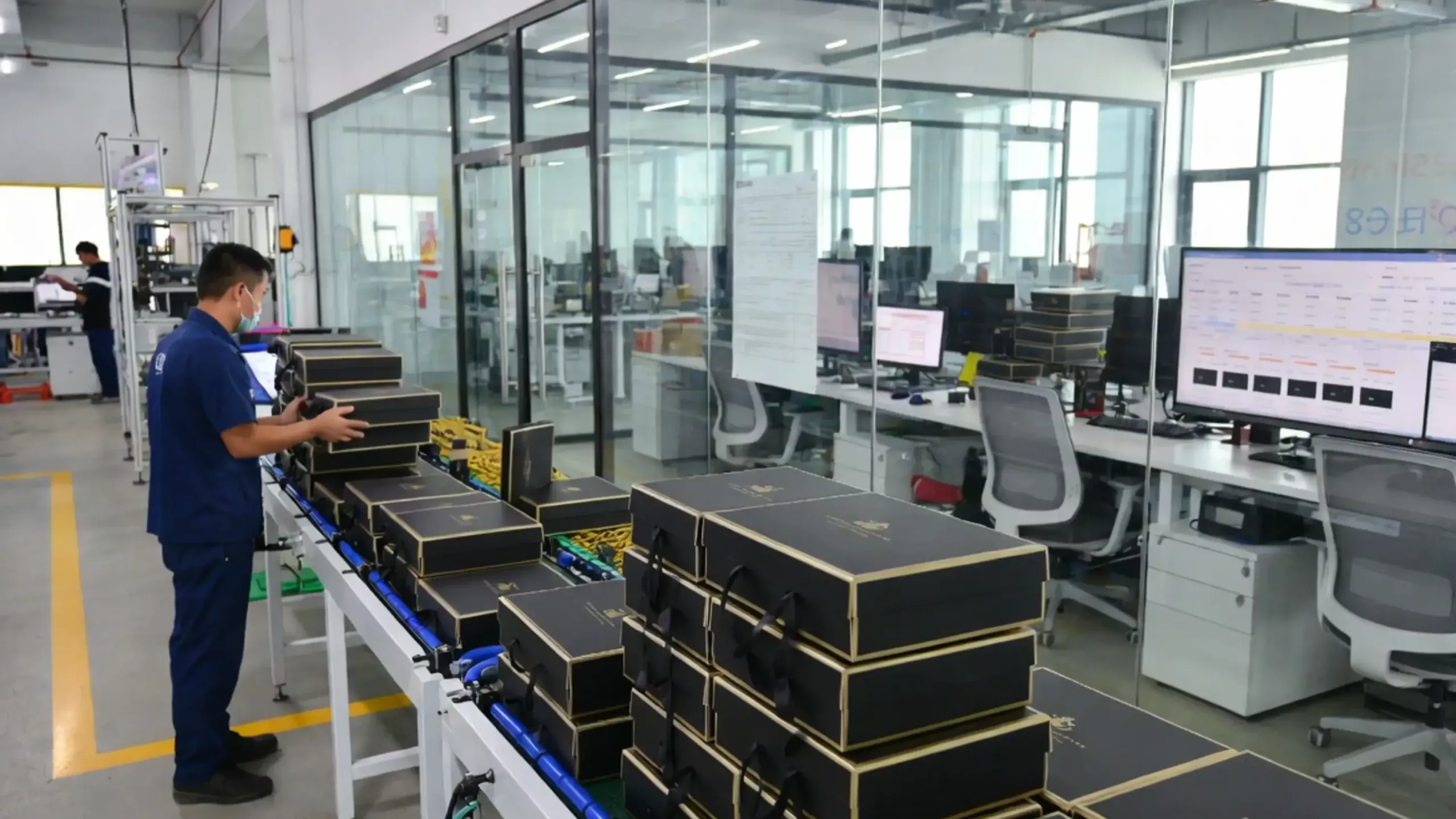
My team spent four weeks on the factory floor in China auditing 20 production lines and testing over 100 premium products. We engineered a fully automated, multi-tier gifting pipeline with CRM-integrated tracking.
1. Segment Accounts by Referral Potential: Accounts over $100k ARR qualified for the premium tier. Standard clients received a foundational appreciation kit.
2. Choose High-Utility Gifts: We selected premium tech accessories, top-grain leather travel organizers, and curated desk kits — high-density materials executives actually keep on their desks.
3. Source Factory-Direct:  Manufacturing Manager Wei shortlisted five Shenzhen factories, comparing pre-production digital samples side-by-side for seam quality, lead times, MOQs, and landed costs. Three suppliers were rejected because their laser engraving burned the PU leather, leaving a charred smell. The selected facility accepted 500-unit orders during off-season (January to March), bypassing the standard 2,000-unit MOQ.
4. Run Compliance and Quality Control: QC Auditor Zhang executed strict AQL 2.5 audits. He verified CE and CPSIA safety standards, ran mandatory RoHS and Prop 65 reviews. During a 3-foot drop test, standard ABS plastic cracked instantly. Upgrading to high-impact polycarbonate added $1.10 per unit but dropped the defect rate to 0%.
5. Standardize Presentation: Matte black rigid boxes with custom-cut EVA foam inserts. Logo placed exclusively on the inside lid via UV spot gloss. Handwritten thank-you cards on 300gsm cardstock.
6. Automate Fulfillment:  When a client hits a one-year milestone, submits a qualified referral, or closes a major project, the CRM fires a fulfillment webhook to the warehouse.
7. Sync with CRM: A custom dashboard tracks send date, gift tier, account owner, referral source, opportunity creation, and follow-up date. Accounts without a logged sales interaction within seven days get flagged for review.
8. Follow-Up Sequence: The account owner calls exactly three days after delivery. No business asks — just genuine appreciation. The premium unboxing experience drives reciprocity.
ROI Formula: (Attributed gross profit - Total program cost) / Total program cost, where program cost = Product Base + Logistics + Custom Fulfillment.
Results
Within six months, total qualified referrals grew by 40%. Data Analyst Chen defined "qualified referral" as a new account booking a discovery call within 30 days of introduction.
| Metric | Before | After |
|---|---|---|
| Pipeline Volume | 120 referrals/quarter | 168 referrals/quarter |
| Referral-to-Opportunity Close Rate | 12% | 22% |
| Inbound Referral Spike (90 days) | Baseline | 30% increase |
| Procurement Cost | Baseline | 28% reduction |
Average gift costs: $35 for standard tiers, $115 for premium items. Cost per qualified referral: $210. Logistics Manager Lin swapped rigid gift boxes for lightweight custom-molded EVA inserts, dropping shipping fees by $4 per unit.
Chen matched delivery timestamps to opportunity creation dates, finding consistent pipeline uplift five to seven days after every delivery event. The resulting 22% close rate significantly outperforms standard outbound campaigns.
Director of Account Management Sarah highlighted the operational shift:
"I used to waste weekends tracking lost shipments of cheap mugs. Now, the CRM automates the logistics, and the premium quality instantly reopens stalled enterprise conversations."
Benefits
- 40% Referral Lift Drives Predictable Revenue: Every 168 quarterly referrals at a 22% close rate creates a measurable, repeatable pipeline that outpaces standard outbound campaigns.
- 30% Inbound Spike Reduces Customer Acquisition Cost: Less reliance on expensive outbound prospecting means the gifting program partially pays for itself through organic lead generation.
- Zero Brand Risk Enables Safe Scaling: Factory-floor AQL 2.5 audits and compliance reviews eliminate the reputational damage of defective gifts, so the program can expand to more accounts without quality erosion.
- $4 Per-Unit Shipping Savings Compounds at Scale: Lightweight EVA inserts replace rigid boxes, translating to thousands in annual logistics savings as order volumes grow.
Key Takeaways
- Premium Utility Over Generic Volume: Enterprise executives discard cheap plastic items. Match a gift's physical utility to the account's actual value — premium utility always beats generic volume.
- Strategic Milestones Beat Calendar Dates: When fulfillment triggers shifted from generic holidays to contract milestones, client response rates doubled. Timing to advocacy moments drives reciprocity.
- Manufacturing Control Dictates Quality: Enterprise gifting quality is won or lost during sample approval, compliance review, and AQL release — long before shipment. Control these physical reviews to prevent brand disasters.
- CRM Tracking Converts Soft Spend to Hard ROI: Without CRM integration, leadership dismisses gifting as soft spend. Map every tracking link to a specific Salesforce opportunity to prove financial return.
Pro Tip: Mandate a pre-production digital sample for every order. Digital proofs often hide fatal material flaws.
Corporate gifts increase client referrals when the gift is useful, the timing is intelligent, the manufacturing is controlled, and the outcome is measured.