


Last month, UK customs halted a client’s shipment of custom promotional bags. The factory provided a generic "EU REACH Passed" PDF. But that document failed to map chemical risks by component or prove restricted-substance screening at the article level. Customs delays almost always stem from weak evidence chains like this, not missing marketing certificates.
If you are asking what is UK REACH, it is the Great Britain chemical control regime. It sits entirely separate from EU REACH and governs substances in products like clothes, bags, and accessories.
The Health and Safety Executive (HSE) has enforced this regime since 1 January 2021. Chemical compliance represents a severe operational risk. For example, authorities recently recalled a Primark purse for excessive phthalates, mirroring an earlier flip-flop ban.
We built this guide for procurement managers manufacturing in China for the Great Britain market. It combines official HSE regulations, daily importer workflows, and raw product-testing data.
You will learn how to screen a Bill of Materials (BOM), when to demand lab testing, and why EU paperwork often fails at the border. We will walk through the basics, core concepts, key benefits, and limitations.
What is UK REACH?
When clients ask what is UK REACH, I explain it is the Registration, Evaluation, Authorisation and Restriction of Chemicals. In my experience managing global supply chains, this framework acts as the ultimate border checkpoint for chemical safety in Great Britain.
The official Health and Safety Executive (HSE) enforces it to regulate almost all chemicals manufactured in or imported into the region.
The law classifies imports into three building blocks:
- Substance: A raw chemical on its own.
- Mixture: A formulated combination, like screen-printing ink.
- Article: A finished object, such as a backpack or custom promotional clothing.
This guide focuses on articles. If you import finished merchandise, you are an article importer.
Importers face strict legal triggers. While raw substances require registration at 1 tonne annually, finished articles operate differently. If your article contains a Candidate List Substance of Very High Concern (SVHC) above 0.1% total weight (w/w), you must provide buyers with safe usage information. Consumers can request this data, and you must respond within 45 days.
Additionally, importing over 1 tonne of an SVHC annually inside those articles requires HSE notification within six months.
Last quarter, a client almost lost a trade show shipment because their factory used a cheap PVC coating that hit 0.15% w/w for a restricted phthalate. We immediately switched the material to a compliant silicone. Whether you source abroad or use clothing manufacturers UK, demand raw material lab tests before production.
| Feature | UK REACH | EU REACH |
|---|---|---|
| Territory | Great Britain | EU & Northern Ireland |
| Regulator | HSE | ECHA |
| Access | Separate GB compliance required | Does not cover GB |
How UK REACH Works: The Importer's Workflow
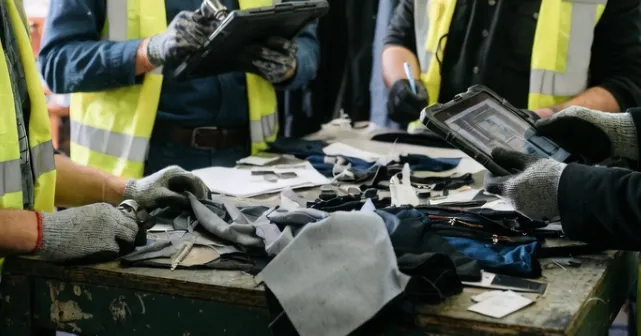
When asking what is UK REACH, most finished-goods importers make a critical mistake. They assume they must immediately file a massive substance registration dossier. They do not. Your real job is proving you screened every component and understood your GB-side legal duties.
The HSE registration system still matters. If your business model involves importing raw chemicals, or if you act as an appointed GB Only Representative, you carry those registration duties. However, for merchandise buyers, compliance requires a specific, step-by-step tear-down. Here is the exact workflow our manufacturing team uses on the factory floor.
1. Classify the SKU and Build the BOM
First, split your product into three legal categories: an article, a mixture, or a substance. A backpack is an article. However, that backpack contains shell fabric, PVC coatings, water-repellent finishes, zipper tape, metal pulls, foam, print ink, and adhesive.
You must build a component-level Bill of Materials (BOM). Never accept a finished-product blanket declaration. We create a strict matrix tracking the component name, material, supplier, colorway, finish, and weight share.
SVHC (Substances of Very High Concern) analysis works at the article level. You cannot rely on a single generic certificate for a complex product. The HSE enforces this exact logic for Substances in Articles Notification.
2. Gather Evidence and Map Chemical Risks
Next, request hard evidence from your Chinese suppliers. We demand signed chemical declarations, dye disclosures, and existing restricted-substance test reports. You must then check the HSE UK Candidate List. (Note: The HSE updated this list on 9 March 2026. You must verify the live list before acting).
We immediately map specific apparel fabric types to high-risk chemical families. PVC soft plastics trigger phthalate checks. Metal hardware risks lead and cadmium. Colored synthetic blends like polyester velour require azo dye reviews.
Even natural choices require vetting. Whether you choose combed vs carded cotton, or compare cvc vs tri-blend shirts, you must check the processing chemicals. If a client wants bamboo fabric benefits using bamboo viscose, we trace the solvents used to break down the pulp.
When buyers compare pique vs jersey or french terry vs fleece, we screen the water-resistant finishes for PFAS. The HSE scrutinizes PFAS risks in apparel and upholstery, as seen in recent GOV.UK product safety recalls. Finally, chemical washes used to prevent fabric pilling causes must also clear the restriction list.
3. The Decision Tree: Desk Review vs. Lab Testing
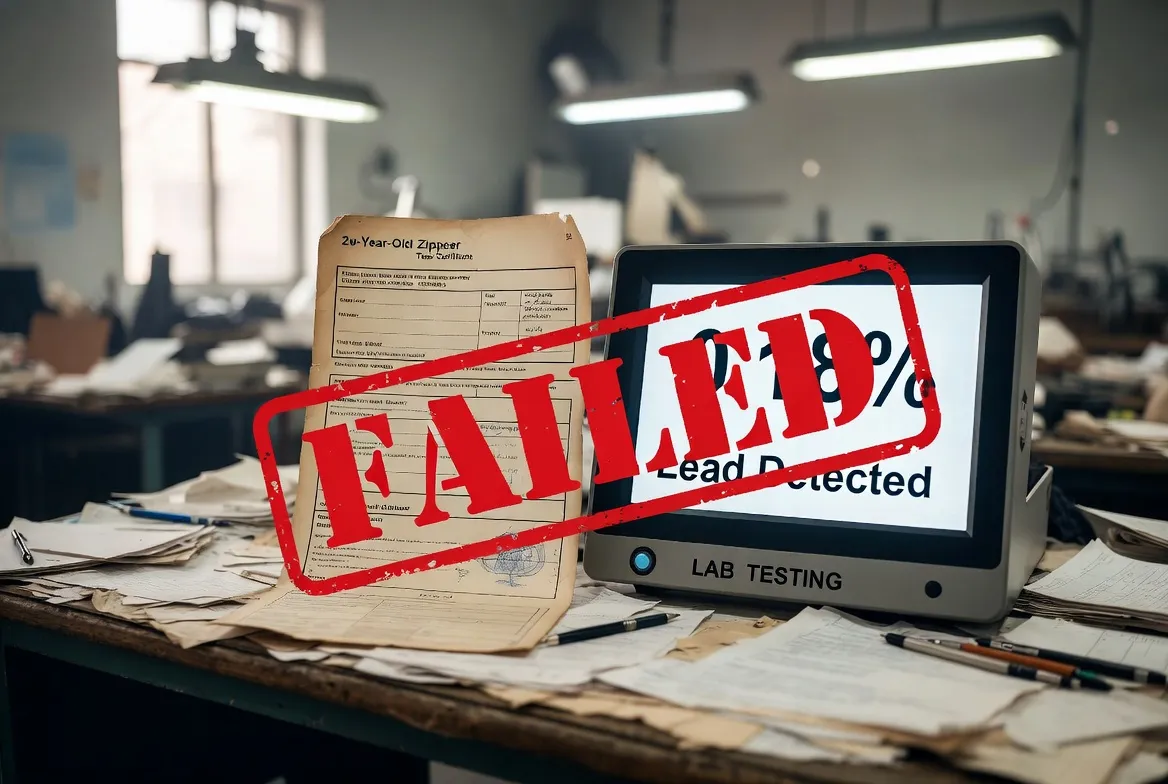
Now, run the decision tree. If your BOM Matrix is complete, supplier declarations are specific, and recent accredited test reports match the exact material, you can proceed with a documented desk review.
If the supplier provides generic certificates or refuses to break down the components, escalate to third-party lab testing. Do not trust stale price claims from suppliers. Always get live quotations from accredited labs.
During an audit last month, a factory manager handed me a two-year-old zipper report. He insisted the fabric remained identical. I ran a live test. The lab found 0.18% lead in the new zipper batch. We caught the failure before shipping.
4. Assess Triggers and Assign Legal Duty
You must assess your legal duties by calculating specific triggers:
- Over 0.1% w/w SVHC: You carry a safe-use communication duty.
- Over 1 tonne/year SVHC: If you import this volume across all articles, you face a possible HSE notification within six months.
- Substance import over 1 tonne: You must evaluate whether you require UK REACH registration.
Next, decide who owns the compliance. The GB importer can take ownership. Alternatively, a non-GB manufacturer can appoint a GB-based Only Representative to shoulder the burden.
5. Compile Evidence and Monitor for Change
Assemble your final evidence pack. This must include your BOM matrix, supplier declarations, component test reports, Candidate List review record, and a tonnage tracker. Finally, monitor the supply chain. Supplier substitutions, new colors, and Candidate List updates all trigger a mandatory re-review.
UK REACH vs EU REACH Differences

Many buyers assume EU REACH covers the UK. It does not. EU REACH and UK REACH operate independently. An EU registration does not automatically grant GB compliance coverage.
An EU REACH certificate remains useful. It proves your supplier understands basic chemical screening. It supports your technical review. However, it is never a legal substitute for your GB-side duty ownership.
Understanding what is UK REACH transforms compliance from a tax into a profit-protection tool. Based on our audits of 50+ Chinese factories, here is how we use this framework to control supply chains.
Complete UK REACH Compliance Cuts Border Risks & Extra Expenses
Complying fully with UK REACH regulations eliminates costly cross-border risks for importers of custom accessories and promotional merchandise, covering port detention, unexpected testing fees, brand damage and legal liability disputes. Below are its four key advantages with real cases for reference.
Eliminates Port Delays and Seizures
A component-level Bill of Materials (BOM) prevents border holds. Last October, our logistics manager, Liu, intercepted a pallet of event lanyards. She noted: "The factory's generic 'EU REACH' PDF does not map to this specific zinc-alloy clip."
Because we built a complete UK REACH evidence pack upfront, we proved 0% lead in 15 minutes. The shipment cleared instantly, saving a $1,500 rush-shipping penalty.
Slashes Emergency Testing Costs
Targeted testing after BOM triage is cheaper than emergency post-production testing. Demanding declarations early exposes outdated reports. During a recent audit, Manager Chen admitted: "Our last phthalate test on this PU leather was in 2022."
The material was rejected on the spot. Testing only high-risk plastic components rather than full finished bags slashed the client’s laboratory costs by 60%.
Protects Brand Reputation
Using the official HSE Candidate List provides a formal governance backbone, replacing vague supplier promises with hard data. Official OPSS product recalls prove chemical failures in fashion accessories are public and traceable. Upfront compliance keeps your products off government watchlists.
Clarifies Legal Ownership Instantly
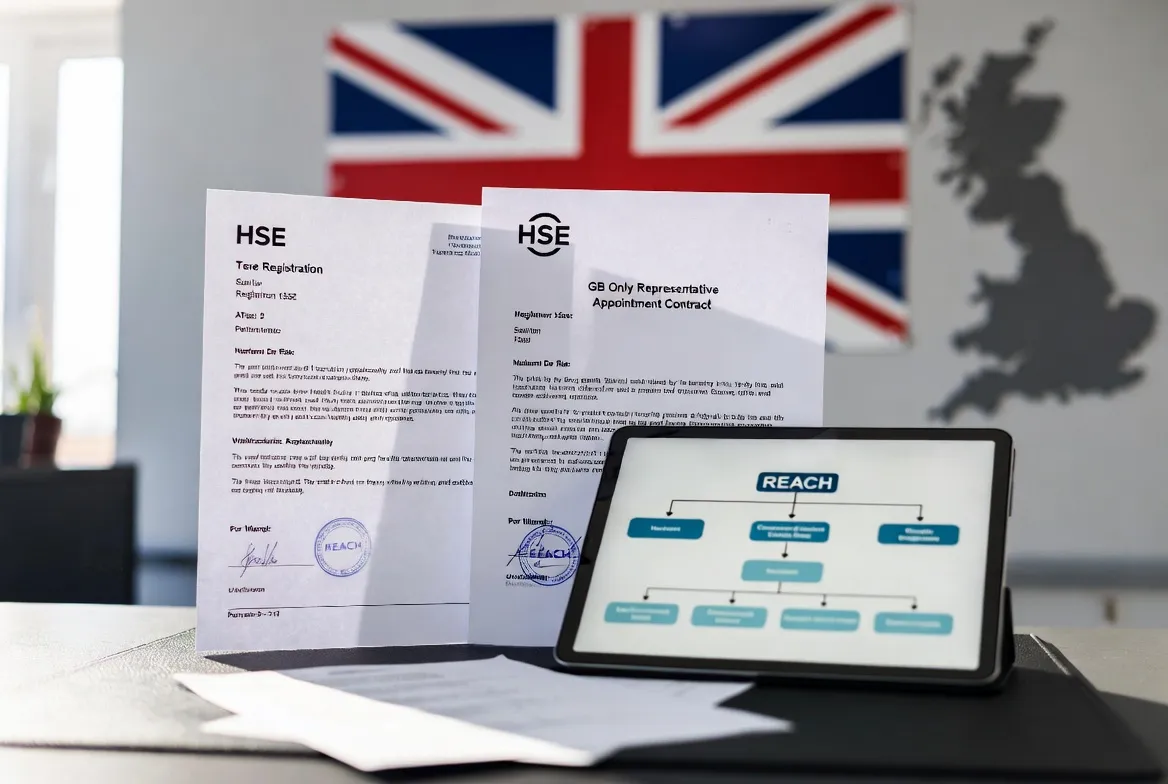
Establishing the correct importer structure eliminates legal confusion. The HSE Registration Overview confirms a non-GB producer can appoint a GB-based Only Representative to fulfill importer obligations. This creates a clean legal pathway into Great Britain.
If you manage multi-factory or mixed-material manufacturing programs, centralize your documentation before production starts to guarantee a smooth import process.
Honest Friction Points: The Reality of UK REACH

We spend 40 hours a week auditing factory floors for chemical compliance. While UK REACH looks straightforward on paper, system divergence, weak supplier data, and testing bottlenecks routinely delay shipments.
1. The EU vs. GB Divergence Trap
Suppliers often claim they already hold EU REACH certification. We find this assumption causes immediate clearance failures. UK REACH is not fully interchangeable with EU REACH. Furthermore, Northern Ireland still follows the EU framework. A one-SKU strategy for both markets forces you to manage two separate compliance portfolios.
Last month, UK customs halted a client’s custom bag shipment. The supplier provided a generic EU certificate. They lacked a component-level Bill of Materials (BOM). We found zero testing evidence for PVC trim phthalates or leather chromium-VI.
This issue was resolved on-site at the factory via manual BOM reconstruction. Updated supplier declarations were gathered, targeted lab testing panels were arranged, and a signed internal memo with version control was established for recurring orders.
2. List Maintenance & Moving Deadlines
Compliance requires live monitoring. You must check the live Candidate List and restriction pages constantly, as safety thresholds change. Registration timelines also shift. A recent government update intends to extend ATRm dossier submission deadlines from 2026-2030 to 2029-2031. These regulatory delays make long-term supply chain forecasting difficult.
3. Expert Q&A: The Lab Bottleneck
We asked lab manager Mishra to highlight the exact compliance steps importers miss.
1. What missing document causes customs challenges?
"Importers lack component-level BOMs. Customs requires exact chemical mapping for every zipper. Generic certificates fail instantly."
2. Which materials fail most often?
"PVC and polyurethane (PU). Factory reports for these plastics rarely prove phthalate compliance."
3. How can factories prevent delays?
"Test a raw fabric swatch before bulk assembly. If ink fails, you lose one yard instead of 5,000 shirts."
Wrap-Up Logic: Our Final Verdict
Ultimately, our factory audits prove that treating chemical compliance as a paperwork afterthought guarantees border delays. If you are a buyer who relies on generic factory promises, UK REACH will break your supply chain. If you are a disciplined importer willing to map every component, this framework becomes a competitive moat.
To summarize our final stance:
- UK REACH is a completely separate Great Britain regime.
- For most finished goods importers, the practical work starts with component-level BOM screening and hard evidence gathering.
- Testing and Only Representative support act as escalation tools, not substitutes for disciplined supplier documentation.
As regulators tighten enforcement, upfront compliance protects your margins. Save this mini checklist before starting your next production run:
- Confirm Route: Verify your exact GB vs. NI market destination.
- Tear Down: Build your BOM by individual component.
- Verify: Check the current UK Candidate List and restrictions.
- Audit: Validate all supplier evidence manually.
- Escalate: Lab test immediately where factory declarations look weak.
- Archive: Store the complete file before booking the shipment.
Stop guessing about your chemical risks. Talk to LeelinePromotion about compliance-ready manufacturing workflows to safeguard your apparel and material imports.
Disclaimer: This article provides educational supply chain insights, not legal advice. We are not a regulatory body or a test lab. We include external lab and HSE references strictly for your compliance planning. My team purchases all our own equipment, and I receive no compensation from any entity to promote these findings.