
Most uniform program failures stem from vague product specifications and confusing factory terminology—especially when ordering custom promotional clothing. We solve this by mapping types of clothing against a strict four-point logic: structure, dress code, season, and audience fit. For every item, we provide clear definitions, best-fit decoration methods, and critical textile performance standards to monitor. Use the labeled diagrams and terminology guide below to ensure your bulk factory orders match your campaign requirements.
Types of Clothing Comparison
| Types of Clothing | Structure | Dress Code | Season | Audience Fit |
|---|---|---|---|---|
| 1. T-Shirts | Crewneck/V-neck, set-in sleeves | Casual | All/Summer | Events, teams, giveaways |
| 2. Polo Shirts | Piqué knit, collared placket | Business casual | All | Office, retail staff |
| 3. Hoodies/Sweatshirts | Hooded/crewneck, fleece-lined | Casual/relaxed | Fall/Winter | Remote work, clients |
| 4. Jackets/Outerwear | Layered shells, zippers | Professional/outdoor | Winter | Field teams, executives |
| 5. Caps/Beanies | Structured panels, adjustable | Casual | All/Winter | Events, retail |
| 6. Performance/Activewear | Stretch blends, athletic cut | Sporty casual | Summer | Marketing teams, runs |
| 7. Workwear/Safety | Reinforced twill, hi-vis | Industrial | All | Field ops, compliance |
| 8. Aprons | Bib/waist, pocketed canvas | Service uniform | All | Catering, demos |
| 9. Socks | Knitted tube, cushioned | Accessory | All | Culture gifts, kits |
9 Types of Clothing
1. T-Shirts (Crewneck, V-Neck, Long Sleeve): The Universal Base Layer

The t-shirt is the default canvas for promotional apparel. It offers the best cost-per-impression, but cheap options fail. Scratchy fabrics become pajamas. To ensure public wear, choose combed ring-spun cotton with a soft "hand-feel."
For smart-casual codes, elevate the item with a premium blank and a subtle left-chest logo rather than a massive front print.
Customization Guide
- Screen Print: Lowest cost for bulk production runs (500+ units).
- DTG (Direct to Garment): Best for complex, multi-color art on 100% cotton.
- DTF (Direct to Film): Essential for durability on synthetic blends or athletic fabrics.
Quality Checklist
- Opacity: Select 180gsm or higher fabric so white shirts aren't transparent.
- Recovery: Ensure collars are ribbed to prevent sagging.
- Sizing: Order a full curve from XS–3XL.
- Fit: Split orders 60/40 between Unisex and Women’s cuts.
2. Polo Shirts: Business-Casual Uniforms That Still Feel Approachable
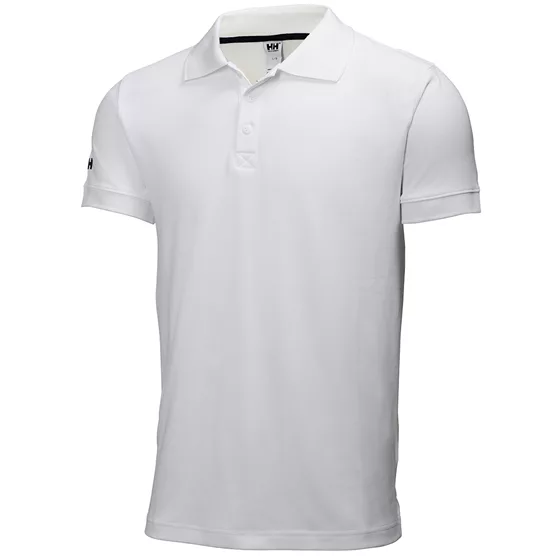
Polos solve the "too formal vs. too casual" dilemma. They bridge the gap between gym clothes and dress shirts, making them the standard for retail floors, event staff, and onsite teams. Most feature textured piqué cotton or moisture-wicking poly blends.
Decoration Guidance Embroidery is the gold standard here. It adds a premium texture that screen printing lacks. However, stitch density adds weight. Heavy logos on lightweight fabrics (under 200gsm) will cause the material to sag or pucker. You must match the logo's thread count to the fabric's stability.
Fit & Quality Checks
- Collar Lay: Ensure the collar features "anti-curl" stays or construction to stay flat after washing.
- Placket Strength: Check for fused interfacing behind buttons to prevent tearing during daily use.
- Shrinkage: Piqué cotton shrinks. Order pre-shrunk versions or size up for longevity.
🧠 Expert Take: Resist the urge to over-brand. A compact left-chest logo signals professionalism, while massive designs often distort on textured knit fabric and ruin the garment's drape.
3. Hoodies & Sweatshirts
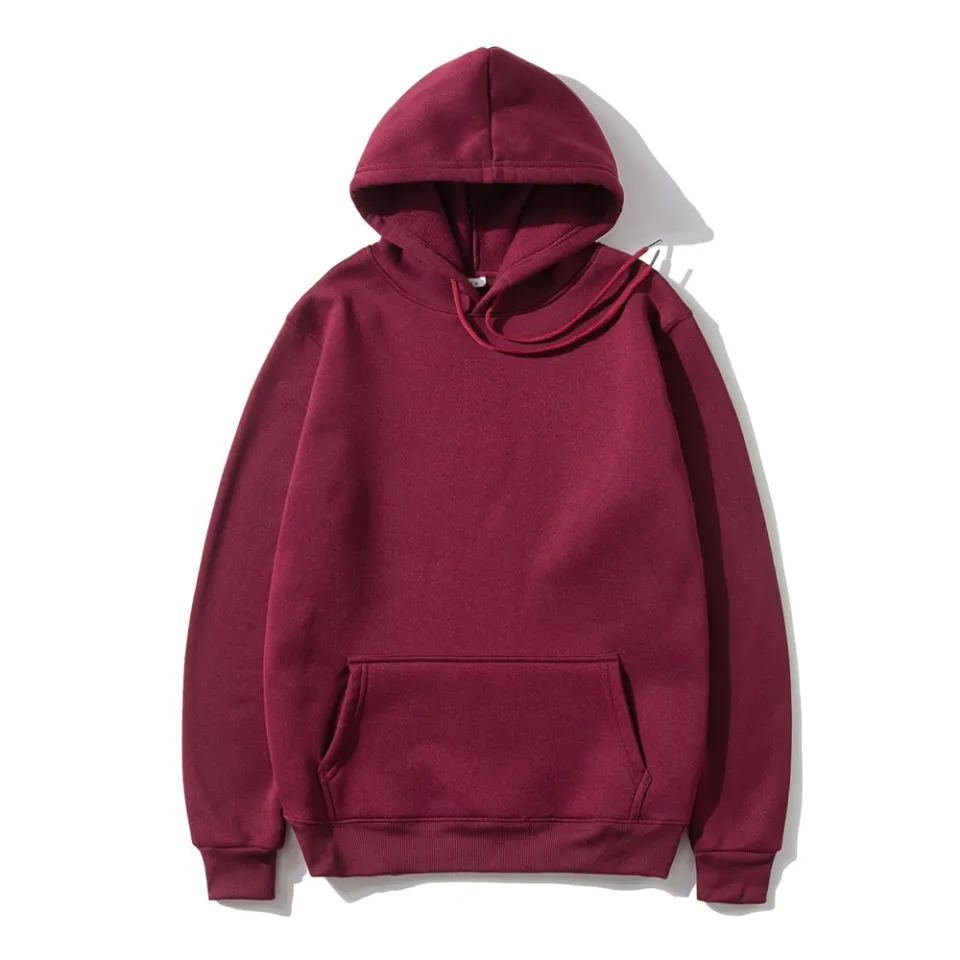
High-quality knits offer the best retention value of any promotional apparel. Crewnecks provide a professional silhouette for client calls, while hoodies are the default for remote work comfort.
Material Selection The interior texture dictates quality. Brushed Fleece traps heat with a fuzzy surface, making it ideal for winter events. French Terry uses looped piles for breathability and a smoother drape. To match the feel of premium retail brands, you must specify a fabric weight of at least 350 GSM.
See the structural differences in our guide on what is cotton terry.
Decoration Strategy Heavy knits support premium branding methods:
- Embroidery: Best for left-chest placement. The fabric weight prevents puckering around the stitches.
- Chenille Patches: Adds a tactile, high-value collegiate aesthetic.
- Screen Print: Restrict this to the back. Large ink layers on the front reduce breathability and create a stiff "sweat shield."
4. Jackets & Outerwear (Including the Trench Coat): Long-Life Branding With Real Authority
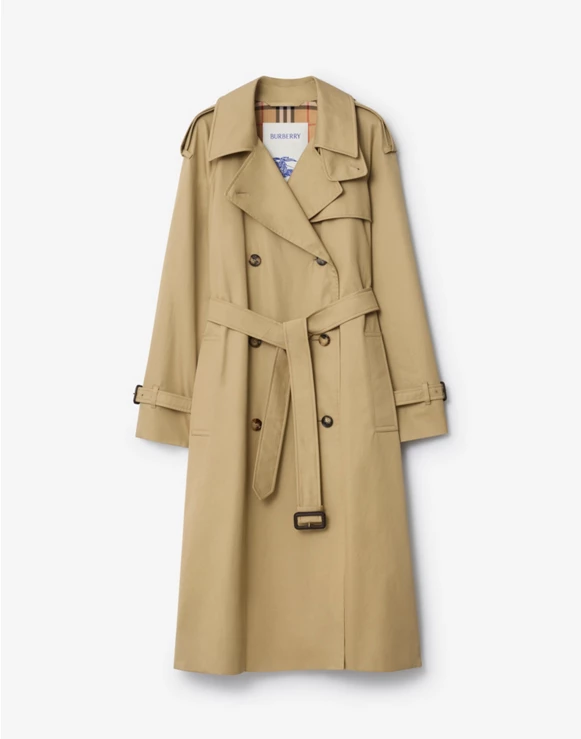
Outerwear delivers the highest long-term ROI among all types of clothing. A quality jacket often remains in a client’s wardrobe for five years.
- Field & Tech: Softshells and bombers suit active teams.
- Executive Gifting: The trench coat, developed for WWI officers, signals history and authority.
- Seasonal: Insulated puffers work best for holiday gifts.
Decoration Constraints Never embroider waterproof shells. Needles puncture the membrane and cause leaks. Use heat transfers or rubberized patches instead. For nylon puffers, use low-temperature transfers to avoid melting the fabric.
Durability Checklist
- Hardware: Demand YKK zippers. Cheap sliders fail first.
- Seams: Ensure waterproof items have taped seams to stop penetration.
- Reinforcement: Check for bar-tacking at pocket corners.
Design Corporate Jacket Program
5. Caps & Beanies: Eye-Level Branding With Small-SKU Logistics
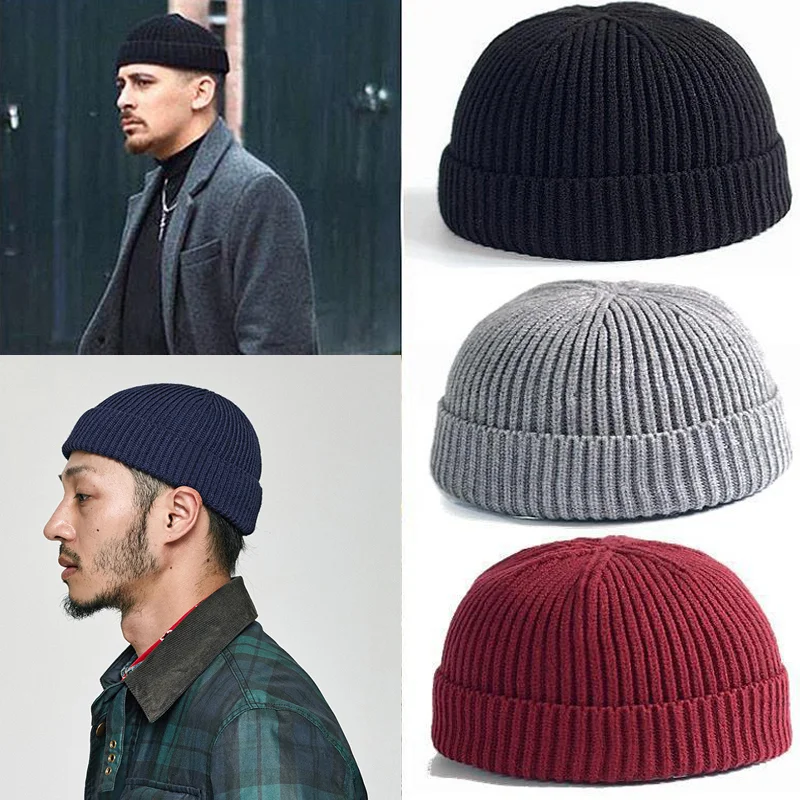
Headwear secures the most valuable real estate in branding—eye level—while eliminating the sizing nightmares associated with apparel. Unlike t-shirts, adjustable closures allow you to procure a single SKU for your entire headcount.
Structure & Selection
- Structured vs. Unstructured: Use structured caps (stiff buckram insert) for professional uniforms. Choose unstructured "dad hats" for relaxed, lifestyle merch.
- Panel Strategy: 5-panel caps remove the center seam, providing a smooth surface for screen printing. 6-panel caps offer a classic fit but require embroidery due to the center seam.
- Beanies: Select cuffed styles for a dedicated embroidery zone.
Decoration Constraints Embroidery is standard, but the cap’s curve limits precision. According to industry decoration standards, text smaller than 5mm often becomes illegible. For complex logos with fine text, switch to high-definition woven patches rather than direct stitching.
Logistics Advantage Headwear is a high-density add-on. Caps stack and beanies compress, allowing 150+ units per carton. This efficiency drastically lowers volumetric freight costs compared to bulky items like hoodies.
🚀 Actionable Insight: For mass events, specify plastic snapback closures to keep costs low. For client gifts, upgrade to cloth straps with metal buckles —it doubles the perceived value for pennies extra.
6. Performance & Activewear: Athleisure Styles That Feel Modern
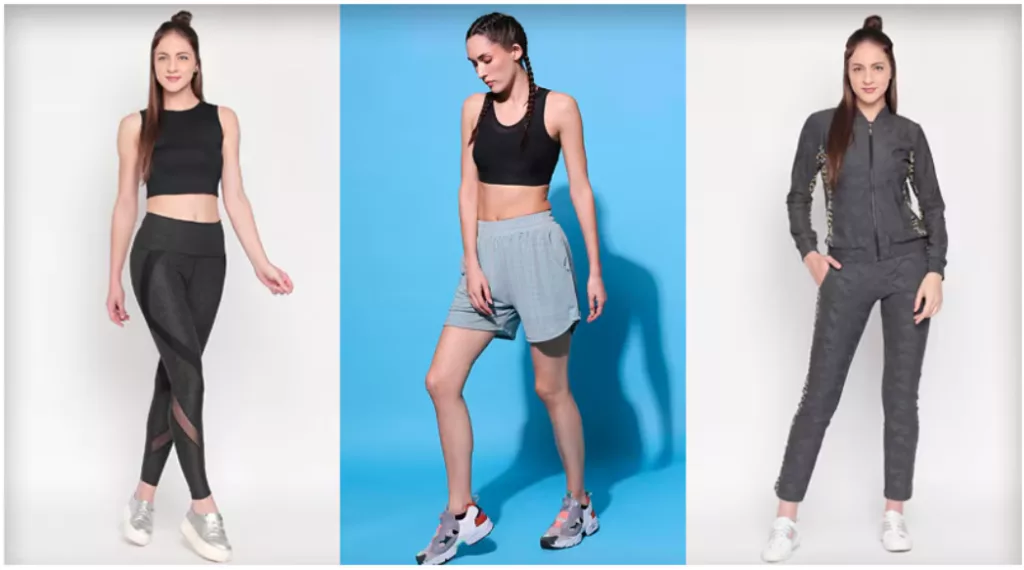
Athleisure—moisture-wicking tees, quarter-zips, and joggers—is now standard for field marketing teams and company charity runs. However, branding stretchy materials requires technical precision to avoid looking cheap.
Most activewear uses polyester/elastane blends. While durable, these synthetic fibers trap body oils. To avoid permanent "gym smell," insist on fabrics with certified antimicrobial finishes rather than just basic moisture-wicking capabilities.
Decoration matters most. Standard screen printing ink is rigid. When the shirt stretches, the logo cracks. For elastic gear, you must use Dye Sublimation (which fuses ink into the fiber) or Silicone Heat Transfers. These methods allow the branding to move with the wearer without peeling.
Finally, demand visual performance signals. Premium gear uses heat-sealed labels listing breathability stats and drying time, not scratchy neck tags.
Schedule Activewear Consultation
7. Workwear & Safety Apparel: Uniforms & Risk Management
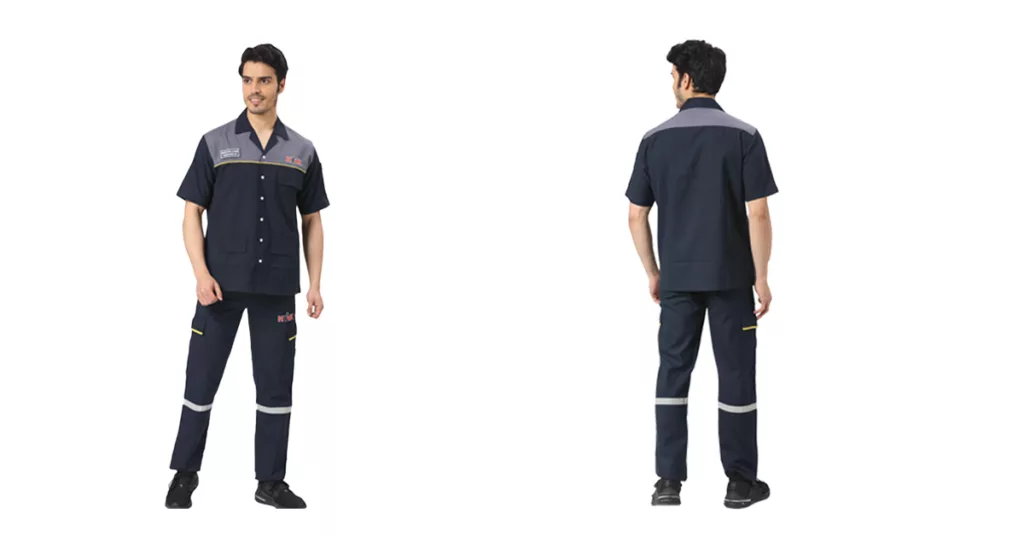
Safety apparel is a compliance asset, not a giveaway. Cheap construction creates liability. Defective gear signals incompetence and risks safety violations.
Core Requirements
- Work Shirts: Source heavy-duty twill or canvas with stain-release finishes.
- Hi-Vis Vests: Verify compliance with ANSI/ISEA 107 standards. Do not print logos over reflective strips.
- Coveralls: Mandate reinforced elbows and knees for shop environments.
Decoration & Durability Industrial laundry machines use high heat and harsh chemicals. This destroys standard screen prints. Specify embroidery or sewn-on patches. Adhesive heat transfers will peel after minimal washes.
The QC Inspection
- Tolerances: Reject sizing variations exceeding 0.5 inches.
- Seam Strength: Conduct a "pull test." If threads show (seam slippage) under tension, the garment fails ASTM D1683 standards.
- Labeling: Safety rating tags must be permanent and legible.
8. Aprons: The Underestimated Uniform Essential for Food, Beverage, and Demos
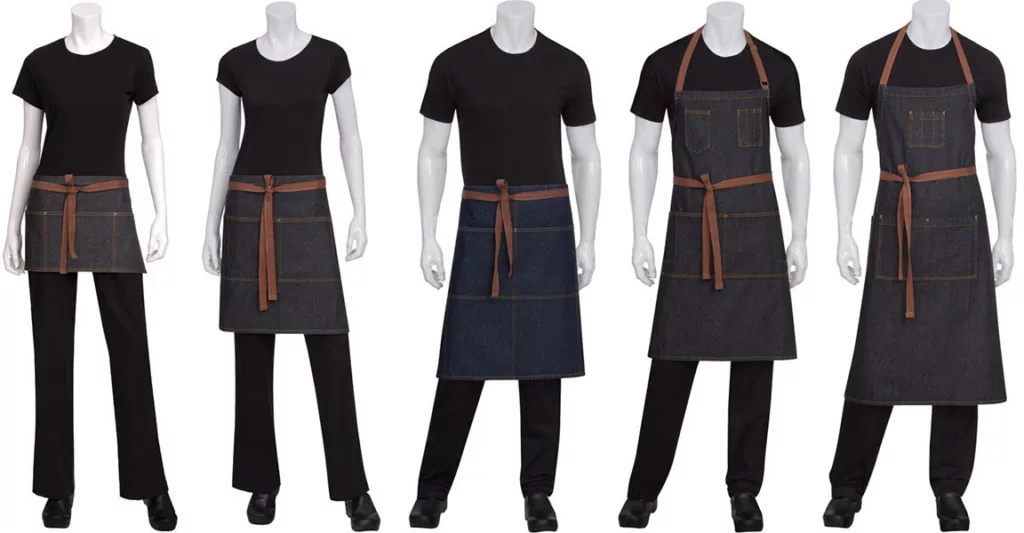
Aprons professionalize temporary staff instantly without the hassle of collecting shirt sizes. They turn street clothes into a cohesive brand look, making them ideal for catering teams and product sampling stations.
Select the Right Cut and Fabric
- Bib vs. Waist: Use bibs for food prep and maximum branding space. Use waist aprons for servers who need mobility.
- Material: Choose a heavy canvas for a premium "craft" look. Opt for industrial poly-cotton blends for better stain resistance and wrinkle control.
The Utility Checklist
- Decoration: Embroider logos high on the chest to stay visible above service counters. Never screen print over seams, as ink will crack.
- Hardware: Standard stitching fails under stress. Demand metal rivets at pocket corners.
- Storage: Ensure pockets are deep enough to hold mobile POS terminals securely.
9. Socks: The Low-Risk Accessory
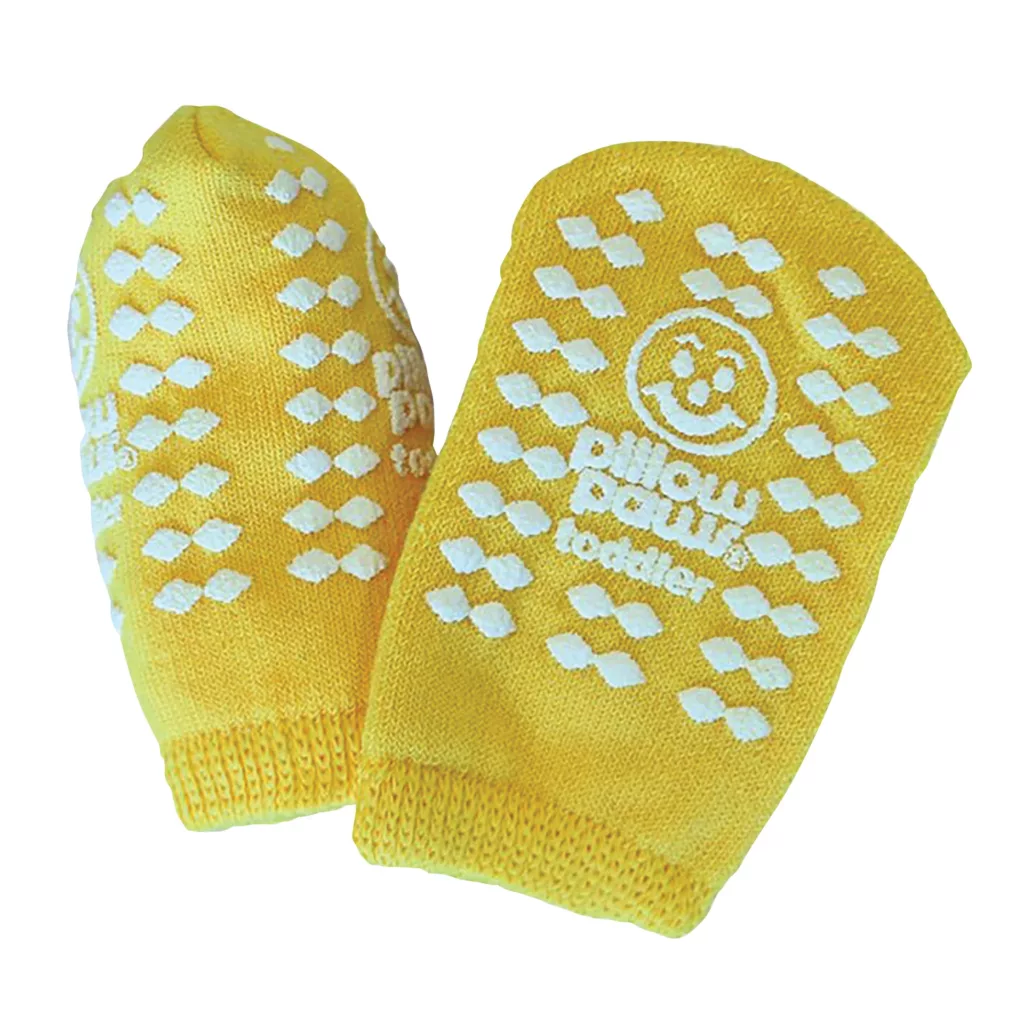
Socks eliminate the sizing panic. Unlike other types of clothing, you do not need to collect measurements for 500 employees. They fit almost everyone and add a fun, "culture-first" element to your brand without looking unprofessional.
The Technical Metric: Needle Count
Socks are knitted, not printed. The design resolution depends on the needle count, similar to pixels on a screen.
- 144 Needles: Standard athletic socks. Good for thick cushioning, but logos will look blocky.
- 200 Needles: Dress sock quality. Use this for crisp text and complex patterns.
Decoration and Kitting
Never embroider socks. The backing scratches the ankle. Instead, use Jacquard knitting to weave designs directly into the fabric structure. Keep logos simple to prevent distortion when stretched. For a high-impact kit, bundle socks with hoodies or unique items found through sunglass manufacturers in South Africa for summer events.
Scale Your Promo Apparel Today
⚡ Power Move: Design a custom paper sleeve. This packaging costs pennies but instantly makes the socks feel like a high-end retail product.
Strategic Apparel Sourcing Guide
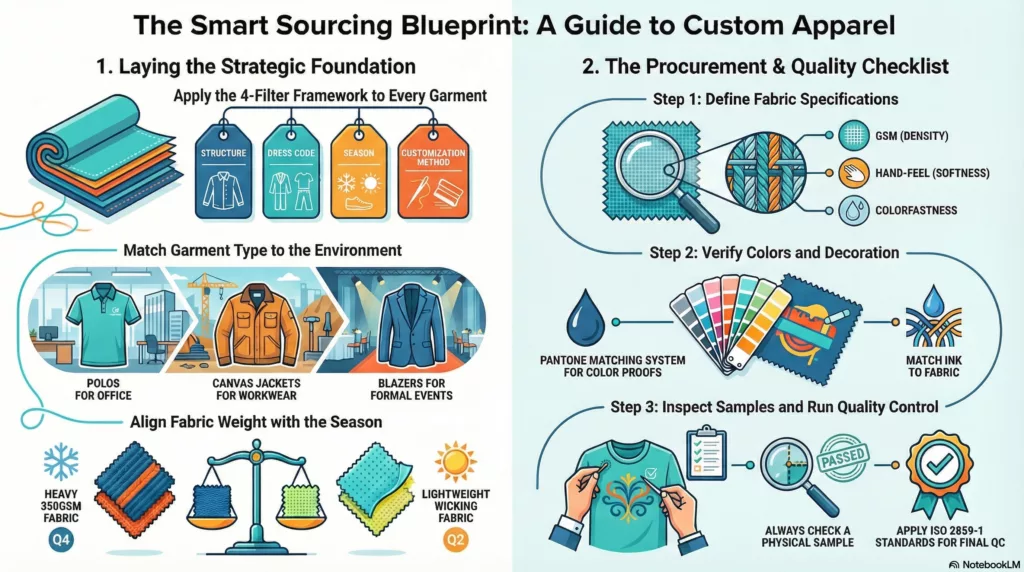
Use four filters to tag every garment: structure, dress code, season, and customization method. This framework prevents expensive errors when sourcing custom promotional clothing, such as selecting heavy fleece for a summer campaign.
Dress Code and Season Mapping
Match the garment type to the business environment and time of year.
- Formal: Select structured button-downs or blazers for galas.
- Business Casual: Use polos and quarter-zips for office teams.
- Workwear: Source canvas jackets and safety vests for field operations.
- Seasonal Strategy: Order heavy 350gsm layers for Q4. Switch to lightweight, moisture-wicking fabrics for Q2.
- Style Directions: Define the brand aesthetic (Minimalist, Streetwear, Heritage) before sourcing to ensure campaign cohesion.
The Buyer’s Technical Glossary
Speak the factory's language to negotiate better specifications.
- Raglan Sleeve: Extends to the collar for better arm movement.
- Set-in Sleeve: Standard shoulder seam for professional looks.
- Bias Cut: Fabric cut diagonally to drape over the body.
- Darts: Folds sewn into fabric to tailor the fit.
- Gusset: Extra fabric patch added for roominess.
- Placket: Double fabric layer that holds buttons.
- Interfacing: Stiff material inside collars to maintain shape.
- Topstitching: Visible stitching for reinforcement.
- Welt Pocket: Opening reinforced with a narrow fabric strip.
- Yoke: Shoulder panel that supports the garment.
- Nap: Direction of texture on fabrics like velvet.
- GSM: Grams per Square Meter. Measures fabric density.
- Piqué: Textured knit standard for polo shirts.
- Rib Knit: Stretchy fabric on cuffs to retain shape.
- Selvage: Finished edge that prevents unraveling.
- Crocking: Excess dye rubbing off onto other surfaces.
- Colorfastness: Resistance to fading or bleeding.
- Shrinkage: Size reduction percentage after washing.
- Hand-feel: The tactile softness of the fabric.
- Silhouette: The overall shape of the garment.
Procurement Checklist
Follow this strict sequence to ensure commercial viability.
- Audience: Define the specific end-user.
- Fabric: Check GSM ratings. Consider bamboo viscose for sustainable softness.
- Decoration: Match ink types to fabric stability.
- Proofs: Verify colors using the Pantone Matching System.
- Sample: Inspect physical pre-production units.
- QC: Apply ISO 2859-1 (AQL 2.5) standards to limit defects.
- Delivery: Confirm logistics timelines with buffer days for customs clearing.
Frequently Asked Questions for Types of Clothing
Q1. What are the main categories in a garment classification list?
Garment classification relies on structure rather than style. The core taxonomy includes tops (shirts, polos), bottoms (pants, shorts), outerwear (jackets, coats), one-piece (jumpsuits, dresses), activewear, and accessories (headwear, socks). Attributes like "business casual" or "winter" are separate tags used to filter these categories for specific campaigns.
Q2. What types of clothing work best for corporate events or trade shows?
For maximum ROI, use a three-tier stack. Start with a polo or premium tee as the base uniform. Add a structured cap for eye-level branding. Finally, offer a quarter-zip or hoodie as a high-value gift for VIPs. Cheap items end up in the trash; high-quality layers get worn weekly, increasing your cost-per-impression.
Q3. What’s the best decoration method for different fabrics?
Match the method to the material weight. Use embroidery for stable fabrics like polos, jackets, and caps. Use screen printing for 100% cotton t-shirts. Use dye sublimation for polyester performance wear to prevent ink cracking. Caution: Never embroider waterproof rain shells, as the needle holes will cause leaks.
Q4. How do we reduce risk when ordering custom promotional clothing in bulk?
Risk management requires strict checkpoints. First, demand a digital proof to verify logo placement. Second, order a physical pre-production sample to test fabric quality and color accuracy. Third, request a "size set" (one of each size) to confirm fit consistency. Finally, apply AQL 2.5 quality standards before the goods leave the factory.
Q5. Can you help source and customize multiple types of clothing in one order?
Yes. We act as a super-connector, sourcing hats, hoodies, and socks from specialized factories and consolidating them into one shipment. This ensures consistent branding across all items and simplifies your logistics.