
Many suppliers claiming to be producers are actually importers adding markups in Cape Town or Sandton. This B2B directory connects optometrists, boutiques, and pharmacies with legitimate custom promotional sunglass manufacturersin South Africa for 2026 inventory.
We rigorously verify each sunglass manufacturers company’s status to distinguish true assemblers from re-sellers and confirm adherence to SABS safety standards for UV protection. Use this list to secure compliant stock and protect your margins.
Comparison of sunglass manufacturers in South Africa (Table)
| No. | Company | Type | Best For | Location | Rating |
|---|---|---|---|---|---|
| 1 | Torga Optical | Vertically integrated producer | Clinics prioritising prescription sunwear speed | Cape Town & national network | ⭐️⭐️⭐️⭐️⭐️ |
| 2 | Ocean Eyewear | Local brand, offshore manufacturing | Retailers wanting one supplier for multiple user groups | Cape Town-based brand reach | ⭐️⭐️⭐️⭐️ |
| 3 | Brentoni | Brand owner & importer | Pharmacies seeking quick rotating displays | Originally Cape Town; Sandton sales hub | ⭐️⭐️⭐️⭐️ |
| 4 | Damar Optical | Wholesale distributor | Practices needing rapid basket top‑ups | Johannesburg‑centred operations | ⭐️⭐️⭐️⭐️ |
| 5 | Moscon Optics | Licensed brand distributor | Stores prioritising official brand programs | Johannesburg area focus | ⭐️⭐️⭐️⭐️⭐️ |
| 6 | Lensco | Trade supplier / assembler | Buyers balancing budget with consistent stock flow | Durban logistics base | ⭐️⭐️⭐️ |
| 7 | Ballo Eyewear | Boutique sustainable maker | Premium eco‑narrative collections and gifting | Cape Town workshop presence | ⭐️⭐️⭐️⭐️⭐️ |
| 8 | Execuspecs | Retail franchise | Suppliers studying local mid‑to‑premium taste | South Africa, head office in Gqeberha area | ⭐️⭐️⭐️⭐️ |
| 9 | Spec-Savers South Africa | Retail optical chain | Vendors targeting national programmes | Port Elizabeth (Gqeberha) origin | ⭐️⭐️⭐️⭐️⭐️ |
| 10 | Sunglass Hut South Africa | Premium retail chain | Benchmarking global pricing and luxury specs | South Africa network under Luxottica SA | ⭐️⭐️⭐️⭐️⭐️ |
1. Torga Optical (Vertically Integrated Manufacturer)
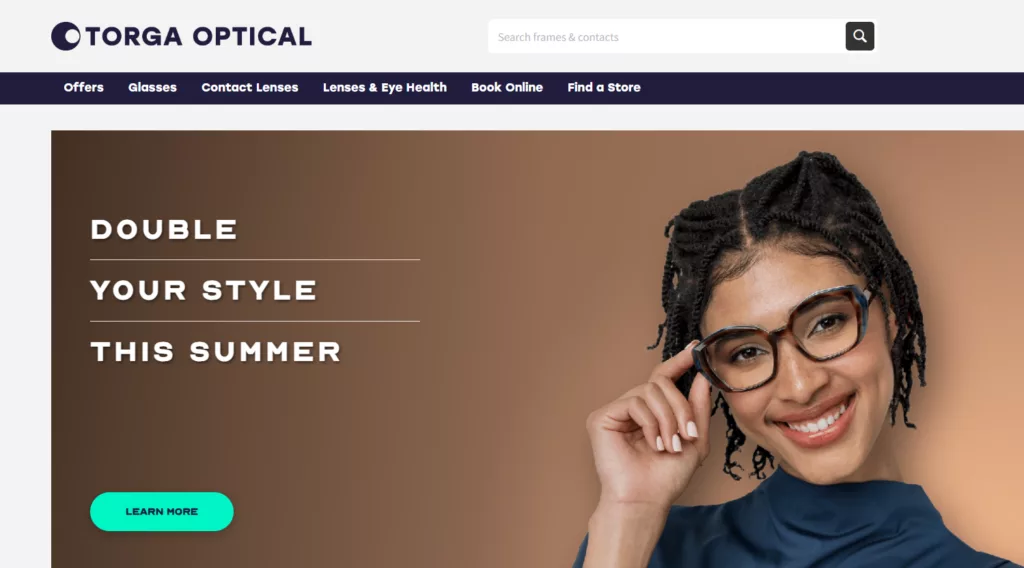
Torga Optical is the most operationally capable option on this list. While many competitors strictly import finished goods, Torga owns its supply chain and operates a lens manufacturing facility in Maitland, Cape Town. This vertical integration allows them to design frames in-house and handle lens surfacing and edging locally, eliminating the long lead times associated with international shipping.
B2B Buyer Notes: This is the top choice for optometrists and multi-branch practices needing prescription (Rx) sunglasses. Because they control the lab, they process custom polarized or tinted lenses faster than suppliers who outsource glazing to third parties.
What to ask:
- Catalogue: Request the specific "Wholesale Catalogue," distinct from their franchise retail offers.
- Technical Workflow: Confirm their capability for edging high base curve frames (common in sport sunglasses).
- Support: Check Service Level Agreements (SLAs) regarding breakage and lens coating warranties.
| Verification Data | Details |
|---|---|
| Address | 322 Voortrekker Road, Maitland, Cape Town, 7405 |
| Phone | +27 21 511 2004 |
| [franchise@torgaoptical.co.za](mailto: franchise@torgaoptical.co.za) | |
| Website | torgaoptical.co.za |
| Founded | 1984 |
2. Ocean Eyewear (South African Brand/Producer)
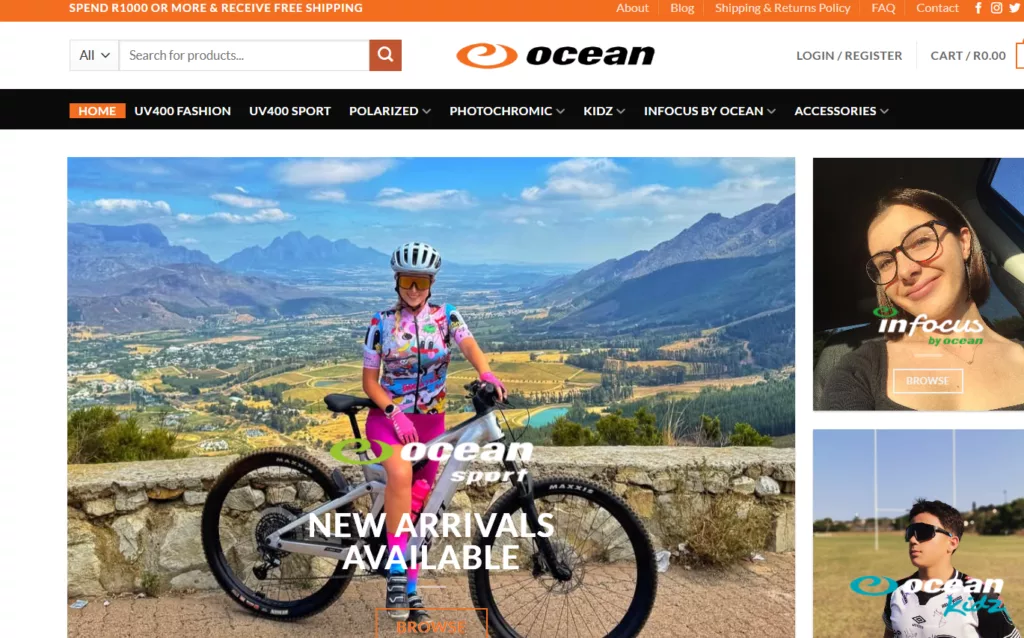
Ocean Eyewear bridges the gap between technical sports gear and high-turnover fashion. They are a South African heritage brand that designs locally in Cape Town and manufactures offshore. This hybrid model allows them to offer a massive SKU variety—from polarized sports goggles to the "Bambino" junior range—under a single invoice.
For retailers, this solves the fragmentation problem. Instead of managing separate vendors for different demographics, Ocean acts as a "category captain." Their 30-year operating history provides a layer of supply chain security and warranty support that new pop-up importers cannot match.
B2B Buyer Notes
This supplier is best for pharmacies and outdoor chains requiring branded floor stands and clear trade pricing tiers.
| Verification Data | Details |
|---|---|
| Location | Darex Park, 11 Eagle Road, Durbanville, Cape Town |
| Contact | +27 21 975 7620 |
| Established | 30+ Years Operating History |
| Key Documents | ANSI Z80.3 Impact Resistance Reports, Product Spec Sheets, Warranty Policy. |
| Partner with Ocean Eyewear |
3. Brentoni (Distributor & Brand Owner)
Brentoni operates as a brand owner and specialized distributor rather than a raw manufacturing plant. While they design collections domestically, they import finished goods from vetted global producers. This structure distinguishes them from OEM sunglass manufacturers in South Africa, as their model prioritizes rapid fashion cadence over production capacity.
B2B Buyer Notes This supplier is optimized for boutiques and pharmacies requiring immediate seasonal inventory refreshes. You purchase finished stock, avoiding the lead-time risks associated with custom manufacturing.
- Request line sheets: Do not ask for a general catalog. Demand "current wholesale line sheets" to confirm physical warehouse availability.
- Verify safety: A "UV400" sticker is insufficient. Request compliance reports validating adherence to ISO 12312-1 standards or SABS regulations to ensure lens safety.
- Check continuity: Confirm reorder lead times immediately. High-rotation fashion styles often sell out permanently, unlike factory lines which can be replenished.
| Verification Data | Details |
|---|---|
| HQ Location | Sandton, Johannesburg |
| Core Business | Brand Management & Importation |
| Transparency Questions | "Who is the Importer of Record?" and "What is the warranty on imported frames?" |
| Trade Sales | Direct wholesale application required |
4. Damar Optical Sunglass Manufacturers in South Africa
Damar Optical operates out of the Sandton/Johannesburg economic hub. They function as a dedicated distributor rather than a raw manufacturer. This model allows retailers to bypass complex import duties and long lead times. They hold local stock of international and house brands, making them the ideal partner for rapid inventory replenishment.
B2B Buyer Notes
- Catalog vs. Custom: You purchase finished goods from a set wholesale catalog. Do not approach them for custom molds or private labeling.
- Trade Accounts: Margins depend entirely on your volume. Request their "Tier 1" price list to confirm if you qualify for rates better than the standard independent optometrist.
- Defect Handling: Leverage their local proximity. Demand a clear Return Merchandise Authorization (RMA) agreement that forces them to cover logistics costs for factory defects.
| Verification Data | Details |
|---|---|
| Physical Hub | Sandton / Greater Johannesburg Area |
| Business Type | Wholesaler / Brand Distributor |
| Anti-Dropshipper Checks | Offers warehouse collection; requires CIPC (Companies and Intellectual Property Commission) registration documents to open a trade account. |
| Best For | Retailers needing 24-48 hour stock replenishment. |
🧠 Expert Take: " Always verify that the distributor holds the exclusive license for the brands they sell. This protects your inventory from seizure due to illegal parallel imports (grey market goods), which violate trademark laws."——————— ben zheng, We are an eyewear manufacturer from China. With sunglasses, optical glasses, reading glasses and other types of glasses
5. Moscon Optics (Heritage Distributor)
Moscon Optics operates as a wholesale supplier, not a factory. They bridge the gap between international design houses and South African shelves, serving the entire Sub-Saharan region. While they do not manufacture frames, their value lies in distribution strength.
They provide optical shops with immediate access to legitimate, licensed eyewear without the long lead times associated with direct manufacturing imports.
B2B buyer notes This supplier suits optical practices that prioritize brand variety and continuity over custom house brands. You are paying for their logistical infrastructure and warranty support, not production capacity.
Key negotiation points:
- Selective distribution: Ask about dealership criteria. Premium brands often enforce strict display standards that your shop must meet before stocking inventory.
- Payment structure: Unlike raw manufacturers that require 100% upfront payment, heritage distributors often offer 30-day credit terms to approved business accounts.
- Service Level Agreements: Get written confirmation of delivery times. Ask specifically about their daily order cutoff for guaranteed next-day dispatch.
| Verification Data | Details |
|---|---|
| Physical Hub | Houghton Estate, Johannesburg |
| Business Type | Exclusive Brand Distributor |
| Proof Points | 40+ years in business; exclusive global brand licenses |
| Logistics | Centralized warehousing; automated dispatch systems |
6. Lensco Sunglass Manufacturers in South Africa
Lensco leverages its strategic position in Durban—home to South Africa's busiest shipping terminal—to maintain high stock availability. They function primarily as a trade supplier for optometrists, bridging the gap between direct imports and local service. B2B buyers must distinguish between "manufacturing" (often just lens fitting) and "distribution" to set realistic design expectations.
B2B Buyer Checklist
- Distinguish Processes: Confirm if they handle frame fabrication or just lens edging and mounting. This dictates your customization limits; assemblers cannot alter frame molds.
- Safety Compliance: For industrial tenders, verify their products meet SANS 1404 requirements. SABS testing documentation must be current.
- Supply Stability: Ask for their "stock-on-hand" reports. Their port proximity should guarantee faster replenishment than inland competitors.
Verification Data | Verification Point | Specific Detail | | :--- | :--- | | Physical Address | Durban (Verify via Google Maps/Street View) | | Business Age | Check CIPC registration date | | Capability Test | "Can you modify frame curvature in-house?" | | Red Flag | No optical lab equipment visible in site photos. |
7. Ballo Eyewear (Cape Town Sunglass Manufacturers in South Africa)
Best for: Sustainable storytelling and premium small-batch collaborations.
Most "eco-friendly" eyewear is just plastic with a marketing spin. Ballo Eyewear is different. Unlike mass-market sunglass manufacturers in South Africa, Ballo operates a dedicated workshop in Woodstock, Cape Town. They hand-craft frames from recycled paper, cork, and sustainable timber using a unique lamination process that ensures durability often missing in wooden frames.
B2B Buyer Analysis This is a high-margin, low-volume partner. They are ideal for concept stores and executive gifting, not discount retail chains.
- The Scale Constraint: Production is manual and labor-intensive. You cannot order 5,000 units for next-week delivery. You must plan inventory lead times months in advance.
- Verification: Differentiate your stock by requesting their material manufacturing documentation. Proving your timber comes from certified sustainable sources validates the premium price point to skeptical buyers.
- Customization: You can laser engrave logos directly onto the cork or timber arms. This creates a tactile brand experience that standard pad printing cannot match.
| Verification Data | Details |
|---|---|
| Address | 19 Buiten Street, Cape Town City Centre |
| Business Type | Boutique Manufacturer / Craft Workshop |
| Sustainability Proof | Request "Material Origin Declaration" for cork/timber. |
| Best For | Limited editions, corporate gifts. |
8. Execuspecs Sunglass Manufacturers in South Africa
Execuspecs is a retail franchise, not a contract manufacturer. They do not produce private label goods for other brands. Instead, they source finished eyewear from vetted global suppliers for their premium storefronts.
B2B Buyer Notes Treat their stores as a live market research tool. Do not contact them for manufacturing quotes or custom molds. Instead, analyze their proprietary Baker eyewear collection to establish a baseline for entry-level quality. Note the hinge types and acetate weight, then brief a real OEM partner to replicate those specs at a wholesale margin.
If you aim to supply them, the conversation shifts to distribution. Contact the procurement head office in Gqeberha. They only onboard suppliers who can guarantee national fulfillment stock levels and adhere to strict retail compliance standards.
Verification Box | Verification Point | Details | | :--- | :--- | | Business Type | Retail Franchise Chain | | Head Office | Port Elizabeth (Gqeberha) | | Partnership Reality | Buys finished goods; does not sell wholesale. | | Best For | Price benchmarking and trend spotting. |
9. Spec-Savers South Africa (Retail Optical Chain)
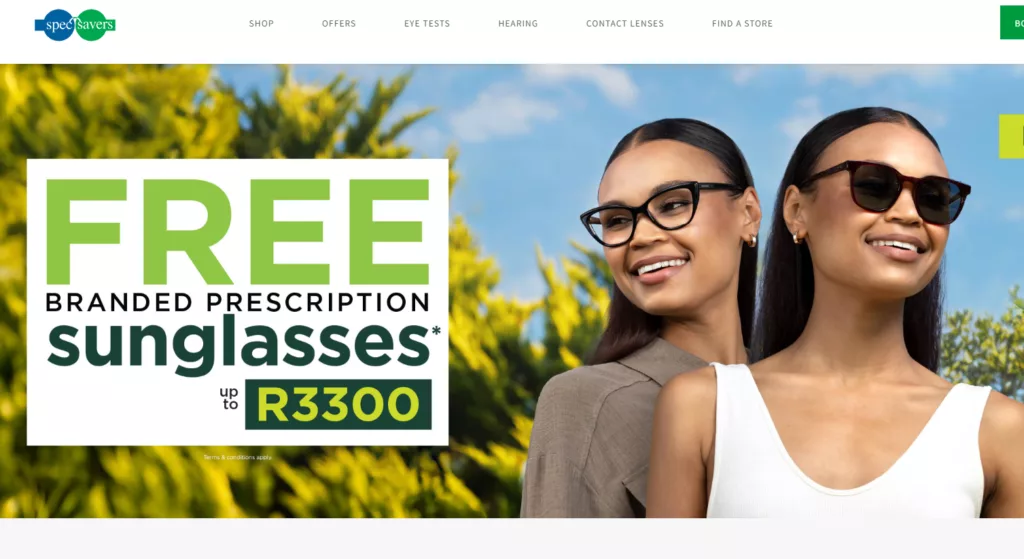
Spec-Savers is the dominant optical retailer in the region, not a contract manufacturer. Do not contact them to mold custom frames or produce private label lines. We include them here because international buyers often mistake their massive footprint for manufacturing capability.
Why They Matter to B2B Buyers Use Spec-Savers to benchmark your market entry. They define the "standard" for pricing and quality in South Africa.
- Price Ceiling: Analyze their house brands. If you cannot offer better specs than their entry-level frames at a lower cost, your product will struggle.
- Corporate Options: For corporate buyers, skip manufacturing queries. Ask about "Corporate Wellness" partnerships to secure bulk optical rates for staff.
For Potential Suppliers Selling to Spec-Savers requires pitching a supply chain, not just a product. You must prove you can hold stock locally and adhere to standards set by the South African Bureau of Standards (SABS).
| Verification Data | Details |
|---|---|
| Head Office | Port Elizabeth (Gqeberha) |
| Business Type | Retail Franchise Network |
| Years in Market | Founded in 1993 |
| Supplier Note | Requires strict vendor onboarding and compliance docs. |
| Contact Spec-Savers |
🧠 Expert Take: " Do not pitch generic "me-too" styles to their buyers. Their internal procurement teams already source mass-market basics efficiently. To get listed, you must offer unique materials or niche designs that fill a specific gap in their current catalog. "—————— Shachar Yehuda, Product Manager at @Moveo Group, Owner - Thingz Sunglasses
10. Sunglass Hut South Africa (Premium Retail Chain)
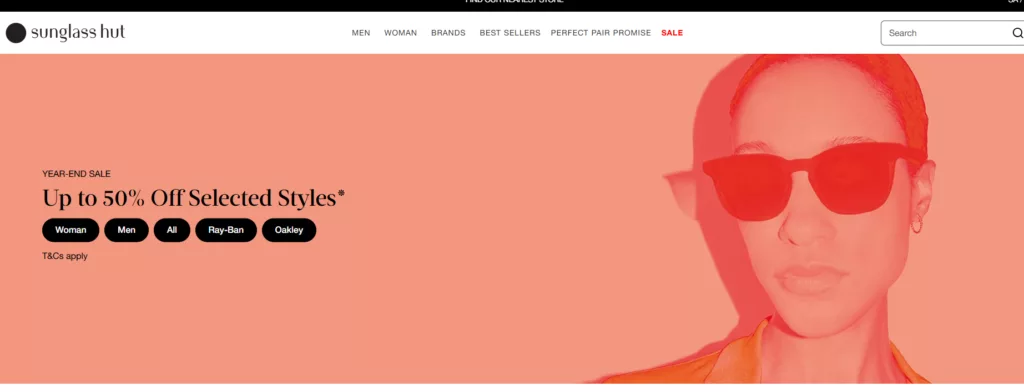
Sunglass Hut is a specialized retailer, not a manufacturer. Owned by the EssilorLuxottica group, they function as the benchmark for global eyewear standards rather than a production partner. You cannot hire them for private label or OEM manufacturing.
Why B2B Buyers Monitor This List Smart entrepreneurs use Sunglass Hut as a physical research lab before sending technical packs to factories.
- Price Anchoring: Check the retail price of polarized units. If your private label brand targets a premium tier but costs 90% less than their entry-level options, customers will question your quality.
- Trend Validation: They prioritize stock based on global sell-through data. If their V&A Waterfront store pushes oversized frames, update your manufacturing brief to match that demand.
- Material Standards: Examine their hinges and lens coatings. This gives you a physical reference point when specifying "acetate weight" or "UV400 quality" to your own supplier.
| Verification Point | Details |
|---|---|
| Business Type | Premium Retail Chain |
| Parent Company | EssilorLuxottica (Global) |
| Constraint | No custom manufacturing or OEM services. |
| Best For | Competitor analysis and product benchmarking. |
Your Action Plan: Manufacturing Sunglasses Safely
You have a list of sunglass manufacturers in South Africa. Now you need a strategy to close the deal without financial risk. Follow this three-step framework to verify partners and secure legitimate stock.
1. Classify the Supplier
Identify your partner's actual role. Misunderstanding this hierarchy forces you to pay high markups for "middleman" stock.
- True Manufacturers: These partners own tooling and injection molding equipment. They physically shape raw acetate. Look for boutique makers in Cape Town.
- Wholesale Importers: These companies buy finished goods and brand them locally. They dominate the Johannesburg and Sandton hubs.
- Assemblers: They import components and finish the lens fitting domestically.
2. Run the Verification Checklist
Scammers often use glossy websites to hide non-existent factories. Execute these checks before you pay a deposit.
Verify the Business
- Map the Address: Check the location on Google Maps. Avoid residential addresses.
- Check Registration: Request registration documents from the CIPC (Companies and Intellectual Property Commission). Confirm at least three years of operation.
- Call the Landline: Reject suppliers who only use mobile numbers or Gmail addresses.
- See the Floor: Demand a live video call to walk through the warehouse.
Audit the Product Do not accept generic "UV400" stickers as safety proof.
- Request Lab Reports: Require proof of compliance with SANS 12312-1 (South African National Standards) or ISO equivalents.
- Check Specs: Ask for data sheets detailing the best lens material for sunglasses in the batch.
- Confirm Warranty: Get the returns policy in writing.
3. Decide: Local vs. Offshore
Your order volume dictates your manufacturing path. Don't force a local distributor to do a factory's job.
- For 50–200 Units (Speed): Buy from a local SA distributor. You pay a higher unit price, but you get stock immediately for pharmacy or boutique refills.
- For 1,000+ Units (Scale): If you need custom promotional sunglasses or private label lines, source directly from a China sunglasses manufacturer.
Local hubs lack the massive capacity of custom sunglass manufacturers in the USA or Asia. If you need specific types of sunglasses with strict QC, find a manufacturing partner who manages the production floor.
Frequently Asked Questions about Sunglass Manufacturers in South Africa
Q1. How can I tell if a sunglass manufacturer in South Africa is a real factory or an importer?
Ask for a live video walkthrough of the floor — you should see injection molding and lens cutting, not just stock boxes. Also confirm who owns the tooling mold for your frame; if they cannot show it, they are likely a distributor.
Q2. What documents should a legitimate sunglass supplier provide for B2B orders?
Legitimate partners provide more than just an invoice. You must request a formal Material Declaration that lists the specific plastics and metals used. Ask for their CIPC registration documents to verify how long they have been in business. Crucially, demand a clear Warranty Policy that explains who pays for shipping if goods arrive damaged. If they hesitate to provide these, walk away.
Q3. What are the key safety standards I should ask about?
Require a test report for SANS 12312-1 for local sales, plus ISO 12312-1 or ANSI Z80.3 if you export. Make sure the report is under two years old and covers your specific model, not just the brand’s general line.
Q4. What MOQ and lead times should I expect for private label sunglasses?
Stock styles can ship in days at low MOQs, but fully custom private label runs typically need 500+ units and 45–60 days. Confirm your customization level first — it drives both the MOQ and the timeline.
Q5. Should I buy locally in South Africa or import from China?
This is a trade-off between speed and margin. Buy locally if you need to restock shelves immediately or test a new style with low risk. The unit cost will be higher, but you get the stock in days. Import directly from a China sunglasses manufacturer if you want to maximize profit margins and create a fully custom brand.
Importing lowers your unit cost significantly but requires bulk orders and longer planning.