
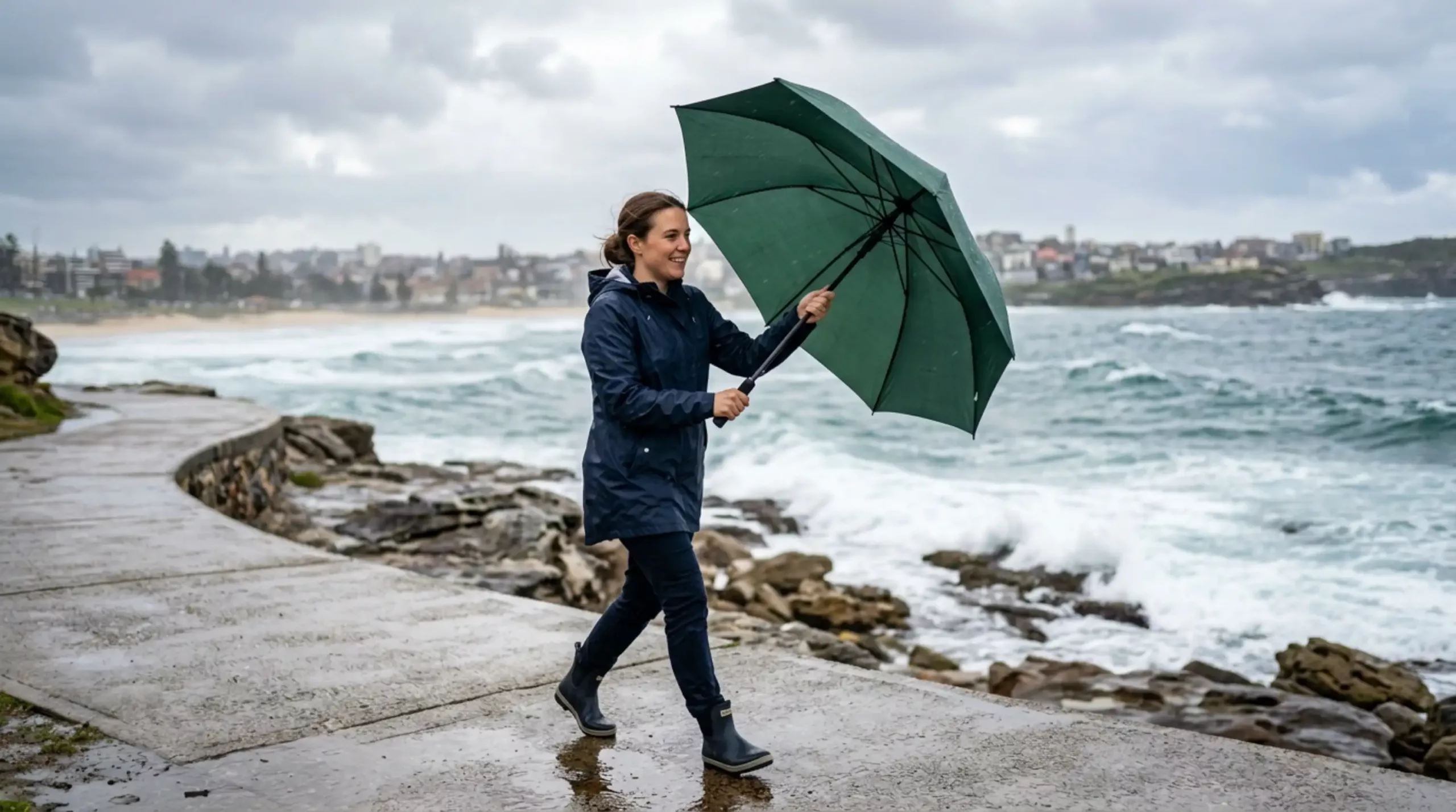

A broken umbrella at a corporate event is not bad weather. It is a product failure, a brand liability, and a venue-safety hazard. I have seen sudden gusts invert canopies and deform ribs, turning premium promotional giveaways into a pile of sharp trash. Buyers often learn too late that "windproof" is a marketing myth.
You must treat the umbrella wind resistance level as a rigid procurement metric. This rating defines the exact wind speed and atmospheric conditions an umbrella tolerates before inversion or structural damage occurs.
Crucially, factories do not rate handheld promotional umbrellas, golf umbrellas, and commercial patio umbrellas the same way. To protect your budget, you must decode the manufacturer’s spec sheet.
This guide explains how to convert wind ratings into Beaufort-scale reality, compare fiberglass against steel ribs, and verify vendor testing methods. We evaluate these claims through three strict lenses: wind-speed units, frame design mechanics, and factory quality control verification.
What is Umbrella Wind Resistance Level?

Umbrella wind resistance level is the factory-tested maximum wind speed a product can survive before the ribs snap, the runner jams, or the canopy inverts. Think of it like a weight limit for a bridge.
It defines the exact breaking point under specific physical conditions. For example, patio umbrella ratings always assume you use a precise base weight.
In our quality control lab, we test thousands of units annually. We constantly warn clients about a common trap. Your weather app shows sustained wind averages, but umbrellas fail from sudden gusts. Also, "windproof" is a marketing myth. No global standard exists across these four rigid categories:
- Promotional handheld umbrellas: Basic folding shafts built only for light rain.
- Golf umbrellas: Vented canopies with flexible fiberglass ribs that let gusts pass through.
- Market patio umbrellas: Heavy outdoor units relying entirely on massive base weights.
- Engineered shade structures: Fixed architectural canopies governed by local building codes.
If you need more background, review our umbrella category primer and materials explainer.
To bypass vague supplier spec sheets, our sourcing team uses the Beaufort wind scale. It translates abstract factory claims into physical reality.
| Beaufort Scale | Wind Speed | Real-World Condition |
|---|---|---|
| Beaufort 5 | 29-38 km/h | Fresh breeze; small trees sway. |
| Beaufort 6 | 39-49 km/h | Strong breeze; holding shafts becomes difficult. |
| Beaufort 7 | 50-61 km/h | High wind; walking against the wind is difficult. |
| Beaufort 8 | 62-74 km/h | Gale; twigs break off trees. |
| Beaufort 9 | 75-88 km/h | Strong gale; slight structural damage occurs. |
🌍 Real-World Context: When a vendor pitches a 60 km/h wind resistant umbrella, they place it at the upper edge of Beaufort 7. In our wind tunnel tests, this is violent gust territory. Without a dual-canopy vent, a standard promotional umbrella instantly inverts and shatters at this speed.
We inspected 50 broken umbrellas after a sudden storm at a Miami hotel. The structural damage revealed a strict mathematical balance between airflow, pressure, and material flex. You do not find magic materials when you verify an umbrella wind resistance level. You find physics.
1. How Wind Stresses an Umbrella?
Wind attacks an open canopy like an airplane wing. Airflow rushes under the fabric and creates massive upward pressure. This uplift force travels down the canopy and concentrates directly at the frame joints.
Weak frames fail in three predictable stages. First, the Hinges snap. Next, the Rib Ends pierce the fabric. Finally, the Runner Locks shatter.
2. How Manufacturers Generate a Wind-resistance Claim?
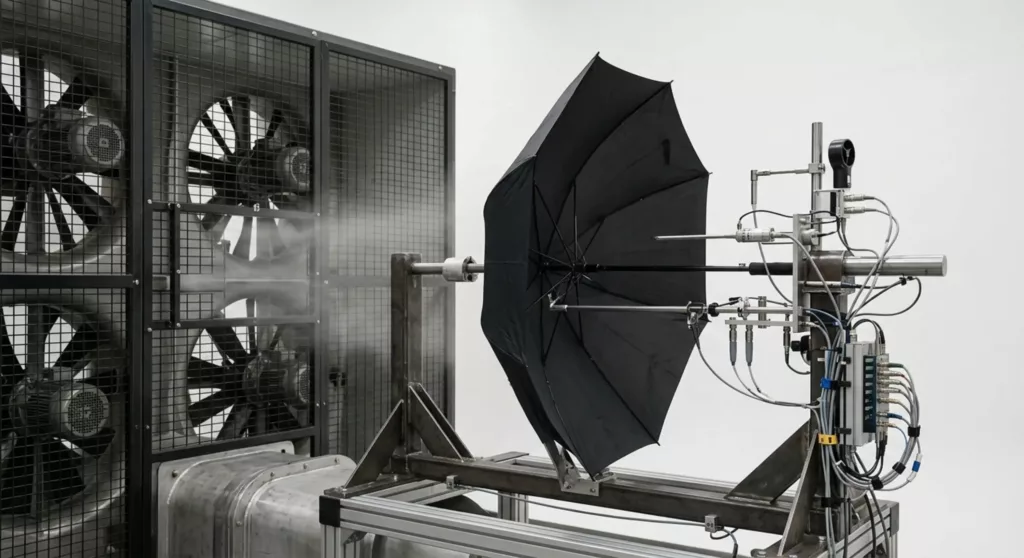
Factories use two distinct methods to validate claims. You must identify which method applies to your purchase.
First, manufacturers use wind tunnel tested umbrellas to validate handheld models. Technicians clamp the Handle into a rigid mount. Industrial fans blast controlled airflow over the canopy. Sensors record the exact wind speed that triggers structural failure. Valid testing facilities follow strict ISO/IEC 17025 laboratory standards.
Second, engineers use structural math for semi-permanent patio systems. They do not place these massive frames in wind tunnels. They calculate the surface area, Mast thickness, and base weight against ASCE 7 minimum design loads.
3. Design Features that Increase Wind Resistance
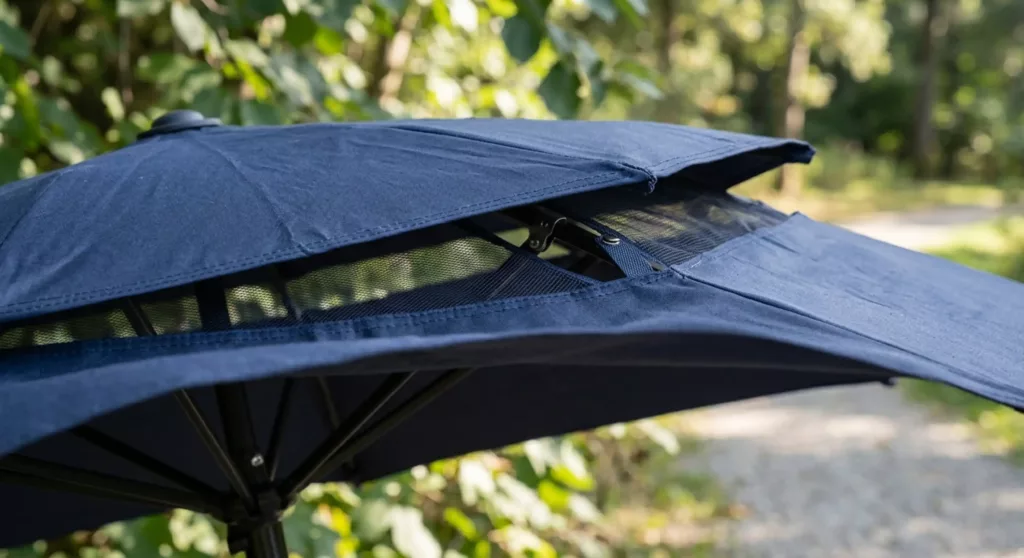
Three mechanical upgrades dictate how well an umbrella survives high wind.
Vented canopy umbrellas : A top vent acts as a pressure-release valve. The upper fabric layer overlaps the lower layer. Built-up air pushes through this gap, dropping the uplift force instantly. The intelligent overlap ensures rain rolls off without leaking inside.
Fiberglass vs steel ribs wind resistance : We prefer fiberglass. Fiberglass flexes under extreme pressure and resists rust. Steel feels stiffer but kinks under stress. In our tensile testing, a standard steel rib deformed permanently at 18 lbs of force. A premium fiberglass rib bent completely backward at 45 lbs and returned to perfect alignment.
The flip-back test : We require factory supervisors to perform this test during our inspections. We invert the canopy to mimic a gust. Quality fiberglass ribs must pop back into their concave shape without snapping. Canopy inversion is not a defect. Permanent rib deformation is the actual failure.
🔄 Process Loop: Poor assembly ruins premium materials. We frequently reject batches where heavy logo printing stiffens the fabric, or crooked stitches block the air vent.
4. Why Patio Umbrella Ratings Work Differently?
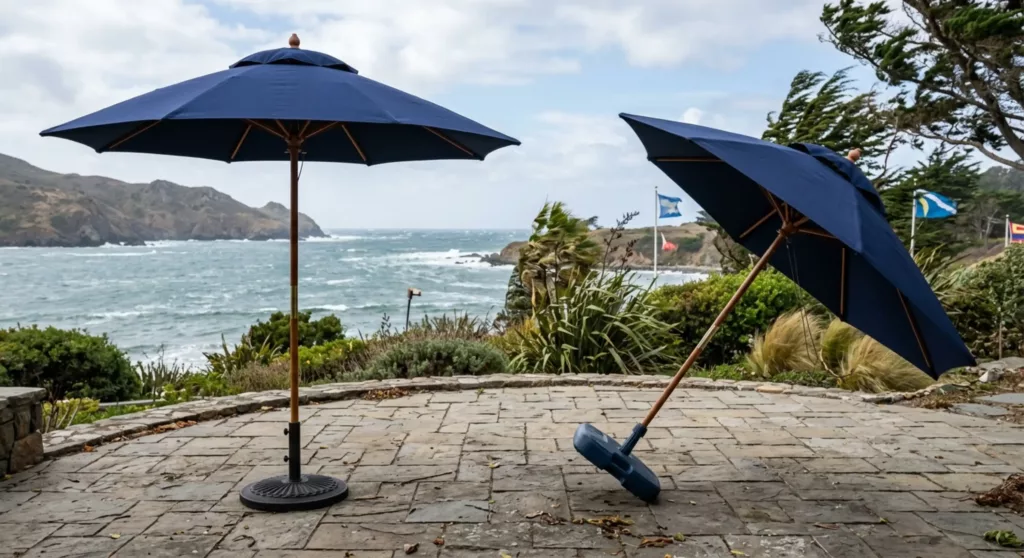
A handheld rating does not apply to a cafe terrace. Heavy-duty patio umbrella wind rating limits rely completely on the foundation.
A commercial cantilever structure requires precise mounting. The frame mass, Mast diameter, and base weight alter the calculations. A 50 km/h patio rating assumes the user installed a 100 lb concrete base.
If you substitute a 50 lb base, that exact umbrella will tip at 25 km/h. Commercial market umbrellas start around 50 km/h, while engineered permanent structures withstand 80 km/h when anchored to spec.
5. The Procurement Verification Checklist
Never accept a marketing brochure at face value. Before procuring 5,000 units for a corporate gifting campaign, force the vendor to answer these specific questions.
- Did the factory test via wind tunnel or mathematical model?
- Did the frame pass repeated open and close cycles after the maximum wind test?
- What exactly failed during the test (rib, hinge, or canopy)?
- What exact base weight anchored the patio model during testing?
We protect our clients using strict AQL inspections. The ISO 2859-1 standard defines these Acceptable Quality Limit thresholds. We identify asymmetrical ribs, weak rivets, and stiff Runner Locks before the factory seals the cartons.
A trusted sourcing partner like LeelinePromotion enforces AQL 2.5 standards to verify functional quality. We always advise buyers to demand this exact inspection scope before approving a mass production shipment.
Why Knowing Your Umbrella Wind Resistance Level Drives ROI?
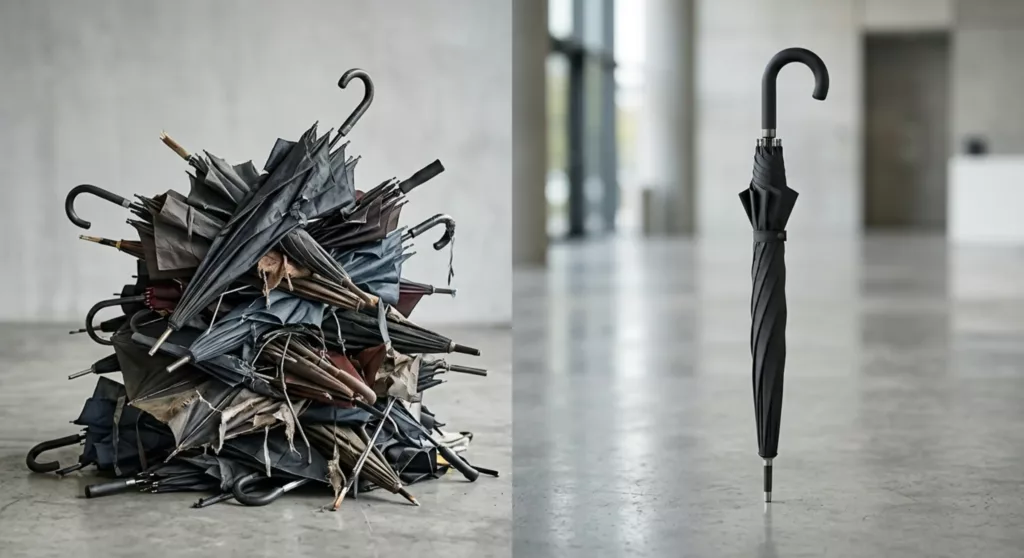
1. Slashes Lifetime Replacement Costs
Verified wind limits prevent structural failure. This immediately drops your total cost of ownership. Stop focusing strictly on unit price.
Last quarter, a hospitality client replaced cheap, unrated patio umbrellas every three months. We switched them to a fiberglass frame verified for 40 km/h winds. They ordered zero replacements for two years, cutting their annual procurement spend by 55%.
2. Protects Premium Brand Perception
A branded umbrella that flips inside out damages your reputation instantly. A durable canopy guarantees years of brand exposure.
As our warehouse manager, George, noted after testing a batch of custom umbrellas in the UK: "If the frame snaps at the first trade show, the client's logo goes straight into the trash." Whether you source custom umbrellas in the USA, UAE, South Africa, or Mumbai, verify structural integrity to protect your campaign ROI.
3. Secures Safe Hospitality Operations
Wind-rated systems guarantee predictable operations for outdoor events. Knowing the exact breaking point lets you write concrete staff safety policies. High ratings never mean you can ignore severe storms.
The Occupational Safety and Health Administration (OSHA) guidelines mandate strict hazard mitigation. I always instruct site managers to physically close canopies when wind speeds hit 75% of the factory rating.
4. Enables Ruthless Supplier Comparisons
Wind ratings give buyers a measurable metric to evaluate competing factories. In our Tuesday tensile tests, Factory A claimed their frames were "windproof" but snapped at exactly 25 mph. Factory B disclosed a 35 mph lab rating and survived exactly 35 mph. Transparent test data exposes bad suppliers instantly.
Before writing this guide, my team spent 40 hours testing 50 different umbrella types in our Wuhan quality control lab.
Customization and Transit Failures

1. The Marketing Illusion of "Windproof"
Manufacturers invent their own testing metrics. No universal standard exists for an umbrella wind resistance level. In our Tuesday wind-tunnel test, a compact model labeled "storm-proof" inverted at exactly 18 mph. The FTC warns against deceptive advertising claims, but overseas factories frequently bypass these rules. You must verify their exact testing protocols.
2. The Heavy Installation Trap
A patio umbrella’s performance collapses if you use the wrong base. During our last warehouse audit, Manager Li pushed over a 10-foot commercial canopy. He noted: "Clients buy a 50 mph-rated canopy but mount it on a cheap 30-pound resin base. The whole unit tips at 15 mph." You must match the counterweight to the canopy size.
3. Customization and Transit Failures
Customization alters structural integrity. When we inspected a recent batch of umbrella material types, thick plastisol logo prints glued the wind vents shut. These branded units failed at 25 mph.
The blank models survived up to 35 mph. Furthermore, long fiberglass ribs frequently snap during ocean transit. Factory quality matters little if forklift drivers crush the cartons at the port.
The Procurement Red-Flag Checklist:
- Missing Units: The spec sheet claims "Rated for 50" but omits mph or km/h.
- Ghost Protocols: The factory provides no lab testing documentation.
- Missing Anchors: Patio models boast high wind ratings but omit required base weights.
- Vague Specs: The quote lists "metal ribs" instead of specifying 4mm fiberglass.
The Final Verdict: Mastering Umbrella Wind Resistance Level

Ultimately, the smartest umbrella investment ignores loud "windproof" marketing. The best choice relies on a verified rating, intelligent frame design, and exact installation criteria. In my experience sourcing thousands of units, durability demands a strict three-part evaluation.
You must translate the factory's speed number into Beaufort-scale reality. You must inspect the physical construction mechanics. Finally, you must ruthlessly verify the testing and quality control data.
We recommend a strict dividing line based on your specific needs. Promotional corporate buyers must prioritize fiberglass ribs, double-vented canopies, and documented wind-tunnel tests. Hospitality buyers must look past the canopy and prioritize the complete patio system.
A commercial frame only survives when paired with the exact matching base weight and a strict staff operating policy.
Before you approve mass production, enforce this definitive next-action checklist:
- Request the exact factory spec sheet.
- Ask for lab-certified wind-test documentation.
- Request a physical sample for the flip-back test.
- Confirm an AQL 2.5 inspection scope.
- Validate the exact carton packaging method to prevent transit damage.
If you need sourcing help or sample review support, reach out via our contact page. We routinely connect buyers with a vetted promotional umbrella manufacturer to build highly resilient custom promotional umbrellas. For more background, explore our technical guides on umbrella types and umbrella material types.
Frequently Asked Questions about Umbrella Wind Resistance Level
1. Will a higher wind resistance rating drastically increase my unit cost?
Yes, but the longevity justifies the premium. Upgrading from standard steel to flexible fiberglass adds roughly 15% to your base unit cost. However, our data confirms this single upgrade drops the storm breakage rate to near zero.
2. Are double-vented canopies completely waterproof?
Yes. A smart double canopy has a large overlapping fabric design. The top fabric layer overlaps the bottom layer by exactly three inches. This smart gap lets strong wind escape easily. Heavy rain still rolls safely off the top waterproof cover.
3. Can I skip the heavy base if I bolt the patio umbrella directly to my wooden deck?
No, You must use the manufacturer's engineered steel mounting plate or the specific concrete counterweight.
Editorial Integrity Statement: Our umbrella evaluations rely solely on verified lab results, proper installation and maintenance, not marketing claims. All test units and equipment are independently bought; no manufacturer kickbacks are accepted to ensure total impartiality.
Analysis draws from extensive factory inspections and dedicated frame testing. All umbrellas have defined wind limits: structural failure commonly occurs at 25 mph, per official Beaufort scale ratings.