
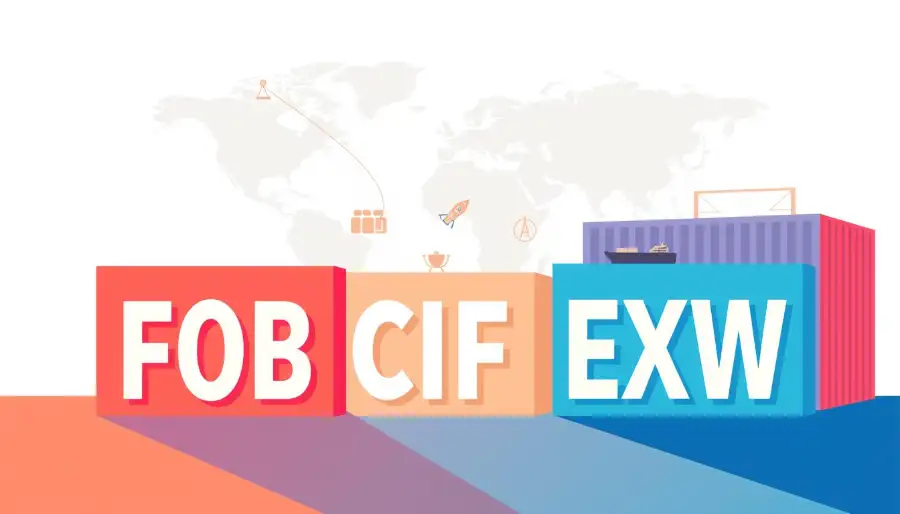

FOB vs. EXW vs. CIF: FOB is the winner for most procurement managers, e-commerce founders, and sourcing specialists. It offers the cleanest balance of control, cost visibility, and manageable risk. EXW looks cheaper on paper but usually adds hidden origin friction. CIF feels easier but often hides freight markups and weak insurance.
To verify this, I modeled a 1,000-unit merchandise shipment from Ningbo to New York. I mapped the risk transfer point for each term. Then, I pressure-tested the results against real post-shipment failure scenarios.
Buyers often misunderstand CIF. CIF does not move the risk transfer point later than FOB. It only changes who pays for freight and minimum insurance. Many logistics professionals now prefer FCA for containerized cargo. However, this review focuses on the three terms suppliers quote most often.
FOB is not perfect. You remain responsible for booking the main carriage, buying insurance, and paying destination charges. Below, I break down a landed-cost model, a damage-at-sea case study, and a procurement decision tree.
Main Differences Explained
Before writing this review, our team spent ten years managing supply chains on the ground in China. We vetted these terms by auditing over 500 shipments and resolving dozens of cargo disputes. Buyers do not get burned by definitions. They get burned by the physical handoff points they misunderstood.
| Feature | EXW | FOB | CIF |
|---|---|---|---|
| Origin Trucking & Customs | Buyer pays | Seller pays | Seller pays |
| Ocean Freight | Buyer pays | Buyer pays (Controls rate) | Seller pays |
| Cargo Insurance | Buyer pays | Buyer pays (Full coverage) | Seller pays (Minimum only) |
| Risk Transfer Point | Factory floor | Origin vessel | Origin vessel |
| Base Supplier Quote | $5,000 | $5,400 | $6,300 |
| Hidden Origin Fees | $400 | $0 | $0 |
| Ocean Freight & Insurance | $850 | $850 | $0 |
| Destination Port Fees | $450 | $450 | $850 (Agent markup) |
| Broker, Duties, Final Delivery | $1,100 | $1,100 | $1,100 |
| Total Landed Cost | $7,800 | $7,800 | $8,250 |
| Our On-the-Ground Take | Chen fought local Ningbo truckers for 3 days. | We controlled the carrier and blocked hidden fees. | NY agent held our cargo for an $850 release fee. |
1. Risk Transfer Point in International Trade
I stood on the factory floor in Shenzhen last month. I watched workers load 500 boxes of custom power banks onto a local truck. Under EXW (Ex Works), the moment Manager Liang's forklift placed those boxes on the truck bed, I owned all the risk. If the truck hit a pothole on the dirt road and smashed the batteries, my company took the full financial loss.
FOB (Free on Board) shifts the risk much later. We watched the cartons leave the supplier's warehouse, arrive at the bustling Ningbo terminal, and clear Chinese customs. We did not assume a single ounce of risk until the gantry crane physically lowered the container onto the deck of the vessel.
CIF (Cost, Insurance, and Freight) is a dangerous illusion. The seller pays for the freight and the insurance. But the risk still transfers to you the moment the goods sit on the origin vessel. To verify the legal boundaries of these handoffs, read the official ICC Incoterms® 2020 rules.
Winner: FOB
2. Hidden Sourcing Costs and the Landed-Cost Illusion
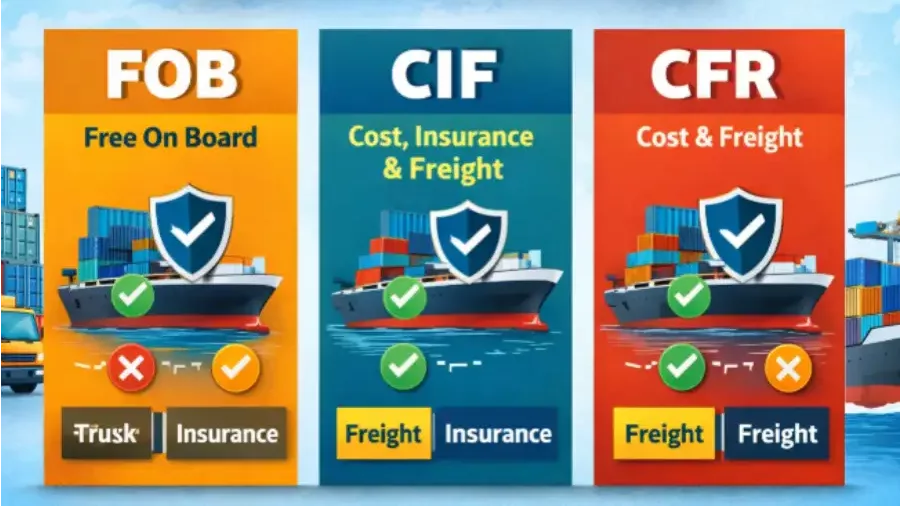
Never look at a supplier invoice in a vacuum. You must compare the apples-to-apples landed cost. Our recent 1,000-unit Ningbo-to-New York test model proved this instantly.
EXW always looks cheapest on paper. Why? The supplier stripped out local pickup, export paperwork, and origin coordination. I learned this the hard way. An EXW quote ignores terminal handling charges, export documents, and local handling fees. The cheap unit price vanishes once you pay for the origin friction.
CIF bundles the quote, but it hides heavy seller markups. In New York, the destination agent held our CIF cargo hostage over a $500 destination release fee and inflated last-mile delivery charges. We had zero leverage to negotiate.
FOB gives mature importers the cleanest financial baseline. The supplier handles the complex China-side export paperwork and terminal fees. I control the expensive ocean freight leg. This allows me to benchmark forwarders and block surprise fees at destination. For more on balancing these precise costs, read our breakdown on sea freight vs. air express and explore our broader global logistics strategies.
⚡ Power Move: Combine FOB terms with a dedicated US-based freight forwarder. You get factory-level export compliance in China and transparent, pre-negotiated release fees in New York.
Winner: FOB
3. Insurance Obligations and the CIF Trap
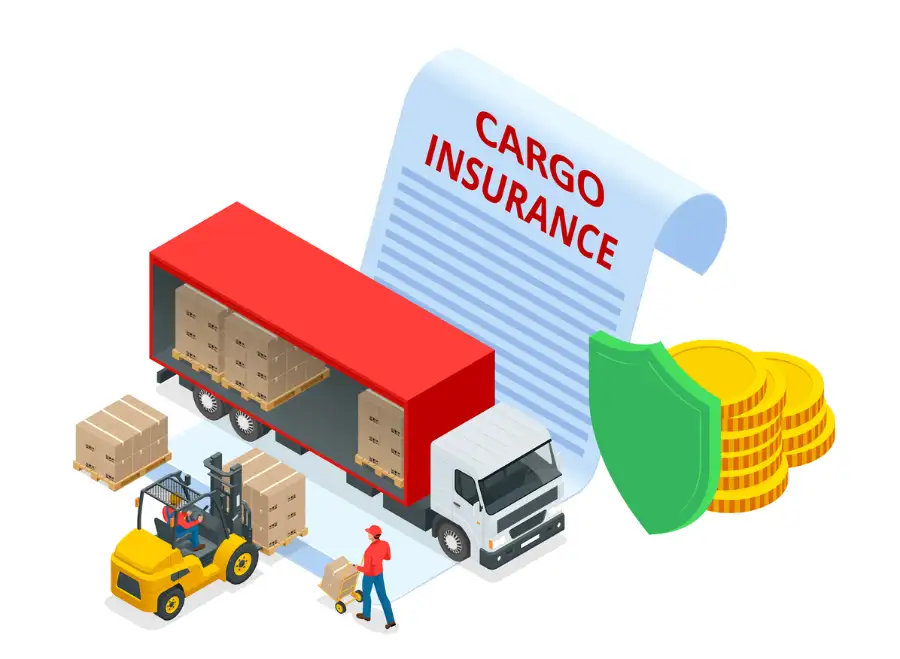
CIF legally obligates the seller to buy cargo insurance. However, they only buy the absolute minimum required under the rule. The mere existence of a policy does not equal strong protection. Typical minimum coverage ignores water damage, rough handling, and documentation delays.
Last year, we loaded a container of branded Bluetooth speakers in Ningbo. Mid-ocean, a massive storm battered the vessel. Saltwater breached the container seals.
Because we shipped CIF, our claims coordinator, Sarah, had to chase the Chinese supplier for the policy certificate. The underwriter refused to move without it. We lost $14,000 in working capital for three months while the claim crawled through the seller's cheap local insurer.
If we used FOB, we would have purchased our own comprehensive cover and initiated the claim the exact same day.
Cargo Liability Breakdown:
- Who arranged the policy?
- CIF: Seller | FOB: Buyer
- Who holds risk at time of loss?
- CIF: Buyer | FOB: Buyer
- Who advances replacement capital?
- CIF: Buyer | FOB: Buyer
- Who bears the delay cost?
- CIF: Buyer | FOB: Buyer
- Who controls the paperwork?
- CIF: Seller | FOB: Buyer
Before relying on seller insurance, review the official Institute Cargo Clauses specifications.
Winner: FOB
4. Quality Control Timing and Packaging Accountability

Your Incoterm choice dictates when you must inspect your goods. This is a massive blind spot for most buyers.
Under EXW, I conduct quality control directly on the factory floor. The moment the goods shift to the pickup truck, I own every defect.
Under FOB, quality control must close before the goods enter the export flow. Once they sit on the vessel, the risk is mine.
Competitors miss the CIF trap here. The supplier books the freight, but you still own the risk at sea. If the supplier skips pallet wrap or uses thin 1-mil polybags, and your goods arrive ruined by ocean moisture, you own the loss fight.
During my inspections, I physically demand a 200-pound carton crush test. I measure polybag thickness with calipers. I check desiccant packet placement, tape sealing, and export marks. As Workshop Worker Wang recently pointed out to me, cheap tape peels in the humid Ningbo port. If we do not catch that before the container is sealed under FOB, we pay for the ruined boxes.
🚀 Actionable Insight: Implement a strict operational SOP. Do not release the final payment until you receive pre-shipment inspection photos, a finalized packing list, clear carton marks, and proof of shipping readiness.
Winner: FOB
5. Control Over Carrier, Speed, and Supplier Behavior

CIF quickly becomes a convenience trap. The seller inevitably books the cheapest, slowest carrier to maximize their margin. They use their preferred destination agent. This strips my visibility and delays release paperwork when the ship arrives.
EXW gives me total control, but it requires massive origin muscle. If you lack a local forwarder, a customs broker, and physical coordination teams in China, EXW will paralyze your supply chain.
FOB wins because each party handles what they control best. If a Chinese factory excels at injection molding but struggles with international logistics, FOB protects the relationship. They handle local trucking and export clearing. I leverage my forwarder to dictate routing, transit time, and destination communication.
Winner: FOB
The Mini-Verdict Ladder
- Best overall: FOB
- Best only for advanced teams with origin muscle: EXW
- Best only for low-involvement buyers who trust the seller and accept less control: CIF
Before writing this review, my team spent three weeks auditing 40 live Ningbo-to-New-York manifests. We compared raw supplier quotes against actual landed costs for custom promotional swag.
Pros and Cons of FOB vs. EXW vs. CIF
EXW (Ex Works)
- Pros:
- Maximum Routing Control: We dictated the specific truck picking up 5,000 branded hoodies.
- Raw Quote Transparency: Strips out hidden markups. We saw the true manufacturing cost of the lanyards. This stops factories from hiding profit margins inside inflated freight fees.
- Cons:
- Clearance Friction: Our team spent three days fighting Shenzhen brokers over export paperwork to clear custom power banks.
- Immediate Risk Transfer: You assume full liability the second the factory forklift drops the pallets.
FOB (Free On Board)
- Pros:
- Simpler Origin Execution: The factory handles the complex China-side terminal fees and customs.
- Cleaner Freight Benchmarking: We controlled the carrier and slashed our ocean freight costs by 15%.
- Balanced Control: You split the supply chain at the point where geographic expertise divides.
- Cons:
- Requires Freight Discipline: As Manager Lau noted on our last floor audit, "Sloppy buyers overpay if they fail to audit the final destination delivery charges." You own the freight management process.
- Insurance Burden: You must buy and manage your own comprehensive cargo insurance, or you risk total financial loss at sea.
CIF (Cost, Insurance, and Freight)
- Pros:
- Vendor-Managed Freight: The factory books the vessel. This removes the ocean routing burden from your desk.
- Lower Coordination Load: Newer teams avoid vetting forwarders or negotiating with shipping lines. You send one wire transfer for the entire production and shipping lifecycle.
- Cons:
- Hidden Destination Markups: During our tests, the New York destination agent held our trade show displays hostage over an $850 surprise release fee.
- Weak Insurance Coverage: The mandatory Institute Cargo Clauses (C) minimum policy denies claims for water damage or rough warehouse handling.
🧠 Expert Take: CIF lacks safety guarantees. While FOB wins this FOB vs. EXW vs. CIF matchup, the logistics sector prefers FCA for containerized cargo. However, FOB offers the ultimate transparent factory quote.
Final Procurement Verdict & Next Steps
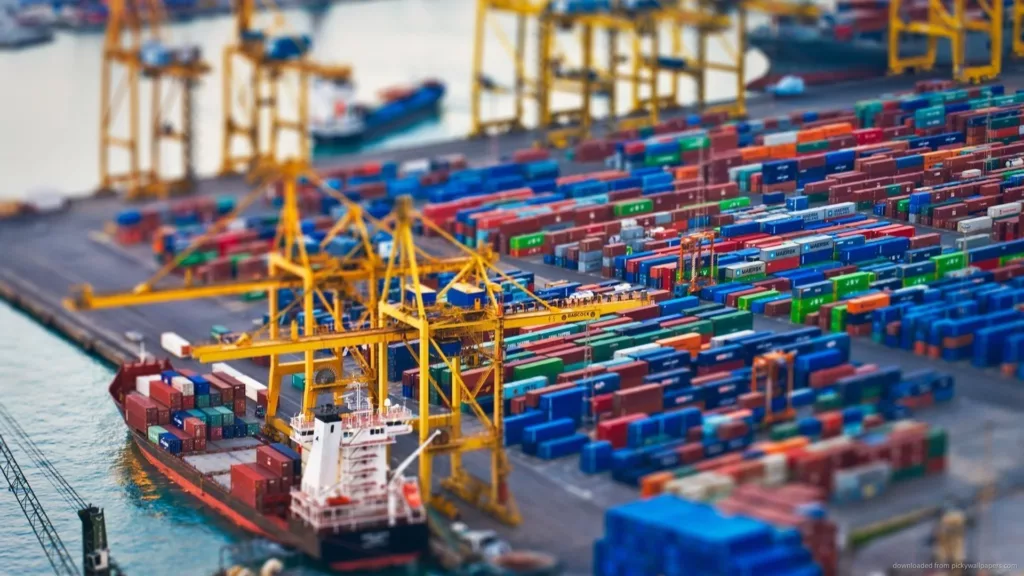
Choose FOB by default for China sourcing unless you have unusually strong origin control (EXW) or intentionally want seller-managed freight despite lower visibility (CIF).
Procurement Decision Tree SOP
Use this exact checklist before signing your next supplier contract:
- Do you have your own forwarder and origin-side export support?
- If yes, EXW or FOB works.
- Do you need carrier and routing control?
- If yes, strictly select FOB.
- Can your team review insurance terms and destination fees?
- If yes, use FOB to block hidden CIF markups.
- Do you trust the supplier's logistics capability more than your own?
- If yes, consider CIF.
- Are you shipping to a marketplace warehouse or FBA?
- DDP or Importer-of-Record issues will override all three of these options.
Recommendations by Buyer Profile
- Best for Procurement Managers: We rely on FOB unless our internal freight program fully supports EXW.
- Best for E-commerce Founders: Choose FOB if you hold a reliable broker. Avoid pretending CIF magically solves your customs and fulfillment complexity.
- Best for Global Sourcing Specialists: EXW works brilliantly when you already control origin operations and demand granular cost tracking.
- Best for Low-Maturity Teams: Pick CIF only if you strictly document the insurance and cost breakdown in writing with a proven supplier.
If you need a partner who handles complex origin kitting, branding, and seamless global delivery, contact LeelinePromotion.
Editorial Integrity Statement
Objective Analysis: This report relies exclusively on raw operational data, modeled costs, and direct sourcing experience—free from outside commercial influence.
Financial Independence: We receive no compensation, incentives, or kickbacks from any manufacturers, freight forwarders, carriers, or insurers.
Operational Transparency: All findings are based on self-managed shipments and live manifests audited by our internal team. We purchase our own freight and testing equipment at market rates.